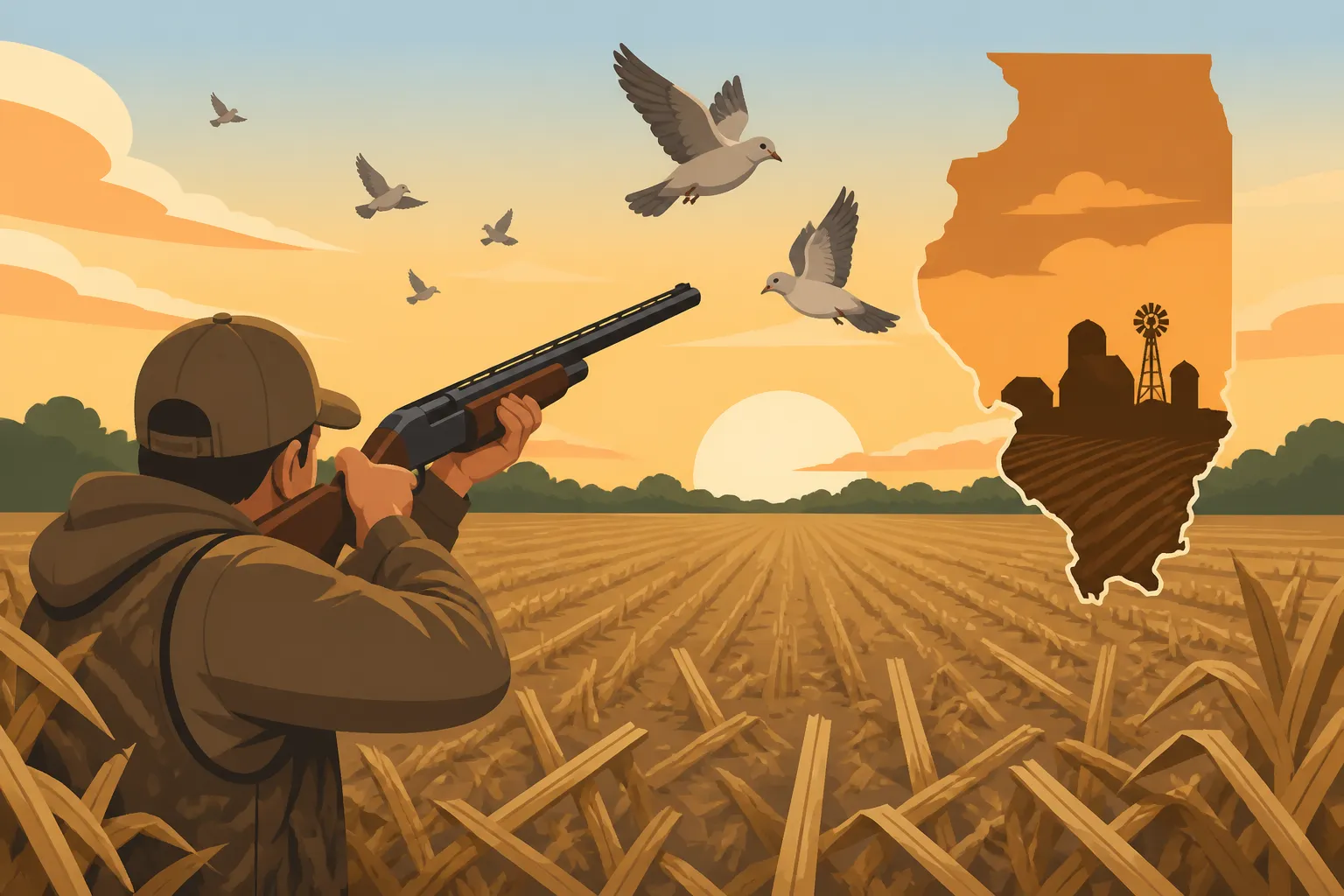
Dove Hunting a Cut Illinois Field
There's nothing quite like the crack of a shotgun on a warm September afternoon, marking the unofficial start of hunting season for many of us here in Illinois. But for all the romance, the reality of dove hunting can quickly turn to frustration if you're not in the right place, especially when trying to find those elusive birds in the vastness of a freshly cut field. It can feel like pure guesswork trying to figure out which stubble field will be a magnet for doves and which will be a ghost town. This guide is all about taking the guesswork out, providing a solid roadmap for successfully hunting doves in those essential cut Illinois fields, from understanding the birds' behavior to setting up your ultimate ambush.
Understanding Illinois Dove Season and Regulations
Before you even think about setting foot in a field, it’s crucial to understand the ins and outs of Illinois dove season. The Illinois Department of Natural Resources (IDNR) sets specific rules to ensure both fair chase and sustainable populations, and ignoring them can lead to a quick end to your day, or worse. It’s not just about knowing when to hunt, but how to hunt legally and ethically.
Key Dates and Permit Requirements
Illinois dove season typically kicks off on September 1st, a date many hunters eagerly anticipate as the first real opportunity to get afield after the long summer. This opening day is often a flurry of activity, and fields can be crowded. The season usually runs into early November, with specific zones (North, Central, and South) sometimes having slightly different end dates, though doves are primarily pursued in the earlier parts of the season. To participate, you'll need a valid Illinois hunting license and a State Habitat Stamp. For those 18 years and older, the cost for a resident hunting license is quite reasonable, and it's your basic entry ticket. Non-residents have options too, but they come at a higher price point. Always double-check the current year's regulations on the IDNR website, or through the Illinois DNR App without Cell Service, as dates and rules can occasionally shift.
Legal Shooting Hours and Equipment
Doves can only be hunted from sunrise to sunset in Illinois. It’s important to respect these times, not only for legal reasons but also for safety. Shooting doves in low light conditions can increase the risk of misidentifying targets or shooting towards unsafe backdrops. As for equipment, shotguns are the weapon of choice, and you're limited to 12-gauge, 16-gauge, 20-gauge, or .410 gauge. The shells must be loaded with shot size no larger than 7 1/2. You're also restricted to a shotgun that can hold no more than three shells in the magazine and chamber combined. This means if your pump or semi-automatic holds more, you'll need a plug. This three-shell limit is a federal regulation for migratory birds, so it's consistent across the country. Remember that lead shot is permissible for doves in Illinois, unlike waterfowl, but some specific public hunting areas may have their own non-toxic shot requirements, so always verify site-specific rules.
The Importance of HIP Certification
This is one of those small, often overlooked details that can trip up even experienced hunters: the Harvest Information Program (HIP) certification. If you plan to hunt any migratory birds in Illinois, including doves, you must register with HIP annually. This is a federal program that helps wildlife agencies gather data on migratory bird harvests, which in turn informs management decisions. It’s quick, easy, and free to get your HIP certification; you simply declare your intention to hunt migratory birds when you purchase your license, either online or at a vendor. Without it, you’re not legally allowed to hunt doves, regardless of whether you have your hunting license and habitat stamp. Consider it a critical piece of your Illinois Migratory Bird Certification.
Identifying Prime Cut Fields for Doves
Finding doves isn't about aimlessly wandering; it's about understanding their habits and knowing what kind of fields they prefer. Doves are creatures of habit, and their behavior around food and water sources, particularly in agricultural landscapes, is highly predictable once you learn to read the signs.
Preferred Crops and Harvest Timing
Doves are seed-eaters, and certain crops are absolute magnets for them. In Illinois, you're primarily looking for fields that have recently been harvested, exposing the seeds doves love. Some of the top contenders include:
- Wheat: This is often the holy grail of early-season dove hunting. Wheat is typically harvested in late June or early July, leaving behind abundant waste grain. By the time September 1st rolls around, these fields have usually been standing for a while, making them ideal.
- Sunflowers: Fields planted specifically for doves, often found on public hunting areas or private lands managed for wildlife, are another top choice. Sunflowers are a favorite, and once they start dropping seeds, doves will flock to them.
- Milo (Grain Sorghum): Similar to sunflowers, milo provides excellent food for doves. These fields are often managed for wildlife and can be incredibly productive.
- Corn and Soybeans: While not as consistently productive as wheat or sunflowers, doves will utilize cut corn and soybean fields, especially if there's a good amount of shattered grain on the ground. They're often secondary choices, but can still offer good shooting, particularly later in the season.
The key is the "cut" aspect. Doves struggle to access seeds when crops are standing tall. A field that's been harvested, leaving a stubble field with plenty of exposed seeds, is what you're after. Pay attention to local harvest reports or simply drive the backroads in the weeks leading up to the season.
Scouting for Dove Activity and Sign
You wouldn't hunt deer without scouting, and doves are no different. Effective scouting is what separates a frustrating day from a successful one. Start driving the country roads a week or two before the season opens, particularly during the late afternoon hours when doves are most active.
- Observe Flight Paths: Look for doves flying from roosting areas (often mature timber or thick shelterbelts) to feeding fields and then to water sources. These flight paths are crucial. You'll want to position yourself along these "flyways" or directly in the feeding field.
- Look for Birds on Wires: Doves love to perch on power lines, fences, and dead trees adjacent to fields. If you see dozens of birds lined up on wires next to a freshly cut field, you’ve found a hotspot.
- Field Examination: Get out and walk the edges of promising fields (with permission, if private). Look for dove droppings on the ground, indicating heavy use. You might even kick up a few birds, giving you a better idea of their numbers.
- Water Sources: Doves need water daily. Ponds, creeks, or even muddy puddles near feeding fields are often high-traffic areas, especially in the afternoon. A cut field with a nearby water source is a double threat.
Using tools like GoHunt can also be invaluable for scouting. Their mapping features allow you to identify crop types and property boundaries from your computer, which can save a lot of aimless driving. This can also help you determine if a promising field is on public land or if you'll need to seek Getting Private Land Permission in Illinois.
Public vs. Private Land Opportunities
Illinois offers a mix of public and private land dove hunting opportunities. Each has its pros and cons.
- Public Land: State Fish and Wildlife Areas often have dedicated dove fields, frequently planted with sunflowers or milo specifically for the season. These areas are fantastic because they guarantee access. However, they can also be incredibly crowded, especially on opening day and the first few weekends. Some sites require an online lottery draw or a free permit for access, so always check specific site regulations well in advance. Examples include Jim Edgar Panther Creek State Fish and Wildlife Area or Sangchris Lake State Park. Knowing where to find Illinois State Fish and Wildlife Areas and how they're managed is key to public land success.
- Private Land: If you can secure access to private land, either through knocking on doors or by Finding an Illinois Hunting Lease, it often provides a less pressured experience. Farmers are sometimes receptive to hunters helping to manage dove populations, especially if the birds are consuming waste grain. Always be polite, respect their property, and offer to help with chores if appropriate. This is where Do You Need Written Permission in Illinois? comes into play; it's always best practice to have it, even if not strictly required by law in all situations.
| Crop Type | Harvest Time | Dove Preference | Notes |
|---|---|---|---|
| Winter Wheat | Early to Mid-July | High | Excellent early season choice; abundant waste grain. |
| Sunflowers | Late August | Very High | Often planted specifically for doves; strong attractant. |
| Milo (Grain Sorghum) | Late August | High | Similar to sunflowers; good food source. |
| Corn | Late September/Oct | Medium | Doves will use cut fields, especially with ample shatter. |
| Soybeans | Late September/Oct | Medium | Can be good if other options are limited or later in season. |
Setting Up for Success in a Cut Field
Once you've identified a prime field, the next step is planning your setup. Doves have excellent eyesight, and they're wary birds. Your concealment, decoy strategy, and overall approach can make or break your hunt.
Strategic Blind Placement and Concealment
The most critical aspect of setting up is concealment. Doves will flare at the slightest hint of danger.
- Utilize Natural Cover: Look for fence lines, ditches, clumps of weeds, standing corn rows (if adjacent), or brush piles within or on the edge of the cut field. A natural setup is always best. You want something that breaks up your silhouette and allows you to move freely without being seen.
- Portable Blinds: If natural cover is sparse, a portable ground blind can be invaluable. A simple pop-up blind or even a ghillie suit can provide the necessary concealment. Make sure it blends in with the field's colors. For a cut wheat field, tan or light brown patterns work well. If you're using a ground blind, ensure it's brushed in properly, especially if on public land, to mimic the surrounding vegetation.
- Facing the Sun (If Possible): If you can position yourself with the sun at your back, it will be in the doves' eyes as they approach, making it harder for them to spot you. This also often makes for better shooting light.
- Mind the Flight Paths: Place your blind along a confirmed flight path. Doves are often funnelled by tree lines, ditches, or even changes in elevation. Position yourself to intercept birds as they come into the field or move between feeding and watering spots. Scouting with tools like GoHunt's satellite imagery can help identify these funnels before you even step foot in the field.
Decoy Spreads and Calling Techniques
Decoys and calls can significantly increase your success rate, especially when birds are wary or in heavily hunted areas.
- Decoy Placement: Doves are social birds, and they are drawn to the sight of other doves on the ground. Place your decoys (often clip-on plastic doves or full-body shells) in small groups of 3-5, spaced about 5-10 yards apart, in an open area within shooting range. Aim to mimic doves feeding on the ground.
- Motion Decoys: A spinning-wing decoy, like a Mojo Dove, can be a game-changer. The flashing wings are incredibly visible from a distance and draw doves in like a magnet. Place it higher than your ground decoys, perhaps on a pole, to maximize visibility. Some hunters use multiple motion decoys to create a more dynamic and enticing spread.
- Dove Calls: While not as critical as for turkeys or ducks, a simple dove coo call can sometimes entice distant birds to come closer, especially if you've had a lull in activity. A realistic coo can make wary birds feel safer. Use it sparingly and realistically, mimicking the soft, soothing sounds of doves.
Safety Considerations and Shotgun Etiquette
Safety is paramount in any hunting situation, but dove hunting, with its often fast-paced action and sometimes crowded fields, requires extra vigilance.
- Know Your Shooting Zones: Always be aware of other hunters in the field. Establish clear shooting lanes and know your maximum range. Only shoot at birds that are well within your zone and have a safe backdrop. The sky is not always a safe backdrop; consider what's beyond the bird.
- Blaze Orange (Optional but Recommended): While not legally required for dove hunting in Illinois, wearing blaze orange or blaze pink when moving to and from your blind, or even a hat while hunting, is a smart safety practice, especially on busy public lands. It makes you visible to other hunters. For Illinois Blaze Orange Requirements during deer season, it's mandatory, but for doves, it's a personal choice.
- Firearm Handling: Always treat your shotgun as if it's loaded. Keep the muzzle pointed in a safe direction and your finger off the trigger until you're ready to shoot. Only load your gun when you are in your blind and ready to hunt. Unload it immediately when moving or when finished hunting.
- Respect Property Lines: If hunting near private property, be absolutely certain of your location and only retrieve downed birds from land you have permission to access. Crossing property lines without permission, even for a downed bird, is trespassing. Adhering to Illinois Firearms Discharge Setback Rules is also critical, ensuring you're a safe distance from residences.
Adapting to Conditions and Field Pressure
Doves aren't static; their behavior changes with weather, time of day, and hunting pressure. A successful dove hunter is adaptable, ready to switch tactics when conditions demand it.
Wind, Weather, and Dove Behavior
Weather plays a huge role in dove movement.
- Wind Direction: Doves, like most birds, tend to fly into the wind. If there's a strong breeze, set up on the downwind side of the field so birds are flying towards you. This also helps slow them down as they approach, offering better shots. A strong tailwind can make for extremely fast-flying birds.
- Temperature: Hot, dry weather often means more consistent movement to water sources. Cooler fronts can sometimes push new birds into an area, but also make existing birds feed more aggressively.
- Rain: Doves generally don't fly much in heavy rain. Light drizzle might keep them low, but a downpour usually means a quiet day in the field. Plan your hunts around fair weather, or at least light precipitation.
- Cloud Cover: Overcast days can sometimes make doves fly lower and more consistently throughout the day, as they aren't seeking shade as much. Sunny days often see a peak in activity morning and late afternoon.
Handling Hunting Pressure and Mid-Day Lulls
Especially on opening weekend or popular public sites, you're not going to be the only hunter in the field.
- Early Bird Gets the Worm: Arriving early, even before sunrise, allows you to scout for late-morning flight patterns and pick your spot before the crowds arrive. This is especially true on public lands where competition for prime spots can be intense. Knowing Opening Weekend Crowds on Illinois Public Land can help you prepare.
- Mid-Day Lulls: Doves often feed heavily in the morning and then again in the late afternoon. The mid-day hours can be slow. Use this time to rest, replenish water, or quietly scout new areas. Sometimes, a change of scenery to a different field or a waterhole can turn a slow day around.
- Moving Around: Don't be afraid to move if your spot isn't producing. If birds are consistently flying over a different part of the field or concentrating elsewhere, pack up your gear and relocate. Flexibility is key. This could mean moving closer to a specific patch of volunteer sunflowers, or nearer to a prominent dead tree they are using as a lookout.
- Respect Other Hunters: If a field is already occupied, find another spot far enough away to avoid interfering with their hunt. A good rule of thumb is to give other groups at least 100-200 yards, more if possible, depending on the field size. Communication is essential; a friendly wave or quick chat can prevent conflicts.
Post-Hunt Strategies and Ethical Retrieval
The hunt isn't over until the bird is in hand and properly cared for.
- Mark Your Birds: Doves are small and can be incredibly hard to find in stubble. When you shoot a bird, keep your eyes on it until it hits the ground. If you mark it mentally with a prominent landmark (a clump of weeds, a post, a change in stubble height), it will save you a lot of searching.
- Bring a Retriever: A well-trained bird dog is not only a joy to hunt with but an invaluable asset for retrieving downed doves. This significantly reduces cripple loss and ensures you recover more of your birds.
- Field Dressing: Doves are typically small enough that many hunters simply breast them out in the field. This saves weight and cooling time. Place the breasts in a cooler with ice immediately to prevent spoilage.
- Daily Bag Limit: In Illinois, the daily bag limit for doves is 15. The possession limit is 45. Always count your birds carefully to ensure you stay within legal limits.
Dove hunting in a cut Illinois field offers a challenging yet rewarding experience. By understanding the birds, scouting diligently, setting up strategically, and adapting to conditions, you'll greatly increase your chances of a memorable and successful hunt. It’s more than just shooting; it’s about reading the landscape, anticipating movement, and truly connecting with the rhythm of the season.
Disclaimer
Hunting is an inherently dangerous activity. This guide provides general information and recommendations. Always consult the official Illinois Department of Natural Resources (IDNR) regulations for the current hunting season, obtain all necessary licenses and permits, and adhere to all local, state, and federal laws. Hunter education and firearm safety are critical. The author and publisher are not responsible for any accidents, injuries, or legal infractions that may occur. Hunt safely and ethically.