Illinois Fall Turkey Zone Availability
It's easy to get tangled up in the details of Illinois hunting regulations, especially when you're trying to figure out fall turkey season after navigating the often-complex spring lottery. Many hunters find themselves scratching their heads, wondering if the same zone rules and permit availability apply, leading to frustration and missed opportunities. This comprehensive guide is here to untangle that web, clearly explaining Illinois's fall turkey zone availability and how you can successfully plan your autumn pursuit of gobblers.
Navigating Illinois's Fall Turkey Zones and Seasons
Understanding how Illinois structures its turkey hunting seasons, particularly in the fall, is the first step to a successful hunt. Unlike the spring, which has multiple defined periods, the fall season offers a different, often more accessible, approach. However, the state is still divided into recognizable zones that impact regulations and, consequently, your hunting strategy.
Understanding the North and South Zone Divide
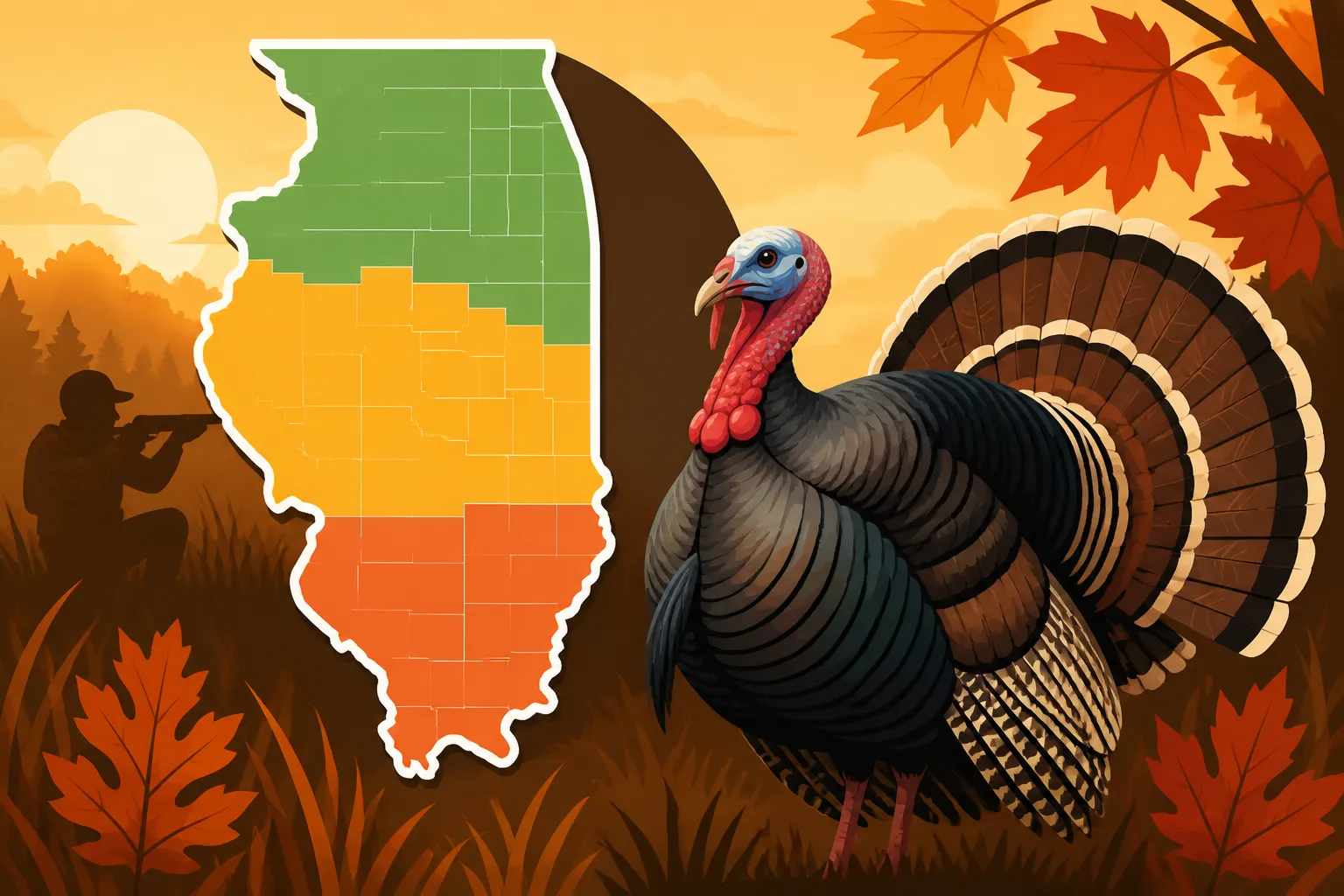
Just like in the spring, Illinois is broadly split into North and South Turkey Zones for fall hunting. This geographical division isn't arbitrary; it reflects differences in habitat, turkey populations, and historical management strategies across the state. The South Zone generally opens earlier and runs longer, taking advantage of the earlier onset of cooler weather and different agricultural cycles in Southern Illinois. The North Zone follows a slightly later schedule, often overlapping with peak fall foliage. It's crucial to know which zone your intended hunting area falls into, as this dictates your season dates and, to some extent, the tactical approach you might take. If you're planning a hunt in the deeper southern reaches, expect a longer season window compared to the northern counties, which can really influence your scheduling and vacation time.
For instance, counties south of U.S. Route 36 are typically in the South Zone, while those north of it are in the North Zone. However, always double-check the most current Illinois Department of Natural Resources (IDNR) hunting digests, as these lines can occasionally be adjusted or specific county exceptions might exist. Knowing your zone is paramount, as hunting out of season, even by accident, carries significant penalties. This zonal system also plays a role in how the IDNR monitors and manages the overall turkey population, particularly when considering factors like nesting success and poult-to-hen ratios.
The Uncomplicated Nature of Fall Permits
One of the biggest reliefs for fall turkey hunters in Illinois is the vastly simpler permit system compared to the spring season. Forget the lottery, the preference points, and the anxious waits for draw results. For the most part, fall turkey permits are sold over-the-counter (OTC), often with ample availability, especially for archery. This means if you decide last minute to chase some fall birds, you likely can. This accessibility makes fall turkey hunting a fantastic option for those who couldn't secure a spring permit or simply want more time in the woods.
This straightforward approach to permits really takes the pressure off. You don't have to plan your fall hunt months in advance around a draw schedule. Instead, you can focus on scouting, checking mast crops, and monitoring turkey movement closer to the season opener. It's a breath of fresh air for many hunters who are used to the complexities of deer permit applications or even the limited availability of certain spring turkey periods. This makes fall turkey an excellent choice for a spontaneous hunting trip or for introducing new hunters to the sport without the barrier of a complicated application process.
Key Differences Between Spring and Fall Turkey Hunting
While both seasons target the same amazing bird, the experience of fall turkey hunting in Illinois is a distinct challenge that requires a different mindset and approach compared to the spring. Regulations reflect these differences, making it essential for hunters to understand the nuances before heading afield.
Legal Weapons and Hunting Methods
The most significant difference between spring and fall turkey hunting in Illinois lies in the legal weaponry and the fundamental hunting strategies employed. In the spring, shotguns and archery equipment are the primary legal devices, and calling in a strutting gobbler is the name of the game. For the fall, the rules expand slightly, though with specific season distinctions.
During the Fall Archery Turkey Season, legal devices are the same as those allowed for deer archery hunting. This means you'll be using a bow or crossbow. This aligns nicely for many deer hunters who already have their archery gear ready. However, Illinois also has a specific Fall Shotgun Turkey Season, which is a shorter, often late-October/early-November window, restricted to shotguns 20 gauge or larger, using specific shot sizes. It’s critical to remember that you cannot use a shotgun for turkey outside of this dedicated shotgun season, even if you're out during the broader archery turkey season. This contrasts sharply with the spring season, where shotguns are legal for all periods. The shift to archery-focused hunting for much of the fall demands a different set of skills, often requiring closer encounters and more precise shots, which can be a challenging but rewarding experience. You're less likely to be "roost hunting Illinois gobblers" as you might in spring, and more focused on finding and breaking up flocks.
Bag Limits and Reporting Requirements
The bag limits and reporting requirements for fall turkey also differ from the spring season, simplifying things for hunters. In the spring, you might be able to purchase multiple permits, often limited to one bird per permit and specific periods. For the fall, Illinois offers a simpler, one-bird bag limit per hunter for the entire season, regardless of how many permits you purchase (which is often limited to one statewide permit in the first place). This means you're focusing on harvesting a single bird, which could be either a gobbler or a hen – another key distinction from spring, where only gobblers (or bearded hens) are legal. This flexibility with gender allows hunters to target any turkey they encounter, which is beneficial when trying to locate dispersed fall flocks.
Reporting your fall turkey harvest is just as important as in the spring, but it's typically a quicker, online process through the IDNR's harvest reporting system. You'll need to report your harvest by 10 PM on the day you take the bird. While there aren't typically check stations for fall turkey like there used to be for deer, accurate reporting helps the IDNR manage the state's turkey population effectively. It's a legal requirement, and failing to report can lead to fines. Make sure you have your permit number and the necessary information readily available after a successful hunt.
Securing Your Fall Turkey Permit
One of the most appealing aspects of chasing fall turkeys in Illinois is the straightforward process of obtaining your permit. Gone are the lottery jitters and preference point calculations that dominate discussions around big game permits. Fall turkey permits are designed for accessibility, especially for hunters looking for a less complicated experience.
Over-the-Counter Availability and No Lottery Stress
Unlike the highly competitive draw system for spring turkey permits in many counties, Illinois fall turkey permits are primarily sold over-the-counter (OTC). This is a huge advantage for hunters, as it eliminates the stress and uncertainty of a lottery. You don't need to apply months in advance, guess your draw odds, or worry about specific application deadlines for most fall permits. This makes fall turkey hunting incredibly flexible; you can decide to go hunting relatively close to the season opener, or even pick up a permit mid-season if you find some spare time.
This OTC system means that if you're simply walking into a licensed vendor or purchasing online, you're almost guaranteed a permit. The IDNR generally ensures that enough permits are available to meet demand, making it a truly accessible hunting opportunity. This contrasts sharply with other popular seasons, like specific firearm deer seasons, where "Opening Weekend Tactics for First Firearm Season" often revolve around securing a coveted permit through a lottery. For fall turkey, the focus can remain purely on the hunt itself, not on the administrative hurdles.
Utilizing Resources to Check Availability
While fall turkey permits are generally abundant, it's always smart to stay informed. The Illinois Department of Natural Resources (IDNR) website is your primary source for up-to-date information on season dates, regulations, and permit availability. You can usually find a dedicated section for fall turkey hunting that details the zones, open counties, and permit purchasing options.
Additionally, digital mapping and hunting information platforms like GoHunt can be incredibly valuable. These tools often integrate IDNR data, providing visual maps of zones, public land access points, and sometimes even real-time updates on permit sales (though less critical for OTC fall turkey permits). Using GoHunt can help you quickly identify if your desired county is open for fall turkey and confirm the season dates. It's a great way to consolidate your scouting and planning, making sure you have all the necessary information at your fingertips. Many hunters use these digital resources to scout for "Scouting Illinois Public Land Before Season" for deer and then leverage that same information for turkey.
Understanding Leftover Permit Sales
For seasons that do have a lottery or limited permit allocation (like spring turkey or some deer permits), leftover permits are a big deal. However, for Illinois fall turkey, the concept of "leftover" permits isn't quite as relevant for the standard archery or shotgun permits because they are already sold OTC. The expectation is that if a county is open for fall turkey, permits will be available throughout the season until the very end.
It's more accurate to think of it as continuous availability rather than leftover sales. This means you're less likely to encounter a situation where permits for a particular fall turkey zone or county are completely sold out. This ensures that hunters, whether planning ahead or making a spur-of-the-moment decision, have a fair shot at participating in the fall turkey season. This ease of access encourages more participation and allows hunters to enjoy the autumn woods without the added stress of a competitive permit draw.
Strategic Zone Selection for Fall Success
Choosing where to hunt fall turkeys in Illinois isn't just about knowing the zone boundaries; it's about understanding how different habitats influence turkey behavior and where you'll have the best chance of encountering birds. The varied landscapes of Illinois offer unique opportunities, and a strategic zone selection can make all the difference.
Habitat Considerations in North vs. South Zones
The diverse geography of Illinois directly impacts turkey habitat, creating distinct hunting scenarios between the North and South Zones. In the northern and central parts of the state, much of the landscape is dominated by agriculture – vast fields of corn and soybeans interspersed with smaller woodlots and creek bottoms. Here, turkeys often utilize these woodlots for roosting and cover, venturing into fields to feed on waste grain or insects. Hunting these areas might involve "Hunting a Funnel Between Two Woodlots" or focusing on field edges where turkeys emerge.
The South Zone, particularly the Shawnee Hills region, presents a dramatically different terrain. Here, you'll find more expansive, contiguous timber, steeper hills, and rock outcroppings. Turkeys in these areas are more reliant on natural food sources like acorns, pecans, and other mast crops found in the hardwoods. Hunting here often involves covering more ground, utilizing ridgelines, and looking for signs of active foraging. Hunters might find themselves "Reading a Ridge for Shawnee Forest Deer" and discovering turkey sign along the way. Your strategy will shift from waiting on field edges to actively still-hunting or using call-and-run tactics to locate flocks in the timber.
Forecasting Turkey Behavior in Autumn
Fall turkey behavior is a world apart from the breeding-focused strutting and gobbling of spring. In autumn, turkeys are primarily concerned with two things: feeding to build fat reserves for winter and maintaining flock integrity for safety. Understanding this shift is key to strategic zone selection. After the spring breeding season, adult hens, their poults, and juvenile turkeys will form large, mixed-gender flocks. Adult gobblers, often still in smaller bachelor groups, might eventually join these larger flocks later in the fall.
The availability of food sources will heavily influence where these flocks congregate. In a good mast year, turkeys will be concentrated in timbered areas where acorns and other nuts are abundant. In years with poor mast, they might be forced to range more widely, often pushing them into agricultural areas to feed on waste grain. Predators are also a constant threat, driving flocks to seek safety in numbers and reliable cover. Consider checking local harvest reports or talking to landowners to get a sense of the current mast crop. Platforms like GoHunt can provide recent satellite imagery to identify prime timbered areas or cut fields where birds might be feeding.
| Feature / Zone | North Zone (Northern & Central IL) | South Zone (Southern IL) |
|---|---|---|
| Dominant Habitat | Agricultural fields, smaller woodlots, creek bottoms | Expansive timber, steep hills, bluffs, rock outcroppings |
| Key Food Sources | Waste grain (corn, soybeans), insects, limited mast | Acorns, pecans, other mast crops, some agricultural interface |
| Season Dates | Typically later opening, shorter season window | Typically earlier opening, longer season window |
| Hunting Strategy | Focus on woodlot edges, field transitions, creek lines | Still-hunting ridges, valleys, active foraging areas, larger timber tracts |
| Flock Behavior | May frequent fields more, seek refuge in dense woodlots | More timber-bound, often found on benches, saddles, or creek bottoms |
| Challenges | Less contiguous cover, increased human activity | Rugged terrain, thicker cover, potentially more widely dispersed birds |
Maximizing Your Fall Turkey Hunting Success
Once you've wrapped your head around the zone availability and season differences, it's time to focus on the actual hunting. Fall turkey hunting requires a unique set of skills and strategies that often differ from the spring pursuit of love-struck gobblers.
Locating and Breaking Up Flocks
The core strategy for many successful fall turkey hunters revolves around locating a flock and then breaking it up. Unlike spring, where you're trying to coax a single gobbler to your setup, fall hunting often starts with finding a large group of birds. This typically involves extensive scouting, either pre-season or on the fly. Look for areas with fresh sign: tracks, droppings, scratchings in leaves where they've been feeding, and dusting bowls. Listen for distant yelps, clucks, and kee-kee runs, especially in the early morning or late afternoon when birds are vocalizing while moving to and from roosts. Digital tools from GoHunt can help you mark potential roosting sites and travel corridors identified during scouting.
Once you've located a flock, the goal is to spook them and scatter them in all directions. This is where the "Breaking Up a Fall Turkey Flock" tactic comes into play. The more scattered they are, the more likely they are to try and regroup, which is when your calling comes in. Run towards them, yell, clap your hands, or even bring a hunting dog specifically trained for turkey flushing (where legal, always check regulations). After the birds have scattered, immediately find a good setup with ample cover, and wait. The re-grouping sequence can take anywhere from 15 minutes to an hour or more, offering a prime opportunity for calling.
Calling Strategies for Fall Birds
After you've successfully broken up a flock, your calling strategy will be vastly different from spring. Instead of aggressive gobbler calls, you'll be imitating the sounds of lost turkeys trying to get back together. The most effective fall calls are typically the lost yelp, the assembly call, and the kee-kee run.
The lost yelp is a series of plaintive, often louder yelps, signaling a bird trying to find its flock. The assembly call, usually longer and more drawn out, is a more urgent version of the lost yelp, meant to draw the scattered birds back together. Perhaps the most iconic fall call is the kee-kee run – a series of high-pitched whistles followed by yelps, mimicking a young bird that's trying to locate its kin. These calls are particularly effective on young birds (jakes and hens) but can also draw in adult hens. It's often best to start with soft, infrequent calls, listening intently for a response. If you hear a distant kee-kee, respond in kind, gradually increasing volume and urgency as you believe the bird is getting closer. This patient, imitative calling is key to bringing a scattered bird into range.
Important Considerations for Fall Turkey Hunters
Beyond the permits and tactics, there are several practical considerations that every fall turkey hunter in Illinois should keep in mind to ensure a safe, ethical, and enjoyable experience.
Safety and Hunter Numbers
Fall turkey season often overlaps with other popular hunting seasons, most notably Bowhunting Illinois's Long Archery Season. This means you'll be sharing the woods with deer hunters, some of whom may not be actively calling or moving, but are instead patiently waiting in treestands. Because of this, hunter safety is paramount. Always identify your target positively and be aware of your surroundings. Wearing blaze orange is not legally required for fall turkey hunting outside of firearm deer seasons, but it is highly recommended when moving through public lands, especially if you anticipate being in areas where other hunters might be present. Check the current regulations for Illinois Blaze Orange Requirements to be absolutely sure.
While fall turkey hunting generally sees fewer participants than the spring season, specific popular public land areas, especially those known for healthy turkey populations, can still experience some pressure. Be prepared to walk a little further or utilize less obvious entry routes to find undisturbed birds. Good mapping applications (like GoHunt) can help you identify remote pockets of habitat or analyze aerial photos for "Finding Ground Others Walk Past." Understanding hunting pressure on Illinois public land is crucial for success.
Processing and Reporting Your Harvest
Once you've successfully harvested a fall turkey, proper processing and reporting are the next critical steps. Field dressing your bird promptly, especially if temperatures are mild, is essential for preserving the meat quality. Remove the entrails and allow the carcass to cool as quickly as possible. Many hunters prefer to breast out their turkeys, especially fall birds which can be smaller than spring gobblers, yielding delicious meals like "Cooking a Wild Turkey Breast."
After field dressing, you are legally required to report your harvest to the IDNR by 10 PM on the same day you killed the bird. This can typically be done online or via phone. You'll need your permit number, the county of harvest, and the date. This data is vital for wildlife biologists who track turkey populations and ensure sustainable hunting opportunities for years to come. Remember, accurate and timely reporting is not just a rule; it's a contribution to conservation. Make sure you understand the Illinois Turkey Checking Requirements fully.
Disclaimer
This guide is intended for informational purposes only and does not supersede official Illinois Department of Natural Resources (IDNR) regulations. Hunting laws and regulations can change, and it is the responsibility of every hunter to consult the most current official IDNR hunting digest before going afield. Always prioritize safety, ethical hunting practices, and respect for wildlife and private property.