Illinois Public Dove Field Draw Rules
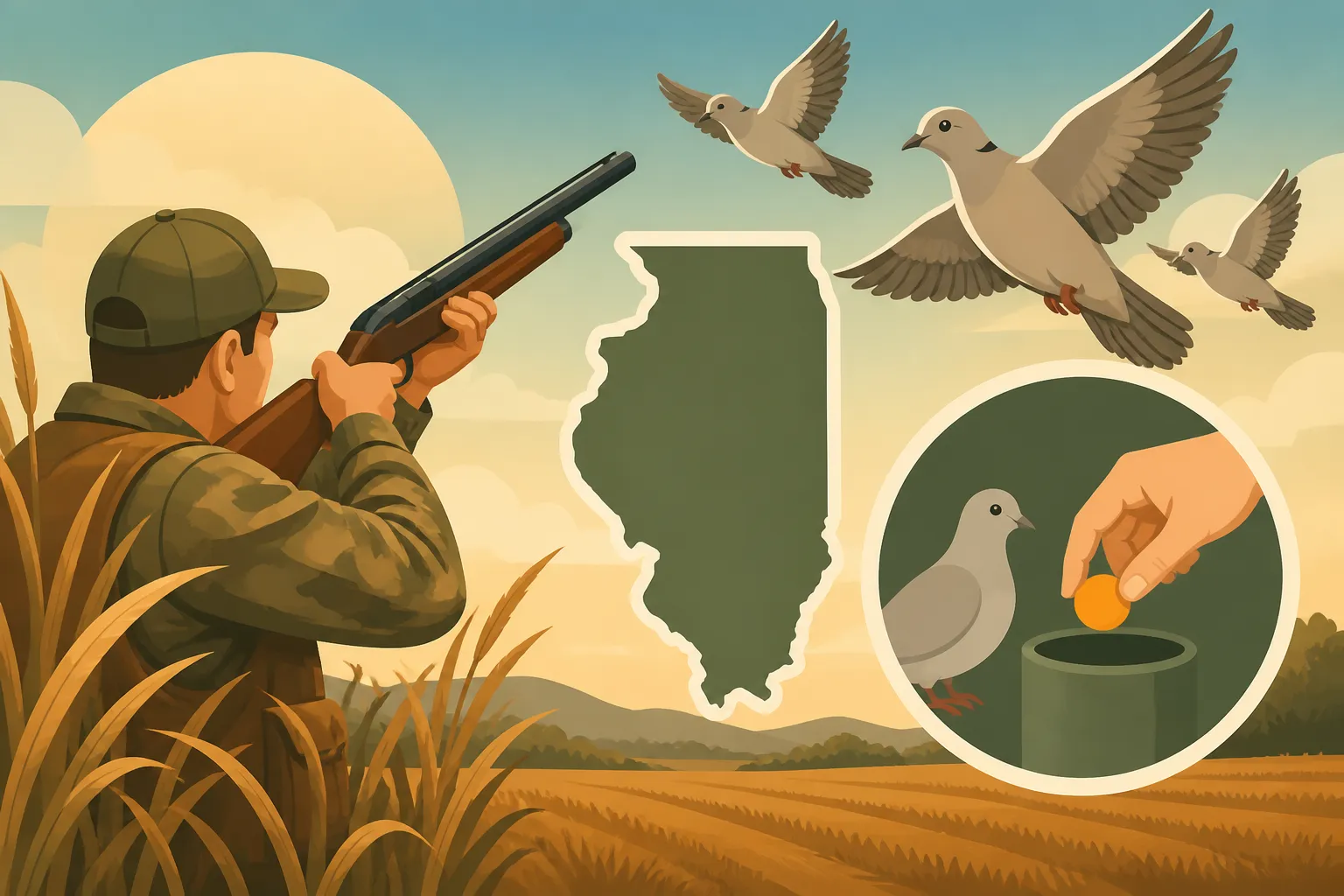
The crisp, late-summer air holds a promise for many Illinois hunters: the frantic, darting flight of doves, the satisfying crack of a shotgun, and the camaraderie of friends in a sunflower field. But if you’ve ever tried to secure a spot on prime public land for opening day, you know the frustration of limited access and intense competition. This guide is here to walk you through the often-confusing world of Illinois Public Dove Field Draw Rules, ensuring you understand the system and maximize your chances of securing a coveted permit.
Understanding the Illinois Public Dove Field Draw System
For many years, showing up early and claiming a spot was the only "rule" on public dove fields. Those days are largely gone, especially for popular sites. The Illinois Department of Natural Resources (IDNR) implemented the public dove field draw system to manage hunter pressure, ensure fair access, and maintain a quality hunting experience across the state's most sought-after public lands. It’s a necessary step, albeit one that requires a bit more planning than simply rolling out of bed on September 1st.
The Rationale Behind the Draw System
Imagine hundreds of hunters descending on a 40-acre sunflower field at sunrise, all vying for the same few good spots. It's a recipe for overcrowding, safety hazards, and a less-than-enjoyable experience for everyone involved. The draw system aims to prevent this chaos by pre-assigning hunting locations or periods, thus distributing hunters more evenly and safely. This controlled access helps the IDNR manage the dove population, reduce over-harvesting in specific areas, and even protect the fields themselves from excessive trampling. It's about sustainable hunting and ensuring future generations can also enjoy the tradition.
The IDNR maintains these fields, often planting specific crops like sunflowers, wheat, or millet that doves prefer. These cultivated food sources are a huge draw for birds, which in turn makes them a huge draw for hunters. Without a controlled system, the investment in creating these prime habitats would be undermined by unchecked hunter numbers. The draw system, while sometimes feeling like another hurdle, ultimately serves to preserve these resources and enhance the overall hunting experience.
Common Frustrations with Public Land Access
Let's be real: waiting for a draw, dealing with online applications, and hoping your name gets picked can be incredibly frustrating. It takes away some of the spontaneity that many of us love about hunting. You might have your heart set on a particular field near your home or one renowned for its bird numbers, only to find you didn't get a permit or you got a slot for a less-than-ideal day. This can be especially disheartening for those who travel a significant distance, only to find their plans derailed by a missed draw or a denied application.
Another common complaint revolves around the perceived fairness or complexity of the system. New hunters, in particular, can find the process daunting. They might not know which fields are best, or how to even begin navigating the IDNR's online portal for permits. The pressure on opening day, even with a draw system, can still be intense. Hunters often feel a rush to get to their assigned spot early, leading to pre-dawn alarms and long waits, which can certainly dampen the spirit of a relaxing dove hunt. For those looking to understand the broader context of accessing land, our guide on Public Hunting Land in Illinois offers more insight into the challenges and opportunities.
Navigating the Application Process for Public Dove Fields
Alright, let's get down to brass tacks: how do you actually apply? The process generally involves an online application through the Illinois Department of Natural Resources website. It’s crucial to pay close attention to dates and ensure you have all your ducks—or doves, in this case—in a row. Missing a deadline means missing out on the opportunity, plain and simple.
Essential Dates and Deadlines
The IDNR typically opens the application period for public dove field permits in mid-to-late July, with deadlines usually falling in mid-August. This timing allows for permits to be issued and mailed (or electronically delivered) before the statewide dove season traditionally opens on September 1st. You’ll want to check the official IDNR website each summer for the exact dates, as they can shift slightly year to year.
Here’s a general timeline to give you an idea:
| Event | Typical Window | Notes |
|---|---|---|
| Application Period Opens | Mid-to-late July | Online applications via the IDNR website. |
| Application Period Closes | Mid-August (e.g., around August 15th) | Strict deadline, no late entries accepted. |
| Draw Results Announced | Late August | Notifications typically sent via email or accessible online. |
| Permits Issued/Available | Late August | Print permits from your account or await mail delivery (site-dependent). |
| Dove Season Opens | September 1st | Always confirm exact dates with the current year's regulations. |
It’s vital to remember that not all public dove fields operate under the same draw system. Some sites might offer first-come, first-served access after an initial permit-only period, while others might have entirely different systems. Always consult the specific site regulations for the area you wish to hunt. A thorough review of the Illinois Small Game Season Rules can provide additional context.
Understanding Site-Specific Rules and Zones
Illinois is a diverse state, and its public hunting lands reflect that. What works at a site in Southern Illinois might be completely different from a field near Rockford. Each public dove field managed by the IDNR or a partnering agency (like the U.S. Fish and Wildlife Service at National Wildlife Refuges) will have its own specific rules. These can dictate everything from hunting hours, weapon restrictions, specific zones within a field, and even the type of blind you can use. Some sites, for instance, might require a special windshield card or a check-in/check-out procedure at a hunter sign-in station.
It’s not uncommon for permits to be issued for specific hunting dates or even specific time slots within a day (e.g., morning or afternoon). You might also find permits that allow hunting for the first few days of the season, after which the field reverts to general public access. Before applying, it’s critical to thoroughly research the specific site you are interested in. The IDNR website usually provides detailed fact sheets or regulations pamphlets for each managed public hunting area. These documents are your best friend for avoiding any nasty surprises.
Using Online Resources for Planning and Application
The IDNR website is your primary hub for all things related to the dove field draw. You’ll typically need an existing account or to create one to apply for permits. Make sure your contact information is up-to-date so you don’t miss any notifications about your application status. The process itself is usually straightforward: select the sites you wish to apply for, choose your preferred dates or periods if options are available, and submit. There's often a small application fee.
Beyond the official IDNR site, tools like GoHunt can be incredibly helpful for planning your hunt. While GoHunt is widely known for big game hunting, its mapping features and public land overlays can be invaluable for pinpointing specific field locations, identifying access points, and even scouting surrounding habitat. Using such platforms allows you to visualize the area, locate parking, and potentially find alternate spots if your draw isn’t successful for your primary choice. Imagine trying to figure out if a certain block of timber offers a good flight path before you even apply—GoHunt can help with that. Remember, you’ll also need to ensure you have a valid Illinois hunting license and a Illinois Migratory Bird Certification before heading afield, so double-check those requirements early.
What to Expect After the Draw
Once the application period closes, it’s a waiting game. The draw results are usually announced within a week or two, and if you’re successful, you'll receive notification, often by email. This permit isn't just a golden ticket; it comes with responsibilities and specific instructions you'll need to follow once you arrive at the field.
Interpreting Your Permit and On-Site Check-In
Your permit will clearly state the specific site, date, and any special conditions for your hunt. It's crucial to read every detail. Some permits are site-specific, meaning they are only valid for the exact location listed, and sometimes even for a particular section of that field. Others might be for a general access period.
Upon arrival at the public dove field, many sites require an on-site check-in. This might involve signing in at a designated hunter check station, filling out a permit card, or simply displaying your permit clearly on your vehicle dashboard. Failure to follow check-in procedures can result in your permit being invalid, or worse, a citation. Always bring your physical permit (if mailed) or a printed copy (if electronic), along with your valid hunting license and HIP certification. This is where attention to detail really pays off, ensuring your exciting day isn't cut short by a technicality.
Field Conditions and Scouting Strategies
Public dove fields, especially those planted specifically for doves, can vary greatly in condition. A field that was fantastic last year might have poor growth this year due to weather, or a particular crop might not have taken. This is where pre-season scouting becomes absolutely invaluable, even with a drawn permit. Driving by the field a week or two before your hunt can give you a crucial advantage. Are the sunflowers mature? Has the millet ripened? Are there birds present?
Look for areas with good cover around the field edges, where doves might stage before flying in, or where you can conceal yourself effectively. Power lines, dead trees, and water sources are natural attractants for doves, so if your drawn field has these features, take note. Tools like GoHunt can provide excellent aerial imagery, allowing you to "e-scout" from home and identify potential hotspots or travel corridors before you even set foot on the ground. A little pre-hunt reconnaissance can turn an average hunt into an unforgettable one. For deeper insights on planning your movements, consider checking out our guide on Scouting Illinois Public Land Before Season.
Dealing with Crowds and Hunter Etiquette
Even with a draw system, public dove fields, especially on opening day and weekends, can still see a fair amount of hunter pressure. Part of a successful public land hunt is understanding how to navigate this reality with courtesy and safety. Your permit might assign you to a specific stake or general area, but within that, you'll still need to be aware of other hunters.
- Respect Boundaries: Maintain a safe and respectful distance from other hunting parties. A good rule of thumb is at least 40-50 yards, but more is always better.
- Communicate: If you’re approaching another hunter’s area, a friendly wave or verbal acknowledgement can prevent misunderstandings.
- Safety First: Always know where other hunters are located and never shoot in their direction. The number one priority is safe firearm handling. Our guide on Illinois Firearms Discharge Setback Rules emphasizes these safety distances.
- Shared Resource: Remember that the field is a shared resource. Help keep it clean by picking up your spent shells and any other trash.
- Dog Etiquette: If you’re hunting with a dog, ensure it’s well-behaved and under control, especially when retrieving birds near other hunters.
While the draw aims to reduce overall pressure, anticipate that you won't be alone. A good attitude and adherence to proper etiquette will make the experience better for everyone. If you’re unsure about setting up, our article on Using a Ground Blind on Illinois Public Land can provide some useful pointers for maintaining discretion even in crowded environments.
Maximizing Your Success on Public Dove Fields
Securing a permit is a huge first step, but the hunt doesn't end there. To truly make the most of your time on an Illinois public dove field, you'll need to combine preparation with smart hunting tactics. Doves are fast, agile, and surprisingly wary, so being ready for action is key.
Setting Up for Success: Blinds, Decoys, and Spreads
A successful dove hunt often hinges on a good setup. Doves have excellent eyesight, so concealment is paramount. While some public fields might have natural cover, many open fields require hunters to bring their own.
- Blinds: A simple portable ground blind, camo netting, or even natural cover (like tall weeds or brush piles) can make a significant difference. You want to break up your outline and blend into the surroundings. Remember that Layout Blind Hunting Illinois Farm Fields can also be an effective strategy if the terrain allows for it.
- Decoys: Doves are social birds, and decoys can be incredibly effective. A small spread of dove decoys, especially spinning-wing decoys (like the Mojo Dove), can draw birds in from a distance and make them commit to your area. Place them strategically where incoming birds will see them, often along a fence line, on a low branch, or even scattered on the ground.
- Positioning: Consider the sun and wind direction. Ideally, you want the sun at your back, making it harder for doves to see you and easier for you to see them. Doves also tend to fly into the wind when landing, so setting up downwind of their approach can offer better shots.
By taking the time to set up a proper blind and deploying a few decoys, you're not just hoping birds fly by; you're actively working to attract them into your effective shooting range. This proactive approach significantly boosts your chances, particularly on pressured public lands. Don't underestimate the power of a well-thought-out setup to help you stand out from the crowd and overcome Hunting Pressure on Illinois Public Land.
Shot Selection and Shooting Practice
Doves are small, fast, and erratic flyers, making them a challenging target. Many hunters find themselves emptying a box of shells for just a few birds, which can be expensive and frustrating.
- Gauge and Shot Size: A 12-gauge or 20-gauge shotgun is standard for dove hunting. For shot size, most hunters opt for 7.5 or 8 shot. These smaller pellets offer a dense pattern, which is crucial for hitting small, fast-moving targets.
- Choke: An Improved Cylinder or Modified choke is usually ideal. It offers a balance between pattern density and spread, allowing for effective hits at typical dove ranges (20-40 yards) without being too tight for quick shots.
- Practice, Practice, Practice: There's no substitute for time at the trap or skeet range. Doves aren't like pheasants or ducks flying in a relatively straight line. They juke, dive, and climb. Practicing shots at various angles and speeds will dramatically improve your success rate in the field. Focus on leading the bird, swinging through the target, and following through after the shot.
- Shot Discipline: Don't just blast away at every bird that flies by. Wait for birds to come into effective range, where you have a reasonable chance of a clean kill. Wounded birds are often lost, which isn't ethical or productive.
Remember, the goal is to enjoy the experience, and hitting more birds (cleanly!) makes it a lot more fun. For broader insights into bird hunting, our article on Dove Hunting a Cut Illinois Field offers additional tactics specific to field hunting.
Staying Safe and Respectful Afield
Safety should always be your top priority. Accidents can happen quickly, especially in a public hunting environment where multiple hunters are present.
- Blaze Orange: While not always required for dove hunting, wearing a blaze orange hat or vest when walking to and from your hunting spot, or when retrieving birds, is a smart safety measure, especially if you're in an area where deer season might overlap or other hunters are present. Always confirm specific blaze orange requirements, which are detailed in our guide on Illinois Blaze Orange Requirements.
- Eye and Ear Protection: Shotguns are loud, and spent wads can fly. Protect your eyes and ears diligently. It's a small inconvenience for lifelong hearing and vision.
- Retrieve Quickly: Doves can be hard to find in thick cover. Have a plan for quick retrieval, whether it's marking where the bird fell or using a trained retriever. Losing birds is wasteful.
- Clean Up: Pack out everything you packed in, including spent shotgun shells. Leave the field cleaner than you found it. This helps maintain access for all hunters and shows respect for the land and the IDNR's management efforts.
By following these guidelines, you not only ensure your own safety and success but also contribute to a positive hunting culture on Illinois's public lands.
Disclaimer
Please note: Hunting regulations and draw rules can change frequently. Always consult the official Illinois Department of Natural Resources (IDNR) website and the current year's hunting digest for the most up-to-date and accurate information before planning any hunt. This guide is for informational purposes only and should not be considered a substitute for official regulations.