Which County Found Illinois’s First CWD Case
The discovery of Chronic Wasting Disease (CWD) in a deer herd is every hunter's nightmare, bringing with it a wave of uncertainty, concern for wildlife, and often, new regulations that can feel burdensome. For Illinois hunters, that stark reality hit home over two decades ago, forever changing how we think about deer management and our role in it. This guide will walk you through where and when CWD first emerged in the Prairie State, what it means for our cherished deer population, and what steps you can take to be a part of the solution.
The Origin Story: Unpacking Illinois's First CWD Case
It feels like a lifetime ago, but the memory of CWD first appearing in Illinois is still fresh for many of us who've been hunting these woods and fields for years. The news sent ripples through the hunting community, a somber warning that a silent, insidious threat had arrived. Understanding where it began is crucial to grasping the journey Illinois has been on to manage this challenging disease.
What Happened in Boone County
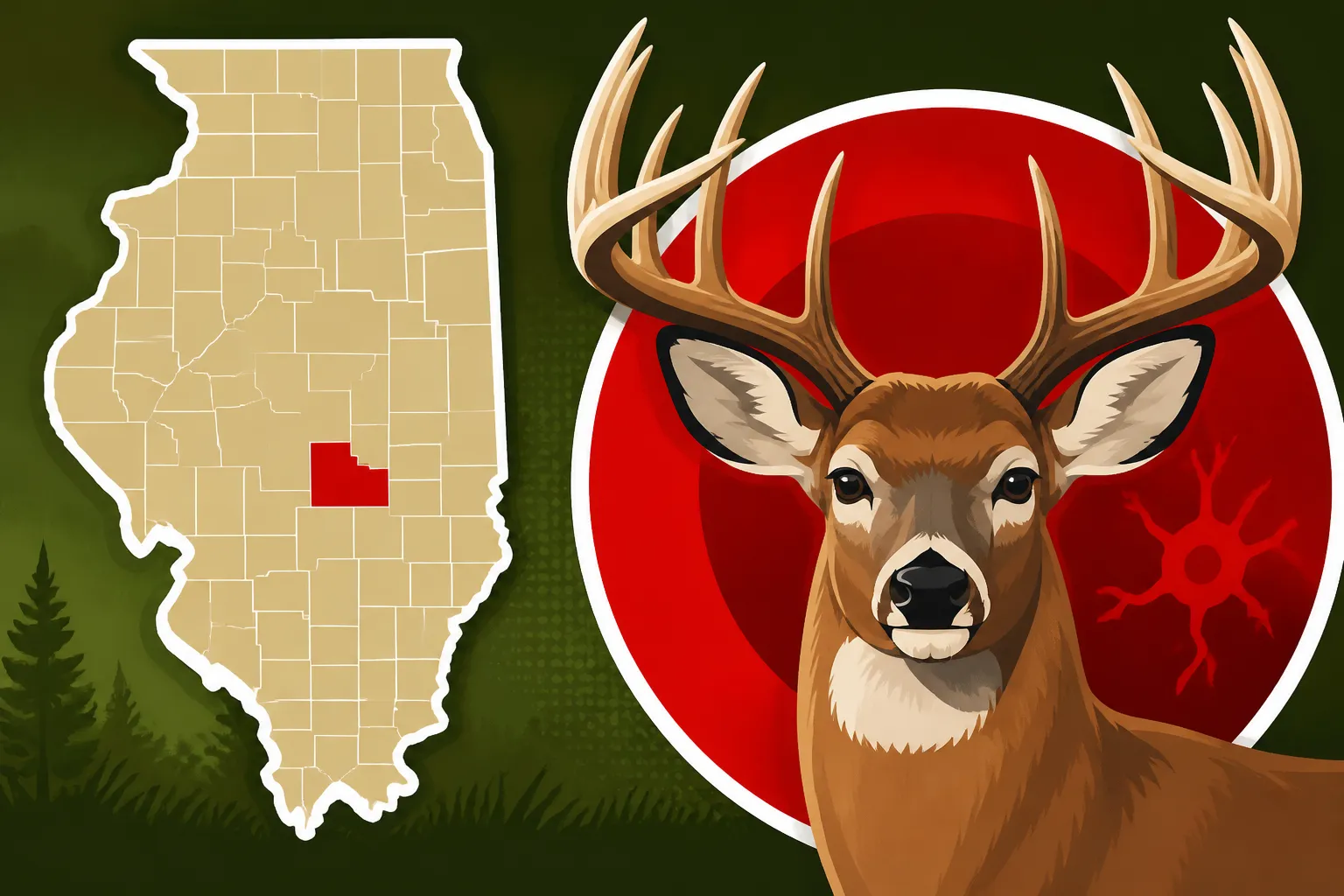
The unfortunate distinction of being the first county in Illinois to confirm a case of Chronic Wasting Disease belongs to Boone County. It was back in 2002 when the Illinois Department of Natural Resources (IDNR) confirmed the presence of CWD in a wild deer herd there. This wasn't some isolated incident discovered by chance; it was the result of proactive surveillance efforts, an acknowledgment that CWD was a growing concern in neighboring states and a threat that needed to be monitored closely within Illinois. The initial finding wasn't just a single animal; it signaled that the disease had already established a foothold within the local deer population, likely having spread silently for some time before detection. The news hit hard, confirming fears that this devastating neurological disease, known for slowly wasting away deer, was no longer just a distant problem. You can learn more about how the disease first started its march across the state by reading about How CWD Spread From Boone County.
Before 2002, Illinois had been lucky, watching as CWD spread through states like Wisconsin and Colorado. There was always a hope it might bypass us. But the reality is, wildlife doesn't respect state lines, and disease can travel with migrating animals or even through contaminated environments. The specific deer found in Boone County that tested positive marked a turning point, triggering an immediate and aggressive response from the IDNR to understand the extent of the infection and try to contain it. This initial discovery in a wild deer population was significant because it meant the disease was not confined to captive facilities, which had been the case in some other states; it was actively circulating in our free-ranging deer.
The Immediate Aftermath and Early Response
The moment CWD was confirmed in Boone County, the IDNR sprang into action, and hunters felt the immediate impact. Emergency rules were implemented, particularly focusing on that specific area. This included increased surveillance, targeted culling efforts in specific CWD management zones to reduce deer density, and a significant push for voluntary hunter cooperation in submitting deer for testing. It was a challenging time, with biologists trying to understand the disease's prevalence and distribution, and hunters grappling with new realities on the ground. Hunters in the affected regions faced changes to their usual routines, with additional requirements for deer check-in and sampling.
One of the biggest shifts was the introduction of mandatory CWD sampling in certain areas during specific firearm seasons. This wasn't about punishing hunters, but about gathering crucial data to map the disease's spread and prevalence. It also led to the establishment of the CWD Management Zone, which initially encompassed Boone and surrounding counties and has unfortunately expanded over the years. The IDNR’s strategy focused on reducing deer densities in affected areas, hoping to slow the transmission rate of the disease. This was a long-term fight, and it started right there, in Boone County, setting the precedent for how Illinois would continue its Illinois's Twenty-Three Year Fight Against CWD.
Understanding Chronic Wasting Disease: More Than Just a "Deer Sickness"
When you hear "Chronic Wasting Disease," it's easy to just think of it as a sad way for a deer to die. But CWD is far more complex and insidious than that. It's a progressive, fatal neurological disease that affects cervids, including white-tailed deer, mule deer, elk, and moose. It's caused by abnormal proteins called prions, which accumulate in the brain and other tissues, leading to brain damage, behavioral changes, and ultimately, death. What makes it particularly frightening is that there is no vaccine and no cure, and it's always fatal.
How CWD Spreads Among Deer
The way CWD spreads is a major part of why it's so difficult to contain. It’s primarily transmitted through direct animal-to-animal contact, but also through indirect contact with contaminated environments. Prions are shed by infected animals through saliva, urine, and feces, and they can persist in the soil for years, even decades. This means a healthy deer can contract the disease by simply interacting with an infected deer or by feeding in an area where an infected deer has been. Think about a deer licking mineral licks, rubbing antlers on trees, or simply grazing in a shared food plot – these are all potential transmission points.
This environmental persistence is a huge challenge for wildlife managers. Even if every infected deer could be removed, the prions might still remain in the environment, ready to infect new deer. This is why reducing deer densities in affected areas is so critical; it lessens the chances of direct contact and slows the rate at which prions are shed into the environment. Understanding Why the Disease Keeps Spreading Southward requires recognizing these complex transmission pathways and how they interact with deer behavior and habitat use.
The Long-Term Threat to Illinois's Herd
The long-term implications of CWD for Illinois's deer herd are significant and deeply concerning. As the disease spreads and prevalence rates increase, it can lead to population declines, especially in adult bucks, which often have higher infection rates due to their wider ranging behavior and increased social interactions during the rut. A healthy deer population is a resilient one, but CWD chips away at that resilience. Beyond the direct mortality, CWD also has potential implications for deer reproduction and overall herd health.
The presence of CWD also complicates hunting itself. While there's no evidence CWD can infect humans, public perception can impact hunter recruitment and participation, which in turn affects conservation funding. The thought of consuming meat from an infected animal, even if currently deemed safe by public health organizations, is enough to give many hunters pause. This creates a ripple effect, from hunting traditions to the economic impact of hunting on local communities. Protecting our deer herd means not just managing numbers, but managing the health of individual animals and the population as a whole. Efforts to monitor Illinois CWD Prevalence Rate Trends are constant, trying to get ahead of the disease's destructive march.
Living and Hunting in a CWD Zone: Practical Implications for Hunters
For those of us who hunt in or near a CWD-positive county, the disease isn't an abstract concept; it's a very real part of our hunting season. The IDNR has implemented specific rules and recommendations to help manage CWD, and it's essential for every hunter to be aware of them. These aren't just suggestions; they're critical steps we all must take to protect the future of Illinois hunting.
Mandatory Testing and Carcass Restrictions
If you hunt in a county designated as part of the CWD Management Zone, you'll encounter specific requirements. One of the most common is mandatory CWD testing for harvested deer, especially during firearm seasons. This usually involves bringing your deer to an official CWD sampling station or a designated check station where biologists can collect tissue samples, typically from the lymph nodes. While it adds a step to your post-harvest routine, it's vital for ongoing surveillance. The IDNR uses this data to track the disease's distribution and prevalence. You can find more information about Mandatory Testing Inside an Illinois CWD County on the IDNR website.
Another critical regulation involves carcass movement restrictions. To prevent further spread of the disease, there are strict rules about transporting deer carcasses out of CWD-positive counties. Generally, you can only move the following out of a CWD county:
- Deboned meat
- Cleaned skull plates or antlers
- Taxidermy products
- Hides
- Slightly altered deer from CWD counties may be transported through CWD counties for processing/taxidermy in a non-CWD county.
These rules ensure that potentially infected parts of a deer, which could contain prions, are not transported to uninfected areas. It means you might need to process your deer differently or make arrangements with a local processor within the CWD zone. Knowing these regulations before you head out is crucial. Details on Moving a Deer Carcass Out of a CWD County are readily available and should be reviewed annually.
Tools and Resources for CWD Management
Navigating CWD regulations and staying informed can feel overwhelming, but there are numerous resources available to help. The IDNR website is your primary source for up-to-date information on CWD management areas, sampling locations, and carcass transportation rules. They provide maps, fact sheets, and contact information for wildlife biologists who can answer your specific questions.
Beyond official channels, various hunting apps and online platforms can be incredibly useful. Mapping apps like GoHunt often integrate public land boundaries, CWD zones, and even provide tools for marking potential deer activity. While GoHunt is excellent for planning and mapping, always cross-reference any CWD-related information with the official IDNR website to ensure you have the most current regulations. Additionally, local hunting clubs and forums can be great places to connect with other hunters and share insights on CWD in your specific hunting area, as long as you're discerning about the information shared.
Here's a quick reference table for CWD basics:
| Aspect | Description | Hunter's Role |
|---|---|---|
| What it is | Fatal neurological disease affecting cervids, caused by prions. No cure. | Stay informed, follow regulations. |
| Primary Location | First detected in Boone County, now in a broader CWD Management Zone (northern Illinois primarily). | Know if you're hunting in a CWD county; check IDNR maps. |
| How it Spreads | Direct animal contact, indirect environmental contamination (saliva, urine, feces, soil). | Reduce deer congregation (no baiting), follow carcass rules. |
| Symptoms | Weight loss, stumbling, drooling, lack of fear of humans, excessive thirst/urination (over long period). | Report sick deer to IDNR. |
| Testing | Mandatory in CWD Zone during firearm seasons. Voluntary submission encouraged. | Submit harvested deer for testing; it's critical data collection. |
| Carcass Movement | Restricted out of CWD counties (only deboned meat, cleaned skulls/antlers, hides, taxidermy products). | Process deer within the CWD zone or follow strict transport guidelines. |
| Human Health Risk | No evidence of human infection, but CDC advises against consuming meat from CWD-positive animals. | Test deer, don't eat meat from CWD-positive animals. |
| Long-Term Impact | Potential for population declines, altered herd dynamics, changes to hunting regulations. | Be a responsible steward, participate in management efforts. |
The Ongoing Fight: Illinois's Strategy and Your Role
The fight against CWD in Illinois is a marathon, not a sprint. It's a continuous, evolving effort that relies heavily on scientific research, adaptive management strategies, and perhaps most importantly, the cooperation of the hunting community. We all have a part to play in protecting our deer and our hunting heritage.
IDNR's Evolving CWD Management Tactics
Over the years, the IDNR's approach to CWD has adapted as scientists learn more about the disease and its spread. Initially, there was a strong emphasis on targeted culling of deer in areas with high prevalence to reduce deer numbers and thus transmission potential. This method, while effective in some localized situations, was challenging to implement broadly and often met with public resistance. More recently, the IDNR has shifted its focus to enhanced surveillance, continued research into various management techniques, and an increased emphasis on hunter education and voluntary cooperation. They are continually looking for ways to improve Illinois Wildlife Disease Monitoring.
The IDNR also monitors the overall Illinois Deer Population Estimate and considers CWD prevalence when setting harvest objectives. They work with landowners to provide information and resources, understanding that private land management is a crucial piece of the puzzle. While the challenge remains immense, the IDNR continues to engage with national experts and other state agencies to implement the most effective and sustainable strategies for the long haul.
Your Impact as a Responsible Hunter
As hunters, we are often the first line of defense and observation in the field. Your actions directly contribute to CWD management. First and foremost, educating yourself is paramount. Know the symptoms of CWD – while often subtle in early stages, advanced signs like extreme weight loss, drooling, or lack of fear of humans are clear indicators. If you see a deer exhibiting these symptoms, report it to the IDNR immediately.
Secondly, adhere strictly to all CWD regulations, including mandatory testing and carcass movement rules. This isn't just about compliance; it's about being a responsible conservationist. Consider volunteering to have your deer tested even if it's not mandatory in your area, particularly if you hunt near a CWD zone. Minimize baiting and supplemental feeding, as these practices can concentrate deer and increase the risk of disease transmission. Lastly, take pride in being a part of the solution. Every deer sampled, every carcass properly handled, every hunter informed, contributes to the ongoing efforts to mitigate the impact of CWD on Illinois's magnificent deer herd. It's our collective responsibility to ensure healthy hunting for generations to come.
Disclaimer
This information is for general guidance only. Hunting regulations, CWD management zones, and testing requirements in Illinois can change. Always consult the official Illinois Department of Natural Resources (IDNR) website or contact them directly for the most current and accurate information before planning your hunt.