Which Shotgun Gauges Illinois Allows for Deer
It can be incredibly frustrating to navigate the ever-changing landscape of hunting regulations, especially when it comes to what firearms you can legally use for deer. Many of us grew up in Illinois knowing it as a "shotgun-only" state, and even with new options emerging, there's still confusion about what shotguns are truly allowed. This guide aims to clear up all that head-scratching, ensuring you understand exactly which shotgun gauges are legal for deer hunting in the Land of Lincoln.
Understanding Illinois's Legal Shotgun Gauges for Deer
Illinois has a rich tradition of deer hunting, and for decades, shotguns were the primary firearm of choice for most hunters. While the rules have evolved, the core regulations for shotguns remain clear and straightforward, ensuring hunters have effective and safe tools for harvesting whitetails.
The Core Regulations for Deer Shotguns
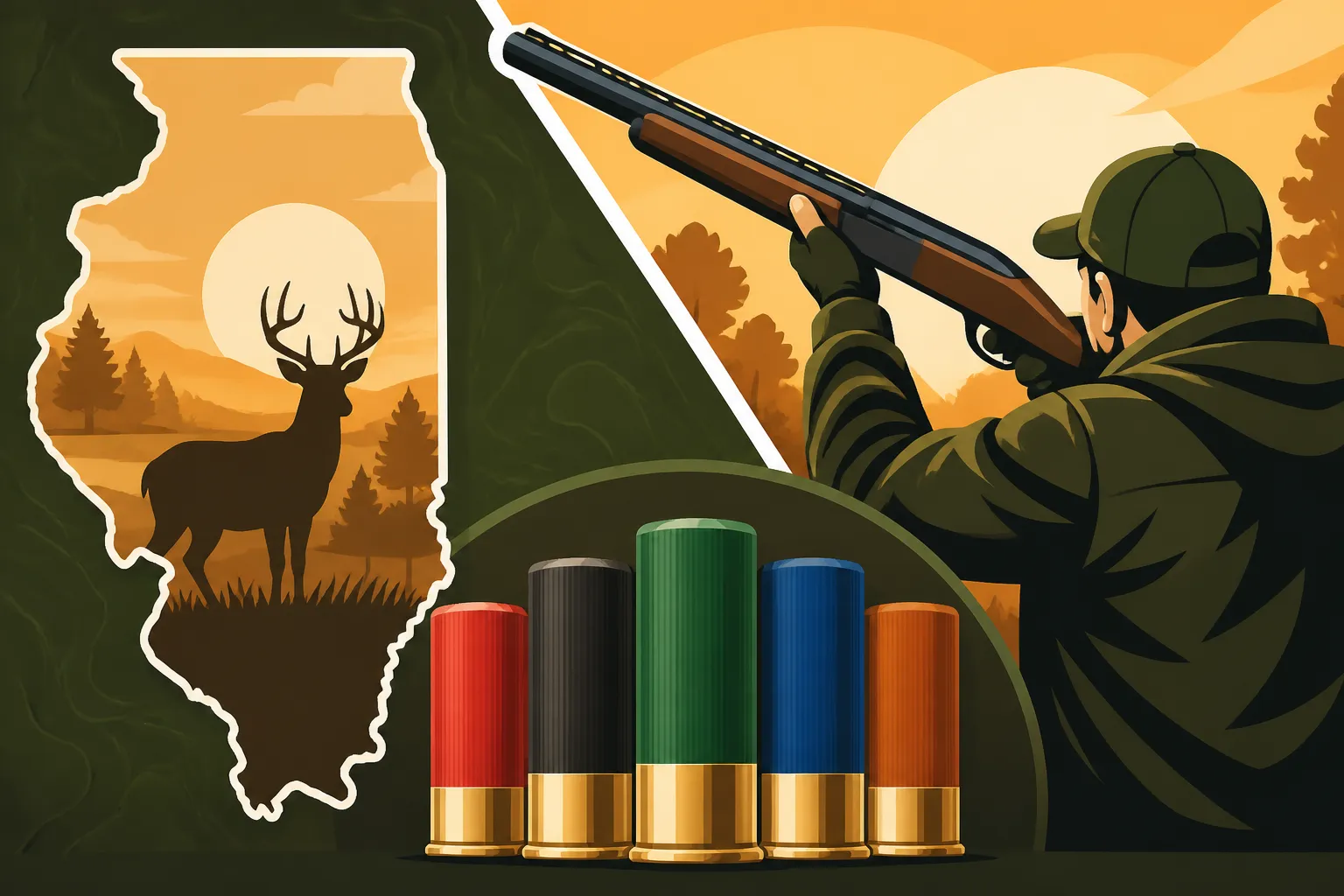
When it comes to deer hunting in Illinois, the state's Department of Natural Resources (IDNR) is pretty specific about what you can and cannot use. For shotguns, the legal gauges are 10, 12, 16, and 20 gauge. That's it. You won't find 28 gauge or .410 bore on that list for deer, and for good reason – they simply don't have the kinetic energy required for an ethical kill on a large animal like a whitetail when using slugs.
The critical piece of this puzzle is that you must use a shotgun that is designed to shoot a single projectile, which means slugs. Birdshot, buckshot, or any other multi-projectile load is strictly prohibited for deer hunting in Illinois. This is a non-negotiable safety and ethical rule, ensuring that deer are dispatched quickly and humanely, and that stray pellets don't pose a risk to other hunters or property. You'll want to ensure your shotgun can effectively chamber and fire these single projectiles, and many modern deer shotguns come equipped with rifled barrels specifically for improved slug performance.
Why Specific Gauges Are Legal
The historical context of Illinois's hunting laws sheds a lot of light on why these specific gauges were chosen. For a long, long time, Illinois was firmly a "shotgun-only" state for deer, a regulation rooted in safety concerns due to the state's relatively flat topography and high population density in many areas. Shotgun slugs, while powerful, typically have a shorter effective range and less propensity for over-penetration compared to centerfire rifle rounds, making them a safer choice in many environments.
The allowed gauges – 10, 12, 16, and 20 – are those that, when loaded with appropriate slugs, deliver sufficient energy for a clean kill on a deer. The larger bore diameter of these gauges allows for heavier slugs, which in turn carry more momentum. While the debate over which gauge is "best" will always rage on around campfires, the IDNR's stance acknowledges that all these gauges, when used correctly with slugs, are perfectly capable of harvesting a deer ethically. Even with the introduction of straight-wall rifle cartridges in recent years, shotguns remain a popular and perfectly legal option, and many hunters still prefer them, especially those who grew up using them. When you're out scouting, a tool like the GoHunt app can really help you visualize the terrain and understand shot distances, which can inform your gauge choice.
Common Shotgun Gauges and Their Effectiveness for Deer
Choosing the right shotgun gauge for deer hunting is a personal decision, often influenced by comfort, recoil tolerance, and existing equipment. Let's break down the most common and effective gauges you'll encounter in Illinois.
The Versatile 12 Gauge Shotgun
Ah, the venerable 12 gauge. This is, without a doubt, the most common and widely used shotgun gauge for deer hunting in Illinois, and frankly, across much of the country. Its popularity isn't hard to understand.
First off, power. Modern 12 gauge slugs, especially sabot slugs fired from a rifled barrel, can deliver incredible knock-down power and impressive accuracy out to 150 yards or even more for skilled shooters with a well-tuned setup. The sheer variety of ammunition available for 12 gauge is also a massive advantage. You can find slugs from virtually every major manufacturer, including offerings like Federal's Power-Shok or Winchester's Deer Season XP, ensuring you can find something that patterns well with your specific firearm.
Beyond deer, the 12 gauge is a true workhorse. It’s perfect for Waterfowl Hunting the Illinois River Valley, Pheasant Hunting Illinois Farmland, or even Spring Turkey Hunting in Illinois. This versatility means a lot of hunters already own a 12 gauge, making it a cost-effective choice. Picture yourself sitting in a ground blind near a standing cornfield in Central Illinois, waiting for a mature buck to emerge. Your 12 gauge, sighted in precisely with a good slug, gives you confidence in that 80-yard shot. Later in the season, you might swap out that rifled barrel for a smoothbore and head to the timber to chase some squirrels. The main downsides? Recoil can be stout, especially with heavier slugs, and the firearms themselves can be a bit heavier than their smaller-bore counterparts.
The Nimble 20 Gauge Shotgun
Don't let anyone tell you the 20 gauge is "just for kids." While it’s an excellent choice for younger or smaller-framed hunters due to its lighter recoil and often lighter firearm weight, the 20 gauge, when paired with modern slugs, is an incredibly effective deer hunting tool.
In fact, with advancements in slug technology, the performance gap between a 20 gauge and a 12 gauge has narrowed significantly. A 20 gauge sabot slug, such as a Remington AccuTip or a Hornady MonoFlex, can still deliver excellent accuracy and sufficient energy for an ethical kill out to considerable distances. Many hunters find they can shoot a 20 gauge more accurately because of the reduced recoil, leading to better shot placement – which, as we all know, is paramount.
Consider a scenario where you're introducing a new hunter to the sport. Putting a 20 gauge in their hands for the Illinois Youth Deer Weekend can make their experience much more enjoyable and successful, fostering a love for hunting without the intimidation of heavy recoil. Even experienced hunters, especially those still-hunting through thick brush in Southern Illinois, appreciate the lighter weight and quicker handling of a 20 gauge. While there might be slightly less variety in slug loads compared to the 12 gauge, the popular options are plentiful and perform exceptionally well.
The Classic 16 and Powerful 10 Gauge
Now we move into some less common territory for deer hunting. The 16 gauge is often called "the gentlemen's gauge" or "the forgotten gauge." It sits right between the 12 and 20 gauge in bore diameter and shot capacity, offering a pleasant balance of recoil and payload. It is, unequivocally, a legal gauge for deer hunting in Illinois.
However, finding modern 16 gauge slugs can be a real challenge. While they exist, they're not nearly as common or as technologically advanced as their 12 or 20 gauge counterparts. If you happen to inherit a beautiful old 16 gauge shotgun from a family member and want to take it deer hunting, it's certainly possible and legal. Just be prepared to do some serious searching for slugs and invest time in patterning to ensure ethical performance. It often means a trip to a specialty gun shop or ordering online.
The 10 gauge, on the other hand, is a powerful beast. While technically legal for deer hunting in Illinois, you'd be hard-pressed to find a hunter who chooses it for deer. The 10 gauge is predominantly a waterfowl hunter's tool, designed to deliver a massive payload of shot for geese and other large birds. Its recoil is substantial, and the firearms are generally heavy and cumbersome, making them impractical for deer hunting. While a 10 gauge slug would certainly be effective, the immense recoil and the fact that its primary purpose is so specialized make it an exceedingly rare choice for whitetails. It's truly a testament to the versatility of shotguns that it's allowed, but definitely not a common recommendation.
Ammunition Choices and Barrel Types
Once you've settled on a legal gauge, the next crucial step is selecting the right ammunition and understanding how your shotgun's barrel type affects performance. This is where accuracy and ethical hunting truly come into play.
Slug Types: Sabots vs. Foster
The world of shotgun slugs can be a bit bewildering, but it boils down to two main categories: sabot slugs and Foster (or "rifled") slugs. Understanding the difference and, more importantly, matching the slug to your barrel is paramount for accuracy.
Sabot slugs are designed for rifled shotgun barrels. A sabot is a plastic sleeve that encases a smaller, typically bullet-shaped projectile. When fired, the sabot engages the rifling in the barrel, imparting spin to the projectile, much like a rifle bullet. Once the slug leaves the muzzle, the sabot falls away, leaving the bullet-like projectile to continue on its accurate, spinning flight. These slugs offer superior accuracy and extended range, often mimicking the performance of a low-velocity rifle. Brands like Hornady's SST, Lightfield Hybred, or Winchester XP3 are popular sabot options. For hunters looking to maximize their range and precision, a sabot slug from a rifled barrel is the clear winner.
Foster slugs, often called "rifled slugs" (though the rifling is purely for aerodynamics and not to impart spin from the barrel), are designed for smoothbore shotgun barrels. These are typically hourglass-shaped, hollow at the rear, and made of soft lead. The "rifling" on the outside helps them stabilize in flight, but they don't spin. They are inherently less accurate than sabot slugs, especially at longer ranges, but they are perfectly capable and ethical for deer within their effective range, usually under 75-100 yards. They are also much more affordable. If you're hunting in thick timber or heavy cover where shots are likely to be close, a Foster slug in a smoothbore might be all you need. Always remember to practice with your chosen ammunition to understand its true capabilities from your specific firearm.
Rifled vs. Smoothbore Barrels
The type of barrel on your shotgun will dictate which slug performs best and, consequently, your effective hunting range.
Rifled barrels are exactly what they sound like: they have spiral grooves cut into the inside of the barrel, just like a rifle. These grooves are designed to impart a spin on a projectile, significantly improving its accuracy and extending its effective range. If you're using a rifled barrel, you absolutely want to be shooting sabot slugs. Using Foster slugs in a rifled barrel is generally not recommended as the soft lead can foul the rifling, and you won't get the accuracy benefits anyway. A rifled barrel with quality sabot slugs can transform a shotgun into a surprisingly accurate deer rifle, pushing ethical ranges well past 100 yards. Many dedicated deer shotguns, such as the Savage 220 (20ga) or the Browning A-Bolt Slug, come with fully rifled barrels and are drilled and tapped for optics.
Smoothbore barrels are the standard barrels found on most shotguns, designed to shoot scattershot (like birdshot or buckshot). They lack any internal rifling. If you're using a smoothbore barrel, your best bet for deer hunting is a Foster-style slug. You can get decent accuracy with these slugs out to about 75 yards, sometimes a bit more with practice and a good sight setup (many hunters use bead sights or simple rifle sights). Attempting to shoot sabot slugs through a smoothbore barrel is largely a waste of money and will result in poor accuracy because there's no rifling to engage the sabot and stabilize the projectile. Many shotgun models offer interchangeable barrels, allowing you to swap between a smoothbore for upland birds or waterfowl and a rifled barrel for deer, offering incredible versatility in one firearm. Using a comprehensive mapping tool, like the one offered by GoHunt, can help you scout your hunting spot and understand the typical shot distances you might encounter, helping you choose the right barrel and slug combination.
Beyond Shotguns: The Straight-Wall Revolution
For many years, the "shotgun-only" rule was a defining characteristic of deer hunting in Illinois. But that all changed, opening up new possibilities for hunters and creating some spirited debates around the campfire.
The Introduction of Straight-Wall Cartridges
A few years back, the Illinois Department of Natural Resources made a significant change, allowing the use of specific straight-wall rifle cartridges for deer hunting. This was a game-changer for many, finally allowing hunters to use what many consider more "rifle-like" firearms with greater accuracy and less recoil than some heavy slug guns. The intent behind this change was largely to provide more options for hunters while still adhering to the underlying safety principles that kept high-power, long-range bottleneck rifle cartridges out of the state.
Common calibers that quickly gained popularity include the .450 Bushmaster, .350 Legend, and even classic rounds like the .45-70 Government. These cartridges are characterized by their "straight-wall" design, meaning the cartridge case walls are straight rather than tapering down to a smaller bullet diameter. This design limits their effective range compared to bottleneck rifle cartridges, but still offers significant ballistic advantages over traditional shotgun slugs in many scenarios, particularly in terms of flatter trajectory and often improved accuracy at extended ranges. While the regulations are now expanded, many hunters still don't fully understand the ins and outs of both options. For a deep dive, you might find our guide on Choosing Between Slugs and Straight-Wall Rifles incredibly helpful.
When a Shotgun Still Shines
Even with the advent of straight-wall rifle cartridges, the trusty shotgun still holds a very important place in the Illinois deer woods, and for many good reasons.
Firstly, cost-effectiveness. If you already own a 12 or 20 gauge shotgun, especially one with an interchangeable rifled barrel, you're already set. Investing in a new straight-wall rifle, scope, and ammunition can be a significant expense. Your existing shotgun, with the right slug, is more than capable.
Secondly, shotguns are often ideal for hunting in dense cover. If you primarily hunt timbered river bottoms or thickets where shots are consistently under 75 yards, the accuracy advantage of a straight-wall rifle might be negligible. A shotgun, particularly a pump-action or semi-auto, can be quick to shoulder and maneuver in tight spots, making it perfect for tactics like Deer Drives on Illinois Public Land or still-hunting through heavy brush.
Then there's the sentimental value. Many hunters grew up carrying a specific shotgun, passed down through generations. There's a deep satisfaction in harvesting a deer with a firearm that holds so much history. Finally, while most public lands now allow straight-wall cartridges, some specific regulations at certain sites or managed hunts might still favor shotguns. Always double-check regulations for your specific hunting area using resources like the IDNR website or even by checking specific location details on GoHunt. A shotgun is still a powerful, legal, and often very effective tool for filling your tag in Illinois.
| Feature | 12 Gauge Shotgun (with slugs) | 20 Gauge Shotgun (with slugs) | Straight-Wall Rifle (.350 Legend, .450 Bushmaster) |
|---|---|---|---|
| Legal in Illinois | Yes | Yes | Yes |
| Recoil | Moderate to Heavy | Light to Moderate | Moderate |
| Effective Range (typical) | 75-150 yards (sabot/rifled barrel) | 75-125 yards (sabot/rifled barrel) | 150-250+ yards |
| Ammunition Cost | Moderate | Moderate | Higher |
| Versatility | Excellent (deer, birds, small game) | Very Good (deer, birds, small game) | Limited to deer/hogs in Illinois |
| Maneuverability | Good | Very Good | Excellent |
At the end of the day, whether you choose a 12 gauge, a 20 gauge, or even a straight-wall rifle, the most important factor is your proficiency and confidence with the firearm. Practice, understand your ethical range, and make sure your equipment is well-maintained and sighted in. A well-placed slug from a 20 gauge is always better than a rushed shot from the most powerful rifle. Illinois offers diverse hunting opportunities, and with the right shotgun, you're well-equipped to enjoy the season.
Disclaimer
Always consult the most current Illinois Department of Natural Resources (IDNR) hunting regulations before heading afield. Laws and regulations can change, and it is the hunter's responsibility to be aware of and comply with all applicable rules.