Illinois Squirrel Season Dates
Hunting small game like squirrels in Illinois can feel a bit like trying to hit a moving target sometimes, especially when you’re just trying to pin down the exact season dates. It's frustrating when you're eager to get out in the woods, but the specific regulations seem to be buried deep in a rulebook, or worse, they change slightly year to year. This guide is here to cut through that confusion, giving you a clear, comprehensive overview of Illinois's squirrel season dates, what to expect, and all the essential rules you'll need to know before you head out.
Understanding Illinois Squirrel Season Framework
For many Illinois hunters, squirrel season is the traditional kick-off to the fall hunting calendar, a chance to get back in the woods before deer season ramps up. It’s accessible, doesn’t require a huge amount of specialized gear, and offers a fantastic opportunity to hone your woodsmanship. However, knowing exactly when you can chase those bushy-tailed critters is crucial.
General Season Dates and Statewide Consistency
Unlike some other game species in Illinois that have complex zone-based season structures, squirrel season typically operates on a statewide basis, which simplifies things quite a bit. Historically, the season has opened in early August and run through mid-February of the following year. This long season offers a generous window for hunters to pursue both fox squirrels and gray squirrels, adapting their tactics as the habitat changes from lush summer foliage to barren winter woods. It’s a great chance to enjoy the outdoors for an extended period, moving from the heat of late summer to the crisp chill of winter.
One important note, however, is that while the general framework remains consistent, specific opening and closing dates can shift slightly from year to year. The Illinois Department of Natural Resources (IDNR) publishes its official Hunting and Trapping Digest annually, and that's your definitive source for the exact dates for the current season. Always cross-reference your plans with the latest digest. Tools like GoHunt can also be invaluable for quickly checking the latest regulations and season information, often updated in real-time as IDNR makes announcements.
Specific Opening and Closing Dates Each Year
While the season generally runs from August to February, there's typically a mid-season closure for a portion of November, usually coinciding with the state's first firearm deer season. This temporary closure is a safety measure, designed to reduce conflicts and ensure the safety of hunters pursuing different species with different equipment in shared habitats. After this short break, squirrel season reopens, often continuing until the statewide archery deer season also concludes in mid-January or early February.
For example, a typical season might look like this:
- Opening Day: August 1st (or the closest Sunday/Monday)
- Mid-Season Closure: Roughly November 16-18 (aligning with First Firearm Deer Season)
- Reopening: Roughly November 19-21 (after First Firearm Deer Season)
- Second Mid-Season Closure: Roughly December 1-4 (aligning with Second Firearm Deer Season)
- Final Reopening: Roughly December 5-7 (after Second Firearm Deer Season)
- Closing Day: January 31st or February 15th (varies by year, often aligning with archery deer close)
Remember, these are illustrative dates. You absolutely must check the current year's IDNR digest or a reliable hunting app like GoHunt for precise dates. These short closures in November and December are critical to be aware of if you plan to hunt during those periods. They highlight the importance of understanding the Illinois Deer Season Structure Explained to avoid any unintended conflicts or violations.
Species-Specific Regulations: Fox and Gray Squirrels
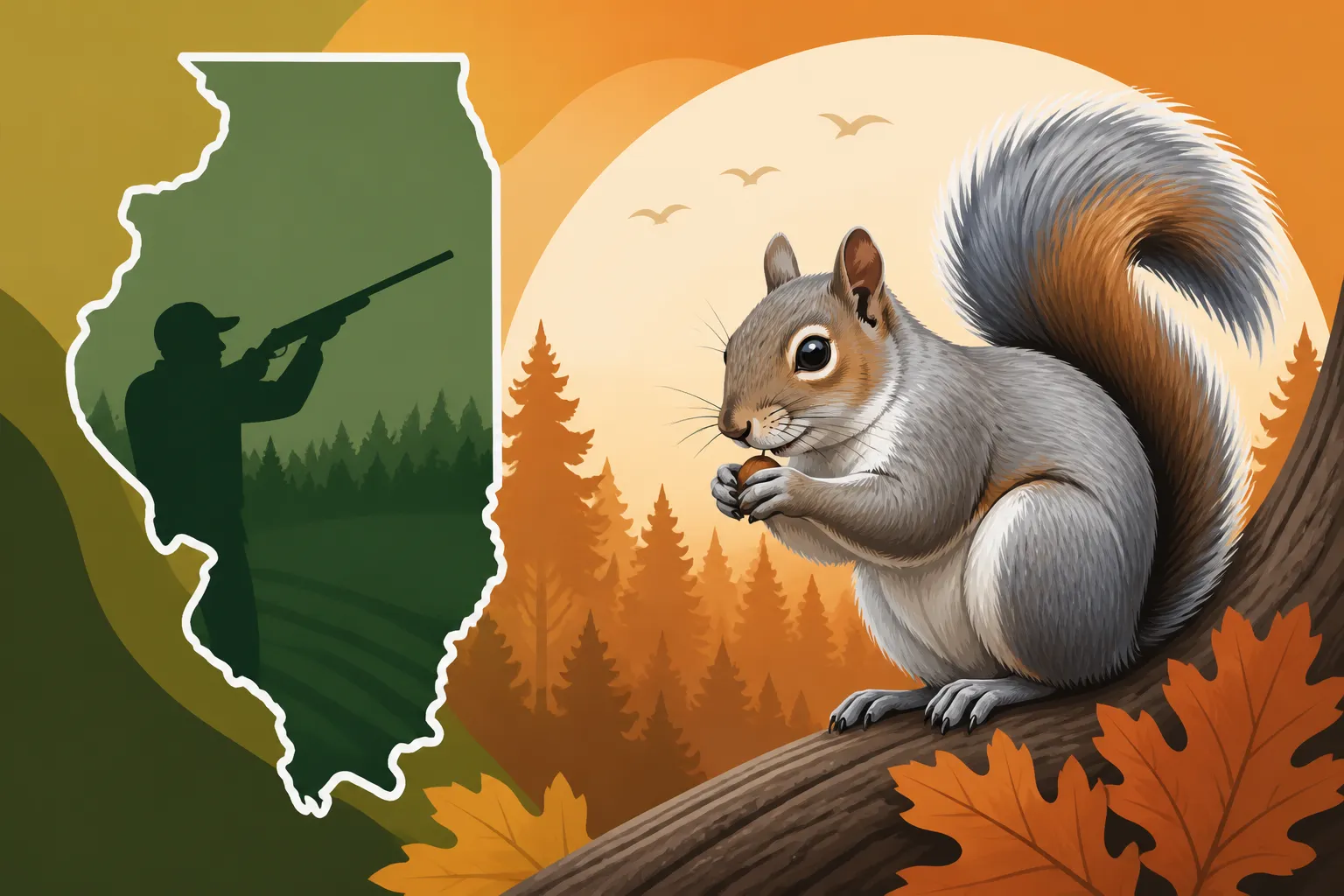
Illinois is home to two primary huntable squirrel species: the fox squirrel and the gray squirrel. While both are generally covered by the same statewide season dates and bag limits, it's good to understand their habitat preferences, as this will influence where you find them. Fox squirrels are typically larger, more reddish-orange, and prefer more open timber, woodlots, and field edges, often seen foraging on the ground. Gray squirrels, on the other hand, are smaller, grayish, and favor denser, more mature hardwood forests, spending more time in the canopy.
Knowing these preferences can help you decide which areas to scout. For instance, if you're targeting gray squirrels, you might focus on Squirrel Hunting Illinois Bottomland Hardwoods or deep timber stands in places like the Shawnee National Forest. For fox squirrels, closer to agricultural fields or smaller woodlots on private land might be more productive. The IDNR sets uniform regulations for both, meaning you don't need to worry about separate licenses or different seasons for each species; they both fall under the general Illinois Small Game Season Rules.
Key Regulations Beyond Just Dates
While knowing the season dates is your first step, there are several other critical regulations you need to be familiar with to ensure a legal and ethical squirrel hunt in Illinois. Ignoring these can lead to fines, loss of hunting privileges, or worse.
Daily Bag Limits and Possession Limits
Illinois has specific limits on how many squirrels you can harvest per day and how many you can possess in total. The daily bag limit for squirrels is typically 5. This means that in any single calendar day, you cannot take more than five squirrels. The possession limit is usually 10, meaning you cannot possess more than ten squirrels total, whether in your vehicle, at your camp, or at home, unless they are properly stored (e.g., frozen) from previous hunting trips and you can prove their origin. These limits are in place to manage the squirrel population sustainably and ensure fair chase.
It's common for hunters to misinterpret the possession limit, thinking it only applies to what they have on them while hunting. However, it's a cumulative limit. If you have five squirrels from Saturday's hunt in your cooler, and you go out Sunday, you can only harvest five more, bringing your total to ten. Any more than that would put you over the possession limit. Always be mindful of these numbers to stay within the law.
Legal Hunting Hours and Equipment
Squirrel hunting in Illinois generally follows the standard hunting hours for most game: ½ hour before sunrise to sunset. This allows for ample time to be in the woods during prime activity periods for squirrels, which are often most active during the early morning and late afternoon hours. You’ll want to ensure you have a reliable watch or a hunting app with sunrise/sunset times built-in so you don't accidentally begin too early or end too late.
When it comes to equipment, squirrel hunting is incredibly versatile. You can use:
- Shotguns: Any gauge not larger than 10-gauge, using shot shells only. Many hunters prefer a .410, 20-gauge, or 12-gauge with smaller shot sizes like 4, 5, or 6.
- Rifles: Rimfire rifles (.22 caliber, .17 caliber) are extremely popular, offering precision and quietness. Air rifles are also legal, and many modern airguns are quite capable.
- Archery Equipment: Traditional bows, compound bows, and crossbows are all legal for squirrel hunting. This provides a great way to extend your Bowhunting Illinois's Long Archery Season practice.
- Handguns: Rimfire or centerfire handguns are also permitted.
Muzzleloaders, while legal for deer, are generally less common for squirrel hunting but certainly permitted within the season rules. The important thing is to match your equipment to your hunting style and the conditions. A .22 rifle is fantastic for quiet still-hunting, while a shotgun might be better for jump-shooting squirrels out of a tree in thicker cover.
Habitat Stamp and License Requirements
Before you even step foot in the woods, you need to ensure you have the proper licenses and stamps. For Illinois residents, this means purchasing an Illinois Resident License Options (often referred to as a "hunting license") and an Illinois State Habitat Stamp, if you are 16 years of age or older. Non-residents will need to purchase the appropriate Illinois Nonresident License Options and a State Habitat Stamp.
The Habitat Stamp is crucial; it's required for all species that have an open season in Illinois, including squirrels, unless you are exempt (e.g., landowners hunting their own property). These stamps directly fund wildlife habitat restoration and preservation efforts across the state, so it’s a small investment with a big impact. Additionally, if you were born on or after January 1, 1980, you must have successfully completed an Illinois Hunter Education Requirements course. Carrying proof of your license, stamp, and hunter safety (if required) is paramount, whether it's the physical copy or an electronic version on your phone, as long as it's verifiable. Always keep these documents readily accessible in the field.
| Aspect | Typical Illinois Squirrel Season Details | Important Notes |
|---|---|---|
| Season Dates | August 1st – February 15th (with November/Dec. closures) | Always check current IDNR Hunting & Trapping Digest for exact dates. |
| Mid-Season Closures | Coincides with First (mid-Nov) & Second (early Dec) Firearm Deer Seasons | Essential for hunter safety and avoiding conflicts during primary deer seasons. |
| Legal Hours | ½ hour before sunrise to sunset | Plan your hunt around peak squirrel activity (early morning, late afternoon). |
| Daily Bag Limit | 5 squirrels | This is the maximum you can harvest in one calendar day. |
| Possession Limit | 10 squirrels | Cumulative limit; includes squirrels at home, camp, or in transit. |
| Legal Weapons | Shotguns (max 10ga, shot only), Rimfire rifles, Air rifles, Archery, Handguns | Choose equipment appropriate for conditions and hunting style. |
| License/Stamp | Valid Illinois Hunting License, State Habitat Stamp (16+) | Required for all hunters 16+, funds conservation. Hunter Ed also required for specific age groups. |
| Species Included | Fox and Gray Squirrels | Both species follow the same general regulations. |
Strategies for a Successful Illinois Squirrel Hunt
Beyond just knowing the rules, a truly successful squirrel hunt comes down to understanding squirrel behavior and implementing effective strategies. These adaptable critters offer different challenges and rewards depending on the time of year and the habitat you're in.
Early Season Tactics: Scouting and Still-Hunting
When squirrel season opens in early August, Illinois woods are usually thick with foliage. This means squirrels have plenty of cover, but it also means hunters need to adjust their tactics. Early season is often characterized by still-hunting—moving slowly and deliberately through the woods, stopping frequently to listen and scan. The key is to cover ground quietly, paying close attention to rustling leaves, chattering calls, and the tell-tale cutting of acorns or hickory nuts falling from trees.
Scouting before the season is absolutely paramount. Look for mature nut-bearing trees like oaks, hickories, and walnuts. Squirrels will be focused on these food sources, especially when the mast crop is beginning to ripen. Identifying these feeding areas, and the travel routes between them, can be a game-changer. Often, How Early Season Squirrels Give Themselves Away is through their noisy feeding habits or their quick movements on the forest floor. A good pair of binoculars can help you spot them high in the canopy before they spot you. Early mornings, when squirrels are most active, are often the most productive. Use topographical maps or apps like GoHunt to pinpoint potential nut-bearing ridges or bottomlands.
Late Season Challenges and Opportunities
As the season progresses into late fall and winter, squirrel hunting takes on a different character. Once the leaves drop, visibility dramatically increases, making it easier to spot squirrels, but also making it easier for them to spot you. This is when patience and stealth become even more critical. Cold weather also means squirrels might be less active, especially on extremely frigid days, often holing up in dens.
However, late season also presents unique opportunities. With leaves off, you can often see squirrels from a greater distance, making precision shots with a .22 rifle more feasible. Hunting around den trees or in specific food plots that still hold winter forage can be very productive. Overcast, drizzly days can be surprisingly good, as squirrels may be more focused on feeding and less vigilant. Also, don't overlook areas near standing corn or soybean fields, as squirrels will often venture out to scavenge leftover grains, especially where the woodlots meet the agricultural fields. Consider how late-season food sources for Late-Season Food Sources for Illinois Whitetails can also be attractive to squirrels.
Public vs. Private Land Access for Squirrels
Illinois offers a mix of public and private land opportunities for squirrel hunters. Public lands, such as Illinois State Fish and Wildlife Areas, State Forests, and even portions of the Shawnee National Forest, provide excellent access. However, these areas can sometimes see more hunting pressure, especially on weekends or during the early season. Using the Illinois DNR Map Tool or an app with public land overlays can help you find less-pressured spots within these larger tracts.
- Public Land: When hunting public land, always be aware of specific site regulations. Some Fish and Wildlife Areas might have special access rules, check-in/check-out procedures, or restrictions on certain weapons. Always confirm these details for the specific site you plan to visit. Public Hunting Land in Illinois can be a great resource, but being prepared is key.
- Private Land: Gaining permission to hunt private land often provides a less crowded and potentially more productive experience. Farmers and landowners might be open to squirrel hunters, especially if squirrels are causing damage to crops or nut trees. Respectful communication and asking well in advance are key. Understanding Getting Private Land Permission in Illinois is crucial, and always remember that a verbal "yes" is often sufficient in Illinois, though written permission is always a good idea for clarity. Build a good relationship with landowners, and you might find a fantastic, long-term hunting spot.
Ultimately, whether you choose public or private land, responsible hunting practices and a thorough understanding of all regulations are essential for a safe and enjoyable Illinois squirrel season.
Disclaimer
Please be aware that hunting regulations, season dates, and license requirements are subject to change by the Illinois Department of Natural Resources (IDNR). While this guide provides general and historically accurate information, it is your responsibility to consult the most current official IDNR Hunting and Trapping Digest or their official website before participating in any hunting activity. This content is for informational purposes only and should not be considered legal advice.