Illinois Public Land Hunting Hours
One of the trickiest parts about hunting on public land in Illinois, especially if you're venturing out to a new spot, is figuring out the exact legal hunting hours. It's not always as simple as "sunrise to sunset." Different game species, different seasons, and even different individual public sites can all have their own specific rules, which can definitely lead to a headache if you don't know where to look. This guide is here to untangle all that, giving you a clear picture of what to expect and how to stay on the right side of the law.
Understanding Illinois's General Public Land Hunting Hours
At a foundational level, the Illinois Department of Natural Resources (IDNR) sets statewide guidelines for hunting hours, which apply to most game animals on public lands unless a specific site dictates otherwise. However, it's those "unless otherwise" clauses that often trip hunters up, so let's dig into the common rules first.
Statewide Sunrise-to-Sunset Rule for Most Game
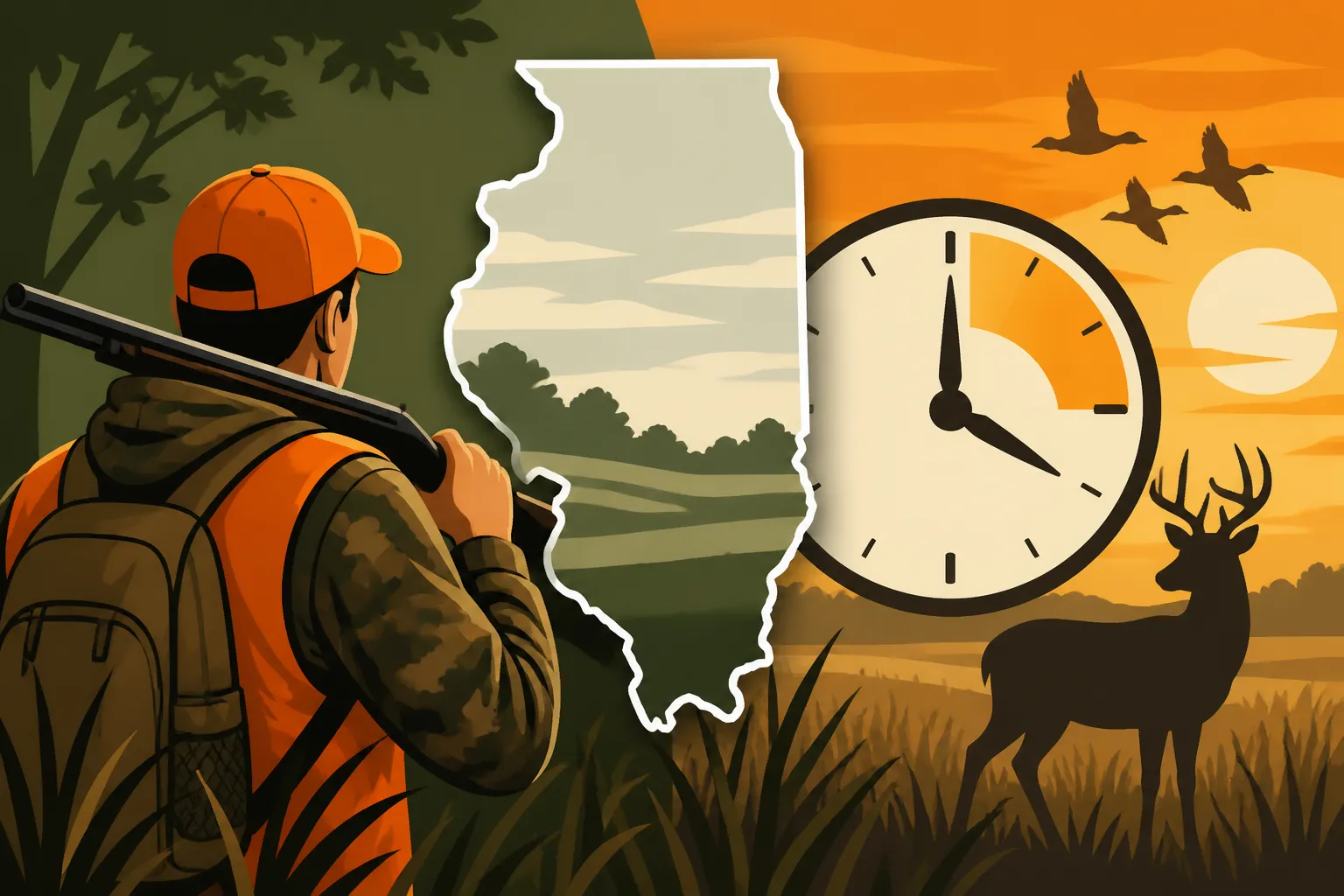
For the majority of big game and small game hunting across Illinois public lands, the general rule of thumb is "half-hour before sunrise to sunset." This applies to popular pursuits like archery and firearm deer seasons, spring and fall turkey hunting, and general small game seasons for squirrels, rabbits, and pheasants. It sounds straightforward enough, but understanding what "sunrise" and "sunset" actually mean for hunting purposes is critical. These aren't just approximations; they're precise times calculated by the U.S. Naval Observatory for your specific location on a given day. Many modern hunting apps, including mapping tools like GoHunt, will provide these exact times, which change daily.
For instance, if you're planning an early morning deer hunt, you might be out in your stand well before actual sunrise. The half-hour before sunrise rule means you could legally take a shot if a deer presents itself during that dim, magical twilight period. Conversely, as the sun dips below the horizon, you've got about thirty minutes of diminishing light to work with before you need to make sure your firearm is unloaded and your hunt concludes. This window is crucial for success, but it's equally important not to push past it. A game warden isn't going to accept "I thought it was still light enough" as an excuse if it's after legal shooting hours. Always aim to be safe and within the legal window.
Specific Game Species Exceptions and Extended Hours
While the "half-hour before sunrise to sunset" covers a lot of ground, certain species and hunting methods come with their own unique sets of rules regarding hunting hours. These exceptions are often in place for biological reasons, hunter safety, or to manage specific populations.
Waterfowl hunting, for example, typically follows the same half-hour before sunrise to sunset rule for ducks and geese. However, the exact start and end times are often tied directly to official federal regulations, and waterfowl hunting blinds or zones on public lands can sometimes have specific check-in or check-out times that indirectly affect when you can be in the field. If you're planning on Waterfowl Hunting the Illinois River Valley, you'll want to check the specific public site's regulations very closely, as some may have very detailed rules about when you can enter and exit designated areas.
Furbearer and predator hunting also introduces a whole different set of considerations. While many furbearers like coyotes can be hunted during daylight hours under the general rules, night hunting for specific species like raccoons, opossums, skunks, and foxes is permitted in Illinois, but usually with very strict regulations. This is almost exclusively limited to private land with specific weapon and light source restrictions. On public lands, night hunting for anything other than specific, highly controlled programs (which are rare for furbearers) is generally prohibited. If you're interested in Predator Hunting in Illinois, especially at night, you need to be absolutely certain you are on private land and adhere to all weapon and lighting regulations. Feral hogs, while considered unprotected animals in Illinois and allowed to be hunted year-round on private land, are generally not permitted for night hunting on public lands. The focus on public land is usually on eradication through daytime efforts.
| Game Category | General Statewide Public Land Hunting Hours | Common Exceptions/Notes |
|---|---|---|
| Deer (Archery & Firearm) | Half-hour before sunrise to sunset | Applies to most public lands. Always check specific site regulations, especially for managed hunts or special seasons like Illinois's Two Firearm Deer Seasons. |
| Turkey (Spring & Fall) | Half-hour before sunrise to sunset | Spring Turkey Hunting in Illinois often has specific closing times in the afternoon (e.g., 1 p.m. or 2 p.m.) at certain sites or during specific periods. Fall turkey usually follows general sunrise-to-sunset. |
| Small Game (Squirrel, Rabbit, Pheasant) | Sunrise to sunset | Squirrel and Small Game Hunting in Illinois generally adheres to these hours. Pheasant hunting on stocked sites might have specific permit-based hunt times. |
| Waterfowl (Ducks & Geese) | Half-hour before sunrise to sunset | Specific check-in/out times at managed public waterfowl areas are common. Always consult the site-specific fact sheet. |
| Furbearers (Coyote, Raccoon, Opossum) | Daytime: Half-hour before sunrise to sunset. Night: Varies (Private Land Only). | Night hunting for furbearers is typically private land only and requires specific permits/methods. Highly restricted or prohibited on most public lands unless part of a very specific, authorized program. Always assume daytime hunting on public land unless explicitly stated otherwise by the specific site. |
| Feral Hogs | Daytime hunting generally follows deer/small game hours | Unprotected species, but public land hunting hours are usually restricted to daylight. Night hunting for hogs is almost exclusively a private land activity. Check for any specific IDNR eradication efforts that might have different rules. |
Navigating Site-Specific Regulations for Public Hunting Areas
This is where things can get a bit more complex. While the IDNR provides overarching statewide rules, individual public hunting sites in Illinois—which include State Fish and Wildlife Areas (SFWAs), State Parks with hunting access, Conservation Areas, and even federal lands like Shawnee National Forest—have the authority to establish more restrictive or specialized hunting hours.
Why Public Land Hours Can Differ
The reasons for these variations are numerous and often practical. Safety is a paramount concern, especially in areas that might have non-hunting public users (hikers, birdwatchers) or are in close proximity to residential zones. Limiting hunting hours can help manage overall hunter pressure, distributing activity throughout the day or preventing overcrowding at peak times. Habitat management goals might also play a role, as certain species might be more vulnerable to disturbance during specific periods. For example, some sites might close earlier for turkey hunting to allow birds to return to their roosts undisturbed.
It's absolutely crucial that you never assume the statewide rules apply to every piece of public ground. Just because you can hunt deer from half-hour before sunrise to sunset statewide doesn't mean you can do that at your chosen State Park or Fish and Wildlife Area. Many sites have their own unique regulations, often stricter than the general state law. Ignorance of these rules is not an excuse, and violating them can lead to tickets, fines, and even the loss of hunting privileges. This is where meticulous research before you hit the field truly pays off.
How to Find Site-Specific Information
So, how do you find these elusive site-specific rules? It requires a bit of homework, but thankfully, the resources are readily available if you know where to look.
- IDNR Website and Digest: The primary source for all Illinois hunting regulations is the official IDNR website. They publish an annual "Digest of Hunting and Trapping Regulations," which is essential reading. While it covers statewide rules, it also often directs you to specific public land information. More importantly, the IDNR maintains individual fact sheets or web pages for each public hunting site. These pages are goldmines, detailing species hunted, allowed weapons, permit requirements, and, crucially, specific hunting hours. Always search for the exact name of the site you plan to visit.
- Online Mapping Tools: Modern mapping applications are invaluable for public land hunters. Services like GoHunt and OnX Hunt are fantastic resources. Not only do they clearly delineate public land boundaries, but many also integrate links to the specific site regulations directly within the app. This means you can be looking at a satellite map of Shawnee National Forest Hunting or a State Fish and Wildlife Area and, with a few taps, pull up the official IDNR fact sheet for that specific location, giving you instant access to hunting hours, permit requirements, and any special stipulations. GoHunt, for instance, often includes a "Regulations" tab that will connect you straight to the source.
- Direct Contact: When in doubt, call the site office directly. Many public hunting areas have a dedicated site superintendent or staff who can clarify any ambiguities. A quick phone call is a small investment compared to the potential headache of a citation.
- On-Site Signage: When you arrive at a public hunting area, always look for posted signs at parking areas, entry points, or information kiosks. These signs often summarize the critical rules, including hunting hours, and serve as a final reminder before you head into the woods.
It's a common mistake to assume that because you're hunting within the general statewide timeframe, you're fine. For example, a property like Jim Edgar Panther Creek State Fish and Wildlife Area or Sangchris Lake State Park might have entirely different hours or restrictions compared to hunting on general private land. Taking the time to verify these details will save you a lot of grief and ensure a more enjoyable, legal hunt.
Practical Strategies for Hunting Within Legal Hours
Knowing the rules is one thing, but actually implementing them effectively in the field requires a bit of strategy and forethought. Hunting within legal hours isn't just about avoiding a ticket; it's about maximizing your chances of success while respecting the land and the animals.
Pre-Dawn Setup and Post-Sunset Retrieval
The "half-hour before sunrise" window is often prime time for deer movement, as they're transitioning from nocturnal feeding to bedding down for the day. This means you need to be in your stand or blind, settled and quiet, well before that legal shooting light kicks in. This necessitates Scouting Illinois Public Land Before Season to identify clear, quiet entry routes that minimize disturbance. Using a quality headlamp with a red-light option (which is less disruptive to game and preserves your night vision) is essential for navigating in the dark. Always aim to get to your spot in plenty of time, allowing yourself 15-30 minutes to settle in, hang your bow or rest your rifle, and ensure your gear is ready to go without making a sound.
The post-sunset period presents its own set of challenges, especially if you've shot an animal late in the day. While you can legally shoot up to sunset, tracking a deer that runs off after that point can be problematic. The general rule in Illinois is that if you wound an animal within legal hunting hours, you are permitted to recover it, even if it extends past legal hunting hours. However, you cannot continue to hunt past legal hours. This means no more shooting, and your firearm must be unloaded and encased. It's often advisable to call a Conservation Police Officer (CPO) if you're tracking a deer long after dark, just to inform them of your intentions. They'd rather you retrieve your game legally and ethically than leave it overnight. For an in-depth look at this, check out Blood Trailing After Dark in Illinois.
Maximizing Daylight and Planning Your Hunt
Effective time management within legal hunting hours is key. Animals, particularly deer and turkeys, often have peak activity periods around dawn and dusk, coinciding with the legal shooting windows. During the middle of the day, activity often slows. This doesn't mean you should pack up and leave, but rather adjust your tactics. Mid-day can be an excellent time for still-hunting, slow-walking through bedding areas, or repositioning your stand or ground blind for the afternoon hunt. Tools like the GoHunt app often provide not only sunrise/sunset times but also moon phase data and weather forecasts, all of which can influence animal movement and help you plan your day more strategically.
Consider the species you're hunting. For instance, Hunting the Rut in Early November often means deer are moving more throughout the day, so sitting longer can pay off. During colder weather, deer might move more frequently during the warmer parts of the mid-day. A good Cold-Weather Sitting Strategy in Illinois involves layering clothing, using insulated ground blinds, and planning for shorter, more active hunts if sitting still becomes too difficult. Always remember that even if you're taking a break from actively hunting, staying within the bounds of the public land and its specific regulations is paramount.
Special Circumstances and Enforcement
Understanding the general rules and site-specific variations is just one piece of the puzzle. It’s also vital to be aware of certain special circumstances, particularly around night hunting, and the consequences of violating regulations.
Night Hunting and Trapping Limitations on Public Land
To reiterate, night hunting for most game animals is strictly prohibited on Illinois public lands. This isn't just a suggestion; it's law. While there are legal provisions for night hunting certain furbearers (raccoons, opossums, skunks, foxes) in Illinois, these activities are almost exclusively restricted to private land and require very specific equipment, such as a .22 caliber rimfire rifle, shotgun, or archery equipment, and often a valid trapping license for taking them. Using artificial lights for night hunting is also highly regulated.
On public land, the risk of misidentification, safety concerns with other users, and managing game populations make night hunting largely incompatible with public access. Any exceptions would be extremely rare, highly controlled, and explicitly stated by the IDNR for a specific site or program. Always assume that hunting on public land, regardless of species, is a daylight-only endeavor unless you have personally verified an official document stating otherwise for that exact location and time.
Trapping seasons and hours can also differ from hunting. Trapping furbearers like muskrats, mink, and beavers has its own set of regulations, and traps are generally allowed to be set and checked during specific windows, often daily. These rules are distinct from active hunting hours.
Consequences of Violating Hunting Hour Regulations
Violating hunting hour regulations is a serious offense in Illinois, and Conservation Police Officers (CPOs) actively patrol public lands to ensure compliance. The consequences can range from significant fines to the confiscation of your equipment, permit revocation, and even the loss of your hunting privileges for a period of time. These penalties aren't just an inconvenience; they can have a lasting impact on your ability to hunt in the future.
Furthermore, a violation involving hunting hours can lead to other charges, such as taking game illegally or attempting to conceal a violation. The IDNR maintains a database of hunting violations, and repeat offenders face even harsher penalties. It's not worth risking your hunting future for a few extra minutes of low light.
To stay clear of trouble, always carry your valid licenses and permits, including your Illinois Hunting Licenses and What They Cost. Make sure your phone is charged so you can consult online regulations or use mapping apps like GoHunt for current sunrise/sunset times. Better yet, print out the site-specific fact sheet for the area you're hunting. Respecting these rules is not only about legal compliance but also about ethical hunting practices and ensuring public land remains open and accessible for all responsible users. Remember, CPOs are there to enforce laws and protect the resource, so cooperating with them and knowing your stuff is always the best policy.
Disclaimer
This guide is intended for informational purposes only and should not be considered legal advice. Hunting regulations, including specific public land hours, are subject to change by the Illinois Department of Natural Resources (IDNR). It is the hunter's responsibility to consult the most current official IDNR hunting and trapping regulations and site-specific fact sheets for any public land they intend to hunt before going afield. Always prioritize safety and ethical hunting practices.