Illinois Small Game and Furbearers
For many Illinois hunters, the focus often narrows to whitetails or spring gobblers, overshadowing the incredible opportunities that lie in pursuing the state's diverse array of small game and furbearers. If you've ever felt like deer season is too short, or you're looking for different challenges, this comprehensive guide will help you discover a whole new world of hunting, from the elusive squirrel to the cunning coyote, offering year-round adventure and skill development right here in the Prairie State.
Understanding Illinois's Small Game Landscape
Illinois might be renowned for its fertile farmland and trophy whitetails, but beneath that reputation lies a vibrant ecosystem supporting a surprising variety of small game and furbearer species. These animals offer accessible, often year-round, hunting opportunities that can hone your skills, put delicious meat on the table, and provide thrilling experiences even when big game seasons are closed. It's a chance to connect with nature on a different level, observing intricate behaviors and understanding the smaller nuances of the Illinois wild.
Diversity of Small Game Species
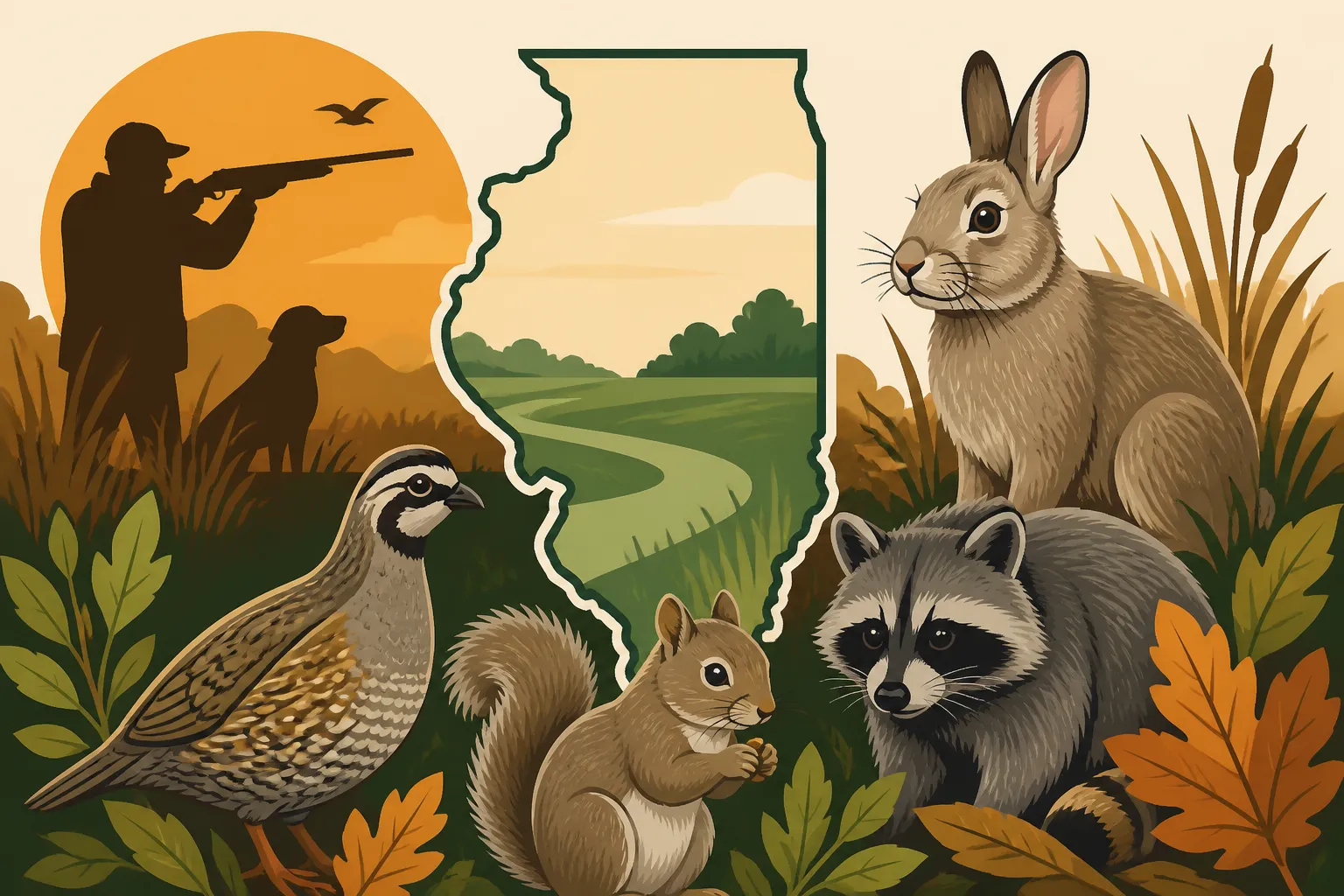
When we talk about small game in Illinois, we're really looking at a broad spectrum of animals, each with its own preferred habitat, behaviors, and hunting challenges. The classic image often conjures up squirrels and rabbits, and for good reason—these are abundant and provide excellent entry points for new hunters. Squirrels, both fox and gray, offer fast-paced action and require keen observation. Rabbits, primarily cottontails, provide exciting hunts, especially when pursued with beagles or in the thick cover of fencerows. Beyond these mainstays, hunters can also find opportunities for upland birds, though their populations vary significantly. These include ring-necked pheasants, which are often supplemented through stocking programs, and the more challenging bobwhite quail, whose numbers have unfortunately declined in many areas but still offer localized opportunities. Each species demands a unique approach, from silent stalking for squirrels to flushing tactics for rabbits, making small game hunting incredibly diverse and engaging throughout the year.
Habitat Challenges and Opportunities
While Illinois has plenty of habitat for small game, it's often fragmented, which presents both challenges and unique opportunities for hunters. Large expanses of unbroken timber are ideal for squirrels, but these are often confined to river bottoms, state parks, and larger private tracts. Rabbits thrive in edge habitat—the tangled transition zones between fields, fencerows, and brushy cover—which is abundant across much of the state's agricultural landscape. However, modern farming practices can sometimes reduce the quality and quantity of this critical cover. For upland birds like pheasants and quail, suitable habitat is even more specific, requiring diverse grasslands, undisturbed nesting cover, and nearby food sources. This fragmentation means hunters often need to be strategic in their scouting, using tools like the Illinois DNR map tool or satellite imagery to identify promising pockets of cover. Even small patches of ungrazed pasture, a thicket of multi-flora rose, or a brushy creek bottom can hold a surprising number of small game animals. Understanding these habitat nuances is key to consistent success and truly mastering the art of the small game hunt in Illinois.
Squirrels: Bushytails of the Illinois Hardwoods
Few hunting pursuits are as classic or as accessible as chasing squirrels in Illinois. They offer an ideal way to introduce new hunters to the field, hone marksmanship, and provide a delicious meal. The state's abundant hardwood forests, particularly along river systems and in larger timber blocks, are prime squirrel country. The season opens early, often in August, providing a fantastic opportunity to beat the crowds and enjoy the outdoors before deer season fully kicks in.
Fox Squirrels vs. Gray Squirrels
In Illinois, you'll primarily encounter two species of squirrels: the Fox Squirrel and the Gray Squirrel. While both offer similar hunting experiences, they have distinct characteristics and often prefer slightly different habitats. Fox Squirrels are larger, typically reddish-brown or grayish-brown with an orange belly, and prefer more open timber with scattered trees, often near agricultural fields or woodlot edges. They are generally less wary and can be found foraging on the ground more frequently.
Gray Squirrels, on the other hand, are smaller, sleeker, and typically a salt-and-pepper gray with a white belly. They are creatures of dense, mature timber, preferring thicker canopies and more contiguous forest cover, especially in river bottoms and the deep woods of places like the Shawnee National Forest. Grays tend to be more skittish and will often stick to the treetops, making them a challenging target for a patient hunter. Understanding these preferences can help you focus your efforts depending on the type of timber you're hunting. For instance, if you're Squirrel Hunting Illinois Bottomland Hardwoods, you're more likely to encounter gray squirrels.
Best Hunting Tactics and Gear
Hunting squirrels effectively requires a blend of stealth, patience, and good marksmanship. For those using a .22 rifle, a quiet approach is paramount. Many hunters prefer a slow, still-hunting technique, pausing frequently to listen for rustling leaves or the tell-tale "bark" of a squirrel. Early mornings, especially after a good rain, can be incredibly productive as squirrels are more active and the damp leaves make for quieter walking. Shotguns, typically 20-gauge or .410, loaded with small shot (like 6s or 7.5s), are excellent for fast-moving targets in the canopy or for younger hunters. Another popular method is "sitting and waiting" near a good mast tree (oaks, hickory, pecan) or a den tree, especially during the peak feeding times of early morning and late afternoon. Binoculars can be incredibly useful for spotting camouflaged squirrels in the dense foliage. Many seasoned hunters will often "bark" or "squeak" to draw out curious squirrels, mimicking their calls. Essential gear includes comfortable boots for walking, camouflage to break up your outline, and a good game bag to carry your harvest. Don't forget your hunting license and habitat stamp!
Prime Squirrel Habitat in Illinois
Squirrels are incredibly dependent on the availability of mast crops and den trees. Prime squirrel habitat in Illinois is typically found in mature hardwood forests, particularly those rich in oak, hickory, and pecan trees. These areas provide the acorns, hickory nuts, and pecans that form the bulk of a squirrel's diet. River bottomlands, such as those along the Illinois River and Mississippi River, are often squirrel hotspots due to their fertile soils, diverse tree species, and dense timber stands.
You'll also find excellent squirrel hunting in smaller woodlots scattered across central and northern Illinois, especially where these woodlots border corn or soybean fields, providing additional food sources. State parks and fish and wildlife areas that permit hunting are also great options, though they may see more pressure. Look for stands of mature trees with plenty of canopy cover and evidence of squirrel activity, such as gnawed nuts, cuttings on logs, or active den holes in tree cavities. Areas with a mix of different tree ages and species tend to support healthier squirrel populations by providing a consistent food supply throughout the season. Scouting before the season, perhaps using a mapping app like GoHunt, can reveal these promising areas and save you valuable hunting time.
Rabbits: Illinois's Abundant Cottontails
The Eastern Cottontail is arguably Illinois's most widely distributed small game animal, providing countless hours of sport for hunters across the state. Rabbit hunting is a high-energy pursuit, often involving walking through thick cover and quick, instinctive shots. It's a fantastic way to enjoy a crisp autumn or winter day, and a successful hunt often means a delicious meal of wild game.
Where to Find Rabbits in Illinois
Cottontail rabbits are creatures of the edge. They thrive in transitional habitats where dense cover meets open feeding areas. This means you'll find them in abundance along fencerows, especially those that have grown thick with multiflora rose, osage orange, or brushy shrubs. Drainage ditches, creek bottoms, and railroad right-of-ways that are left untamed are also prime locations. Brushy field edges, abandoned farmsteads with overgrown outbuildings, and ungrazed pastures choked with briars and weeds are all excellent places to concentrate your efforts.
Think "tangled" and "thick"—places where a larger animal like a deer might struggle to move through quickly. These areas provide crucial escape cover from predators and harsh weather, allowing rabbits to feel secure while still being able to access nearby food sources like clover, tender grasses, or crop remnants. Even relatively small patches of suitable habitat can hold a surprising number of rabbits, making them accessible to hunters with limited land access.
Effective Rabbit Hunting Strategies
Rabbit hunting is a highly active sport, often best pursued with a group of hunters working together to "kick up" game. The most common and effective strategy is to walk slowly and methodically through thick cover, flushing rabbits as you go. Hunters should spread out safely, maintaining visual contact and knowing the location of everyone in the party. Focus on pushing through the densest briar patches, brush piles, and thickets, as rabbits will often hold tight until the last moment.
Shotguns, typically 12 or 20-gauge, are the weapon of choice, loaded with open chokes (like improved cylinder or modified) and small shot sizes (like 5 or 6). Quick, instinctive shots are often necessary as rabbits burst from cover. Another highly effective strategy is to use small game drives, especially on larger tracts of land. Hunters form a line and push through cover towards blockers positioned at the end of the cover. This can be particularly productive in large CRP fields or extensive brushy areas. Always be mindful of safety, especially when hunting with others, and communicate constantly.
Running Dogs for Rabbits
For many hunters, the ultimate rabbit hunting experience involves running beagles. These tenacious hounds possess an incredible sense of smell and an unwavering drive to track and flush cottontails. A pack of well-trained beagles can transform a rabbit hunt into a truly exhilarating chase. The dogs will pick up a rabbit's scent, "jump" it from its hiding spot, and then pursue it, often in a circular pattern, with their characteristic baying providing a constant soundtrack to the hunt.
Hunters position themselves along known rabbit runways or escape routes, waiting for the dogs to push the rabbit back around. It's an active and social form of hunting, less about stealth and more about listening to the dogs, predicting the rabbit's movements, and making a clean shot when the opportunity arises. Beagles excel in dense cover where human hunters struggle, making them invaluable for thoroughly working areas like Rabbit Hunting Thick Illinois Brush. It’s a tradition deeply ingrained in many Illinois hunting families, and the camaraderie of a good dog pack adds an unforgettable dimension to the pursuit of cottontails.
Upland Birds: Pheasants and Quail
Illinois's upland bird hunting scene offers a mix of wild and stocked opportunities. While populations have faced challenges over the decades, dedicated efforts by conservation groups and the IDNR ensure that hunters still have places to pursue these iconic game birds. It's a different kind of challenge than squirrels or rabbits, often requiring pointing dogs and large tracts of suitable habitat.
The State of Wild Pheasant Populations
Wild ring-necked pheasant populations in Illinois have faced significant declines over the past several decades, primarily due to habitat loss and changes in agricultural practices. The conversion of grasslands, fencerows, and small woodlots into intensively farmed fields has stripped pheasants of vital nesting cover, brood-rearing habitat, and winter shelter. The proliferation of monoculture crops leaves little diversity for these birds to thrive.
Despite these challenges, pockets of wild pheasants still persist in certain areas of the state, particularly in counties with more diverse agricultural landscapes, strong conservation reserve program (CRP) enrollment, or larger tracts of undisturbed grasslands. Areas in central and northern Illinois with remnants of native prairie or robust conservation efforts sometimes offer limited opportunities. Hunting these wild birds is incredibly challenging and rewarding, often requiring extensive scouting and well-trained pointing or flushing dogs. Success in these areas is a testament to the hunter's skill and the health of the local habitat.
Bobwhite Quail's Decline and Restoration
The bobwhite quail, once a common sound across Illinois farmlands, has experienced an even more dramatic decline than pheasants. Their distinctive "bob-white" call is much rarer today than it was a generation or two ago. Quail are even more sensitive to habitat changes, requiring a mosaic of dense nesting cover, open bugging areas for chicks, and brushy escape cover. Intensive farming, pesticide use, and the loss of hedgerows have severely impacted their numbers.
However, there is hope. Dedicated conservation groups, often working with private landowners and the IDNR, are implementing habitat restoration projects specifically designed to bring back quail. These efforts focus on creating diverse native grasslands, establishing brushy field borders, and controlling invasive species. While widespread wild quail hunting is rare, localized opportunities do exist, particularly in southern Illinois where fragmented forests and fields still provide some suitable cover. Illinois Bobwhite Quail Decline is a serious concern, but ongoing habitat work offers a glimmer of hope for future generations to hear that iconic call once more.
Stocked Pheasant Programs
Given the struggles of wild pheasant populations, many hunters turn to Illinois's robust stocked pheasant programs to get their upland bird fix. The IDNR manages several public hunting areas where pheasants are released throughout the season, providing guaranteed opportunities for hunters. These sites typically have controlled hunting periods and require an upland game permit in addition to your regular hunting license and habitat stamp.
Popular sites like Jim Edgar Panther Creek State Fish and Wildlife Area or Des Plaines State Fish and Wildlife Area offer excellent opportunities for hunters to walk fields and flush birds. These hunts are often popular and can see significant pressure, especially on weekends. Hunters benefit greatly from using flushing dogs, like retrievers or spaniels, to find and retrieve birds. While not the same as hunting wild pheasants, these stocked programs provide accessible and enjoyable experiences, helping to introduce new hunters to upland bird hunting and keeping the tradition alive. It's a great way to experience Pheasant Hunting Illinois Farmland even if wild bird numbers are low in your area.
Furbearers: The Often Overlooked Opportunity
While deer and turkey get most of the attention, Illinois offers a rich and often underutilized resource in its furbearer populations. These animals provide challenging hunting and trapping opportunities, often extending the hunting season well into the colder months. Pursuing furbearers can be incredibly rewarding, demanding a deep understanding of animal behavior, tracking, and habitat.
Illinois's Most Common Furbearers
Illinois is home to a diverse array of furbearer species, each playing a vital role in the ecosystem. The most common and widely distributed include raccoons, opossums, muskrats, mink, red fox, gray fox, coyotes, and beavers. Raccoons are incredibly adaptable and can be found almost anywhere, from urban fringes to deep timber, offering excellent opportunities for night hunting with dogs. Opossums, often found in similar habitats, are also abundant.
Muskrats and mink are typically found in aquatic environments like marshes, ponds, and stream banks, providing prime targets for trappers. Foxes, both red and gray, are widely distributed, with red foxes preferring open country and gray foxes favoring timbered areas. Coyotes are found throughout the entire state and offer year-round hunting opportunities. Beavers, the continent's largest rodent, are common along rivers and larger creeks, presenting challenges for both trappers and landowners dealing with their dam-building activities. Each species offers a unique set of challenges and requires specialized knowledge and techniques to pursue successfully.
Hunting and Trapping Regulations
Hunting and trapping furbearers in Illinois is governed by specific regulations, which can vary by species and method. It's crucial for hunters and trappers to be thoroughly familiar with the current IDNR Furbearer Regulations Digest. Most furbearer hunting seasons typically open in November and extend through late winter, providing plenty of opportunity after other seasons have closed. Raccoons and opossums are frequently hunted at night with dogs, and specific rules apply to lighting and weapon use during these hours.
Trapping seasons generally run concurrently with hunting seasons for many furbearers. Illinois permits a variety of trap types, including foothold traps, body-gripping traps, and snares, but there are strict regulations regarding trap size, placement, and checking requirements. For example, all traps must be checked at least once every 24 hours. There are also specific rules about where traps can be set, especially near public roads or dwellings. Trapping Illinois Furbearers requires not only skill but also a strong commitment to ethical practices and adherence to all legal requirements to ensure humane and responsible harvesting. Always double-check the latest regulations before heading into the field.
Economic Opportunities for Trappers
Beyond the recreational aspect, furbearer trapping in Illinois can offer modest economic opportunities for those skilled in the craft. While fur prices fluctuate based on market demand, a successful trapping season can provide supplemental income. The pelts of raccoons, muskrats, mink, and coyotes often command the best prices. For dedicated trappers, processing pelts and selling them to fur buyers or at auction can offset equipment costs and even turn a small profit.
Furthermore, trapping plays an important role in wildlife management. In some areas, furbearers like beavers or raccoons can cause significant property damage to agricultural fields, infrastructure, or timber stands. Landowners facing these issues may hire trappers to remove problem animals, providing a service that can be mutually beneficial. This aspect of trapping not only helps manage wildlife populations but also strengthens the connection between hunters, trappers, and land stewardship in Illinois, contributing to both ecological balance and rural economies.
Coyotes and Predators: Year-Round Action
Coyotes are perhaps the most prolific and adaptable predators in Illinois, offering exciting, year-round hunting opportunities for those seeking a different kind of challenge. Their cunning nature and wary disposition make them a worthy adversary, and success often hinges on mastering calling techniques and understanding their behavior. Beyond coyotes, other predators like foxes and bobcats also present unique hunting scenarios.
Coyote Hunting Strategies
Hunting coyotes in Illinois can be an incredibly dynamic and rewarding pursuit. Since they are an unprotected species on private land, they can be hunted year-round, making them an excellent option during the off-season. The most popular and effective strategy involves calling. Electronic calls loaded with distress sounds (rabbit, fawn, bird), or vocalizations (howls, barks) can draw coyotes in from long distances. Hand calls, while requiring more skill, can also be highly effective.
Setting up with the wind in your face or crosswind is critical, as coyotes have an exceptional sense of smell. Using camouflage and remaining absolutely still is paramount, as they often approach cautiously, circling downwind to catch your scent. Hunting partners can be invaluable, with one caller and one or more shooters covering different approach angles. Night hunting with lights is also permitted on private land, adding another thrilling dimension to the chase. For more specific tactics, consider reading up on Coyote Calling in Illinois Farm Country. The challenge of outsmarting such an intelligent predator keeps hunters coming back for more.
Bobcat Management and Limited Opportunities
Bobcats represent a remarkable conservation success story in Illinois. Once extirpated from much of the state, their populations have rebounded significantly thanks to protection and habitat restoration efforts. Today, bobcats are classified as a protected furbearer, but a limited hunting and trapping season has been established in recent years, primarily in the southern and western parts of the state where populations are densest.
However, opportunities to harvest a bobcat are highly regulated and limited. Hunters and trappers must apply for a specific bobcat permit, and quotas are set for certain zones to ensure sustainable management. Hunting bobcats is extremely challenging, requiring patience, knowledge of their elusive habits, and often a keen understanding of their preferred habitats, which include dense timber, brushy areas, and rocky outcrops. Success is rare and a true trophy, reflecting the animal's natural stealth and the hunter's dedication. Due to strict management, it's essential to check the IDNR regulations for current season dates, permit requirements, and harvest limits.
Fox Hunting in Illinois
Both red and gray foxes can be found across Illinois, offering another intriguing challenge for predator hunters. Red foxes tend to prefer more open, agricultural landscapes, often utilizing fencerows, field edges, and small woodlots. Gray foxes, with their unique ability to climb trees, favor denser timber and more rugged terrain, particularly in the southern parts of the state.
Similar to coyote hunting, calling is a primary method for fox hunters. Smaller, higher-pitched distress calls, mimicking mice or small birds, are often effective. Foxes are incredibly wary and possess excellent eyesight and hearing, so stealth, camouflage, and choosing a good vantage point are crucial. Early mornings and late evenings are typically the most productive times, as foxes are most active during these crepuscular hours. Snow cover can also be a significant advantage, making tracks easier to spot and forcing foxes to move more openly. Hunting foxes is a test of patience and observation, providing a thrilling experience for those who appreciate the cunning of these beautiful canids.
Waterfowl: A Separate but Important Category
While often considered distinct from "small game," waterfowl hunting is an incredibly popular and vital part of Illinois's hunting heritage. Situated directly in the Mississippi Flyway, Illinois is a critical stopover point for millions of migratory ducks and geese, offering world-class hunting opportunities. Though it typically requires specialized gear and knowledge, it provides another fantastic avenue for outdoor pursuit.
Illinois's Place on the Mississippi Flyway
Illinois holds a truly special place in the world of waterfowl hunting, sitting squarely in the heart of the Mississippi Flyway. This major migratory corridor funnels millions of ducks and geese south each fall and north each spring, making Illinois a crucial stopover point. The Illinois River Valley, in particular, is legendary for its historical and ongoing importance to waterfowl. Its rich backwater lakes, flooded timber, and vast agricultural fields provide abundant food and resting areas for migrating birds.
Hunters from across the country flock to Illinois for its waterfowl opportunities, knowing that when the migration is on, the action can be phenomenal. Species like mallards, pintails, green-winged teal, canvasbacks, and various geese fill the skies. Understanding the nuances of migration timing, weather patterns, and bird behavior is essential for success, making it a highly engaging and educational form of hunting. This deep connection to the flyway underscores why Waterfowl Hunting the Illinois River Valley remains such an iconic experience.
Basic Waterfowl Species Overview
The diversity of waterfowl species that pass through or winter in Illinois is impressive. For ducks, the most commonly harvested species include mallards, often considered the "king" of ducks due to their abundance and excellent table fare. Other dabbling ducks like green-winged teal, blue-winged teal, wood ducks, and pintails are also frequent visitors. Diving ducks, such as canvasbacks, redheads, and scaup, prefer larger, deeper bodies of water and present a different hunting challenge.
When it comes to geese, the Canada Goose is by far the most prevalent, with both migratory and resident populations offering robust hunting opportunities. Lesser snow geese and specklebelly geese also make their way through the state, particularly along the Mississippi River, offering specialized hunting experiences. Each species has unique flight patterns, feeding habits, and preferred habitats, meaning waterfowl hunters often need to adapt their decoy spreads, calling techniques, and hide locations depending on what birds are in the area. This constant challenge and learning curve is a major draw for waterfowl enthusiasts.
Essential Gear and Regulations for Small Game and Furbearers
Stepping into the world of small game and furbearer hunting in Illinois is an exciting prospect, but like any hunting activity, it comes with specific requirements for licenses, permits, and legal equipment. Understanding these upfront ensures a safe, legal, and enjoyable experience.
Licensing and Permitting Requirements
Before you even step foot in the field, securing the proper licensing is the absolute first step for any hunter in Illinois. Every hunter, regardless of age (unless specifically exempt, like mentored youth), needs a valid Illinois hunting license. For residents, this means a Illinois Resident Base License Cost, while non-residents will need to purchase an Illinois Nonresident Base License Cost. On top of this, all hunters, unless otherwise exempt, must also purchase an Illinois State Habitat Stamp, which directly funds vital conservation efforts across the state. This stamp is an annual requirement and helps ensure the future of wildlife and hunting opportunities.
Additionally, if you plan to hunt migratory game birds (like doves, snipe, or woodcock, though not specifically small game covered in depth here), you'll need federal migratory bird certification and a Federal Duck Stamp, even if you’re not hunting ducks or geese. For those looking to hunt pheasants on state-managed pheasant release sites, a site-specific upland game permit will also be required. Trappers, too, have their own specific licensing requirements. It's crucial to consult the Illinois Department of Natural Resources (IDNR) website or their annual digests for the most up-to-date and specific requirements, as rules can occasionally change. Many hunters use resources like GoHunt to stay informed on these regulations and apply for permits.
Legal Weapons and Ammunition
The types of weapons and ammunition permitted for small game and furbearer hunting in Illinois are generally less restrictive than for big game, but there are still important guidelines to follow.
- Shotguns: For most small game like rabbits, squirrels, pheasants, and quail, shotguns are the most common choice. Any gauge from .410 to 12-gauge is generally permitted. Ammunition must consist of shot, with lead shot generally legal for upland game and non-toxic shot (steel, bismuth, etc.) required for waterfowl and certain other migratory birds. The specific shot size will depend on the game; smaller shot (e.g., #4, #5, #6, #7.5) is typical for upland birds and squirrels, while larger shot (e.g., #2, #4) might be used for rabbits or denser cover.
- Rifles: For squirrels, coyotes, and other furbearers, rifles are popular. Rimfire rifles, especially the .22 caliber, are excellent for squirrels due to their accuracy and minimal meat damage. Larger rimfire calibers like .17 HMR or .22 WMR are also popular for coyotes and foxes. Centerfire rifles are legal for coyotes and most other furbearers (except for deer and turkey during their respective seasons), with calibers like .223, .204 Ruger, or .243 Win being common choices.
- Archery Equipment: Bows and crossbows are legal for taking most small game and furbearers, offering a silent and challenging method for those who prefer it. Broadheads are typically used for larger furbearers like coyotes, while small game points can be used for squirrels and rabbits.
- Air Rifles: Modern, powerful air rifles in appropriate calibers (.22, .25, .30) are also legal for many small game species in Illinois, providing a quiet and often backyard-friendly option for pest control or target shooting leading into hunting season.
Always verify the legal ammunition types and weapon restrictions for specific species and locations, especially on public lands where additional rules may apply. For instance, some state parks may have more restrictive weapon policies than other public lands.
Safety Considerations
Hunting small game and furbearers is generally considered less hazardous than big game hunting due to smaller calibers and different environments, but safety should always be the top priority. The fundamental rules of firearm safety (T.R.O.P. – Target, R.O.W. – Responsibility, M. – Muzzle, F. – Finger, S. – Sight) are paramount. Always be sure of your target and what lies beyond it, especially when hunting in areas with varied terrain or limited visibility.
When hunting in groups, communication is key. Hunters should maintain a safe distance, know where everyone in the party is at all times, and wear blaze orange or blaze pink, which is legally required during firearm deer seasons for all hunters in the field. Even outside of deer season, wearing some form of high-visibility clothing is a smart practice to increase visibility to other hunters or landowners. Pay attention to your footing, especially in dense, brushy cover where trips and falls are common. Carrying a first-aid kit, a fully charged cell phone (though service can be spotty in remote areas), and knowing how to use a compass or GPS (like the one integrated into the GoHunt app) are all essential for a safe and successful day afield. Remember, proper Illinois Hunter Education Requirements are in place for a reason, reinforcing these crucial safety principles.
| Species | General Season Dates (Approx.) | Daily Bag Limit | Possession Limit | Common Methods |
|---|---|---|---|---|
| Squirrels | Aug – Feb | 5 | 10 | .22 Rifle, Shotgun |
| Rabbits | Nov – Feb | 4 | 8 | Shotgun, Beagles |
| Pheasants (Wild) | Nov – Jan | 2 | 4 | Shotgun, Pointing Dogs |
| Quail (Wild) | Nov – Jan | 8 | 16 | Shotgun, Pointing Dogs |
| Raccoons | Nov – Jan (Hunting), Nov – Feb (Trapping) | No Limit (Hunting), No Limit (Trapping) | No Limit (Hunting), No Limit (Trapping) | Shotgun, Dogs (night), Trapping |
| Opossum | Nov – Jan (Hunting), Nov – Feb (Trapping) | No Limit (Hunting), No Limit (Trapping) | No Limit (Hunting), No Limit (Trapping) | Shotgun, Dogs (night), Trapping |
| Fox (Red & Gray) | Nov – Jan (Hunting), Nov – Feb (Trapping) | No Limit (Hunting), No Limit (Trapping) | No Limit (Hunting), No Limit (Trapping) | Rifle, Calls, Trapping |
| Coyote | Year-round | No Limit | No Limit | Rifle, Shotgun, Calls |
| Bobcat | Limited Season (Dec-Jan) | 1 (by permit) | 1 | Rifle, Trapping |
| Muskrat/Mink | Nov – Feb (Trapping) | No Limit | No Limit | Trapping |
| Beaver | Nov – Mar (Trapping) | No Limit | No Limit | Trapping |
Note: All dates and limits are approximate and subject to change by the Illinois Department of Natural Resources (IDNR). Always consult the current year's hunting and trapping regulations before heading afield.
Disclaimer
The information provided in this article is for general guidance and informational purposes only. Hunting regulations, seasons, and licensing requirements in Illinois can change. It is the responsibility of every hunter and trapper to consult the most current Illinois Department of Natural Resources (IDNR) regulations and local ordinances before engaging in any hunting or trapping activities. Always prioritize safety, ethical practices, and respect for wildlife and private property.