How CWD Spread From Boone County
The chilling reality of Chronic Wasting Disease (CWD) is something no hunter wants to confront, especially when it hits close to home. For those of us in Illinois, the initial discovery in Boone County back in 2002 was a gut punch, forever changing how we think about deer management and our cherished hunting traditions. This guide will take a deep dive into how CWD took root and began its unwelcome spread from that northern Illinois ground zero, exploring the ecological, human, and regulatory factors that have shaped its trajectory across our state.
The Alarming Discovery and Initial Response in Boone County
Imagine the shockwaves that ran through the Illinois hunting community when CWD was first detected. For years, it felt like a distant threat, something happening out west or in neighboring states. Then, suddenly, it was right here, in our own backyard, starting with Boone County. This wasn't just a biological anomaly; it was a profound challenge to our understanding of deer health and the future of hunting in Illinois.
The First Cases and Their Significance
It was in the fall of 2002 when the Illinois Department of Natural Resources (IDNR) confirmed the first positive case of CWD in a wild deer taken from Boone County. This wasn't a single isolated incident; subsequent testing quickly revealed more cases in the surrounding area. The significance couldn't be overstated: Illinois had become another battleground in the ongoing fight against this insidious neurological disease. The fact that it appeared in a wild population, not just a captive one, meant immediate and widespread concern. Hunters who had been pursuing deer in those familiar woodlots and fields for decades suddenly faced an invisible enemy threatening the very animals they pursued. This initial cluster of cases in Boone County effectively made it ground zero for "Why Boone County Became Ground Zero for CWD" in Illinois.
Initial Containment Efforts and Challenges
In the wake of those initial detections, the IDNR, alongside local landowners and hunters, sprang into action. The immediate goal was containment—to prevent CWD from spreading further from its confirmed presence in Boone and surrounding counties. This involved implementing special CWD management zones, increasing surveillance, and encouraging hunters to submit deer for testing. Sharpshooting programs were also initiated in some areas to reduce deer densities and, hopefully, slow transmission rates by limiting deer-to-deer contact. However, these efforts were met with a mix of cooperation and understandable skepticism. Hunters were being asked to change long-standing practices, participate in culling efforts, and confront a disease that, to the naked eye, often shows no outward symptoms in its early stages. The logistical challenges of testing every harvested deer, managing public perception, and enforcing new regulations across a wide area proved immense, setting the stage for a long and arduous struggle.
Understanding CWD: The Science Behind the Spread
To truly grasp how CWD expanded from its Boone County origins, we need a basic understanding of what this disease actually is and how it operates. It's not a bacteria or a virus in the traditional sense, which makes it particularly challenging to combat and explains its persistent nature in the environment. This isn't just academic; it directly impacts how the disease transmits and persists in our deer herds.
The Nature of Prion Diseases
Chronic Wasting Disease belongs to a group of neurological disorders known as transmissible spongiform encephalopathies (TSEs), or more simply, prion diseases. Unlike typical infectious agents, CWD is caused by abnormally folded proteins called prions. These rogue proteins, found primarily in the brain and spinal cord, convert normal proteins into more abnormal ones, leading to microscopic holes in the brain tissue. It's a slow, progressive degeneration, akin to Alzheimer's or Mad Cow Disease (BSE) in cattle, eventually leading to severe weight loss (wasting), behavioral changes, and ultimately, death. What makes prions so formidable is their incredible resistance to conventional sterilization methods like heat, radiation, and disinfectants. They can persist in the environment—in soil, plants, and water—for years, possibly even decades, remaining infectious. This environmental persistence is a significant factor in "Illinois's Twenty-Three Year Fight Against CWD" and a major reason why complete eradication is such a daunting, if not impossible, task once it establishes a foothold.
Transmission Pathways in the Wild
The insidious nature of CWD is compounded by its multiple transmission pathways among wild deer. The primary method is direct deer-to-deer contact, where infected animals shed prions through saliva, urine, and feces. As deer interact, especially during breeding season or around communal food sources, they can easily transfer these prions. Indirect transmission, however, is arguably even more problematic. Since prions can remain viable in the environment, healthy deer can become infected by ingesting contaminated soil, plants, or water. This means that an area where an infected deer once lived, even after the animal is gone, can remain a source of infection for new deer entering the territory.
Consider a popular deer scrape or a well-used feeding area on public land, like those you might scout with the help of a tool such as GoHunt. If an infected buck deposits prions there, those prions can linger, potentially infecting other deer that visit the same spot months or even years later. Furthermore, infected carcasses, if not properly disposed of, can release prions into the soil as they decompose. This multifaceted transmission, both direct and environmental, explains why containing CWD once it's present in the ecosystem, as it was in Boone County, is an incredibly complex and long-term battle.
Factors Contributing to CWD's Expansion Beyond Boone
The initial hope was that CWD could be contained within Boone County and its immediate neighbors. However, the disease, driven by a combination of natural deer behaviors and human activities, proved relentless, slowly pushing its boundaries further across Illinois. It’s a harsh reminder that wildlife management is rarely as simple as drawing a line on a map.
Natural Deer Movements and Population Dynamics
Deer are not static creatures; they move. Bucks, particularly young bucks, undertake dispersal movements, often traveling significant distances from their birth areas to establish new territories. While many deer remain within relatively small home ranges, these natural movements, especially during the breeding season (the rut), provide vectors for disease spread. A CWD-infected buck moving from Boone County into an adjacent county during the rut could potentially shed prions over a wider area, infecting other deer directly or contaminating the environment. Moreover, deer population density plays a crucial role. In areas with higher deer concentrations, like some of the fertile farmlands adjacent to Boone, the chances of direct contact and environmental contamination increase dramatically. This is why managing deer density is a cornerstone of CWD control efforts, though it’s often unpopular with some hunters. The natural flow of deer across the landscape, seeking food, cover, and mates, made containment a constant uphill battle.
Human-Assisted Spread and Unwitting Vectors
While deer movement is a natural vector, human actions, often unintentional, can also contribute significantly to the spread of CWD. The most critical factor is the movement of infected carcasses or parts. A hunter harvesting a CWD-positive deer in Boone County, then transporting the entire carcass to a different county or even across state lines for processing or taxidermy, could inadvertently introduce prions to a new area. This is precisely why the IDNR has strict "Illinois Carcass Movement Restrictions" in place for deer harvested in CWD-positive counties.
Baiting and artificial feeding, while often seen as harmless or even beneficial by some, can also concentrate deer unnaturally, increasing direct contact and environmental contamination. Hunters often share stories of seeing dozens of deer at a single feed site; while a sight to behold, it's also a perfect breeding ground for disease transmission. Furthermore, the illegal or unregulated movement of live deer, though less common, poses an extreme risk. While there are no confirmed cases of such movement spreading CWD in Illinois, it remains a serious concern for wildlife agencies nationwide. Understanding these human-assisted vectors is crucial for hunters to play their part in preventing further spread. You can check your local regulations, for example, on a mapping platform like GoHunt to make sure you are in compliance.
Habitat Characteristics Favoring Dispersal
The type of habitat found in and around Boone County also played a role in the disease's spread. Northern Illinois, where Boone County is situated, is a mosaic of agricultural fields, small woodlots, and suburban development. This fragmented landscape can sometimes lead to concentrated deer populations in remaining forested areas or along riparian corridors. These "pinch points" can become hotspots for prion accumulation in the environment, especially around food sources and bedding areas.
For instance, a narrow creek bottom winding through farmland provides a natural travel corridor for deer. If this corridor passes through areas where CWD is present, it acts as a highway for both infected deer and the prions they shed. The persistent nature of prions in various soil types and vegetative environments means that once an area becomes contaminated, it remains a potential threat for an extended period, regardless of whether an infected animal is currently present. This environmental persistence, coupled with the interconnected nature of Illinois's landscape, means that CWD is not easily confined to isolated pockets but can slowly leach into new territories.
The Gradual March Southward and Across Illinois
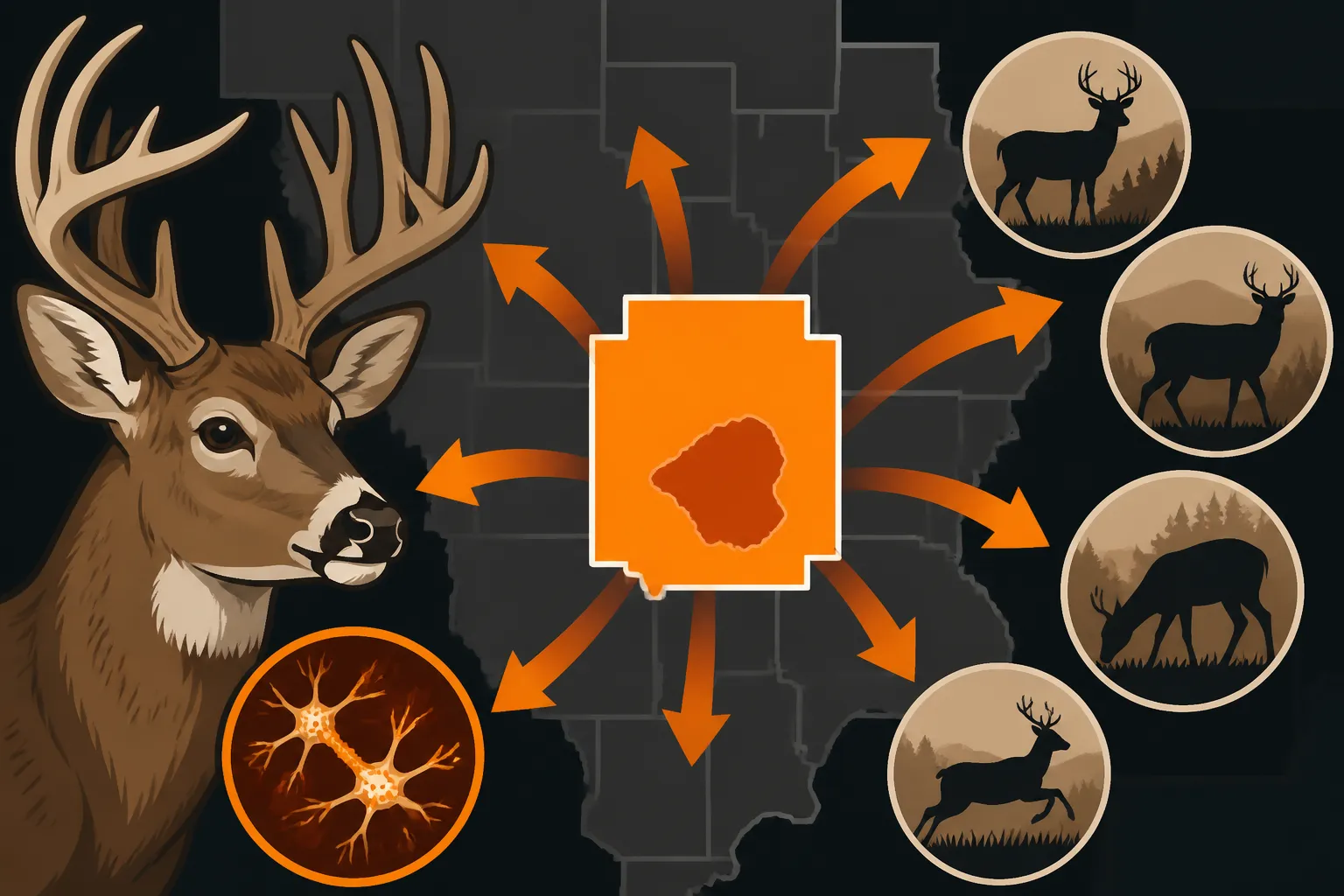
From its initial foothold in Boone County, CWD didn't just stay put. Over the past two decades, Illinois has watched with concern as the CWD zone expanded, primarily pushing south and west, affecting more and more of our state's diverse deer populations. It's a testament to the disease's tenacious nature and the challenges of containing it. This geographical creep has profoundly impacted "Illinois's Chronic Wasting Disease Zone".
Documenting the Southward Trend
The pattern of CWD spread from Boone County has been a slow, southward creep, largely tracking natural deer movements and the interconnectedness of habitats. Initially, positive cases remained concentrated in the immediate vicinity of Boone, including counties like Winnebago, McHenry, and DeKalb. However, as years turned into a decade, the disease was detected further south, reaching into counties like Ogle, Kane, and LaSalle. Biologists closely monitor "Illinois CWD Prevalence Rate Trends" to understand this progression.
The IDNR uses a comprehensive surveillance program, relying heavily on hunter-harvested deer, to track this expansion. By mapping the locations of positive samples year after year, a clear trend emerges: the disease, while still most prevalent in the northern tier of counties, has consistently shown up in new counties further downstate. This isn't a rapid, uncontrolled explosion, but rather a persistent, almost inevitable spread, driven by the factors we've already discussed. The fear is that without effective management, this southward march could eventually impact prime deer hunting regions further south, leading to even more widespread challenges for hunters and wildlife managers alike.
The Role of Specific Geographic Features
Illinois's geography, while seemingly flat in many areas, plays a subtle but significant role in how CWD progresses. Major river systems like the Rock River and the Fox River, which flow through or near the initial CWD zone, create natural corridors that deer utilize. These river bottoms, with their dense cover and consistent water sources, act as highways for deer movement, potentially facilitating the spread of prions along their courses. The network of smaller drainages and timbered fencerows that crisscross Illinois farmland also contributes to this spread, providing continuous cover that allows deer to move with relative ease between woodlots and fields over considerable distances.
Conversely, broad expanses of open agricultural land might act as a partial barrier, slowing down widespread dispersal, but they don't halt it entirely. Deer will still utilize timbered edges and creek beds to navigate these open areas. The topography of the land, from flat plains to rolling hills, influences deer density and movement patterns, which in turn influences CWD transmission dynamics. For instance, in areas with more fragmented habitats, deer may congregate more, increasing the risk of spread. Understanding these local geographical nuances helps IDNR target surveillance and management efforts, though the sheer scale of the landscape makes pinpointing every pathway nearly impossible.
Impacts on Illinois's Deer Herd and Hunting Culture
The spread of CWD from Boone County has had a tangible impact not just on the deer themselves, but on the very fabric of hunting in Illinois. It's a challenging situation that demands adaptation from both wildlife managers and the dedicated hunters who cherish our state's whitetails.
Ecological Consequences for Deer Populations
While the most visible consequence of CWD is ultimately the death of infected deer, the ecological impacts extend beyond individual animals. In areas with high CWD prevalence, studies have shown potential declines in deer populations, especially among adult bucks, which are often more susceptible to detection due to their wider movements and longer lifespans. This can alter the age structure and sex ratio of local herds, potentially affecting breeding success and overall population health. Additionally, as more deer succumb to the disease, it can create a cycle where environmental prion loads increase, making it harder for healthy deer to avoid infection.
The long-term health of our deer herd is a primary concern for the IDNR. While Illinois's overall deer population remains robust in many areas, the localized impacts of CWD are real. Hunters, who are often the first to notice changes in herd health or population dynamics, are encouraged to report any deer exhibiting symptoms of CWD, such as extreme emaciation, excessive drooling, or neurological signs. Platforms like GoHunt can help hunters understand game management units and CWD zones, allowing them to be more informed about local conditions. This vigilance is crucial for monitoring "How Many Deer Have Tested CWD-Positive in Illinois" and assessing the disease's ecological footprint.
Changing Hunter Behaviors and Regulations
The presence of CWD has undeniably altered hunting culture in Illinois. Gone are the days when hunters could simply harvest a deer and not think twice about disease. Now, ethical hunting includes being informed about CWD, participating in surveillance, and adhering to new regulations. Mandatory or voluntary "Illinois CWD Testing for Hunters" in affected counties is a common practice, and hunters are increasingly taking their deer to official sampling stations. This means adjusting post-harvest routines, from field dressing to transportation.
Furthermore, the IDNR has implemented specific hunting strategies in CWD management zones. For example, some areas have extended hunting seasons or additional antlerless permits to help reduce deer densities, aiming to slow the spread of the disease. This has led to discussions and, at times, frustration among hunters, some of whom feel these measures are too aggressive, while others support the proactive approach. The decision "Why IDNR Suspended Targeted Culling" in favor of hunter-driven harvest is a good example of the evolving management approach. Regardless of individual opinions, CWD has forced a collective re-evaluation of our role in wildlife management, urging us to be partners in monitoring and mitigating this persistent threat to Illinois's whitetails.
Ongoing Management Strategies and the Hunter's Role
The battle against CWD in Illinois is far from over, but the state, guided by scientific understanding and hunter cooperation, continues to adapt its strategies. As hunters, we are not just spectators; we are vital participants in this ongoing effort to manage the disease and protect the future of our deer herd.
IDNR's Adaptive Management Approaches
Since the initial detection in Boone County, the Illinois Department of Natural Resources (IDNR) has refined its CWD management strategies, moving from initial aggressive culling programs to a more adaptive approach that heavily relies on hunter participation. Key components of their strategy include:
- Surveillance and Monitoring: Extensive sampling of hunter-harvested deer, particularly in CWD-positive counties and adjacent areas, remains paramount. This allows the IDNR to track the disease's prevalence and geographical spread, providing critical data for decision-making. Hunters are strongly encouraged, and in some areas, it is "Mandatory Testing Inside an Illinois CWD County."
- Targeted Harvest: The IDNR encourages increased harvest of antlerless deer in CWD-affected areas through various permit structures and special seasons. The goal is to reduce overall deer density, which studies suggest can help slow the rate of disease transmission. Hunters can find detailed information on such permits and season dates through the IDNR website or through tools like GoHunt, which can overlay CWD zones with hunting opportunities.
- Carcass Movement Restrictions: To prevent human-assisted spread, strict rules are in place regarding the movement of deer carcasses harvested in CWD-positive counties. This often means only certain parts (deboned meat, clean skull plate, etc.) can leave the CWD management zone. Knowing how to responsibly handle and transport your harvest is crucial, especially for those considering "Moving a Deer Carcass Out of a CWD County."
- Public Education and Outreach: Continuous efforts are made to educate hunters and the general public about CWD, its risks, and the importance of compliance with regulations. This includes providing resources on proper carcass disposal, reporting sick deer, and understanding the science behind the disease.
These strategies are constantly evaluated and adjusted based on new scientific findings and the evolving dynamics of the disease, ensuring a proactive and responsive approach to protecting Illinois's deer.
The Hunter's Crucial Role in Surveillance and Control
As hunters, we are on the front lines of CWD management. Our participation isn't just helpful; it's absolutely essential. We represent the largest group of individuals interacting with the deer herd, making us invaluable partners in surveillance and control. Here’s how we contribute:
- Submitting Samples for Testing: When hunting in a CWD-affected county, taking your harvested deer to a "Finding an Illinois CWD Sampling Location" is one of the most direct ways to help. This provides the IDNR with the data they need to track the disease and refine their maps of affected areas. It’s a small extra step that yields immense value for conservation efforts.
- Adhering to Regulations: Following all rules regarding carcass movement, baiting restrictions (where applicable), and permit quotas is critical. These regulations are designed to limit the spread of the disease and protect the health of the deer herd for future generations.
- Reporting Sick Deer: If you observe a deer exhibiting signs consistent with CWD, immediately report it to the IDNR. While these symptoms are relatively rare, identifying them is crucial for isolating potential new outbreaks.
- Informed Decision-Making: Staying informed about the latest CWD updates from the IDNR, understanding "Illinois Deer Harvest Records," and making responsible choices about where and how you hunt empowers you to be a more effective conservationist. This includes being aware of the disease's presence in counties like Effingham and Scott, which were causes for concern for biologists due to their geographical position.
By embracing these responsibilities, Illinois hunters demonstrate their deep commitment not just to the thrill of the hunt, but to the long-term health and sustainability of our state's incredible white-tailed deer resource.
| Year Discovered (Approx.) | Affected Region (Initial) | Key Factors in Spread from Boone | Hunter's Role | IDNR Strategy |
|---|---|---|---|---|
| 2002 | Northern Illinois (Boone County) | Natural deer movement, human carcass transport | Harvest, Test, Report, Comply | Surveillance, Targeted Harvest, Carcass Restrictions |
| Ongoing Expansion | Southward & Westward | Prion persistence in environment, deer density, habitat corridors | Education, Informed Decisions, Ethical Practices | Adaptive Management, Public Outreach |
Disclaimer
This article provides general information about Chronic Wasting Disease in Illinois. Hunting regulations and disease management protocols can change. Always consult the official Illinois Department of Natural Resources (IDNR) website or relevant authorities for the most current and accurate information before planning your hunt.