Best Illinois Counties for Pheasant
If you're an upland bird hunter in Illinois, you know the quest for pheasants can feel like chasing a ghost. Unlike the heyday of decades past, finding wild ring-necked pheasants across the Illinois landscape is a genuine challenge. This guide won't sugarcoat the difficulties, but it will arm you with realistic expectations and actionable strategies to identify the pockets where these beautiful birds still manage to thrive, and how to maximize your chances of flushing one.
The Reality of Wild Pheasant Hunting in Illinois
Let's be honest right from the start: Illinois isn't South Dakota when it comes to wild pheasants. Many hunters lament the decline of these iconic birds, and their frustrations are absolutely valid. The landscape has changed dramatically, and with it, the fortunes of the pheasant. Understanding why this has happened is the first step in figuring out where you might still find them.
A Landscape Transformed: Why Wild Pheasants Faded From Illinois
The rich, black soil of Illinois that makes it such an agricultural powerhouse is, ironically, the primary reason for the pheasant's decline. Historically, Illinois offered a mosaic of small farms, diverse crop rotations, fencerows, and plenty of idle grasslands – perfect pheasant country. But over the last several decades, that mosaic has largely been replaced by vast monocultures of corn and soybeans.
Think about it: those old-timers talk about pheasants flushing from every ditch and hedgerow. Those features, however, are now largely gone. Fencerows were ripped out to accommodate larger equipment and maximize tillable acreage. Diverse crop rotations, which often included small grains and hayfields that provided vital nesting cover, were replaced by continuous corn and soy. Pesticide use, while necessary for modern agriculture, also reduces insect populations that young pheasant chicks rely on for food. The cumulative effect is a severe reduction in the specific habitat pheasants need to nest, raise their broods, escape predators, and survive harsh winters. It’s a sad reality, and it means the old maps and traditional wisdom often don't apply anymore. This transformation is a significant part of Why Wild Pheasants Faded From Illinois from our landscape.
Understanding Current Population Trends
While the widespread, robust populations of yesteryear are a distant memory, it's not entirely grim news. Pheasants aren't completely gone. Instead, their populations are highly localized and incredibly dependent on specific, high-quality habitat remaining in smaller, often isolated pockets. We're talking about remnants of grassland, areas enrolled in conservation programs, or parcels of land managed specifically for wildlife.
Biologists tasked with tracking these scattered populations face an uphill battle. The birds exist in a low-density, fragmented pattern, making broad-stroke population estimates challenging. What this means for you, the hunter, is that you can't just pick a "good pheasant county" and expect to find birds everywhere. Success today is about drilling down to the micro-habitat level. It's about finding that needle in a haystack—the specific field edge, the brushy creek bottom, or the neglected corner of a farm that still offers everything a pheasant needs. It requires persistence, keen observation, and often a bit of detective work, but that makes flushing a wild bird all the more rewarding.
Pockets of Hope: Where Wild Pheasants Still Persist
So, if the old pheasant factories are mostly gone, where do you even start looking? It all boils down to habitat. Wild pheasants are tenacious survivors, but they cannot create their own ideal living conditions. They need specific cover, food, and water, and where those elements align, even in small doses, you might find birds.
Habitat is King: Focus on Grasslands and CRP
If you remember one thing about finding wild pheasants, it's this: think grass. Ring-necked pheasants are grassland birds, first and foremost. They need dense, tall, undisturbed grass for nesting, hiding from predators, and surviving the brutal Illinois winters. This isn't just any grass; we're talking about native prairie grasses, switchgrass, or dense stands of fescue that offer overhead cover and a thick understory.
One of the best places to find this critical habitat is on lands enrolled in the Conservation Reserve Program (CRP). CRP pays farmers to take environmentally sensitive land out of agricultural production and plant it with grasses and other beneficial cover. These CRP fields, especially older, well-established ones that haven't been disturbed in years, are absolute magnets for pheasants. They provide essential nesting areas in spring, bugging grounds for chicks in summer, and crucial thermal cover in winter. Look for large blocks of CRP adjacent to waste grain fields – that combination is dynamite. For more detailed insights, check out our piece on Pheasant Hunting Illinois Grassland. Cattail marshes and areas of thick, impenetrable brush can also serve as fantastic winter roosting and escape cover, often holding birds when other areas are barren.
Northern and Central Illinois: The Best (Remaining) Chances
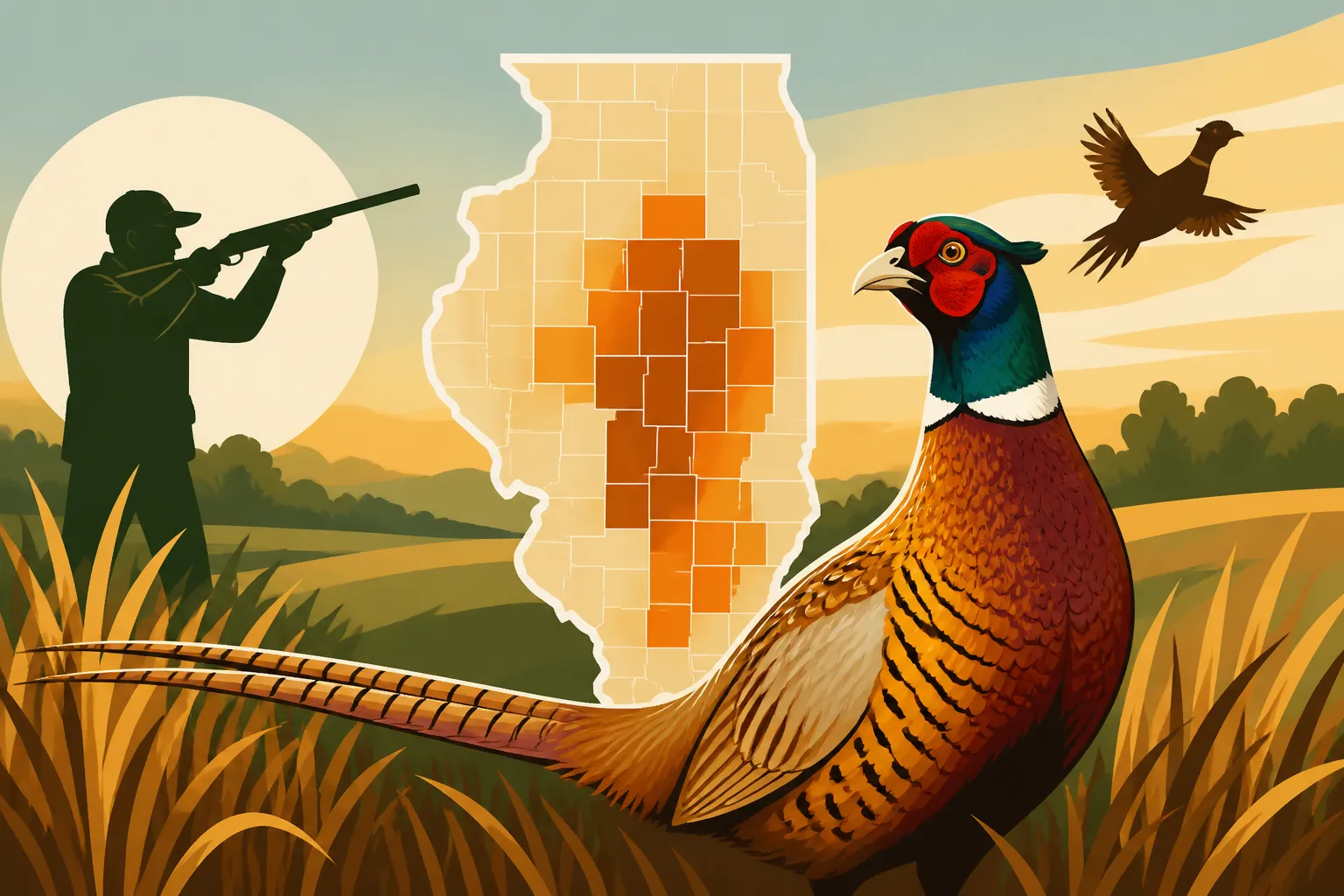
Historically, and even today, your best chances of encountering wild pheasants in Illinois lie in the northern and central parts of the state. These regions, particularly the counties with a slightly more diverse agricultural landscape or those that still retain significant patches of remnant prairie and extensive CRP enrollments, offer the highest likelihood. We're not talking about every field in every county, but rather specific areas within these regions.
Consider counties that have a mix of corn, soybeans, and some livestock operations, as these tend to maintain more varied landscapes with fencerows and pastures. Areas with a strong history of conservation efforts, either through state programs or private landowner initiatives, also tend to hold onto their wild pheasant populations better than others. It's less about a county line on a map and more about the micro-level land use within that county. Tools like GoHunt can be invaluable here, allowing you to layer satellite imagery with public land boundaries and even identify potential private land habitat that looks promising for pheasants. You can pinpoint those crucial grass fields, brushy draws, and untamed creek bottoms that might be holding birds.
The Role of Specific Counties and Local Efforts
While naming a definitive "best" county can be misleading due to the localized nature of wild pheasant populations, certain areas have historically stood out and continue to offer some potential. Counties with significant public land holdings that manage for upland habitat, or those with a high percentage of private land enrolled in federal conservation programs, are your best bets. Areas like those near the Illinois River Valley, for instance, might offer a diverse landscape where some pockets of pheasant habitat can persist. Hunting Illinois River Valley Diving Ducks is a different pursuit, but shows the diversity of the river counties.
Success often comes down to finding that specific landowner who believes in habitat management, or discovering a lesser-known public parcel that hasn't been completely overwhelmed by agricultural creep. This kind of hunting isn't for the faint of heart; it's for the dedicated hunter who enjoys the process of scouting as much as the hunt itself. Developing relationships with local farmers and landowners is paramount. Often, a small patch of neglected land on a private farm, carefully managed or simply left alone, can produce a few flushes year after year. It's a testament to the resilience of the birds and the dedication of individuals to preserve their habitat.
Maximizing Your Chances: Strategy for Illinois Pheasants
Now that we know where to look, let's talk about how to improve your odds. Finding wild pheasants in Illinois requires a specific approach, often combining public land knowledge with the careful pursuit of private land access.
Public Land Opportunities and Stocked Birds
For many hunters, especially those without extensive private land connections, public hunting areas with stocked birds offer the most consistent pheasant hunting experience in Illinois. The Illinois Department of Natural Resources (IDNR) manages a number of State Fish and Wildlife Areas (SFWAs) that participate in a pheasant stocking program. These sites are a fantastic resource, allowing hunters access to areas where birds are released throughout the season.
Hunting these areas requires a bit of planning, including special permits in addition to your regular hunting license and habitat stamp. The season dates and specific rules for these sites can vary, so it's crucial to check the IDNR regulations for the specific site you plan to visit. While these birds aren't "wild" in the same sense as native populations, they offer a challenging and enjoyable hunt, especially for those new to upland bird hunting or anyone looking for a more guaranteed opportunity. Knowing the Illinois Pheasant Stocking Locations and the Illinois Pheasant Season and Stocking rules is key here. These sites often have excellent habitat management, providing good cover that even stocked birds will utilize to avoid hunters.
Seeking Private Land Access
If your dream is to flush truly wild Illinois pheasants, then securing private land access will likely be your best bet. The majority of prime pheasant habitat, even in its reduced state, is found on private farms. This might sound daunting, but a respectful approach and a willingness to build a relationship with landowners can open doors.
Start by identifying areas that look like good pheasant habitat from public roads or by using mapping tools like GoHunt. Look for those un-mowed field edges, brushy creek bottoms, old farmsteads, or significant blocks of CRP. Once you've identified a promising area, research the landowner. A polite, face-to-face visit, ideally not during a busy harvest season, is usually the most effective approach. Explain who you are, what you're looking for, and offer to share some of your harvest. Many farmers appreciate hunters who respect their land, close gates, and are safety-conscious. Building trust takes time, but a good relationship with one landowner can lead to opportunities on neighboring properties. This approach is central to Getting Private Land Permission in Illinois for any species. Remember, never trespass, and always obtain explicit permission.
Effective Scouting and Hunting Tactics
Whether you're on public ground or private, smart scouting and effective hunting tactics are paramount. Before the season, or even during, use tools like GoHunt to examine satellite imagery. Look for those transitions where row crops meet grass, brush, or timber. Identify pinch points, drainages, and areas of dense cover where pheasants might congregate. Pay attention to fields that have not been harvested right away, like standing corn or milo, as these can hold birds late into the season. Scouting Illinois Public Land Before Season is always a good idea, and the same principles apply to private land.
When it comes to the hunt itself, pheasants are known for holding tight. They'd rather run than fly, so you need to be methodical. Walking slowly, pausing frequently, and working in a line with other hunters can help push birds into flushing range. Hunting with a good bird dog, particularly a pointing dog or a flushing retriever, is a game-changer. A dog's nose can find birds that you'd walk right past, and their retrieving skills are invaluable for finding downed birds in thick cover. For those interested, diving into Running Pointing Dogs on Illinois Pheasants can provide a lot more insight. Focus your efforts on the thickest cover available, especially around midday when birds might be loafing. Don't overlook small, isolated patches of cover; a single pheasant can make a tiny clump of weeds feel like a forest.
Comparative Look at Pheasant Hunting Opportunities
Let's lay out the differences between chasing elusive wild pheasants and hunting on stocked public land. Both offer unique experiences, but knowing what to expect can help you plan your season.
| Feature | Wild Pheasant Hunting | Stocked Pheasant Hunting (e.g., IDNR sites) |
|---|---|---|
| Location Focus | Specific habitat patches in northern/central Illinois, often private land or small public tracts. | Designated State Fish & Wildlife Areas with active stocking programs. |
| Bird Abundance | Low, scattered, highly dependent on local, unmanaged habitat; finding one is a triumph. | Moderate to high, concentrated by regular release efforts; more consistent flushes. |
| Challenge Level | High – extensive scouting, gaining access, finding wary birds in often difficult-to-reach cover. | Moderate – birds can be wary, but are more predictable in terms of location; often more hunters. |
| Required Permits | Base hunting license, Illinois State Habitat Stamp, HIP certification (if migratory birds also hunted). | Base license, State Habitat Stamp, HIP certification, PLUS a special pheasant permit for the specific site. |
| Dog Benefit | Essential for finding hidden birds and retrieving those that fall in thick cover, greatly increases success. | Highly beneficial for finding birds quickly and efficiently, as well as retrieving to avoid lost game. |
| "Wild" Experience" | High – the thrill of genuinely wild, unpredictable birds; more physical and demanding. | Lower – a more controlled environment, but still offers an exciting hunt, especially for new hunters. |
| Cost | Licenses only (plus travel/gear) unless leasing private land. | Licenses + specific pheasant permit fee for each day or period of hunting. |
Ultimately, hunting for pheasants in Illinois, especially wild ones, is a rewarding challenge. It’s a hunt that often teaches you more about habitat and persistence than about sheer numbers of birds. But when that iridescent cock pheasant explodes from a grass clump with a cackle, all the effort becomes worthwhile.
Disclaimer
This article is for general informational purposes only and does not constitute professional advice. Laws, prices and regulations vary by location and change over time. Consult a qualified professional for guidance on your specific situation.