Illinois Cottontail Population Trend
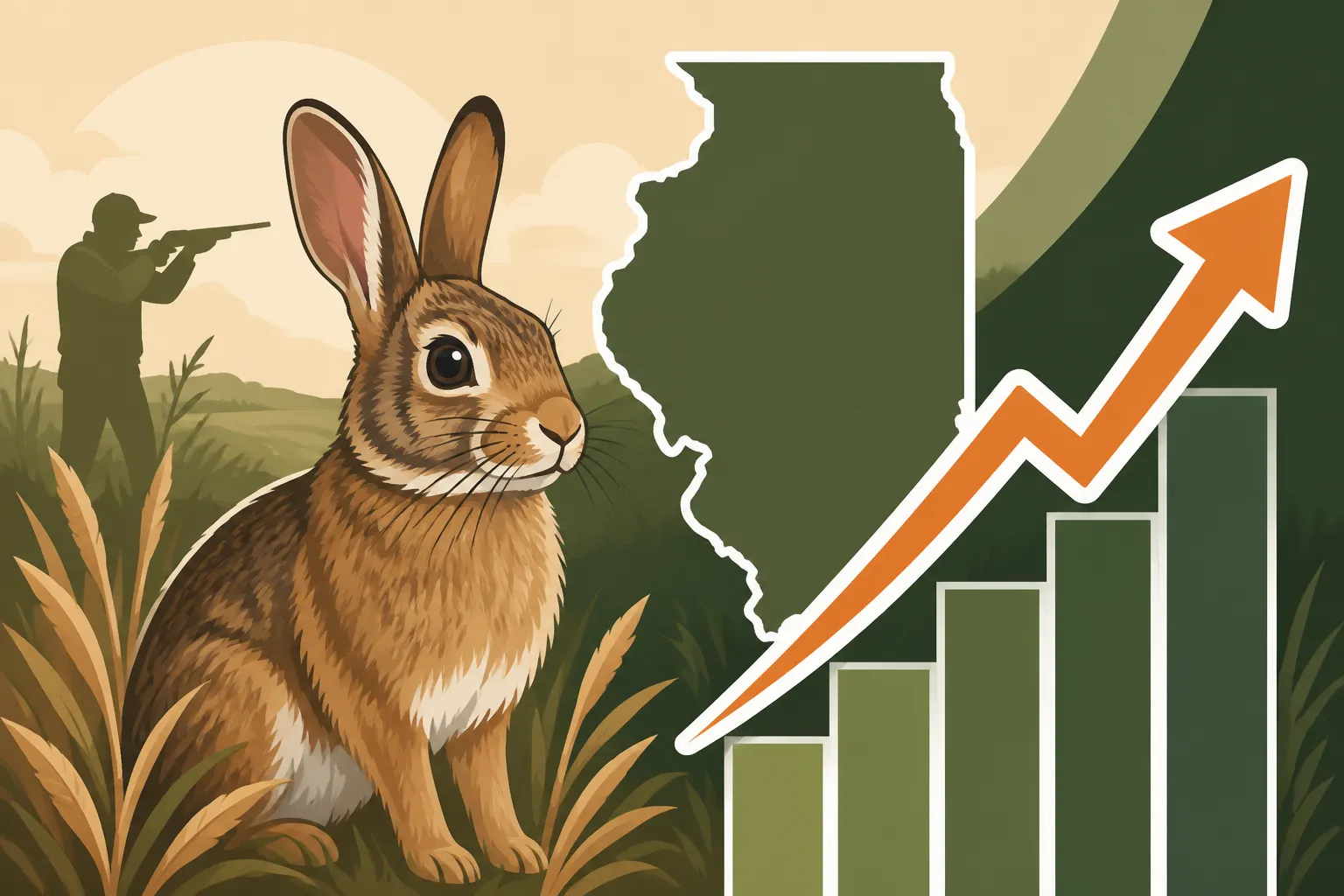
For anyone who grew up in Illinois listening to tales of grandfathers and great-uncles filling their game vests with cottontail rabbits from every fencerow and woodlot, the current reality can feel a bit disheartening. The days of simply walking out your back door and bagging a limit of bunnies seem, for many, to be a distant memory. This guide will delve into the observable trends in Illinois's cottontail rabbit population, exploring the historical highs, the factors behind their decline, and what efforts are being made to ensure these iconic small game animals remain a vital part of our state's wildlife.
The Historical Picture: Where Have All the Cottontails Gone?
It’s easy to romanticize the past, but when it comes to small game like cottontail rabbits in Illinois, there’s a real basis for those nostalgic stories. For decades, rabbits were incredibly abundant, a staple for many families and a prime target for young hunters just getting their start. But like so many things, the landscape — and with it, the rabbit population — has seen significant shifts.
Golden Age of Small Game: A Look Back at Illinois's Past
Imagine Illinois in the mid-20th century. Picture a patchwork quilt of small family farms, each with its own network of brushy fencerows, small woodlots, creek bottoms choked with briars, and fallow fields slowly returning to nature. This wasn't just pretty scenery; it was prime cottontail habitat. Rabbits thrive in what we often call "edge" habitat – places where different types of cover meet, offering both food and refuge. The sheer diversity of agricultural practices back then, with smaller fields and less intensive cultivation, created an ideal environment. My own grandfather used to tell me stories about how he and his brothers would hunt after school, often bringing home a mess of rabbits for dinner, sometimes without even leaving their own property. They saw it as both a sport and a practical way to put food on the table. Those were the days when Illinois Small Game Season Rules were often a family tradition, passed down through generations.
The farming methods employed then, which were far less industrial than today's, naturally provided everything a rabbit needed. Think of hay fields, clover patches, and grain fields side-by-side with dense thickets and brush piles. This created an incredible mosaic of protection from predators and an endless buffet of forage. The landscape itself was a rabbit factory, practically. You could almost trip over them in certain areas, especially during good weather.
The Unseen Changes: Habitat Loss as the Primary Culprit
Fast forward to today, and that idyllic landscape is largely a thing of the past. The biggest reason for the decline in Illinois cottontail populations, and indeed many other small game species, is unequivocally habitat loss. It's not one single cause but a confluence of factors that have reshaped our state.
Firstly, the intensification of agriculture has been a massive blow. Those charming, brushy fencerows? Many have been ripped out to make way for larger, more efficient fields, maximizing tillable acreage. Small woodlots have been cleared, and creek bottoms have been "cleaned up" or farmed right up to the bank. Modern farming practices often involve vast monoculture fields, leaving little diversity or escape cover for rabbits. A rabbit can't live in a 100-acre soybean field with nowhere to hide from a hawk or coyote. They need that thick, gnarly stuff—the briars, the multiflora rose, the tangled honeysuckle. When these features vanish, so do the rabbits.
Secondly, urban and suburban sprawl relentlessly consumes former agricultural and natural lands. As towns expand, housing developments, shopping centers, and new roads pave over prime rabbit habitat. Even if a small pocket of woods remains, it often becomes isolated, surrounded by concrete and manicured lawns that offer no real sustenance or protection for wildlife. It's a classic example of death by a thousand cuts; each development takes a small piece, but cumulatively, it's devastating.
Lastly, the decline in certain federal conservation programs, or shifts in their focus, has also played a role. Programs like the Conservation Reserve Program (CRP) once incentivized farmers to take marginal lands out of production and plant native grasses and wildflowers, creating fantastic habitat. While CRP still exists, the acreage enrolled and the types of plantings have changed over time, sometimes leading to less optimal cover for rabbits. The loss of idle fields and diverse crop rotation has left cottontails with fewer places to live and less food to eat.
Understanding the Modern Illinois Cottontail Landscape
So, where does that leave us today? While the numbers aren't what they once were, it’s not all doom and gloom. Illinois still has cottontail rabbits, but their distribution has become more concentrated, and finding them requires a more strategic approach.
Fragmented Havens: Where Rabbits Still Thrive
Despite the widespread habitat loss, rabbits haven't disappeared entirely. They've simply retreated to the remaining pockets of suitable habitat. These fragmented havens are primarily found in specific areas across the state. River bottoms, for example, often retain dense, tangled vegetation along their banks, providing excellent cover. Areas where landowners haven't "cleaned up" every brush pile or fencerow can be absolute honey holes. Old homesteads, forgotten corners of farms, and small neglected woodlots are often where you’ll find them. Public lands also play a crucial role. State Fish and Wildlife Areas, State Parks, and even some federal properties often manage for small game habitat, meaning they intentionally leave areas thick and brushy.
I recently found a fantastic spot along a small creek that feeds into the Illinois River. It was a narrow strip of timber, maybe 50 yards wide, but it was absolutely choked with greenbriar, fallen timber, and honeysuckle. It looked impenetrable, and that's exactly why the rabbits loved it. I used a mapping tool like GoHunt to scout the area beforehand, identifying these thicker, less accessible spots on aerial imagery. It’s these overlooked, "messy" areas that are now the prime locations for hunters hoping to find a good population of cottontails. Understanding Scouting Illinois Public Land Before Season becomes crucial for identifying these prime spots. You might also find good numbers in specific cover types; Rabbit Hunting Illinois Fencerows still yields rabbits if those fencerows are left undisturbed, and Rabbit Hunting Thick Illinois Brush is where you’ll usually find the best action.
The Impact of Predator Populations and Disease
While habitat loss is the undeniable heavyweight champion of rabbit decline, other factors certainly play a supporting role. Predator populations, particularly coyotes, foxes, and bobcats, have rebounded in many parts of Illinois. These opportunistic hunters certainly take their toll on rabbit populations. When habitat is fragmented, rabbits are more exposed and vulnerable as they move between small patches of cover, making them easier targets for predators.
Diseases also factor in, though perhaps less visibly. Tularemia, often called "rabbit fever," is a bacterial disease that can be transmitted to humans and is usually fatal to rabbits. While not widespread enough to decimate entire populations, localized outbreaks can significantly reduce numbers in a particular area. Fibromas, which are benign skin tumors, can also affect rabbits, though they are usually not fatal unless they impede a rabbit's ability to eat or move. Observing a sick or diseased rabbit in the field is a good reminder of the natural cycle, and knowing about Illinois Wildlife Disease Monitoring can offer more context.
Predator populations ebb and flow, and their impact is often most pronounced when rabbits are already struggling due to lack of cover. A healthy rabbit population in robust habitat can often withstand typical predation pressure, but a smaller, stressed population in sparse habitat is far more susceptible to being wiped out.
What's Being Done and How Hunters Can Help
It's not all grim news. Many dedicated individuals and organizations are working hard to reverse these trends and bolster Illinois's cottontail populations. Hunters, in particular, have a vital role to play in both understanding and contributing to these efforts.
Conservation Efforts and Habitat Restoration Initiatives
The Illinois Department of Natural Resources (IDNR) and various conservation groups are actively engaged in habitat restoration projects across the state. Much of this work focuses on creating and enhancing the "edge" habitat that rabbits and other small game species desperately need. This includes planting native grasses and forbs, developing brush piles, and managing timber to create dense undergrowth.
Programs like the federal Farm Bill’s Conservation Reserve Program (CRP) and Environmental Quality Incentives Program (EQUIP) continue to offer incentives for private landowners to implement conservation practices that benefit wildlife. Organizations such as Pheasants Forever and Quail Forever, while focusing on their namesake species, are also instrumental in creating habitat that directly benefits cottontails. Their local chapters often work with landowners to restore field borders, plant hedgerows, and manage woodlands for better small game cover. When you see efforts to improve habitat for quail, know that rabbits are usually benefiting right alongside them.
Many of these initiatives focus on connecting fragmented habitat pieces, creating corridors that allow rabbits to move more safely and find new food sources and mates. It’s a slow process, but every acre of restored habitat is a victory for small game.
Hunter's Role: Habitat Improvement and Ethical Harvesting
As hunters, we have a profound responsibility and opportunity to contribute to rabbit conservation. We are, after all, some of the most invested stewards of the land. One of the most impactful things hunters can do is engage in habitat improvement projects, especially on private land where they have access.
- Create Brush Piles: This is perhaps the easiest and most effective way to provide immediate cover. Cut down unwanted saplings or collect fallen branches and stack them into dense, multi-layered piles. These provide instant shelter from predators and harsh weather.
- Leave Unkempt Areas: Resist the urge to "clean up" every corner of your property. That forgotten patch of briars, the tangled sumac clump, or the unmowed field edge might look messy to some, but it’s a rabbit paradise. Allowing these areas to grow wild provides essential escape and nesting cover.
- Plant Native Shrubs and Perennials: Certain native plants like blackberry, wild plum, and various native grasses offer both food and cover. Consult with local conservation groups for advice on what grows best in your area.
- Ethical Harvesting: While rabbit hunting doesn't typically involve complex population management like deer, practicing ethical harvesting is still important. This means knowing your local population, avoiding over-harvesting specific small areas, and focusing on quality hunts rather than just quantity.
Understanding the principles of Habitat Work on Illinois Fish and Wildlife Areas can provide inspiration for what can be achieved on private ground. Tools like GoHunt can help you visualize current land use and identify areas ripe for habitat improvement, or pinpoint existing "messy" areas on public land that might hold rabbits. By actively participating in habitat creation and respecting the local populations, we ensure that future generations can still experience the thrill of a beagle chase or the satisfaction of bringing home a cottontail for the stew pot.
| Factor | Impact on Cottontail Population | Historical Context | Modern Trend |
|---|---|---|---|
| Habitat Loss | Major Negative | Diverse small farms, brushy fencerows, fallow fields | Large monoculture fields, urban sprawl, "clean farming" |
| Predation | Moderate Negative | Stable predator populations, balanced ecosystem | Increased coyote/fox presence, fragmented habitat |
| Disease | Minor Negative | Natural occurrence, localized impacts | Localized outbreaks, stress on fragmented populations |
| Conservation Efforts | Moderate Positive | Limited formal programs | IDNR initiatives, Farm Bill programs, NGO work |
| Hunter Participation | Moderate Positive | Tradition of small game hunting | Declining hunter numbers, but growing habitat focus |
Disclaimer
This article is for general informational purposes only and does not constitute professional advice. Laws, prices and regulations vary by location and change over time. Consult a qualified professional for guidance on your specific situation.