Illinois Fox Squirrel Color Variations
Have you ever been out in the Illinois woods, perhaps chasing after a bushy-tailed phantom, and suddenly stopped dead in your tracks, wondering if you just saw a squirrel that defied all expectations? It’s common to think all fox squirrels look a certain way, usually that familiar reddish-orange. But the truth is, these clever critters in Illinois boast a surprisingly wide array of color variations, which can sometimes make identifying them a fun challenge for any hunter or wildlife enthusiast. This guide will dive deep into the fascinating spectrum of fox squirrel colors you might encounter across our beautiful state, helping you understand why these differences occur and what to look for when you’re out in the field.
Understanding the Illinois Fox Squirrel
Before we get too deep into their dazzling coats, let’s quickly touch on the fox squirrel ( Sciurus niger) itself. These are the largest tree squirrels in Illinois, and indeed, in much of North America. They’re a favorite target for small game hunters, and for good reason—they provide excellent table fare and offer a challenging hunt. Unlike their smaller, more social gray squirrel cousins, fox squirrels tend to be a bit more solitary and often prefer more open woodlots, isolated trees along field edges, and even suburban parks rather than dense, unbroken forest. Their robust size, typically weighing between one and three pounds, is often the first clue you’ve spotted a fox squirrel, even before you get a good look at its coloration.
Their typical daily routine involves foraging on the ground for nuts, seeds, and fungi, and then scampering up a tree to enjoy their meal or escape perceived threats. They're incredibly intelligent and adaptable, which is part of why they thrive in such varied Illinois landscapes, from the bottomland hardwoods of the major river systems to the small woodlots interspersed with vast agricultural fields. Whether you're hunting them in Squirrel Hunting Illinois Bottomland Hardwoods or focusing on isolated pockets, understanding their habits is key, regardless of their fur color.
The Kaleidoscope of Fox Squirrel Colors in Illinois
While many people picture a very specific look when they hear "fox squirrel," the reality in Illinois is much more varied. Their coats can truly run the gamut, influenced by genetics and sometimes subtle environmental factors. It's like a painter with a whole palette, not just a single tube of orange.
The Classic Reddish-Orange and Brown
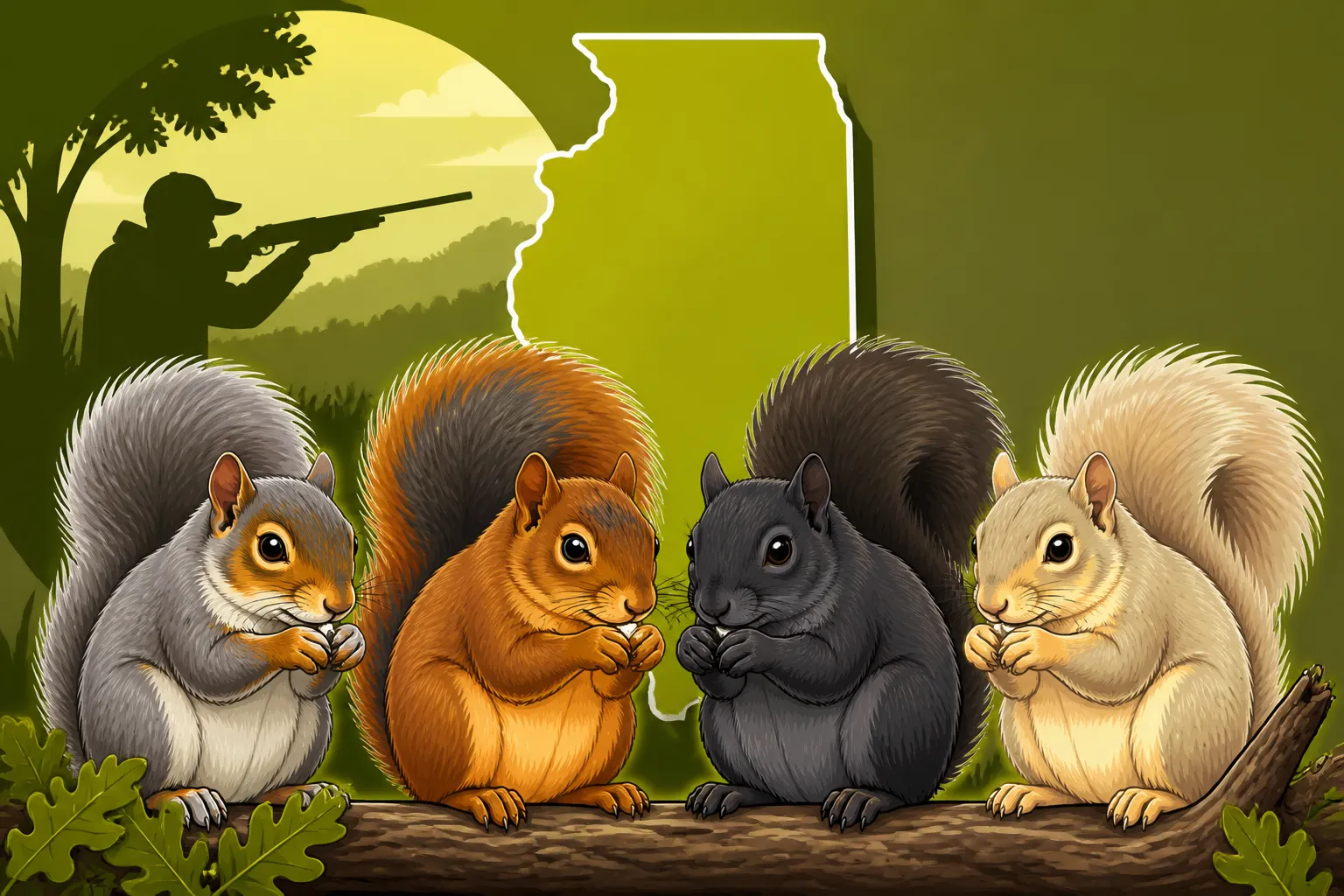
The most commonly observed and universally recognized fox squirrel in Illinois sports a striking reddish-orange belly, often extending up its sides. Its back and head are typically a mix of rusty brown, grizzled with touches of gray and black hairs. This coloration provides excellent camouflage against tree bark, fallen leaves, and sun-dappled branches, making them surprisingly difficult to spot when they freeze.
This traditional color pattern is what many hunters grow up seeing and expecting. It’s the benchmark against which other variations are measured. The tail is usually a mix of these colors, often with a frosted or light-colored tip, giving it that characteristic bushy, vibrant appearance that makes a fox squirrel’s tail almost as iconic as its body. When you’re glassing a distant oak in a field, this is often the color that stands out against the green or gold of the leaves.
Melanistic (Black) Fox Squirrels
Perhaps the most dramatic departure from the norm, melanistic fox squirrels are almost entirely black. While more common in some urban areas or specific genetic pockets, these jet-black squirrels can certainly be found in parts of Illinois. Seeing one can be quite a shock if you're not expecting it, as it might lead you to question what kind of animal you're even looking at.
These aren't a different species; they simply carry a gene for increased melanin production, resulting in a dark, almost uniform black coat. Their tails might still have a faint hint of grizzled gray or brown, but the overall impression is one of sleek, dark fur. Identifying these relies less on color and more on their larger size and typical fox squirrel behavior, such as their preference for more open habitats compared to the dense woods often favored by true black gray squirrels. When observing these unique individuals, knowing the typical Gray Versus Fox Squirrels in Illinois characteristics becomes even more important than just color.
Leucistic (Cream to White) Variations
On the opposite end of the spectrum from melanism, you might occasionally encounter a leucistic fox squirrel. These squirrels display a partial loss of pigmentation, resulting in lighter, creamy, or even pure white patches of fur. Unlike albinism, which involves a complete lack of melanin and often red or pink eyes, leucistic animals typically have normal eye color.
A leucistic fox squirrel could have a patchy white and orange coat, or be almost entirely a pale cream color. These individuals are quite rare and can be a truly remarkable sight. From a hunting perspective, their unusual coloration can make them stand out dramatically against natural backgrounds, potentially making them easier targets but also more prone to predator detection. They are certainly a conversation starter at deer camp.
Erythristic (Red) Variations
Another beautiful, albeit rarer, variation is the erythristic fox squirrel, characterized by an abundance of red pigmentation. These squirrels can appear a much deeper, more vibrant reddish-orange or even brick-red than the typical fox squirrel. Sometimes, their entire coat, including their back, takes on this intense hue, rather than just their belly.
These "red phase" squirrels are less common but can be stunning to observe. They highlight the incredible genetic diversity within the species. For hunters, recognizing this as a fox squirrel, despite its unique color, is important for ensuring you're adhering to all Illinois Squirrel Season Dates and bag limits, as they are still the same species as their more common counterparts.
Other Mixed and Mottled Patterns
Beyond these distinct categories, fox squirrels can exhibit a blend of these colors or unique mottled patterns. You might see a squirrel that is predominantly brown but with a much lighter, almost blonde belly, or one with a heavily grizzled back that looks more gray than brown. Some individuals can have a mix of black and orange patches, especially if they are a carrier for the melanistic gene.
The exact shade of red, orange, brown, or black can also vary subtly from one squirrel to another, even within the same woodlot, due to slight genetic differences. It’s part of what makes observing these animals so engaging – you never quite know what unique combination you’ll stumble upon. This variability speaks to the robust genetic health of Illinois's squirrel populations.
Factors Influencing Fox Squirrel Color
So, why do these fascinating color variations occur? It’s not just random chance; there are biological and environmental reasons behind the spectrum of colors we see.
The Power of Genetics
The primary driver of fox squirrel coloration is genetics. Just like hair and eye color in humans, fur color in squirrels is determined by genes passed down from their parents. Melanism, leucism, and erythrism are all genetic mutations or variations.
For example, a melanistic squirrel carries a gene that causes its body to produce an excess of melanin, the pigment responsible for dark colors. Conversely, a leucistic squirrel has a gene that inhibits pigment production in some or all of its fur cells. These genes can be recessive, meaning both parents might carry the gene without showing the trait themselves, but if two carriers breed, their offspring have a chance of exhibiting the unusual coloration. This genetic lottery creates the beautiful diversity we observe. Understanding these underlying genetic principles helps us appreciate the rare beauty of these animals, and it’s a good reminder that not every animal will fit into a neat, easily categorized box.
Diet and Environmental Influences
While genetics are king, diet and environmental factors can subtly influence a squirrel’s coat, though they typically don’t cause dramatic color shifts like a genetic mutation would. A healthy diet rich in nuts, seeds, and fungi can contribute to a lustrous, vibrant coat, making the colors appear richer and more intense. Conversely, a poor diet or stress could potentially result in a duller, less vibrant fur.
Sun exposure can also play a minor role. Just as human hair can lighten in the sun, prolonged exposure might cause some slight fading or bleaching of a squirrel's fur over time, though this effect is generally minimal and temporary, reversing with the next molt. These environmental factors are more about the quality and sheen of the fur rather than fundamentally altering its base color.
Age and Molting Cycles
A squirrel's appearance can also change throughout its life and with the seasons. Young squirrels, or kits, often have a softer, somewhat less defined coloration than mature adults. As they grow, their coats typically darken and take on the more characteristic hues of their genetic makeup.
Fox squirrels also undergo molting cycles, usually twice a year (spring and fall), where they shed their old fur and grow a new coat. The new fur can sometimes appear slightly different from the old, perhaps a bit richer in color, especially after the fall molt when they grow a denser winter coat. So, a squirrel you saw in the spring might look a touch different in the fall, even if the underlying genetic color pattern remains the same. These seasonal changes are part of their natural adaptation to the varying Illinois climate.
Practical Considerations for Illinois Hunters
For those of us who love to chase small game in Illinois, understanding these color variations adds another layer to the hunting experience. It's not just about taking game; it's about observing and appreciating the wildlife around us.
Identification Beyond Color
When you spot a squirrel that doesn't fit the typical mold, don't let its color throw you off. Remember, physical characteristics and behavior are often more reliable indicators of species than color alone. Fox squirrels are noticeably larger than gray squirrels, with a broader head and a less "twitchy" demeanor. Their tails are typically very bushy, and they often spend more time on the ground foraging.
If you’re hunting in an area like Hunting Central Illinois Farmland Deer where woodlots are scattered, you’re far more likely to encounter fox squirrels than grays. Using tools like the mapping features on platforms like GoHunt can help you scout the terrain for prime squirrel habitat, regardless of what color squirrels you might find there. Always observe the animal's size, shape, and how it moves. A large, robust squirrel, even if it's entirely black, is most likely an Illinois fox squirrel.
Habitat Clues and Species Distribution
While color can be deceptive, habitat preferences are often more consistent. Fox squirrels generally prefer more open, mature woodlands with a diverse understory, or even isolated trees and fencerows. Gray squirrels, conversely, tend to favor denser, more continuous canopy cover, often found in larger tracts of timber.
If you're deep in the Shawnee National Forest Hunting, you might find both species, but as you move out into the more fragmented landscapes of central Illinois, fox squirrels become dominant. Knowing the typical squirrel species for a given habitat, along with their general behaviors, can help confirm your identification. When you're Scouting Illinois Public Land Before Season, pay attention to the type of timber and undergrowth; this can give you a clue about what squirrel species you're likely to encounter.
Ethical Hunting and Respect for Wildlife
Regardless of their color, all fox squirrels are the same species and fall under the same hunting regulations in Illinois. There’s no special permit for a black squirrel, nor any protection for a white one (unless it's an albino with protected status in specific municipal areas, which is usually clearly marked and rare). Always be sure of your target and confirm it's a legal game animal before taking a shot.
Observing these unique color variations can make a day in the field even more memorable. It's a reminder of the wildness and diversity that thrives even in our familiar Illinois landscapes. For hunters, it's a chance to connect more deeply with the natural world and appreciate the incredible array of life within it. And who knows, you might just get to tell a truly unique hunting story about that one time you saw a "ghost" squirrel or a "shadow" squirrel!
| Characteristic | Typical Fox Squirrel | Melanistic Fox Squirrel | Leucistic Fox Squirrel | Erythristic Fox Squirrel |
|---|---|---|---|---|
| Primary Body Color | Reddish-brown, grizzled with gray/black | Uniform glossy black | Cream, white, or patchy light colors | Deep reddish-orange to brick-red |
| Belly Color | Rusty orange | Black (often uniform with body) | White or pale cream | Intense reddish-orange |
| Tail Color | Mix of body colors, often with frosted tip | Dark, sometimes with faint grizzled tips | White or pale | Deep red, uniform |
| Eye Color | Dark (brown/black) | Dark (brown/black) | Normal (dark), not pink/red like albinos | Dark (brown/black) |
| Size | Large (1-3 lbs), robust build | Large (1-3 lbs), robust build | Large (1-3 lbs), robust build | Large (1-3 lbs), robust build |
| Habitat Preference | Open woodlands, woodlots, field edges | Same as typical fox squirrels | Same as typical fox squirrels | Same as typical fox squirrels |
| Rarity | Common | Uncommon in most areas, localized populations | Rare | Rare |
The next time you're out looking for small game, perhaps applying some How Early Season Squirrels Give Themselves Away tactics, keep an eye out for these unique color variations. They’re a testament to the rich biodiversity right here in Illinois.
Disclaimer
This article is for general informational purposes only and does not constitute professional advice. Laws, prices and regulations vary by location and change over time. Consult a qualified professional for guidance on your specific situation.