Warren County Public Land for Deer
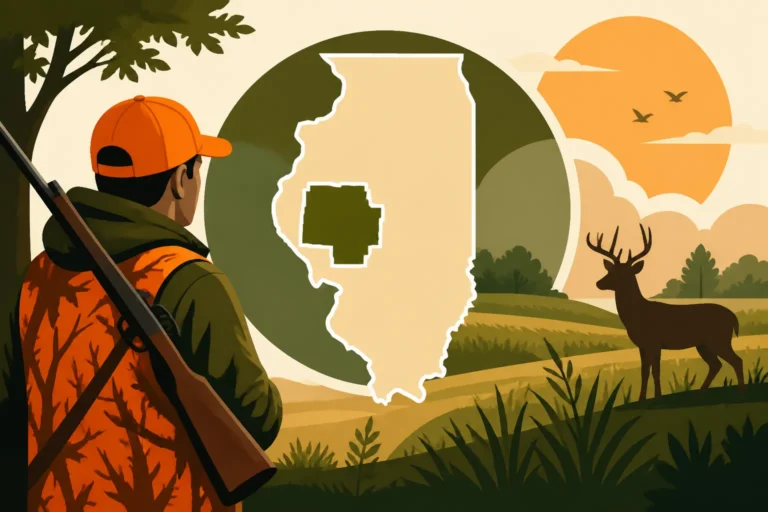
Finding quality public land to chase deer in an agricultural heartland like Warren County, Illinois, can feel like searching for a needle in a haystack. Many hunters in these areas get frustrated by the vast expanses of private farmland, wondering if there's any hope for a public land enthusiast. This guide is here to unravel the complexities of hunting deer on public ground in and around Warren County, offering practical advice and strategies to make your hunting efforts productive.
Understanding Public Land Access in Predominantly Private Areas Like Warren County
Let's be real: hunting in a county like Warren, dominated by row crops and privately owned farms, presents a unique set of challenges. It's not like heading to the vast tracts of the Shawnee National Forest where public land abounds. Here, you're dealing with smaller, often isolated parcels, and understanding this reality is the first step to successful hunting.
The Reality of Hunting Pressure and Limited Acreage
It can be incredibly frustrating to stare at a sea of green on a mapping app, knowing most of it is off-limits to you. Counties like Warren are prime examples of this situation. The public land that does exist often comes in the form of smaller state-managed sites, natural areas, or even tiny disconnected parcels managed by local conservation districts. These spots, precisely because they are limited, tend to see a lot of hunter pressure, especially during the firearm seasons.
Think about it: when everyone is looking for the same limited resource, those areas get hammered. Deer quickly become nocturnal or move to adjacent private land where they feel safer. This isn't to discourage you, but to set a realistic expectation. Your tactics for these smaller, pressured areas need to be different than what you might employ in sprawling timber. It often means getting creative, working harder, and being smarter about when and how you hunt.
How to Identify and Evaluate Public Land Parcels
So, how do you even find these elusive public pockets? Your best friends will be robust mapping tools like onX Hunt or even a detailed plat book if you prefer old-school methods. These resources allow you to visually identify public land boundaries against the patchwork of private farms. Look for areas marked as State Fish and Wildlife Areas, Conservation Areas, or even smaller state parks that might allow hunting. Don't overlook county forest preserves or local park districts, though you'll need to double-check their specific hunting regulations, as rules can vary wildly from site to site.
Once you've identified potential parcels, the real work begins. You'll need to dig deeper. Use your mapping tool to zoom in and analyze the terrain. Are there creek bottoms, timbered draws, or thickets that would naturally hold deer? Are there access points that make sense, or will you be fighting thick cover just to get in? Don't just look for "green blocks" on the map; look for habitat features that deer need to survive and thrive, especially in a farmed landscape. For more on pre-season efforts, check out Scouting Illinois Public Land Before Season. While GoHunt is primarily known for Western big game, the principles of using advanced mapping and data to research potential hunting areas are universally applicable. Using such platforms to analyze terrain, land ownership, and even historical satellite imagery can give you a leg up, helping you scout digitally before you ever set foot on the ground.
Key Public Hunting Opportunities Around Warren County
While Warren County itself might not boast massive tracts of state or federal land, hunters need to think slightly broader. The presence of significant river systems and the interconnectedness of habitats mean that opportunities often exist in the landscape's natural features or in neighboring counties with similar characteristics.
State Fish and Wildlife Areas or State Parks
Specific, large State Fish and Wildlife Areas (FWAs) or State Parks directly within Warren County that offer extensive deer hunting opportunities may be limited. However, it's crucial to check the Illinois Department of Natural Resources (IDNR) website for the most current information, as opportunities and regulations can change annually. Often, these areas are managed for multiple uses, and hunting might be restricted to certain species, seasons, or require site-specific permits drawn through a lottery. Always assume that site-specific regulations are stricter than statewide rules.
If Warren County's direct options are sparse, consider what's in the immediate vicinity in neighboring counties. For instance, areas along the Spoon River or other tributary systems might have smaller state or county-managed parcels. These often represent remnants of natural habitat, like bottomland hardwoods or brushy uplands, that weren't converted to agriculture. These smaller, sometimes overlooked spots can hold surprisingly good numbers of deer, especially if they offer sanctuary from surrounding private land. You might find some useful general advice on larger public areas in Illinois State Fish and Wildlife Areas.
Leveraging River Systems and Associated Public Ground
The Spoon River, winding its way through Warren County, is a natural focal point for deer activity and potential public access. River and creek bottoms often serve as critical travel corridors and bedding areas for deer, offering diverse habitat in an otherwise agricultural landscape. These linear strips of timber and thickets provide cover, food, and water, acting as deer highways between larger woodlots or fields. Even if the actual public land is a narrow strip along the riverbank, it can be incredibly productive.
Hunting river systems means understanding how deer use these features. Look for pinch points, oxbows, and areas where the timber widens. Public access points might be limited, often requiring walk-in access, which can deter other hunters. Don't be afraid to put in the miles along these river corridors. These often overlooked areas can be sanctuaries for deer trying to escape pressure. For broader insights on hunting river areas, consider reading Hunting the Illinois River Valley, as many of the principles apply even to smaller river systems. You might even find some useful concepts in Hunting a Funnel Between Two Woodlots if those river bottom features create similar pinch points.
The Challenge of Small, Isolated Woodlots
In highly agricultural regions, public land can sometimes consist of small, isolated woodlots or timber blocks, often surrounded entirely by private farmland. These parcels, while appearing small on a map, can be incredibly attractive to deer, providing the only significant cover for miles. The challenge, however, is that their small size means deer often don't spend long periods in them during daylight, especially if they experience significant hunting pressure.
When hunting these small woodlots, precision is key. Your entry and exit routes become paramount to avoid spooking deer. Understanding wind direction for every single sit is non-negotiable. Deer will often bed on adjacent private land and filter into these public woodlots to feed or stage before dark, or use them as quick travel routes. Setting up on the downwind side of an entry trail or funnel, ideally a few hours before dark or right at first light, can be your best bet. These hunts are often quick, intense affairs where a single mistake can blow your chance.
Strategies for Maximizing Success on Warren County Public Land for Deer
Hunting deer on public land in a farming-dominated county requires a different mindset and approach than hunting in big timber country. It's about maximizing every sliver of opportunity and adapting your tactics to the specific environment.
Early Season Scouting and Trail Camera Placement
Pre-season scouting is absolutely non-negotiable on these smaller, pressured public parcels. You need to know exactly how deer are using these limited resources before you ever carry a weapon. Look for classic deer sign: tracks, rubs, scrapes, and bedding areas. Pay close attention to trails leading into and out of the public parcel, particularly those connecting to crop fields or dense cover on private land. This intelligence will help you predict deer movement. For specific tips, consider Where to Hang a Camera on a Logging Road.
Trail cameras can be a valuable tool, but they come with unique challenges on public land, especially in high-pressure areas. The risk of theft or tampering is real, so consider security measures or placing cameras in less obvious locations. More importantly, use them to confirm deer patterns, not just count deer. Are they nocturnal? Are they using specific entry/exit points at dawn or dusk? This information is gold. Remember, even in public spots, placing cameras on logging roads or distinct travel corridors can reveal patterns.
Adapting Tactics to High-Pressure Environments
Deer on small, pressured public land are incredibly wary. They've likely been pushed and prodded since archery season opened. Therefore, still-hunting or using ground blinds can often be more effective than traditional treestand hunting, especially if your treestand setup is difficult to conceal. With still-hunting, you're constantly moving, covering ground slowly, and adapting to what the deer are doing. This tactic allows you to cover more area and find deer that might be holding tight.
If you choose a stationary approach, consider a ground blind. They offer concealment, scent control (to an extent), and mobility if you use a pop-up. Just remember to brush it in well. Using a Ground Blind on Illinois Public Land offers some great advice here. The key is to find those overlooked pockets that other hunters walk past. That deep, nasty thicket that's a pain to get into? That's probably where the deer are. Don't be afraid to go where others won't. This often means Finding Ground Others Walk Past by putting in extra effort to access those harder-to-reach spots.
Understanding Deer Movement in Farm Country
Deer in farm country are experts at using the available cover, no matter how sparse, to their advantage. Fencerows, drainage ditches, and narrow strips of timber between fields become vital travel routes. They'll use the slightest bit of topography or standing vegetation to move undetected. During the early season, standing corn and soybeans offer incredible cover. As these crops are harvested, deer are forced into remaining timber, often increasing activity on small public parcels.
Understanding the timing of crop harvest is critical. A standing cornfield might be a deer sanctuary one day and an open field the next. This dramatic change in landscape forces deer to relocate and can create new hunting opportunities. Pay attention to how deer transition between feeding in fields and bedding in adjacent timber. Setting up on field edges or internal timber lines that connect directly to major food sources is often your best bet. For more detailed strategies, review Hunting Central Illinois Farmland Deer and Hunting a Standing Soybean Field. These resources offer specific advice that's highly applicable to Warren County.
Navigating Regulations and Ethical Considerations
Public land hunting, especially in shared-use areas, comes with a responsibility to understand and respect rules, boundaries, and fellow hunters. Ignorance of the law is never an excuse, and ethical behavior ensures that these limited resources remain available for all.
Site-Specific Rules and Permit Requirements
Never assume that statewide hunting regulations apply uniformly to every public parcel in Illinois. Small Fish and Wildlife Areas, Conservation Areas, or even specific tracts within larger holdings often have their own unique set of rules. These can include restrictions on hunting dates, weapon types, hunter quotas, blaze orange requirements (even during archery season in some spots), and even specific check-in/check-out procedures. It's common for some areas to require a free site permit that must be obtained online or at a local office.
Before you ever head out, visit the Illinois Department of Natural Resources (IDNR) website and search for the specific site you intend to hunt. Download and read the public hunting regulations for that location. Failure to do so can result in fines, permit revocation, or even more serious legal trouble. A quick call to the site superintendent can also clarify any ambiguities.
| Aspect | General Illinois Public Land Rules | Site-Specific Rules (Example) |
|---|---|---|
| Season Dates | Statewide Archery/Firearm Dates | Restricted to specific periods only |
| Weapon Types | Legal statewide weapons | Archery-only, or specific gauges/calibers |
| Blaze Orange | Required during firearm seasons | Might be required during Archery season |
| Hunter Numbers | First-come, first-served | Quota hunts, lottery draw |
| Tree Stands/Blinds | Allowed, often must be removed daily | Specific types only, no screws/nails |
| Check-In/Out | Statewide reporting online | Mandatory physical check-in/out box |
| Permits | Base hunting license + deer permit | Additional free site permit required |
Respecting Boundaries and Private Land
In counties like Warren, where public and private land intermingle closely, respecting property lines is paramount. Trespassing is not only illegal but can jeopardize public hunting opportunities for everyone if landowners decide to close access or become less tolerant of hunters. Always know exactly where you are. Mapping apps like onX Hunt are invaluable for this, showing property lines and landowner names directly on your phone or GPS.
While hunting, constantly cross-reference your location with your map. If you shoot a deer and it crosses onto private property, you generally cannot retrieve it without the landowner's explicit permission. This can be heartbreaking, but it's the law. Always try to locate landowners before you hunt to establish a relationship and secure permission for potential game retrieval. For a detailed look at the legalities, read Illinois Trespass and Permission Law and Retrieving Game From Private Land in Illinois. These are crucial articles for any hunter in Illinois, especially those navigating checkerboard ownership.
Public Land Etiquette and Hunter Cooperation
Since public lands in Warren County might be limited and receive pressure, practicing good hunter etiquette is essential for a positive experience for all. This means sharing the resource, being mindful of other hunters, and leaving no trace. If you see another hunter, give them plenty of space. Don't crowd someone's setup or walk through their hunting area. A simple conversation at the parking lot can often help coordinate efforts and avoid conflicts.
Always pack out everything you pack in. Leave the woods cleaner than you found them. Avoid leaving trash, spent casings, or any signs that you were there. Ethical behavior extends to the proper handling of game, leaving no gut piles near trails or residences. By being considerate, respectful, and responsible, we ensure that public land remains a viable and enjoyable option for deer hunting in Illinois, even in those areas where it's a precious commodity.
Disclaimer
This article is for general informational purposes only and does not constitute professional advice. Laws, prices and regulations vary by location and change over time. Consult a qualified professional for guidance on your specific situation.