Hanging a Stand on a Southern Illinois Ridge
Trying to hang a treestand on a southern Illinois ridge can feel like a game of three-dimensional chess, especially with those unpredictable thermals and varying terrain. It's a real challenge to pinpoint that perfect spot where you'll intercept a wary buck without spooking him on your way in or out. This guide will walk you through the nuances of scouting, placement, and safety, ensuring your next sit in the rugged hills pays off.
Understanding Southern Illinois Ridge Dynamics
Southern Illinois, particularly the Shawnee Hills region, isn't your typical flat Midwestern farm country. The landscape is a mosaic of steep ridges, deep hollers, and dense timber, which means deer movement is often dictated by elevation changes, water sources, and cover. Successfully hanging a stand here requires a deep appreciation for how these elements conspire to influence deer behavior. It's not just about finding a fresh rub; it's about understanding the entire circulatory system of the woods.
Topography and Terrain Features
When you're looking at a map or walking the ground in places like the Shawnee National Forest, you'll quickly notice how dramatic the elevation changes can be. Ridges here aren't always sharp spines; sometimes they're broad, rolling benches that flatten out before dropping into a creek bottom. Understanding these nuances is crucial. Deer will often travel just below the crest of a ridge, using the cover and the slight elevation advantage to avoid detection while still getting a good view downslope. They'll also use saddles – those low points in a ridge line – as natural travel corridors, especially when moving between bedding areas and food sources. These saddles act like funnels, concentrating deer movement and offering prime ambush points.
Beyond saddles, look for finger ridges that extend off the main ridge system. These can be incredible travel routes, guiding deer right to you. Sometimes a subtle depression or a slight rise on an otherwise flat bench can be enough to alter a deer's path by just a few yards, and those few yards can make all the difference in getting a shot. Water sources are another critical component; small springs, seeps, or trickling creeks in the bottoms of hollers will draw deer, especially during dry spells or late season. Don't overlook old logging roads or faint game trails that might crisscross these slopes, either. Deer, like humans, often take the path of least resistance, and an old roadbed, even if overgrown, can be a major thoroughfare. Remember, deer in these hilly regions often spend their days bedding high on the slopes, using the prevailing wind to their advantage, before dropping down into bottoms to feed.
Reading the Wind and Thermals
This is where hunting southern Illinois ridges gets really tricky, and frankly, where many hunters go wrong. Unlike flat land where wind might be relatively consistent, in hilly terrain, wind direction is often more of a suggestion than a rule. You've got the primary wind direction, sure, but then you have to contend with thermals – those rising and falling air currents driven by temperature changes throughout the day. Early in the morning, as the sun begins to warm the earth, thermals will generally rise, pulling your scent uphill. In the evening, as the air cools, thermals reverse and start to fall, pushing your scent downhill. This phenomenon is incredibly consistent and predictable, yet often overlooked.
Imagine setting up on a bench overlooking a draw. If you're hunting in the morning, and the wind is generally blowing north, your scent might still be pulled straight up the draw due to rising thermals, potentially alerting deer above you. Conversely, an evening hunt in the same spot, with thermals falling, could see your scent being carried down into the creek bottom, blowing out deer that are moving to feed. The key is to hunt spots where the thermals work with the prevailing wind, or at least don't completely betray you. For example, if the primary wind is quartering across a ridge, and you position yourself just below the crest, rising morning thermals might carry your scent uphill and away, but then afternoon falling thermals could carry it downhill into the drainage. A thorough understanding of Wind and Thermals on a Southern Illinois Ridge is paramount to success. Tools like the "wind checker" feature on apps like GoHunt can be immensely helpful, showing you real-time wind conditions and even predicting thermal drafts based on elevation. This information helps you visualize how your scent will move, allowing you to pick a stand site and approach route that minimizes detection.
Strategic Stand Placement Considerations
Once you have a handle on the terrain and how air currents move, it's time to get strategic about stand placement. This isn't just about finding the biggest tree; it's about identifying the confluence of deer activity, cover, and your ability to safely access the stand undetected. Every decision, from the exact tree to the height you hang, should be made with the goal of maximizing your odds of a clean shot while minimizing your impact on the deer's natural movement.
Identifying Key Deer Sign and Travel Corridors
Before you even think about hanging a stand, you need to become a master detective. Start your scouting long before the season. Scouting Illinois Public Land Before Season is not just a good idea, it's essential for consistent success. Look for a combination of fresh rubs, scrapes, and most importantly, well-used trails. On ridges, deer often don't just randomly wander; they follow established paths, even if they're faint. These paths might be along a bench, through a saddle, or paralleling a steep drop-off. Focus on pinch points – areas where the topography naturally funnels deer movement. This could be a narrow section of a ridge, a point where two draws converge, or even where dense cover meets a more open timber stand.
Don't just look for a trail; look for the trail. Are there multiple tracks, or just one? Is there fresh droppings and tracks that suggest recent, consistent use? During the rut, bucks will often cruise these ridge lines, scent-checking for does, making saddles and points excellent spots. Keep an eye out for old, gnarled oaks or other mast-producing trees. If there's a good acorn crop, deer will gravitate towards those areas, and a stand set overlooking a productive ridge-top oak flat can be deadly. However, be mindful that food sources change throughout the season, so what was hot in early archery might be cold later in the year. Consider Where Shawnee National Forest Bucks Bed in relation to these travel corridors to anticipate their movements.
Planning Your Entry and Exit Routes
This is arguably one of the most critical, yet often overlooked, aspects of stand hunting, especially in the rugged southern Illinois terrain. A perfectly placed stand is worthless if you spook every deer in the area getting to or from it. Your entry and exit routes must be as stealthy as possible, taking advantage of topography, dense cover, and wind/thermals. Ideally, you want to approach your stand from a direction that keeps you out of the deer's primary travel corridors and bedding areas, and where the wind/thermals are carrying your scent away from where you expect deer to be.
For example, if you anticipate deer moving up a draw in the evening, your entry should be from the top of the ridge, allowing falling thermals to carry your scent away from the draw until you're safely in your stand. Similarly, an early morning approach might mean coming from a lower elevation, letting rising thermals take your scent away. Use natural features like creek beds, drainage ditches, dense thickets, or deep ravines to shield your movement. Avoid walking directly through known bedding areas or across open fields. Sometimes, a longer, more circuitous route is far better than a direct, risky one. Consider using apps like GoHunt to mark your planned routes, identify terrain features that offer concealment, and check wind forecasts specific to your location. Planning your route is just as important as the stand location itself.
Essential Gear and Safety Protocols
Even the best-laid plans for stand placement mean nothing if you're not properly equipped and, more importantly, safe. Hunting from an elevated position, particularly in challenging terrain, comes with inherent risks. Investing in quality gear and strictly adhering to safety protocols isn't just a suggestion; it's a non-negotiable requirement for anyone Bowhunting Illinois's Long Archery Season or during other deer seasons. Don't let complacency lead to a serious injury.
Choosing the Right Treestand and Climbing System
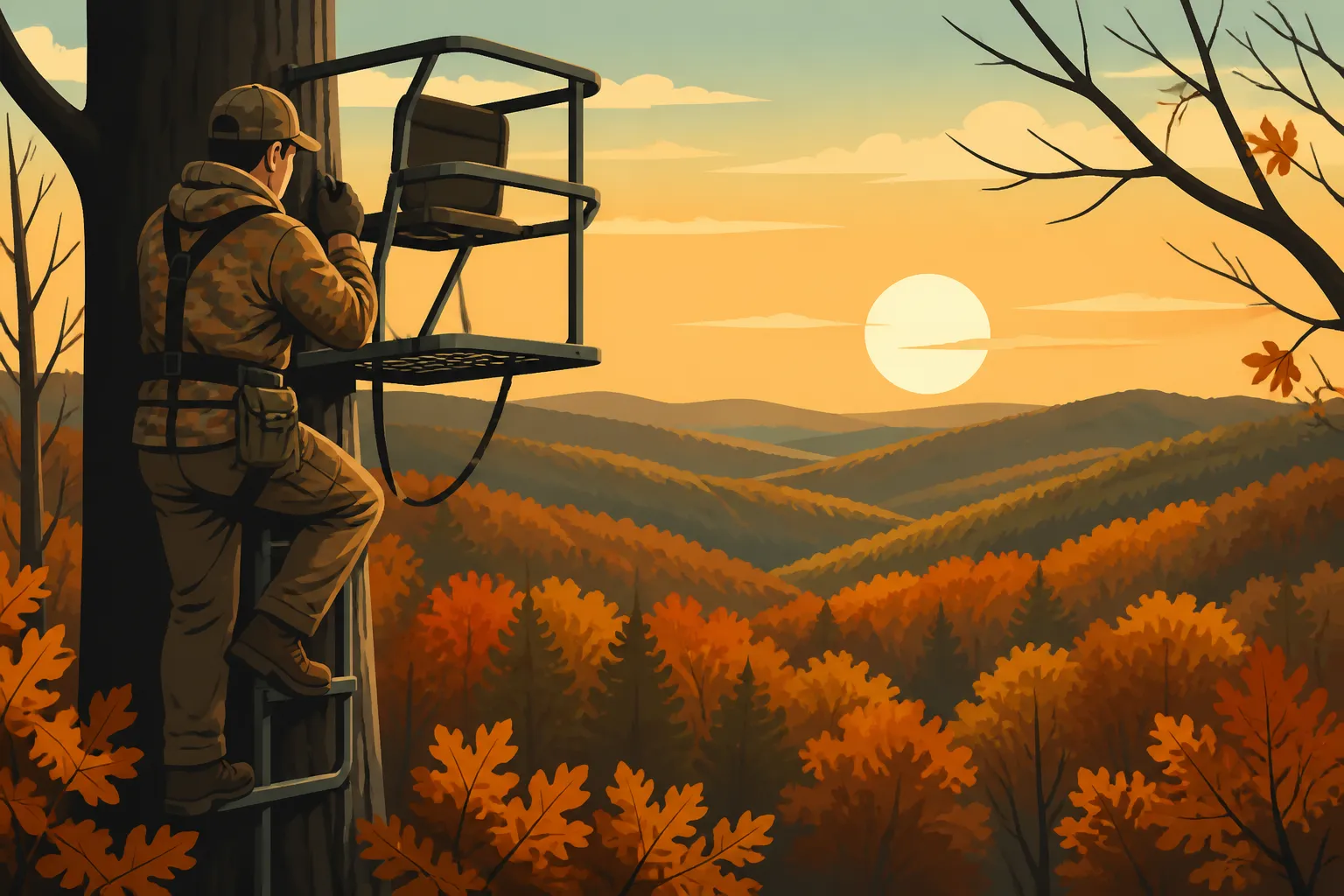
The southern Illinois environment is demanding, and your gear needs to be up to the task. For ridge hunting, lighter, more portable stands are often preferred, especially if you anticipate moving your stand frequently as deer patterns shift. Climbing stands can be great for mobility if you find a suitable straight, limbless tree, but many of the oaks and maples on these ridges are far from ideal. More often, a lightweight hang-on stand combined with climbing sticks or a climbing aid system like the "Lone Wolf Custom Gear" sticks or a "Muddy" climbing system will offer the versatility needed to navigate crooked trees and varying bark textures. Platforms like those from "Summit Treestands" are also popular for their comfort and stability. Ensure your stand has a sturdy, quiet platform and a comfortable seat for those long sits.
When selecting a stand, consider the weight—you'll be carrying it up and down those hills. Also, think about ease of setup and takedown. The faster and quieter you can get into and out of your spot, the less likely you are to spook game. For public land hunting, where regulations can vary, always double-check the rules regarding stand placement, dates for leaving stands up, and any requirements for identification tags. Some areas, including portions of the Shawnee National Forest, have strict rules about what types of stands are allowed and how long they can remain in place.
Prioritizing Safety Gear and Practices
This cannot be stressed enough: always use a fall arrest system. Every single time you leave the ground, from the moment your feet leave the earth until they touch it again, you should be tethered. This includes during the climbing process, hanging the stand, and descending. A full-body harness is the gold standard and offers the best protection. Companies like "Hunter Safety System" or "Muddy Outdoors" make excellent harnesses that are comfortable and easy to use. Accidents happen in a split second, and even a short fall can result in severe injury or worse. No trophy buck is worth your life or long-term health.
Beyond the harness, practice hanging your stand at home, in a controlled environment, before hitting the woods. This helps you get comfortable with the process, identify any potential snags, and ensure all components are working correctly. Carry a reliable cutting tool, a whistle, and a fully charged cell phone (though service can be spotty in the hollers). Let someone know exactly where you're going and when you expect to return. Always inspect your stand and straps before each use for wear and tear, and replace anything that looks questionable. Treestands, like any piece of hunting gear, have a lifespan, and UV exposure can degrade straps over time. When Treestand Setups in Shawnee National Forest, proper safety is paramount.
Post-Setup Adjustments and Long-Term Strategy
Hanging a stand isn't a one-and-done deal. The woods are dynamic, deer patterns change, and even a subtle shift in foliage can impact visibility or shooting lanes. After your initial setup, it's crucial to evaluate, adapt, and refine your strategy throughout the season. Think of it as an ongoing conversation with the deer and the land, rather than a fixed statement.
Fine-Tuning Your Setup for Optimal Shots
Once your stand is hung and you've had a chance to sit in it, don't be afraid to make small adjustments. Did you notice a limb obstructing your optimal shooting lane? Can you clear it quietly and safely? Is your bow hanger or gear hook in the ideal spot for quick, silent access? Often, after the first sit, you'll identify minor tweaks that can significantly improve your comfort, stealth, and ability to make a clean shot. For example, you might realize your stand is facing slightly the wrong direction for the most likely approach of a deer, or that a few strategically trimmed small branches could open up a vital window without affecting cover. Just be sure to check local regulations regarding vegetation trimming on public land.
Another common realization is that you need more cover. While you want good shooting lanes, being silhouetted against the skyline or an open background will make you stick out like a sore thumb. Use natural breaks in the canopy, thick vine growth, or even strategically placed artificial camouflage netting if regulations allow, to break up your outline. Remember, deer are incredibly attuned to changes in their environment. A natural-looking setup that blends in with the tree and surrounding foliage will be far more effective than a stand that screams "human."
Adapting to Changing Conditions
The southern Illinois woods are constantly evolving, and deer behavior evolves with them. Early season might see deer focused on specific food sources, while the late season will have them seeking out whatever remaining food is available, often shifting to denser thermal cover as temperatures drop. The rut changes everything, with bucks abandoning their typical patterns to cruise for does. This means your "perfect" stand location might only be perfect for a specific window of time or a particular set of conditions.
Stay flexible. If your stand isn't producing, or if you're seeing deer consistently moving just out of range, be prepared to move it. This is where a mobile setup shines. Don't get emotionally attached to a stand site; if the deer aren't using that specific travel corridor anymore, you need to be where they are. Using scouting tools like GoHunt, which can provide updated aerial imagery and topographical maps, allows you to identify new funnels or feeding areas. Always be scouting, even when you're hunting. Pay attention to fresh sign, recent tracks, and listen for clues like distant shots or the sounds of falling acorns. Sometimes, moving your stand just 50-100 yards can turn a slow hunt into an exciting encounter. Understanding Hunting the Rut in Early November or how deer respond to late-season food sources can guide these adjustments.
| Stand Type | Pros | Cons | Best Use Cases |
|---|---|---|---|
| Hang-on | Lightweight, versatile, good for crooked trees, easy to adjust height with sticks | Requires separate climbing sticks, can be slower to set up/take down | Specific, scouted spots; moving stand often; varied tree types |
| Climbing | All-in-one unit, relatively fast setup/takedown on ideal trees, quiet | Limited to straight, limbless trees; bulky to carry in dense cover | Pre-scouted areas with suitable trees; still-hunting |
| Ladder | Very stable, comfortable, easy access, good for beginners | Heavy, bulky, difficult to move, highly visible, limited portability | Permanent sets on private land, clear shooting lanes, less pressure |
| Ground Blind | Excellent concealment, weather protection, good for multiple hunters | Limited visibility, scent control challenging, can spook deer if not brushed in | Field edges, dense cover, highly pressured areas, youth hunters |
Disclaimer
Always check the latest Illinois Department of Natural Resources (IDNR) regulations before heading afield, as rules and seasons can change. Ensure you have all required licenses and permits. This guide is for informational purposes only and does not supersede official IDNR guidelines.