Running Pointing Dogs on Illinois Pheasants
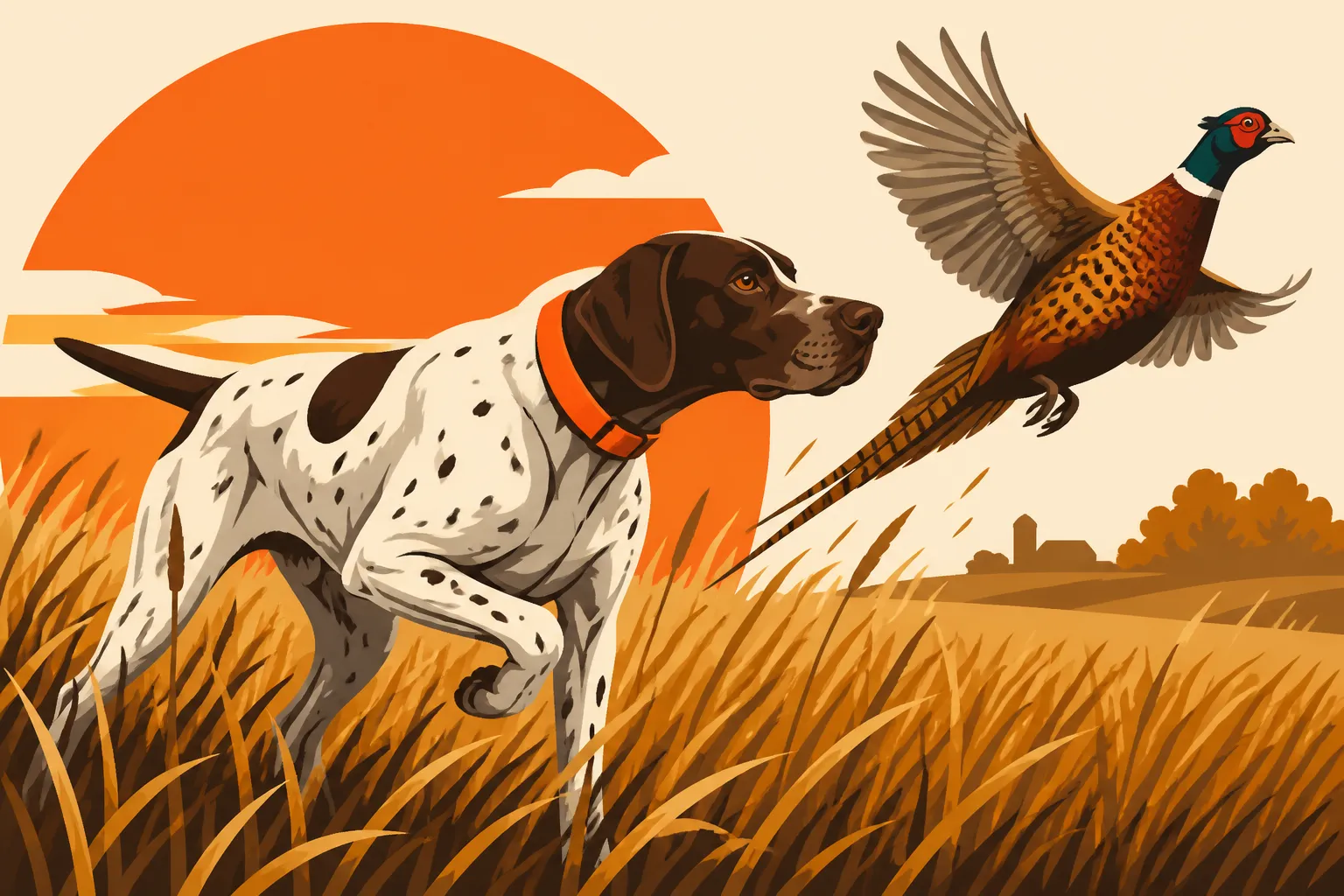
There’s nothing quite like the thrill of watching a well-trained pointing dog lock up solid on a pheasant, nose quivering, tail stiff, eyes burning with intensity. But if you’ve ever tried to hunt Illinois pheasants with a pointing dog, you know it’s not always a picture-perfect scene from a magazine cover. These wily birds can be masters of evasion, and working dense Illinois cover with a dog that's not quite ready can quickly turn a dream hunt into a frustrating scramble. This guide is here to walk you through the nuances of successful pheasant hunting in the Land of Lincoln with your canine companion, from understanding bird behavior to advanced field tactics and dog care.
Understanding Pheasant Behavior in Illinois
To effectively hunt pheasants with a pointing dog in Illinois, you first need to understand the birds themselves. Illinois pheasants are known for their intelligence and evasive tactics, making them a challenging but rewarding quarry for dog handlers.
Illinois Pheasant Habitat Preferences
Pheasants in Illinois aren't just found anywhere; they have very specific habitat needs that dictate where your dog will encounter them. They thrive in areas that offer a mix of dense cover for roosting and protection, open fields for feeding, and plenty of edges where these two habitat types meet. Think of it as a mosaic. Ideal spots often include large blocks of Conservation Reserve Program (CRP) land, which provides crucial nesting and escape cover, mixed with corn or soybean fields that offer abundant food sources. You’ll also find them hunkering down in fencerows, drainage ditches, and brushy creek bottoms, especially as hunting pressure increases or the weather turns harsh. Understanding these preferences helps you direct your dog to the most productive areas, rather than simply walking aimlessly.
During the early season, when cover is still thick, pheasants might hold tighter in taller grasses or standing crops. As the season progresses and crops are harvested, birds tend to concentrate in the remaining dense cover, like cattail sloughs, thickets, and un-mowed field borders. This shift in habitat use throughout the season means your scouting efforts and hunting strategy need to adapt. A good place to start your research for promising areas is by checking the Illinois DNR's information on Illinois Pheasant Habitat Area Access, which often highlights public lands managed specifically for these birds.
The "Run-or-Hold" Dilemma
One of the most challenging aspects of hunting pheasants with a pointing dog is their notorious "run-or-hold" behavior. Unlike quail or grouse, which often hold tight for a dog, pheasants are runners. A rooster might get wind of your dog's approach from fifty yards out and decide to hit the ground running, creating a cat-and-mouse game. Your dog will follow the scent trail, often pointing several times along the way as the bird continues to move ahead. This can be incredibly frustrating if your dog breaks point or you can’t keep up. The goal is to work with your dog to cut off the bird's escape route, forcing it to hold or flush.
Understanding when a pheasant is likely to run versus hold is key. They typically run in lighter cover where they can escape unseen, or when they feel pressure from a dog or hunter. In very dense, impenetrable cover, where running is difficult, they are more likely to hold tight. This is where your dog's ability to "pin" a bird—keeping it from running further—becomes invaluable. It's a delicate dance: the dog needs to push the bird just enough to make it feel cornered, but not so much that it flushes wild. This is where an experienced pointing dog really shines, subtly working the scent cone to keep the bird in place until the hunter arrives.
Reading Pheasant Sign
Successful pheasant hunting isn't just about walking fields; it's about reading the landscape and the subtle clues the birds leave behind. Before you even unleash your dog, look for sign. Fresh tracks in the mud or snow, especially along field edges or around water sources, are a dead giveaway. You might spot dusting bowls—small depressions where birds have ruffled their feathers to clean themselves. Droppings, feathers, and even the distinct calls of roosters at dawn or dusk can help you narrow down productive areas.
Even once you start hunting, paying attention to your dog's behavior is a form of reading sign. Is your dog suddenly slowing down, nose to the ground, working a scent trail? That likely means a running bird. Is it making wide, sweeping casts, then slamming into a solid point? That's a bird that's held tight. Sometimes, especially in fresh snow or mud, you might even see the actual tracks of a running pheasant ahead of your dog, giving you precious seconds to try and circle ahead or position yourself for a shot. Using tools like the GoHunt app can also provide invaluable topographic and land access information, helping you identify potential pheasant hotspots and plan your approach based on visible cover and field patterns.
Training Your Pointing Dog for Illinois Pheasants
A well-trained dog is your most important asset when hunting Illinois pheasants. Proper training, focusing on obedience, scent work, and steadiness, is critical for success and safety.
Building a Strong Foundation: Obedience and Steadiness
Every great bird dog starts with a rock-solid foundation in obedience. Commands like "whoa," "heel," "come," and "sit" aren't just for show; they are vital safety commands and essential for controlling your dog in the field, especially around other hunters or livestock. "Whoa" is perhaps the most important command for a pointing dog, teaching them to freeze in place on command, whether they're on point or just running through cover. This is particularly important for pheasants, which are often running birds that can tempt a young dog to chase. Steadiness to wing and shot is the ultimate goal, ensuring your dog holds its point even as the bird flushes and the shot is fired, only retrieving once commanded.
Achieving steadiness takes consistent repetition and discipline. Start in a controlled environment, using pigeons or pen-raised pheasants, and gradually introduce more distractions. Many hunters opt for electronic collars during this phase, using the stimulation to reinforce commands like "whoa" when the dog is tempted to break. The goal isn't punishment, but communication and correction. A dog that is steady allows the hunter to approach the bird without fear of a wild flush, giving you time to get into a shooting position and ensuring the bird doesn't get bumped out of range before you even see it.
Scent Training and Bird Exposure
Scent is a pointing dog's primary tool, and developing their nose is a continuous process. Early exposure to game birds, even before formal training begins, can ignite their natural prey drive. Scent training can involve using training dummies infused with bird scent, or planting live birds in various types of cover for your dog to find. The key is to make these experiences positive and rewarding, allowing the dog to associate the scent with the thrill of finding a bird. Focus on teaching your dog to work into the wind, systematically covering ground while interpreting scent.
For Illinois pheasants, it’s important to expose your dog to pheasants specifically, as their scent can differ from quail or chukar. Use pen-raised pheasants in realistic field conditions. Allow your dog to trail running birds, as this simulates real-world pheasant hunting. This teaches them to adjust their pace and body language to the moving scent cone. Many dog owners utilize resources from established trainers like the folks at Purina Pro Plan or sport dog brands to learn advanced scent work techniques. Remember, every encounter with a bird is a learning opportunity, reinforcing the connection between scent, point, and ultimately, retrieval.
Handling Obstacles and Pressure
Illinois pheasant hunting often involves navigating challenging terrain. Dense CRP, thorny fencerows, and brushy creek bottoms are common, and your dog needs to be comfortable and effective in all of them. This means slowly exposing your dog to different types of cover during training. Start with lighter cover and gradually move to thicker, more challenging environments. Encourage them to push through brambles and tall grass, teaching them to be thorough in their search pattern. This will prevent them from skipping over potential pheasant holding areas.
Beyond physical obstacles, your dog will also face pressure from other hunters, gunshots, and the excitement of the hunt itself. Desensitizing your dog to gunshots is critical and should be done gradually and positively. Start with distant, low-caliber shots while your dog is focused on something positive, like eating, and slowly decrease the distance and increase the caliber. Public hunting areas, especially during opening weekend, can be crowded. Training your dog to ignore distractions and focus on the task at hand is essential for a safe and productive hunt. You can find more information on handling the crowds and other challenges in articles like Opening Weekend Crowds on Illinois Public Land.
Tactics for Running Dogs in Illinois Pheasant Habitat
Once your dog is well-trained, it's time to put those skills to the test in the diverse pheasant habitats of Illinois. Strategic hunting tactics can greatly improve your success rate.
Working Field Edges and Fencerows
Field edges and fencerows are classic pheasant magnets in Illinois, providing a corridor of cover, food, and travel. These linear features are often overlooked but can hold a surprising number of birds, especially in heavily pressured areas. When hunting these spots, position your dog to work the cover, while you walk the edge, ready for a flush. The idea is to have the dog push birds out towards the open field where you have a clear shot, or to hold them tight in the fencerow itself.
Be methodical. Don't just blaze through. Have your dog work into the wind, crisscrossing the fencerow or brushy edge. Pheasants will often run down these linear strips of cover before eventually flushing. If your dog goes on point, try to get ahead of the point, or position yourself to cut off the bird's escape route down the fencerow. In areas with standing crops, like a late-season cornfield adjacent to a CRP field, the fencerow acts as a natural funnel. Pay particular attention to bends or thicker clumps of cover within the fencerow, as these are prime holding spots. For more tips on this type of habitat, check out Hunting a Brushy Fence Row at Dusk.
Navigating CRP and Dense Cover
Conservation Reserve Program (CRP) fields are a haven for pheasants, offering dense, often waist-high cover that provides excellent protection. However, hunting these areas with a pointing dog requires a different approach than open fields. The thick cover can make it difficult to see your dog and the birds, and can quickly exhaust both hunter and dog. In these situations, using a dog with a good bell or a GPS collar (like those offered by GoHunt, which can help track your dog's movements in thick cover) is invaluable.
Work CRP fields systematically. A common tactic is to have two hunters walk parallel lines, with the dog working between them, or ahead, covering the ground in a grid pattern. The goal is to push birds towards an edge or a known escape route. If your dog goes on point, be patient and move in slowly. Sometimes, a pheasant will try to sneak out the back of the point, so always be aware of what's behind your dog as well. The dense cover often forces pheasants to hold tighter, giving you better shot opportunities if you can get there quickly enough. Remember, stamina is key here for both you and your dog, so take breaks and ensure your dog is well-hydrated. Information on Hunting a CRP Field Edge at First Light can offer more specific field strategies.
Strategic Flushing and Shot Opportunities
Getting a pheasant to hold for a pointing dog is only half the battle; the other half is getting a clean flush and a safe shot. When your dog goes on point, approach cautiously and deliberately. Observe your dog's body language—is it a hard, confident point, or a tentative one indicating a running bird? If the bird is running, try to circle ahead quietly, or have a hunting partner do so, to cut off its escape. The goal is to make the bird feel truly cornered, forcing it to take to the air.
Once you're in position, whether the bird holds or is running, prepare for the flush. Kick the cover, stomp your feet, or use a flushing stick to encourage the bird to fly. Be ready for an explosive flush, as pheasants can burst out of cover with surprising speed. Always be mindful of your shooting lanes, your hunting partners, and, most importantly, your dog. Only take a shot when you have a clear, safe line of fire. After the shot, if the bird is downed, send your dog for the retrieve only when you're confident it's safe and the bird is dead. This reinforces good retrieve habits and prevents your dog from being injured by a crippled bird.
Essential Gear and Safety for Dog and Hunter
A successful and safe pheasant hunt in Illinois relies not only on good training and tactics but also on having the right gear and prioritizing safety.
Must-Have Dog Gear
For your pointing dog, a few pieces of gear are absolutely non-negotiable. First and foremost, a well-fitting, bright orange collar is crucial for visibility in thick cover and for safety, especially if hunting on public land where other hunters might be present. Many hunters add a small bell to the collar, which helps you keep track of your dog's movements, especially when they're out of sight in tall grass or CRP. The change in the bell's rhythm is often your first indication they've gone on point.
A GPS tracking collar, like those from GoHunt, is another invaluable tool, particularly when hunting large fields or dense cover where your dog can quickly disappear. These devices allow you to see your dog's precise location on a handheld unit or smartphone app, even showing if they're on point. It’s a game-changer for reducing stress and ensuring you don't lose your companion. Don't forget a sturdy lead, a whistle for long-distance commands, a portable water bowl, and plenty of fresh water to keep your dog hydrated throughout the hunt. Consider a dog vest for protection against briars and burrs, which are common in Illinois coverts.
Hunter Safety and Comfort
Your safety and comfort are just as important as your dog's. Blaze orange is a legal requirement during specific hunting seasons in Illinois, and it's always a good idea when hunting upland birds, even when not legally mandated, to maximize visibility. The state has specific regulations on How Much Blaze Orange Illinois Requires, so be sure to review those before heading afield. Invest in comfortable, waterproof hunting boots and brush pants or chaps to protect your legs from thorns and wet conditions.
Carrying a quality shotgun that you're proficient with, along with appropriate upland bird shot (typically 4, 5, or 6 shot for pheasants), is fundamental. Always carry a small first-aid kit for yourself, and be familiar with basic firearm safety rules, especially when hunting with others and a dog. Communication is key with hunting partners: always know where everyone is, and only shoot when you have a clear, safe shot with a good background.
First Aid and Emergency Preparedness
Accidents can happen in the field, so being prepared for emergencies is vital for both you and your dog. A comprehensive dog first-aid kit should include items like antiseptic wipes, gauze, vet wrap, splinter tweezers, and paw balm for cuts or abrasions. Knowing how to treat common field injuries like cuts, snake bites (though less common for pheasants in Illinois, always a possibility), or heat exhaustion is crucial. Carry a small amount of liquid electrolyte solution or high-energy treats for your dog in case they get fatigued.
Beyond the physical, be aware of environmental hazards. Overheating is a major concern for dogs working hard in warm weather, even in cooler months. Monitor your dog closely for signs of exhaustion, and provide frequent water breaks. Be aware of your surroundings for potential dangers like hidden fences, abandoned farm equipment, or dangerous wildlife. Having a fully charged phone and knowing the nearest emergency vet clinic or hospital is always a good idea. Consider taking an Illinois Hunter Education course, which covers many aspects of field safety for both hunters and their dogs. Understanding Illinois Small Game Season Rules can also help ensure you're hunting legally and safely.
Table: Key Training Stages for a Pheasant Pointing Dog
| Training Stage | Focus Areas | Goal for Illinois Pheasants |
|---|---|---|
| Foundation Obedience | Heel, Sit, Stay, Come, Whoa (on leash and off) | Reliable control, preventing wild flushes or chasing, safe handling in diverse situations. |
| Scent Introduction | Exposure to bird scent (pigeons/pheasants), working wind | Developing a strong nose, understanding scent cones, systematic field coverage. |
| Point Development | Holding a steady point, honoring other dogs, proper body language on point | Confident, staunch points, allowing hunter to approach, minimizing running birds. |
| Steadiness to Wing/Shot | Holding point through flush and shot, no breaking, retrieving on command | Safe shooting opportunities, preventing crippled birds from escaping, reinforcing retrieval. |
| Retrieval Training | Force fetch, proper hold, delivering to hand | Consistently and gently retrieving downed birds, preventing lost game. |
| Field Conditioning | Exposure to varied cover (CRP, fencerows), stamina building, navigating obstacles | Effective hunting in diverse Illinois habitats, endurance for long days afield. |
| Advanced Handling | Quartering patterns, casting, handling running birds, dealing with pressure | Efficiently covering ground, cutting off running pheasants, staying focused under distractions. |
Disclaimer
Hunting is an inherently dangerous activity. This guide provides general information and recommendations. Always consult the latest Illinois Department of Natural Resources (IDNR) regulations and local ordinances before hunting. Prioritize safety, be mindful of your surroundings, and respect wildlife and private property. The author and publisher are not responsible for any accidents, injuries, or legal infractions that may occur. Responsible and ethical hunting practices are paramount.