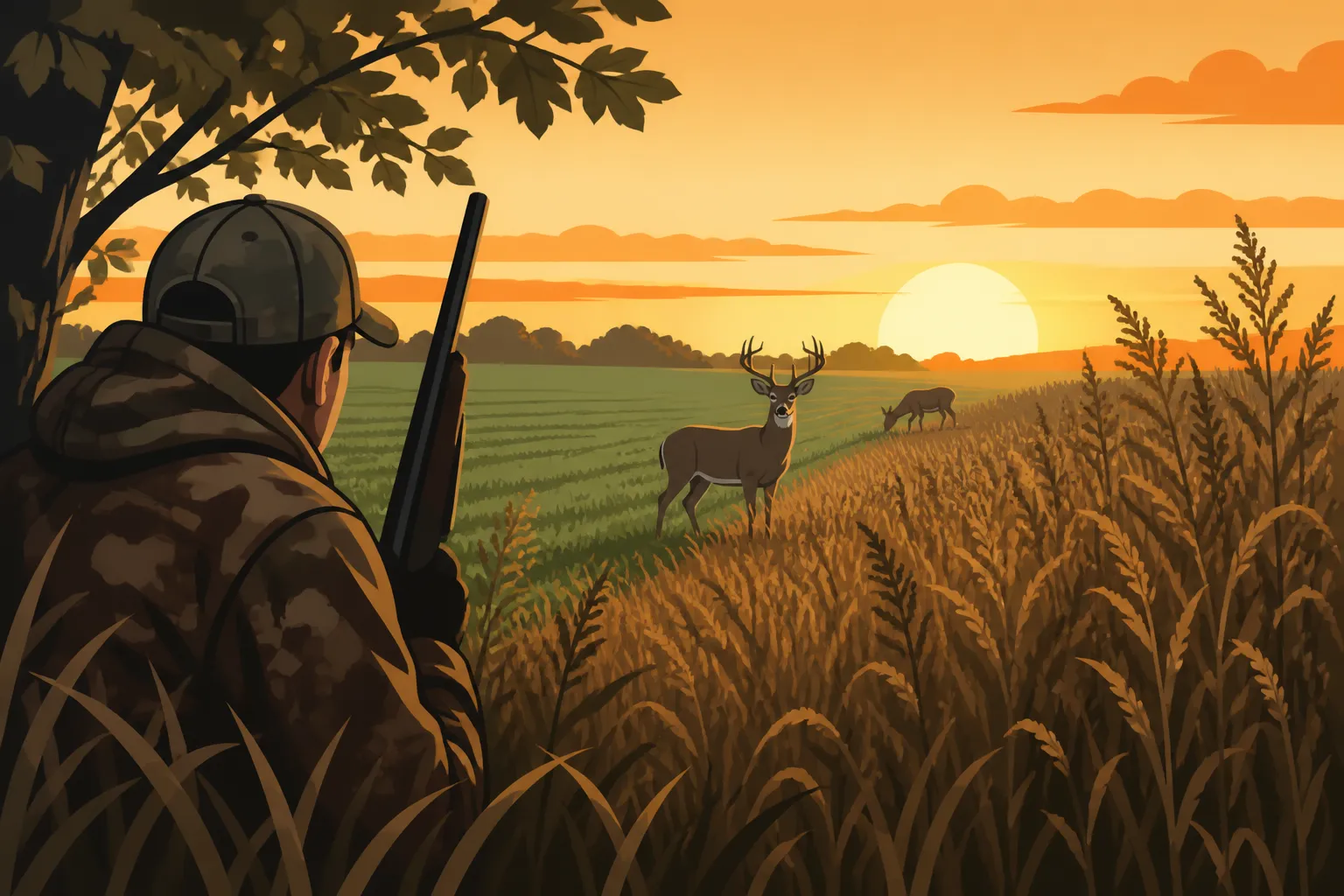
Hunting a CRP Field Edge at First Light
There’s nothing quite like the anticipation of first light in the deer woods, but often, hunters struggle to pinpoint exactly where those elusive whitetails will be when the world starts to brighten. Many seasoned hunters know that those transitional zones are key, but how to effectively hunt a CRP field edge at dawn is where the real challenge lies. This guide is all about giving you the practical, on-the-ground strategies to make your first-light hunt along CRP fields productive, turning those fleeting moments of dawn into genuine opportunities.
Understanding CRP Fields and Deer Behavior at First Light
CRP, or the Conservation Reserve Program, creates some of the most phenomenal habitat for deer across Illinois. These fields, often consisting of dense native grasses and wildflowers, offer a sanctuary from disturbance and a rich buffet of forage. Understanding why deer gravitate to these areas, especially at dawn, is the first step to consistently punching your tag.
What Makes CRP Edges So Attractive to Deer?
CRP fields are essentially giant blankets of security and sustenance for whitetails. Unlike row crops that come and go with the seasons, CRP provides year-round cover. In the spring and summer, it’s prime fawning habitat, thick and safe. As fall arrives, those tall, often stiff grasses become ideal bedding cover, insulating deer from cold winds and offering a visual barrier from predators and hunters alike. Deer can simply disappear into the dense stands of switchgrass or big bluestem.
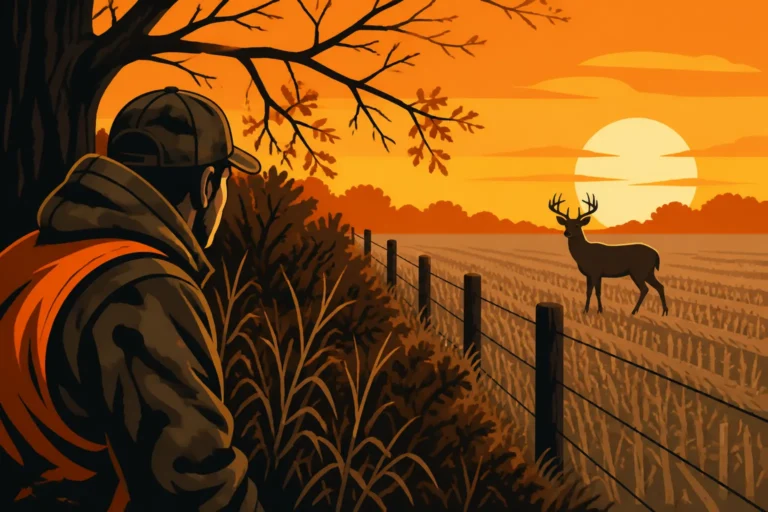
The edges of these CRP fields are particularly magnetic for deer. They represent a classic transition zone—the perfect place for a deer to pause, browse on edge vegetation, and scope out its next move without fully exposing itself. These edges often border agricultural fields like corn or soybeans, or timber blocks, acting as a natural highway between food sources and secure bedding. Deer will often stage in these thicker edge areas before committing to a larger field in the evening, and conversely, they’ll use them as their first stop for cover when moving off a feeding area at first light. It's not just about the safety of the tall grass, but also the abundant native forbs and grasses within the CRP itself that offer additional browsing opportunities.
The Critical First Hour: Why Dawn is Key
The moments just before and after legal shooting light are arguably the most crucial for deer movement, especially around CRP edges. Deer are primarily crepuscular, meaning they are most active during dawn and dusk. At first light, you’re often catching deer in one of two scenarios: either they’re still out feeding in an adjacent crop field and are now heading back to the security of the CRP to bed down, or they’ve been bedded deeper in the CRP and are just starting to stir, making their way to a nearby food source for a last-minute bite before the day warms up.
This window of opportunity is fleeting. As the sun rises higher and light levels increase, deer feel less secure in the open or semi-open areas, quickly retreating to their dense bedding cover. The low light also provides a natural advantage to the hunter, making it harder for deer to spot movement or pick up on subtle cues. You're trying to intercept a deer on its way from point A to point B, before it settles into its daytime patterns. This makes your entry and setup critically important, as you’re trying to position yourself in a way that allows you to see them before they see you during those crucial minutes. Remember, deer are creatures of habit, and often, their first-light routes into bedding cover will be consistent if undisturbed.
Scouting and Setup Strategies for CRP Edges
Hunting a CRP field edge at first light requires more than just showing up. It demands meticulous scouting and a thoughtful setup to ensure you're in the right place at the right time, minimizing your impact and maximizing your chances.
Reading the Landscape for Entry and Exit Routes
Before you even think about setting up a stand, you need to become a master of the landscape. Use tools like the GoHunt app or other aerial mapping programs to study the contours of the CRP field and its surroundings. Look for natural funnels where deer movement might be concentrated. This could be a narrow strip of timber connecting two CRP fields, a creek bottom winding through the area, or even a subtle ridge line that offers a natural path of least resistance. Deer are lazy, and they will take the easiest path available, especially if it provides cover. A well-placed Hunting a Funnel Between Two Woodlots strategy can pay dividends here.
Pay close attention to wind and thermals. This is absolutely critical for first-light hunting. As the sun rises, thermals often begin to lift, carrying your scent upwards. However, during the initial dark hours before dawn, cold air sinks, meaning your scent might pool in low-lying areas or drift downwards into draws. You need to pick an approach path that keeps your scent out of the primary deer travel corridors and potential bedding areas. This might mean walking a longer route around a field, using a ditch, or sticking to a hard road to minimize scent transfer to the ground. You'll want to study Wind and Thermals on a Southern Illinois Ridge tactics, even if you're not in the extreme south, as the principles apply across varied terrain. Your exit route is just as important; you don't want to spook deer out of their bedding areas as you leave.
Optimal Stand Placement for First Light Action
Once you’ve identified potential travel corridors, it's time to choose your stand location. For first light, you want to be able to see deer moving into the CRP from feeding areas, or out from deeper cover towards the edge. This usually means setting up on the edge of the CRP itself, or slightly into the timber line bordering it, giving you a clear view of the transition zone.
Consider the angle of the sun. You want the rising sun at your back, if possible, to illuminate the deer while keeping you silhouetted or in shadow. This also helps with visibility. Concealment is paramount; pick a tree with good natural cover, like a mature oak with plenty of limbs or a cedar thicket. If natural cover is scarce, a ground blind can be an excellent option, especially if you can get it brushed in well in advance. Setting up Using a Ground Blind on Illinois Public Land can provide crucial cover in more open terrain. Think about your shooting lanes: are they clear for the directions deer are most likely to approach from? You might need to do some minimal trimming well before the season, but be mindful not to alter the habitat so much that it spooks deer.
For instance, if you're hunting an eastern edge of a CRP field that borders a cornfield, you might set up 15-20 yards inside the timber, looking west into the CRP and the corn beyond. This allows you to intercept deer that are finishing their feed in the corn and filtering back into the CRP cover. Using detailed maps on GoHunt can help you visualize these scenarios and even mark potential stand sites and approach routes digitally. Remember, deer are often using Entry Routes Through Standing Corn to move between fields, so aligning your stand to intercept these movements is vital.
Executing Your Hunt: Tactics and Considerations
You've done the scouting, you've picked your spot. Now it's time to execute. This is where attention to detail, discipline, and a deep understanding of deer behavior truly come into play.
Silent Approach and Scent Control
Your hunt begins the moment you step out of your vehicle. A silent approach in the pre-dawn darkness is non-negotiable. Wear quiet clothing – fleece or wool are excellent choices. Avoid crunchy leaves or snapping twigs by planning your route meticulously. Carrying a small, dim headlamp for navigation is helpful, but use it sparingly and always on its lowest red-light setting to preserve your night vision and minimize disturbance. A noisy approach can blow your hunt before you even get to your stand, sending deer scattering or making them hold tight.
Scent control is equally vital, perhaps even more so at first light when deer are often moving slowly and deliberately. Shower with scent-free soap, use scent-eliminating sprays on your clothes, and store your hunting gear in airtight containers with natural scent absorbers like pine needles or earth. But most importantly, hunt the wind. No amount of spray can overcome a swirling or direct wind carrying your human odor straight to a deer’s nose. Always use a wind checker when you get to your stand and periodically throughout your sit. Check out articles on Scouting Illinois Public Land Before Season for tips on minimizing your impact before the hunt, which directly ties into successful scent management.
Patience, Patience, Patience (and When to Call It)
Once you’re in your stand, settled and ready, the hardest part for many hunters begins: waiting. It’s tempting to start scanning wildly as soon as you have enough light to see, but movement is the enemy. Be still. Let your eyes slowly adjust to the increasing light, and use binoculars or a spotting scope (if legal in your specific zone) to pick apart the shadows and dense cover of the CRP edge. Deer often appear as if by magic, materializing out of nowhere, and the slightest fidget or glance down at your phone can give you away.
The first hour of light is usually the most productive for deer movement, but don't be discouraged if nothing happens immediately. Sometimes, that mature buck might be the last deer to leave the security of the deep timber or CRP. There have been countless times when a deer appeared well after the initial flurry of activity. Conversely, you also need to know when to call it. If the sun is high, the wind shifts unfavorably, or you haven't seen any activity for a couple of hours and you know you need to move to avoid spooking deer, then it might be time to pack up. This decision often comes down to personal experience and reading the specific conditions of the day. For those looking for bigger bucks, understanding the Illinois Buck Age Structure and how older bucks behave can inform your patience.
CRP edges are dynamic, and deer patterns can shift based on pressure, food availability, and weather. Sometimes, a field that was hot one week might be cold the next. Staying flexible and constantly re-evaluating your strategy based on fresh sign and observation is key. If you're consistently seeing deer move through a different spot, don't be afraid to adjust your setup for the next hunt. Tools like GoHunt can help you log your sightings and analyze patterns over time, leading to more informed decisions.
| Aspect of Hunt | Key Consideration for CRP Edge at First Light | Ideal Action |
|---|---|---|
| Location Choice | Transition zone between food and cover | Edge of CRP bordering crop fields or timber; look for funnels |
| Wind Direction | Critical for deer detection | Always hunt with wind in your favor, blowing away from primary travel/bedding areas |
| Thermal Currents | Downward draft pre-dawn, rising post-dawn | Position to account for sinking cold air at dark, rising thermals as sun warms |
| Approach | Must be silent and scent-free | Plan quiet route, use scent elimination, walk slowly, use dim red light |
| Stand Setup | Concealment and shooting lanes | Tree with dense cover, sun at your back, clear lanes for expected deer paths, use a ground blind if necessary |
| Patience | Deer move cautiously at dawn | Remain still, use optics to scan, wait for good light, anticipate sporadic movement |
| Timing | First hour of light is prime | Be in stand well before dawn, focus on the first 60-90 minutes of legal light |
Ultimately, hunting a CRP field edge at first light in Illinois is a rewarding endeavor that tests your woodsmanship. It combines thoughtful planning, silent execution, and a good dose of patience. By focusing on these principles, you'll greatly increase your chances of intercepting one of Illinois's magnificent whitetails as they transition between night and day.
Disclaimer
Hunting is an inherently dangerous activity. Always prioritize safety, follow all local and state regulations, and ensure you have the proper licenses and permits before engaging in any hunting activities. The information provided in this guide is for informational purposes only and should not be taken as professional instruction or a substitute for proper hunter education and experience. Conditions and regulations can change, so always verify the most current information with the Illinois Department of Natural Resources (IDNR) or relevant authorities before heading afield.