Illinois Antler Point Restriction Status
The confusion surrounding antler point restrictions (APRs) can be a real headache for deer hunters, especially when you hunt in multiple states or hear conflicting information. Trying to figure out if that small-racked buck you just saw is legal can cause unnecessary stress and lead to missed opportunities or even violations. This guide will cut through the noise, clearly explaining Illinois's stance on antler point restrictions, why it matters, and what you, as a hunter, need to know to stay legal and confident in the field.
Understanding Antler Point Restrictions in Deer Management
Antler point restrictions are a common deer management tool implemented in many states, designed primarily to protect younger bucks and allow them to mature, theoretically leading to a more balanced age structure within the deer herd and the potential for older, larger-antlered deer. The basic idea is that hunters are only allowed to harvest bucks with a certain number of antler points, or a minimum spread, or a combination of both.
For example, a common APR might dictate that a buck must have "at least 4 points on one side" or "a main beam length of 13 inches" to be a legal harvest. These rules are usually put in place with good intentions: to shift harvest pressure away from yearling bucks, allowing them to survive another year or two, develop larger racks, and contribute to the gene pool. Proponents argue this leads to more mature bucks for hunters to pursue and a healthier overall deer population. However, it's not without its critics, who point to challenges in field judging antlers, the potential for increased illegal harvests of sub-legal bucks, and the impact on hunter opportunity, especially for those who prioritize venison over antlers.
Illinois's Statewide Antler Point Restriction Status
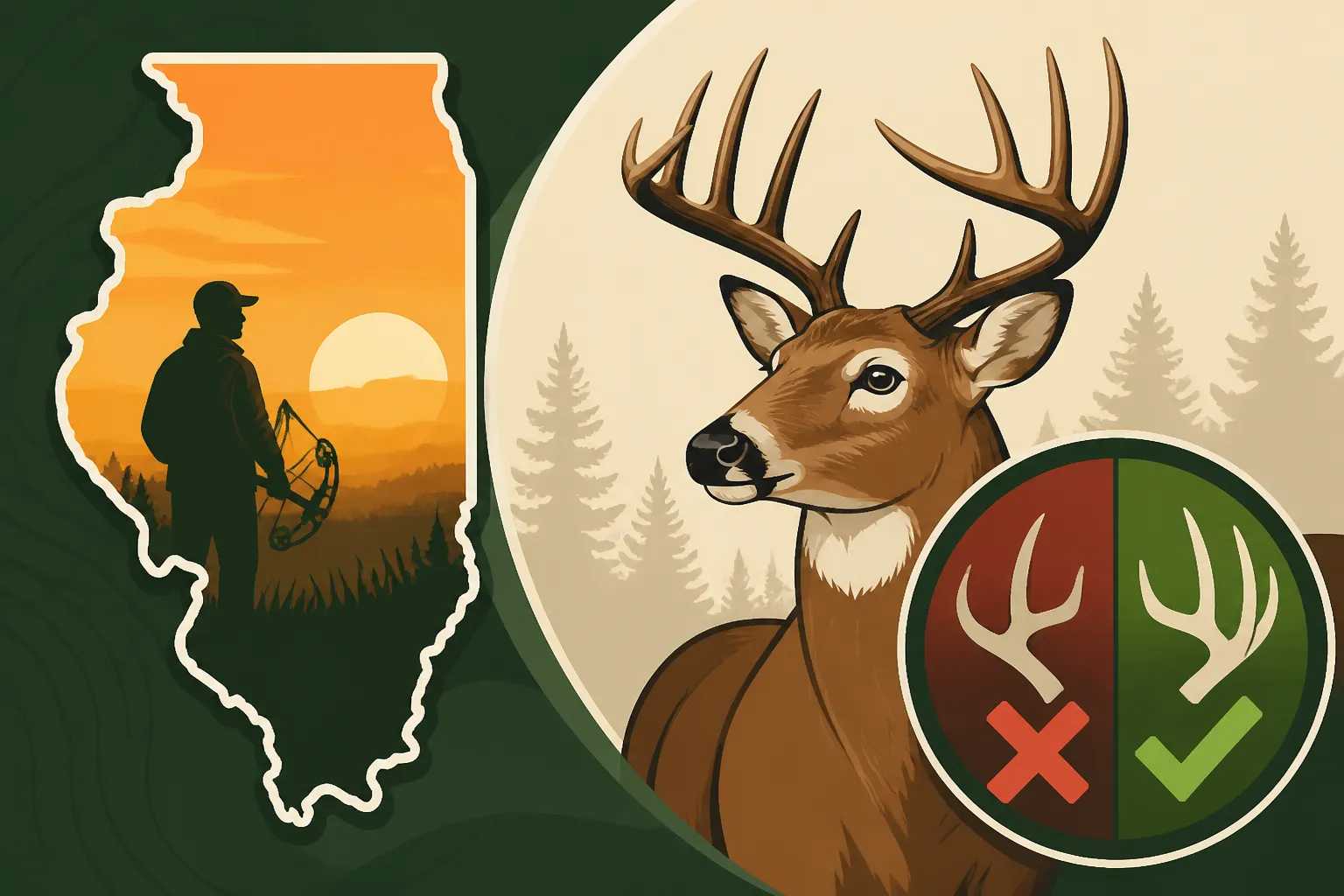
Here's the straightforward answer that might surprise some hunters, especially those familiar with neighboring states: Illinois does not have statewide antler point restrictions for white-tailed deer. This means that during the regular archery, firearm, and muzzleloader seasons across the state, any antlered deer is a legal harvest, provided it meets the definition of an "antlered deer" as established by the Illinois Department of Natural Resources (IDNR).
The IDNR defines an antlered deer simply as a deer having at least one visible antler three inches or more in length. As long as a buck meets this minimum length requirement for at least one antler, it is considered a legal antlered deer. There are no additional requirements regarding the number of points, the spread of the antlers, or the main beam length for general hunting permits. This approach prioritizes hunter opportunity and simpler regulations over complex antler-based rules. So, if you're holding a valid permit for an antlered deer in Illinois, and you see a buck with a visible antler that's at least three inches, it's a legal animal to harvest.
Exceptions to the General Rule
While Illinois maintains a clear stance against statewide APRs for most permits, it's always critical to be aware of potential exceptions, as specific regulations can sometimes apply to certain hunt types or locations. These exceptions are relatively rare for general statewide permits but are worth understanding.
Managed Hunts and Special Areas
In some cases, specific managed hunts on certain public lands or private properties enrolled in special management programs might have their own unique antler restrictions. These are typically localized rules designed to achieve very specific management goals for a particular site. For instance, a highly managed state park or a private cooperative might experiment with APRs to see how they affect their local deer herd. However, these are not statewide mandates. Any such restrictions would be clearly outlined in the specific hunt regulations for that particular site or program. Always double-check the specific rules for the exact location you plan to hunt, especially if it's a site that requires a special permit or lottery application, such as some of the Illinois State Fish and Wildlife Areas or larger public hunting lands.
Youth Hunts
Youth hunting seasons in Illinois generally follow the same rules as adult seasons regarding antlered deer definitions. The focus of the youth deer weekend is to provide an opportunity for younger hunters to learn and participate, and adding complex antler restrictions could detract from that experience. Therefore, during the dedicated Hunting the Illinois Youth Deer Weekend, young hunters typically operate under the same "antlered deer" definition as other hunters: one antler at least three inches long. This simplifies things for mentors and young hunters alike, allowing them to focus on safety and the overall hunting experience rather than counting points.
Why Illinois Operates Without Statewide APRs
The IDNR's decision not to implement statewide antler point restrictions is rooted in several management philosophies and practical considerations. It’s a deliberate choice that contrasts with many other popular deer hunting states, and understanding why can help you appreciate Illinois's approach.
Focus on Hunter Opportunity and Simplicity
One of the primary reasons Illinois avoids statewide APRs is to maximize hunter opportunity and keep regulations as straightforward as possible. For many hunters, the goal is to harvest a deer for venison, regardless of antler size. Requiring a minimum number of points can complicate the hunt, leading to missed chances and potential frustration, especially for new hunters or those who don't have the luxury of passing on multiple bucks. The IDNR aims to provide accessible hunting experiences, and complex antler rules can be a barrier. It also simplifies field identification, reducing the chance of mistakenly harvesting a sub-legal buck.
Data-Driven Management and Herd Health
Illinois manages its deer herd primarily through a combination of antlerless harvest quotas, permit allocations, and disease monitoring, rather than relying on antler restrictions to control buck age structure. The IDNR collects extensive data on deer harvest, population estimates, and disease prevalence (like Chronic Wasting Disease in Illinois Deer) to make informed management decisions. By encouraging the harvest of antlerless deer, the state directly influences population numbers and sex ratios, which are often considered more impactful on herd health and carrying capacity than solely regulating buck antlers. This management strategy emphasizes the overall health and balance of the herd, rather than just the trophy potential of individual bucks.
Concerns Over Misidentification and Enforcement
APRs can be difficult to enforce and can lead to honest mistakes in the field. Judging antler points, especially in low light, dense cover, or when a deer is moving quickly, can be challenging. A hunter might miscount points or misjudge antler length, leading to a violation even if they intended to comply. This can create undue stress for hunters and complicate the role of conservation officers. By having a simple "one antler at least three inches" rule, the potential for such misidentification and subsequent enforcement issues is significantly reduced. This approach helps maintain a positive relationship between hunters and wildlife authorities.
Navigating Illinois Deer Seasons Without APRs
Hunting in Illinois without antler point restrictions means your focus can be on other crucial aspects of deer hunting. This freedom from complex antler rules can actually enhance your hunting experience, allowing you to concentrate on strategy, ethical shot placement, and enjoying the outdoors.
Understanding the Legal Definition of an Antlered Deer
Your primary concern when targeting a buck in Illinois is that it meets the legal definition: a deer with at least one visible antler three inches or more in length. This is a very generous and clear standard. You don't need to stress about whether it's a "basket rack" 8-point or a spike; if it has at least one antler that's three inches, and you have an antlered deer permit, you're good to go. This clarity can be especially helpful for hunters just starting out or those less experienced in judging antlers on the hoof.
Using Technology to Plan Your Hunts
While APRs aren't a concern, effective scouting and understanding land boundaries are always critical. Utilizing mapping applications like those offered by GoHunt can significantly enhance your hunting strategy. These tools allow you to study terrain features, identify potential funnels, bedding areas, and food sources, and verify public versus private land boundaries before you even step foot in the woods. For instance, you can use GoHunt to overlay property lines on satellite imagery, helping you plan your approach and exit routes, whether you're Hunting Central Illinois Farmland Deer or exploring the vast Shawnee National Forest Hunting. Even without APRs, having a solid understanding of the land is paramount.
Ethical Considerations and Personal Choice
The absence of statewide APRs doesn't mean you can't impose your own personal antler restrictions. Many hunters choose to self-regulate, opting to pass on younger bucks to target more mature animals. This is a personal choice based on individual hunting goals and values. The beauty of Illinois's system is that it allows for this flexibility. You can choose to be a "meat hunter" and fill your freezer, or you can hold out for a trophy buck, knowing that the regulations won't force you to pass on a legal animal simply because its antlers don't meet an arbitrary point count. This freedom underscores the importance of individual hunter ethics and responsibility.
Key Deer Season Dates and Regulations
Regardless of antler restrictions, staying up-to-date on season dates and permit requirements is crucial. Illinois has a comprehensive Illinois Deer Season Structure Explained with distinct periods for archery, firearm, and muzzleloader hunting. Ensure you have the correct Illinois Hunting Licenses and What They Cost and appropriate permits for the season and county you plan to hunt. After harvesting a deer, prompt and accurate Illinois Deer Reporting Requirements are mandatory. This data helps the IDNR manage the herd effectively, replacing the need for broad, statewide antler restrictions.
Comparing Illinois to Neighboring States
To truly grasp Illinois's approach, it's helpful to see how it stacks up against some of its neighbors, many of whom have adopted APRs in various forms.
| State | Statewide Antler Point Restriction (APR) | Definition of Legal Antlered Deer (General) | Primary Management Philosophy |
|---|---|---|---|
| Illinois | No | At least one visible antler 3 inches or more in length | Hunter opportunity, population control via antlerless harvest, data-driven management |
| Iowa | Yes (often) | Varies by zone, commonly "4 points on one side" or 15" outside spread | Increase buck age structure, trophy potential, herd quality |
| Missouri | Yes (often) | Commonly "4 points on one side" or 15" outside spread in some zones | Improve buck age structure, quality deer management |
| Wisconsin | Yes (often) | Varies by zone, commonly "3 points on one side" or more | Grow older bucks, enhance hunting experience |
| Kentucky | Yes (often) | Varies by zone, commonly "4 points on one side" or 13" main beam | Quality deer management, buck age structure |
As you can see, Illinois stands out by not imposing a statewide APR. This distinct approach reflects a different philosophy in balancing hunter access with herd management objectives. While neighboring states like Iowa, Missouri, and Wisconsin often utilize various APRs, Illinois opts for a simpler legal definition of an antlered deer, allowing hunters more flexibility in their harvest decisions.
Final Thoughts on Illinois's Approach
Hunting in Illinois offers a refreshing simplicity when it comes to buck harvest regulations. The absence of statewide antler point restrictions means you can focus on the core elements of ethical hunting: identifying a legal deer, making a clean shot, and adhering to all other game laws. This approach values hunter participation and provides flexibility, allowing each hunter to define their own success, whether that's filling the freezer with venison or patiently waiting for a mature buck.
Remember, while the antler rules are straightforward, staying informed about all other Illinois hunting regulations, season dates, and specific site rules is paramount. Always consult the most current Illinois Digest of Hunting and Trapping Regulations before heading into the field, and use resources like GoHunt to aid your scouting and planning. This allows you to experience the rich hunting traditions Illinois has to offer with confidence and peace of mind.
Disclaimer
Please note that hunting regulations can change. While this guide provides accurate information based on current Illinois hunting laws, it is always your responsibility to consult the official Illinois Department of Natural Resources (IDNR) Hunting and Trapping Digest or their website for the most up-to-date and complete regulations before engaging in any hunting activities. This content is for informational purposes only and does not constitute legal advice.