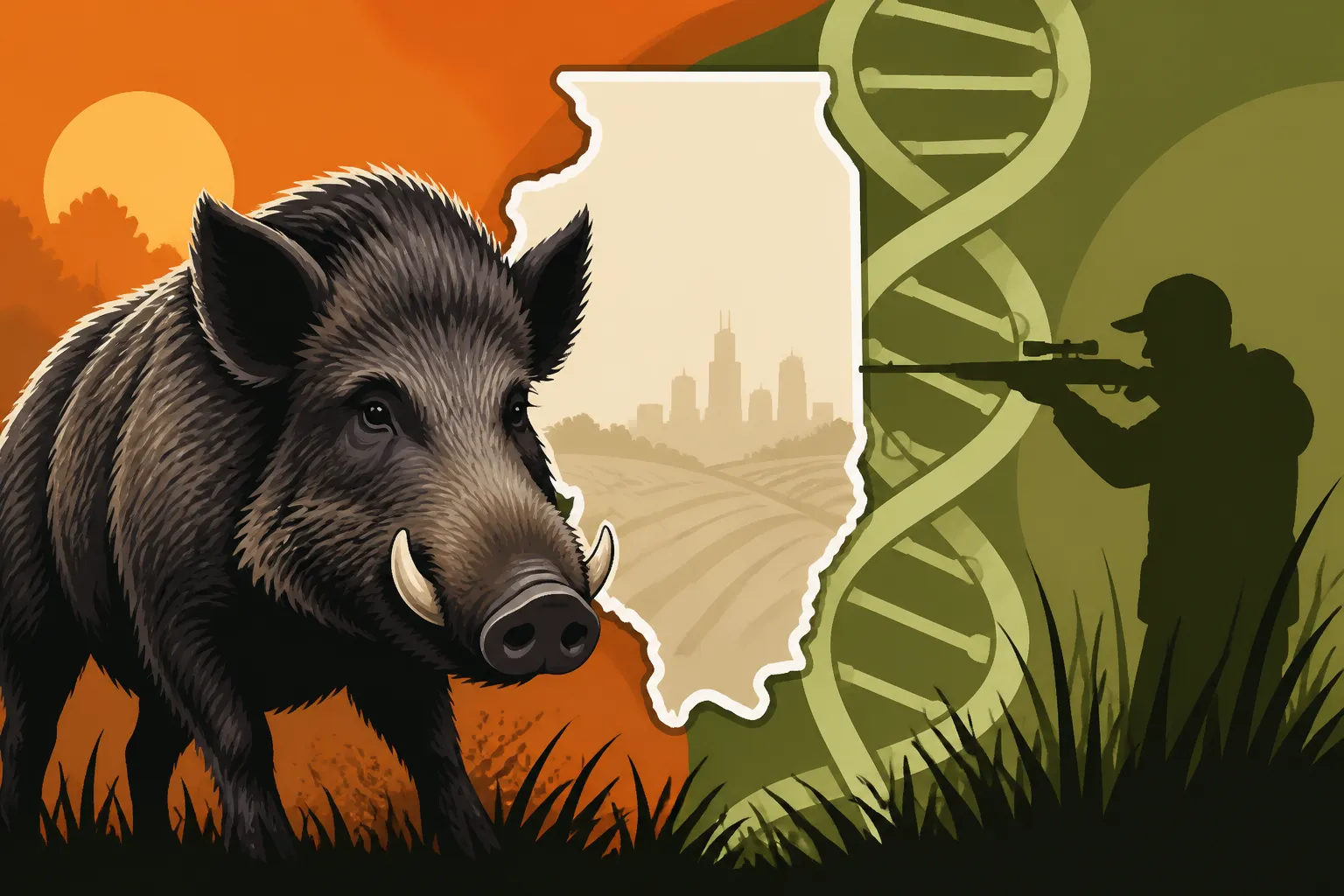
Illinois Feral Swine Genetics and Origin
Few things are as frustrating for an Illinois landowner or hunter as discovering the destructive aftermath of feral hogs. These invasive animals don't just trample crops and root up pristine habitat; they breed at an alarming rate and seem to appear out of nowhere. Understanding where these problematic pigs come from and what makes them tick genetically is crucial to effectively combating their spread, and that's exactly what we're going to dive into today.
The Unwanted Guests: Understanding Illinois Feral Swine
Feral swine are truly an ecological and agricultural menace, and their presence in Illinois is a relatively recent, but rapidly growing, concern. While hunters might see them as a year-round hunting opportunity, the reality of their impact paints a much darker picture for the state's natural resources and agricultural economy. They are a species that simply doesn't belong here, and their destructive habits make them a top priority for control and eradication efforts.
What Defines a Feral Swine in Illinois?
In Illinois, a "feral swine" isn't just any pig running around loose. The term specifically refers to any hog, regardless of its specific genetic makeup, that is living in a wild or semi-wild state. This means it's not under direct human control, isn't confined to a farm, and isn't part of an active agricultural operation. They might look like domestic pigs, or they might exhibit characteristics of wild boars, but their defining feature is their independent, free-ranging existence. This distinction is important because it dictates how they are managed under state law, where they are considered an unprotected species.
These animals have adapted remarkably well to surviving without human intervention, often developing thicker coats, longer snouts, and tusks. They become incredibly wary and elusive, using dense cover to their advantage and becoming largely nocturnal to avoid detection. This adaptation makes them particularly challenging to manage, as they quickly learn to avoid common trapping methods and human presence.
The Environmental and Agricultural Nightmare
The impact of feral swine on Illinois's environment and agriculture is nothing short of catastrophic. From rooting up vast tracts of farmland, destroying soybean and corn crops, to devastating delicate wetland ecosystems and forest undergrowth, their presence leaves a trail of destruction. They are opportunistic omnivores, feeding on everything from acorns and roots to ground-nesting bird eggs, fawns, and even small livestock. This broad diet puts immense pressure on native wildlife populations and valuable natural resources.
Beyond direct habitat destruction, feral hogs are vectors for a host of diseases, including pseudorabies, brucellosis, leptospirosis, and even E. coli. These diseases pose a significant threat to domestic livestock, other wildlife, and even human health. A farmer whose fields are ravaged by hogs faces not only crop loss but also the very real risk of disease transmission to their herd, leading to potentially devastating economic losses. This constant threat makes their control a multi-faceted problem that goes far beyond just hunting. You can learn more about the specific damages they cause in our guide on Crop Damage Hogs Cause in Illinois.
Why Feral Hogs are a Unique Challenge for Hunters and Landowners
For hunters, the presence of feral hogs can be a double-edged sword. While it offers a unique, year-round hunting opportunity – given their unprotected status in Illinois – the species also presents considerable challenges. They are notoriously intelligent, learn quickly from pressure, and often exhibit patterns that make them incredibly difficult to consistently harvest. Their nocturnal habits, combined with their preference for thick cover, mean that locating and taking them often requires specialized tactics and equipment.
Landowners, in particular, bear the brunt of the financial and ecological damage. They're often on the front lines, dealing with ravaged fields and fences, and the ongoing stress of trying to mitigate the damage. The resources required to fence, trap, and actively hunt these animals can be substantial, and the problem often feels like an uphill battle. It's not just about a few animals; it's about controlling a rapidly expanding population that threatens the very livelihood of many in rural Illinois. Understanding their movements and habitat preferences, perhaps through mapping tools like GoHunt, can be a valuable asset for both hunters and landowners trying to get a handle on the problem.
A Murky Past: Tracing the Origins of Illinois's Feral Hogs
To understand the feral hog problem in Illinois, we have to look back at how these animals, originally non-native to the continent, ended up running wild in our forests and fields. It's not a simple story, but rather a complex blend of historical agricultural practices, accidental escapes, and unfortunately, sometimes intentional releases. Unraveling this past helps us understand the genetic makeup we see today and why they are so persistent.
The Legacy of Domestic Escapees
A significant portion of Illinois's feral swine population can trace its lineage directly back to domestic pigs. For centuries, across the United States, it was common practice for farmers to allow their pigs to free-range or "woodlot" graze, especially in areas with abundant mast crops like acorns. While this practice provided cheap feed for the hogs, it also made it incredibly easy for some to escape and become wild. These domestic pigs, often selectively bred for rapid growth and prolificacy, adapted surprisingly quickly to a feral existence.
Once escaped, these pigs would revert to more wild characteristics over generations. Their coats would often become darker and coarser, their snouts longer and more suited for rooting, and their bodies leaner and more athletic. They'd develop tusks and become much more aggressive. This constant leakage from domestic operations over decades, combined with their incredible adaptability, laid the groundwork for many of the feral populations we see today.
The "Russian Boar" Myth and Reality
When people talk about feral hogs, often the image of a "Russian boar" or "European wild boar" comes to mind – large, dark, hairy animals with impressive tusks. While these European wild boars were introduced to parts of the United States in the late 19th and early 20th centuries, primarily for sport hunting on private preserves, their role in Illinois's overall feral swine genetics is often misunderstood. Some populations elsewhere do have a strong genetic link to these imports.
In Illinois, the reality is that true "pure" European wild boar genetics are less prevalent than the public might assume. While some might have escaped from private hunting facilities, or migrated from neighboring states where such releases occurred, the vast majority of Illinois feral swine are a mosaic of domestic genetics. Any "wild boar" appearance traits are often the result of domestic pigs reverting to wild characteristics over time, or the interbreeding of escaped domestic stock with existing feral populations that may have some wild boar ancestry. This mixing creates a hybrid animal that combines the hardiness of a wild boar with the prolific breeding of a domestic pig.
Accidental or Intentional Introductions?
Beyond simple escapes from farms, there's a more troubling aspect to the spread of feral hogs: intentional introductions. In some areas, individuals have deliberately released pigs into the wild, either to establish new hunting opportunities or simply out of ignorance, believing they were enhancing local wildlife. These releases, often called "hog dropping," can quickly establish new populations in previously unaffected areas. This type of human-assisted dispersal dramatically accelerates the spread, making control efforts far more difficult.
Furthermore, hogs can move naturally across state lines. As surrounding states like Missouri, Kentucky, and Indiana deal with their own feral hog issues, it's not uncommon for individual sounders to push into new territory, including Illinois. The Mississippi and Ohio River bottoms, with their dense cover and abundant food sources, act as natural highways for these animals, allowing them to traverse long distances and establish new strongholds, as discussed in our piece on How Wild Hogs Spread Across Illinois. It’s a constant battle to monitor and intercept these migratory groups before they become entrenched.
The Genetic Tapestry: What Makes an Illinois Feral Hog
The feral swine roaming Illinois today are not a uniform group. Instead, they represent a fascinating, yet problematic, genetic blend. This genetic diversity is part of what makes them so resilient and adaptable, complicating management efforts but also offering clues to their behavior and origins.
Hybrid Vigor: The Mixing of Domestic and Wild Traits
The defining characteristic of most feral swine in Illinois is their hybrid nature. They are often a complex mix of genetics from various domestic pig breeds (like Yorkshire, Duroc, Hampshire) that have escaped captivity, combined with whatever residual "wild boar" genetics might exist from earlier introductions or migration from other states. This genetic blending often results in what biologists call "hybrid vigor" or heterosis. This means the offspring of genetically diverse parents often exhibit increased fitness, growth rate, fertility, and survival compared to their purebred parents.
For feral hogs, this hybrid vigor translates into an animal that can withstand harsh conditions, reproduce at an astonishing rate, and adapt quickly to new environments and pressures. They get the best (or worst, depending on your perspective) of both worlds: the prolificacy of a domestic pig and the hardiness and cunning of a wild animal. This makes them incredibly difficult to eradicate, as they are constantly evolving and becoming more efficient at surviving in the wild.
Genetic Markers and Tracking Their Spread
Biologists and wildlife agencies utilize genetic analysis to better understand feral swine populations. By studying specific genetic markers in tissue samples collected from harvested animals, researchers can pinpoint the likely origins of a particular population, identify movement patterns, and even estimate population connectivity between different areas. This genetic detective work is invaluable for informing control strategies. For example, if genetic analysis shows a high degree of similarity between hogs in southern Illinois and a known population in Missouri, it suggests migration as a primary pathway for spread.
This data helps agencies like the Illinois Department of Natural Resources (IDNR) to prioritize control zones and focus resources where they can have the most impact. It's a precise way to understand the enemy – knowing if you're dealing with a localized problem stemming from a recent escape or a persistent influx from a neighboring state. Tools like GoHunt can layer public land boundaries and topography, helping hunters identify potential travel corridors where genetic samples might be collected.
How Genetics Influence Behavior and Population Dynamics
The genetic background of a feral hog also influences its behavior and, consequently, the dynamics of the population. Hogs with a stronger domestic influence might initially be less wary, making them easier targets for early trapping or hunting efforts. However, as they become truly feral over generations, their instincts for survival, evasion, and finding food in the wild become more pronounced. Animals with more "wild boar" genetics might exhibit bolder, more aggressive behaviors, larger home ranges, and a stronger tendency to form larger sounders.
Furthermore, genetic traits influence reproductive rates. Domestic pigs are bred for large litter sizes, and feral hogs retain much of this capacity, often breeding at a younger age and producing multiple litters per year. This high reproductive output, combined with the hardiness conferred by hybrid vigor, is the primary reason why feral hog populations can explode so quickly in suitable habitats, even with significant hunting pressure. Understanding these inherent genetic advantages is key to appreciating the scale of the challenge in managing Illinois's feral hog populations.
Here's a quick comparison of the genetic influences you might see:
| Trait | Primarily Domestic Ancestry | Primarily Wild Boar Ancestry | Typical Illinois Feral Swine (Hybrid) |
|---|---|---|---|
| Coat Color | Pink, spotted, white | Dark brown, black, grizzled | Variable, often dark, brindled, or spotted |
| Body Shape | Blocky, short legs | Lean, muscular, longer legs | Muscular, sometimes rangy, good runners |
| Tusk Size | Small or absent | Long, sharp | Present, can be significant |
| Reproductive Rate | Very High (2 litters/year, large litters) | High (1-2 litters/year, smaller litters) | Very High (retains domestic prolificacy) |
| Temperament | Docile, less wary | Aggressive, highly wary | Wary, intelligent, can be aggressive |
| Adaptability | Moderate (needs feed/shelter) | High (survives in diverse habitats) | Extremely High (hybrid vigor) |
The Spread and Establishment: How Hogs Took Root in Illinois
While the origins might be complex, the story of how feral hogs established a foothold and began to spread across Illinois is critical. It's a tale of opportunistic expansion, finding ideal habitats, and capitalizing on their innate reproductive capabilities to colonize new areas.
Pathways of Dispersal: From Neighboring States to Local Pockets
The journey of feral hogs into Illinois is often characterized by two main pathways: internal releases and external migration. Internally, localized populations might originate from the escape of domestic pigs from farms, especially in rural areas where pigs might be allowed to roam. These incidents, while seemingly small, can quickly lead to established sounders if not addressed immediately. Once a few pigs escape and reproduce, a new pocket of feral swine can take root.
However, a significant portion of the Illinois population's spread is attributed to migration from neighboring states, particularly from Missouri and Kentucky. These states have long-standing feral hog issues, and their populations, particularly along river systems like the Mississippi and Ohio, naturally push into new territories. These river bottoms, with their dense cover, abundant food, and water sources, act as natural corridors for pigs to cross state lines and disperse into southern Illinois counties. Tracking Feral Swine Sightings in Southern Illinois often correlates with these riverine systems. This constant influx means that even if Illinois managed to eliminate its internal populations, the threat of re-invasion from adjacent states remains.
Habitat Hotspots: Where Illinois Hogs Thrive
Feral hogs aren't just found anywhere in Illinois; they gravitate towards specific types of habitat that provide everything they need to survive and flourish. Southern Illinois, with its extensive timber, dense river bottoms, and less developed land, offers prime real estate for these animals. Areas with heavy forest cover provide excellent bedding and escape routes, making them difficult to track and hunt. The Shawnee National Forest, for example, offers vast tracts of remote land where hogs can thrive largely undisturbed.
Beyond timber, areas with a mix of woodlands and agricultural fields are particularly attractive. The fields provide an abundant, readily available food source (corn, soybeans, wheat), while the adjacent timber offers crucial cover for resting, farrowing, and escaping pressure. Water sources are also vital, and hogs will often congregate near creeks, rivers, and ponds. These specific ecological niches, which are plentiful across parts of Illinois, provide the perfect conditions for sustained population growth and continued expansion, allowing them to establish robust populations.
The Reproductive Machine: Exponential Growth
Perhaps the most alarming aspect of feral swine biology is their incredible reproductive capacity. This isn't just a handful of animals; it's a rapidly multiplying force. Sows can begin breeding as young as six months old and can have two, sometimes even three, litters in a single year. Each litter can range from 4 to 12 piglets, with an average of 6-8. When you do the math, it's easy to see how a small group of escaped pigs can become a major problem in just a few years.
This exponential growth rate means that even if you remove a significant number of animals through hunting or trapping, the population can quickly rebound if control efforts aren't sustained and aggressive. It's like trying to empty a bathtub with a teaspoon while the faucet is wide open. This biological advantage makes traditional hunting pressure largely ineffective at truly reducing populations, instead often leading to dispersal as pressured hogs seek new, less disturbed areas. Understanding this reproductive potential underscores why a comprehensive, multi-pronged approach is essential for any hope of control.
Management Implications: Using Genetics to Fight Back
The complex genetics and pervasive nature of Illinois's feral swine problem mean that effective management strategies must be equally complex and sustained. It's not a fight that can be won overnight, but rather a long-term commitment requiring a blend of science, active removal, and public cooperation.
Monitoring Genetic Diversity for Control Strategies
The ongoing study of feral swine genetics isn't just for academic curiosity; it directly informs management and control efforts. By continuously monitoring the genetic diversity and relatedness within and between populations, wildlife managers can identify key areas of concern. For instance, if genetic analysis reveals a newly established population has a unique genetic signature not seen in other Illinois hogs, it might indicate a recent, localized introduction that can be targeted for rapid eradication before it spreads further. Conversely, if genetic material points to an ongoing influx from a neighboring state, it highlights the need for regional cooperation and control efforts along shared borders.
This genetic intelligence also helps in understanding the impact of control measures. If trapping and hunting are effective, genetic diversity might decrease in a localized population, indicating successful removal. However, if new genetic markers suddenly appear, it could signal new introductions or migrations, prompting a shift in strategy. This scientific approach helps ensure that precious resources are allocated to the most effective tactics, rather than simply reacting blindly to sightings.
Illinois's Unprotected Status and the Fight Against Feral Swine
Recognizing the severe threat posed by feral swine, Illinois has designated them as an unprotected species. This means there are no closed seasons, no bag limits, and hunters can legally pursue them year-round on private land with landowner permission, and on certain public lands with specific regulations. This policy is a direct response to their invasive nature, encouraging their removal whenever possible. However, the intent is eradication, not the establishment of a huntable game species. The IDNR emphasizes that hunting alone is rarely sufficient to control populations, often leading to dispersal rather than true reduction.
The state encourages various methods of removal, including trapping, shooting, and even aerial gunning in certain contexts. The focus is on preventing their establishment and eliminating existing populations. This contrasts sharply with regulated game species, where seasons and limits are designed for sustainable harvest. The uncontrolled nature of feral hog hunting in Illinois is a reflection of the severity of the problem, allowing individuals to contribute to the overall goal of reducing their numbers. You can find more details on Illinois Feral Hog Regulations and Hunting Illinois's Year-Round Feral Hogs for specific guidelines.
The Role of Hunter Participation in Data Collection
Hunters play a surprisingly crucial role beyond just removing individual animals. They are often the first to encounter new populations and can provide invaluable data to wildlife agencies. Reporting sightings, especially in areas where hogs haven't been previously confirmed, is incredibly important. Even better, collecting biological samples from harvested animals – such as tissue for genetic analysis or lymph nodes for disease testing – can provide critical scientific intelligence. Many state agencies, including the IDNR, will have protocols for submitting such samples.
Tools like GoHunt, which offer detailed mapping and land ownership information, can help hunters better understand the terrain where they encounter hogs and accurately report locations. This crowdsourced data, combined with scientific studies, creates a more complete picture of the feral hog situation across the state. By working together, hunters and wildlife managers can leverage every piece of information to develop more targeted and effective strategies to combat this persistent and destructive invasive species.
Disclaimer
This article is for general informational purposes only and does not constitute professional advice. Laws, prices and regulations vary by location and change over time. Consult a qualified professional for guidance on your specific situation.