Illinois Deer Vehicle Collisions
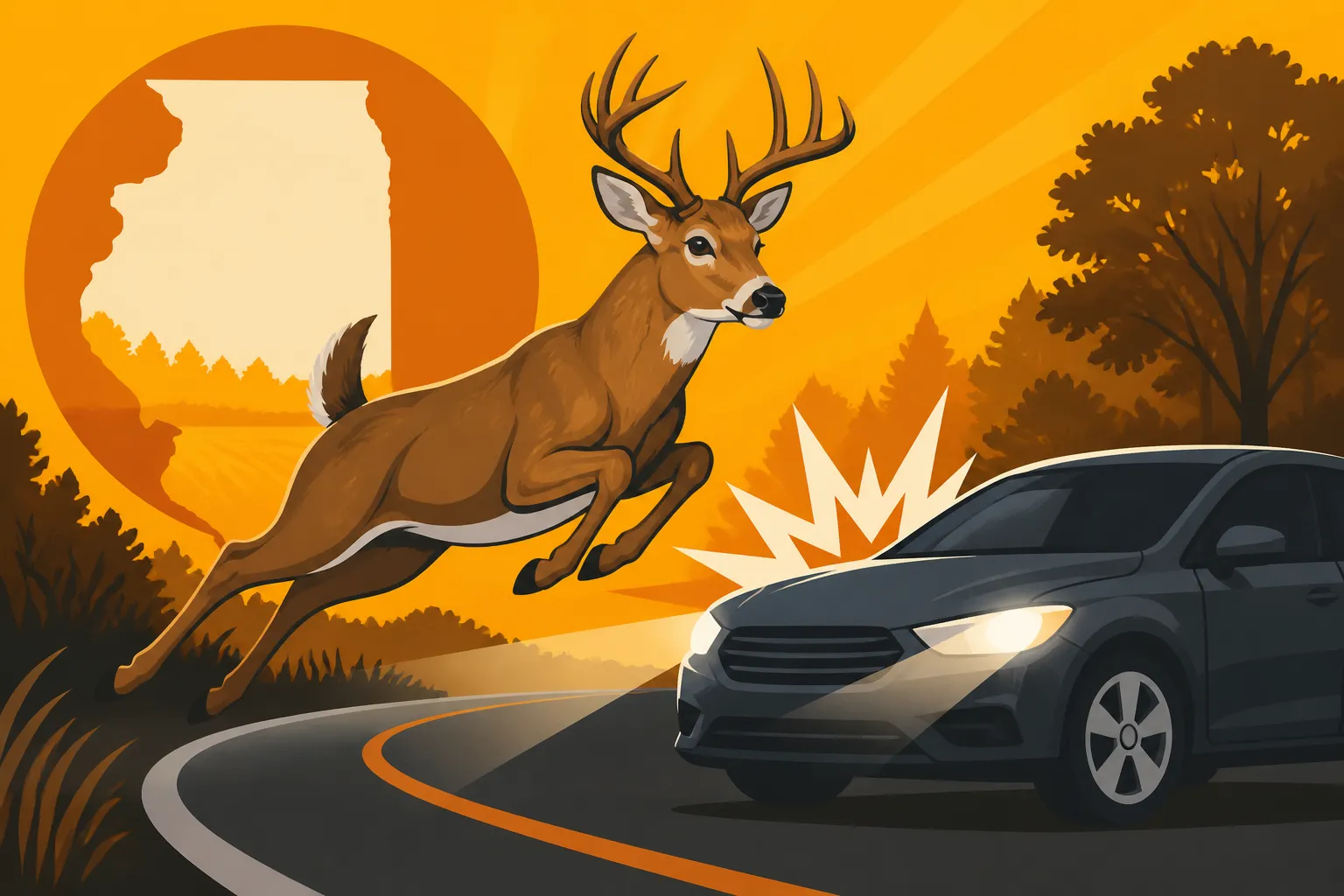
There's nothing quite like cruising down a quiet Illinois back road, enjoying the scenery, when suddenly, a flash of brown darts into your headlights. Deer vehicle collisions are a stark reality for drivers across our state, leading to millions in damages, countless injuries, and far too many heartbreaking fatalities each year. This guide will walk you through why these encounters are so common in Illinois, how to drastically reduce your risk of a collision, and what critical steps to take if the worst-case scenario becomes unavoidable.
The Alarming Reality of Deer Vehicle Collisions in Illinois
If you've lived or driven in Illinois for any length of time, you've probably either hit a deer, narrowly avoided one, or know someone who has. It's not just bad luck; it's a statistical reality in our state. Illinois consistently ranks among the top states for deer-related accidents, and understanding why is the first step toward staying safer on the road. The sheer volume of whitetails combined with our extensive road network creates a perfect storm for these dangerous encounters.
Why Illinois is a High-Risk State
Illinois is a land of rich agricultural fields interspersed with dense timber, river bottoms, and suburban fringes. This patchwork of habitat is absolutely ideal for white-tailed deer, providing them with abundant food sources and secure cover. As a result, our deer population is robust, often dense in many areas, creating frequent opportunities for deer and vehicles to cross paths. When you consider the state's vast network of highways, rural roads, and even busy urban corridors, it becomes clear why the potential for collisions is so high. Our ever-expanding human footprint also pushes deer into tighter, more fragmented habitats, forcing them to cross roads more frequently in search of food, water, and breeding grounds. It's a constant tug-of-war between nature and human development, with our roadways often becoming the unfortunate battlegrounds. The sheer number of deer is a primary driver; understanding the Illinois Deer Population Estimate can help put this into perspective.
Even in areas you might consider "less wild," like the outer suburbs of Chicago or Springfield, deer thrive in green spaces, woodlots, and along creek beds, often moving through residential areas under the cover of darkness. This means a deer encounter isn't just a rural problem; it's a statewide challenge. The combination of high deer density, varied landscapes, and human expansion ensures that vigilance is always necessary, no matter where you're driving in the Prairie State.
Seasonal Peaks and Daily Danger Zones
Deer activity isn't constant throughout the year; it fluctuates dramatically with their biological cycles and human activities. The most dangerous time for deer vehicle collisions in Illinois is undoubtedly during late fall and early winter. This period, roughly from October through December, encompasses the breeding season, commonly known as the rut, and coincides with the harvest of agricultural crops. During the rut, bucks are actively seeking does, often traveling great distances and showing less caution than usual, while does are on the move to escape persistent bucks. This heightened movement means more deer crossing roads at all hours. We see a significant spike in accidents around When the Illinois Rut Peaks, typically in early November, but the preceding weeks and following month remain very risky.
Beyond the seasonal peaks, daily danger zones are equally predictable. Deer are crepuscular, meaning they are most active during dawn and dusk. These are the times when they move from bedding areas to feeding grounds and vice versa. Unfortunately, these are also the times when human commuters are most active, often traveling to or from work, sometimes tired, and with visibility reduced by low light conditions or sun glare. Adding to this, crop harvest season in late fall removes cover, forcing deer to move more openly and frequently across fields and roads as they seek new food sources or denser cover. It's a critical time when every driver needs to be extra cautious and understand that deer are on the move, making unpredictable appearances.
Understanding Deer Behavior to Avoid Collisions
To effectively avoid deer, it's not enough to just know when they are active; you need to understand how they move and react. Deer are creatures of habit, but also prone to sudden, unexpected bursts of movement, especially when startled or pressured. Anticipating their actions can give you precious seconds to react.
Deer Movement Patterns
Deer aren't just aimlessly wandering. They follow established trails, often along tree lines, creek bottoms, and through dense cover, moving between bedding areas, feeding locations, and water sources. These routes frequently cross roads at predictable points, such as where a woodlot meets a field, or where a creek flows under a bridge. Learning to "read" the landscape for these natural funnels and travel corridors can help you identify high-risk areas. For instance, Reading Illinois Mud for Fresh Deer Movement can give you clues about where deer are routinely crossing.
They also react to environmental factors. Heavy rain or snow can trigger increased movement as deer seek shelter or fresh browse exposed by the weather. Similarly, hunting pressure can push deer into new areas, often across roads they might typically avoid. Knowing the local conditions and the presence of hunters (which is often high during prime deer season) can help you anticipate displaced deer. Their behavior is largely driven by survival instincts – finding food, avoiding predators, and reproducing – all of which can lead them directly into your path if a roadway interrupts their natural patterns.
The "One Deer" Myth and Herd Dynamics
Perhaps one of the most dangerous misconceptions about deer is that they travel alone. This is rarely the case. Deer are social animals, often moving in groups, especially does and their fawns, or during the rut when multiple deer may be chasing or being chased. If you see one deer cross the road, your immediate thought should be: Where are the others? It's almost guaranteed that more will follow, often without hesitation, especially if they are fawns following their mother or a buck pursuing a doe. Understanding the Illinois Buck-to-Doe Ratio by Region can give you insight into herd dynamics in your area, and thus, the likelihood of encountering multiple deer.
Many collisions occur when a driver sees the first deer, brakes or swerves, and then relaxes, only to have a second or third deer dart out from the same spot, often directly into the side of the vehicle. Always assume there are more. Slow down considerably, scan both sides of the road, and be prepared to stop for several minutes if necessary. This herd mentality is a critical piece of information that can save lives and prevent significant damage.
Proactive Strategies to Prevent Deer Encounters
While you can't control deer behavior, you can absolutely control your own. Adopting a few proactive driving habits and utilizing available tools can dramatically reduce your chances of a collision. Prevention is always the best medicine when it comes to deer on the road.
Defensive Driving Techniques
The cornerstone of preventing deer collisions is defensive driving. This means being constantly aware of your surroundings and anticipating potential hazards. First and foremost, slow down, especially during dawn, dusk, and late fall. Reduced speed gives you more reaction time to brake or respond. Secondly, scan the shoulders and ditches, not just the pavement directly in front of you. Deer often stand just off the road, hidden in brush, before leaping out. Look for the glint of their eyes in your headlights, or their dark silhouettes against the lighter sky at dawn. Use your high beams whenever possible on rural roads, as they extend your visibility and give you more time to spot deer.
Another crucial tip: resist the urge to swerve. While your instinct might be to avoid hitting the deer at all costs, swerving can lead to much more severe accidents, such as losing control, hitting a tree or another vehicle, or rolling your car. It’s a tough decision in a split second, but often, hitting the deer (while still braking firmly) is safer than swerving into oncoming traffic or a ditch. Braking hard and maintaining control of your vehicle, aiming to hit the deer square-on if a collision is unavoidable, typically results in less severe outcomes for vehicle occupants than evasive maneuvers.
Utilizing Technology and Information
Beyond driving techniques, there are tools and information sources that can aid your vigilance. While deer whistles are commonly advertised, their effectiveness is highly debated and often unproven. Your best technological advantage comes from being informed and having good visibility. Keeping your vehicle's headlights clean and properly aimed is fundamental. Investing in good quality, well-maintained tires can also improve your braking ability in an emergency.
For modern hunters and outdoor enthusiasts, mobile applications can be invaluable for understanding wildlife movement, which directly translates to safer driving. Apps like GoHunt provide detailed mapping, showing public land boundaries, topography, and even aerial imagery. While primarily for hunting, this kind of data can help you identify high-traffic deer corridors that cross roads, especially when driving through unfamiliar areas. Similarly, the Scouting With the Illinois DNR App can highlight significant tracts of deer habitat, making you more aware of where deer are likely to be concentrated. Staying informed about local conditions, such as recent EHD outbreaks or harvest activities in surrounding fields, can also offer clues about potential deer movement.
Table: High-Risk Times and Corresponding Actions
| Risk Factor | Time of Day | Time of Year | Driving Action |
|---|---|---|---|
| High Deer Activity | Dawn & Dusk | October – December | Slow down significantly, increase scanning |
| Increased Rut Movement | All Hours | Late October – Mid-Nov | Extreme caution, assume multiple deer, don't swerve |
| Crop Harvest Season | All Hours | September – December | Watch field edges closely, anticipate displaced deer |
| Reduced Visibility | Night, Fog, Rain | Year-Round | Use high beams (if safe), reduce speed, increase follow distance |
| Habitat Transition Zones | Year-Round | Year-Round | Be extra vigilant near woodlots, creeks, field edges |
What to Do If a Collision is Unavoidable
Despite your best efforts, sometimes a deer collision is simply unavoidable. When that happens, knowing what to do immediately after impact is crucial for your safety and for handling the aftermath properly. Panic can set in, but a clear head and a plan can make a big difference.
Immediate Steps After Impact
First and foremost, stay calm and pull over safely if your vehicle is still operable. Activate your hazard lights. If you can, move your vehicle off the main road to a safe location away from traffic. Do not get out of your vehicle immediately, especially if you are on a busy road or if the deer is still alive and struggling. A wounded deer can be unpredictable and dangerous. Your personal safety is paramount. Once it's safe to exit, assess the damage to your vehicle.
Next, call the local authorities. This could be 911, the Illinois State Police, or your county sheriff's department. Even if the damage seems minor, reporting the incident is important for insurance purposes and for official record-keeping. They can also assist with traffic control and determine if the deer needs to be dispatched or removed from the roadway. Take photos of the scene, the deer, and the damage to your vehicle. This documentation will be invaluable when filing an insurance claim. Remember that Illinois Hunter Education Requirements emphasize safety first in all scenarios involving wildlife, and this extends to post-collision situations.
Handling the Injured or Deceased Deer
Once authorities are involved, they can advise on how to handle the deer. Never approach an injured deer without proper training or equipment. A wounded deer can cause serious injury if it lashes out. If the deer is deceased and creates a traffic hazard, the authorities will arrange for its removal. In Illinois, if you wish to salvage the meat from a deer that was killed in a vehicle collision, you must report the incident to the Illinois Department of Natural Resources (IDNR) or local law enforcement within 24 hours. They can issue a salvage tag, which legally allows you to possess the deer. Without this tag, possession of roadkill deer is illegal.
Salvaging a deer involves more than just a tag; you need to be prepared for Field Dressing a Deer in Cold Weather (which is when most collisions happen) or warmer weather, and have a way to transport it. If you're not equipped or comfortable with this process, it's best to leave it to the authorities. Many people choose to let the meat go, or consider alternatives like Donating Venison in Illinois if they harvest a deer during hunting season, rather than dealing with a roadkill salvage. Be mindful of potential CWD concerns in certain Illinois counties; the IDNR or law enforcement can advise on Illinois Carcass Movement Restrictions if you are in a designated CWD zone. The process of Reporting a Deer Through Illinois's App is primarily for harvested deer, but always check with authorities for current roadkill reporting procedures. Understanding the scale of Illinois Annual Deer Harvest and How IDNR Counts the Illinois Deer Herd further emphasizes the significant interaction between deer and human activities, including vehicle collisions.
Disclaimer
This article is for general informational purposes only and does not constitute professional advice. Laws, prices and regulations vary by location and change over time. Consult a qualified professional for guidance on your specific situation.