Gray Versus Fox Squirrels in Illinois
Ever been out in the Illinois woods, heard a rustle, spotted a squirrel, and then immediately wondered if it was a gray or a fox? It's a common dilemma, and knowing the difference isn't just for bragging rights; it's crucial for understanding their habits and where to find them. This guide is here to untangle the often-confused characteristics of Illinois's two most popular squirrel species, helping you become a more discerning observer and a more successful hunter.
Distinguishing Features: Telling Gray and Fox Squirrels Apart in Illinois
While both gray and fox squirrels are abundant throughout Illinois and often share the same general hunting season, they are distinctly different animals. Many hunters, especially newcomers, struggle to tell them apart at a glance, leading to missed opportunities or misidentified game. Understanding their specific physical attributes is the first step toward becoming a more knowledgeable woodsman. It's not just about size; subtle color patterns and even the shape of their ears can give them away once you know what to look for.
Size and Build: More Than Just a Little Difference
The most immediate and often easiest way to differentiate between the two species is their overall size and build. Fox squirrels are the larger, more robust of the two, truly earning their namesake with a fox-like bulk. They typically weigh in at around 1.5 to 2 pounds and can measure 20 to 25 inches from nose to tail tip. When you see a fox squirrel scrambling up a tree, they just look thicker, with a broader body and a more powerful, less frenetic climb compared to their smaller cousins. Imagine the difference between a sturdy mid-sized dog and a lean terrier – that's roughly the scale we're talking about.
Gray squirrels, on the other hand, are noticeably smaller and more slender. An average adult gray squirrel usually weighs between 1 and 1.5 pounds and is about 16 to 20 inches long. They possess a more agile and delicate frame, allowing them to navigate the intricate branches of the canopy with incredible speed and grace. If you spot a squirrel that seems almost impossibly quick, a blur of motion darting through the uppermost limbs, chances are it's a gray squirrel. Their lighter build means they can move through thinner branches and cling to tighter spots, giving them an advantage in dense, unbroken forest canopies.
Observing a squirrel's general demeanor and how it carries itself can also offer a clue. A fox squirrel often seems a bit more deliberate in its movements, perhaps pausing more frequently on the ground to survey its surroundings or sitting upright on a limb with a confident posture. Gray squirrels, by contrast, are often a bundle of nervous energy, constantly twitching their tails, chattering, and moving with an almost frantic intensity. This difference in build directly translates to their preferred escape routes and how they react when spooked – a larger fox squirrel might bolt across open ground to the nearest tree, while a gray might simply vanish into the thickest part of the canopy.
Coloration and Markings: The Most Obvious Clues
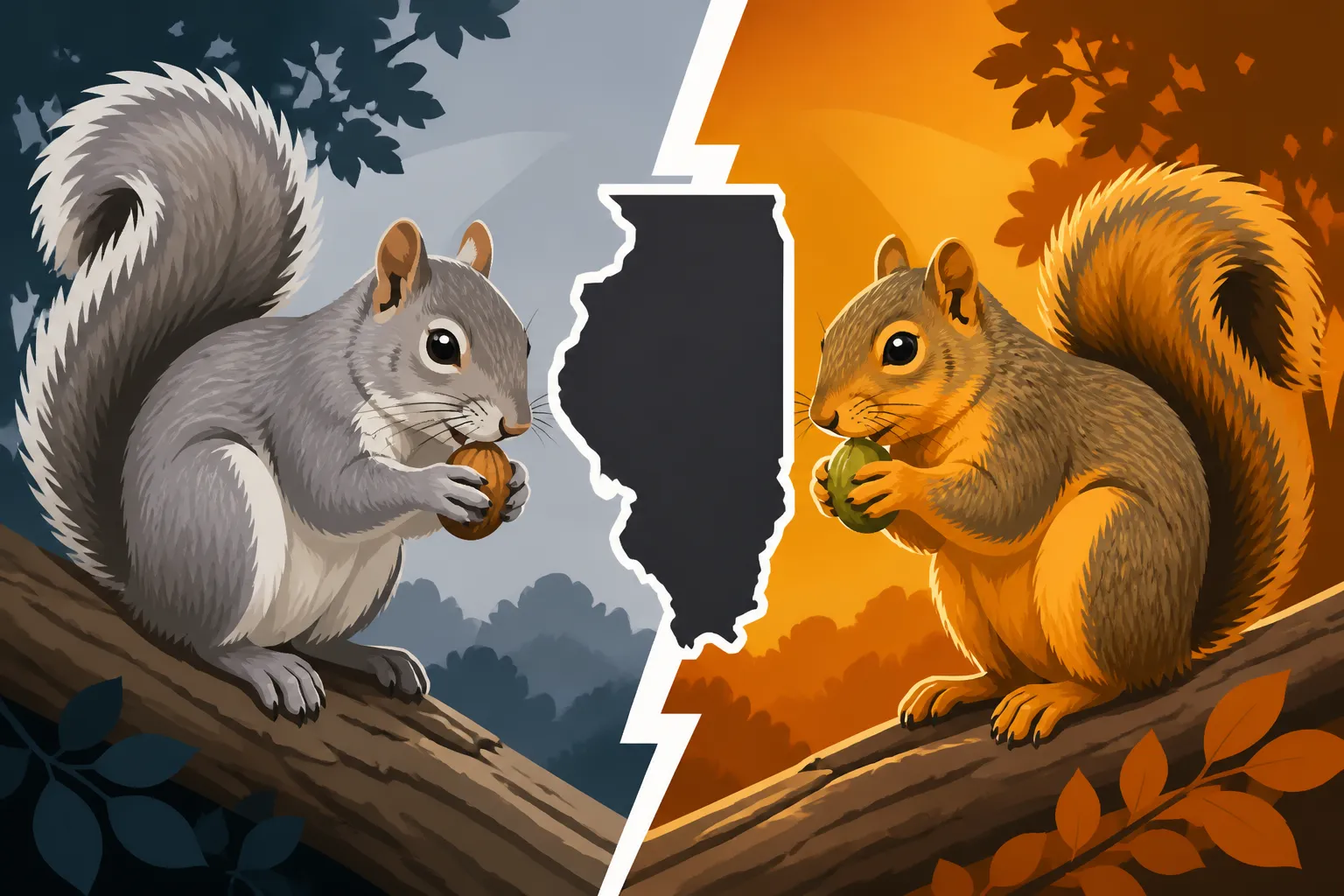
While size is a good indicator, their fur coloration provides the most distinct visual cues. Fox squirrels display a wide range of colors, but their most common appearance in Illinois is a rusty-orange or reddish-brown hue on their back, sides, and tail, often mixed with gray. Their belly and underside are typically a vibrant, almost fiery orange or cinnamon color. You might even see some individuals with a black head or black patches mixed into their fur, especially in certain parts of the state, but that characteristic orange belly is usually a dead giveaway.
Gray squirrels, as their name suggests, are predominantly gray on their backs and sides, sometimes with hints of brown or black mixed in, giving them a salt-and-pepper appearance. Their belly is almost always a clean, stark white or very light gray. This contrast between the dark back and white belly is a classic identifier. While some gray squirrels can have a reddish tint to their fur, especially on their flanks or behind the ears, it's usually much less pronounced than the dominant orange of a fox squirrel, and their belly will still maintain that tell-tale white.
Sometimes, especially in low light or at a distance, distinguishing the exact shade can be tricky. However, if you can get a clear view of the underside, the difference between a bright orange and a pure white belly is often unmistakable. It’s also worth noting that in some regions, melanistic (all black) gray squirrels exist, but these are less common in Illinois and generally retain the typical gray squirrel body proportions. When you're trying to quickly identify one in your scope or through binoculars, focusing on that belly color and the dominant hue of their body fur will give you the answer most of the time.
Tail Differences: A Subtle But Useful Indicator
The tail, often considered a squirrel's most iconic feature, also holds subtle but useful differences between the two species. Both have bushy tails, which they use for balance, as a blanket in cold weather, and for communication. However, the coloration and prominence of certain tail features can help you tell them apart.
Fox squirrels typically have a tail that matches their body color—a mix of rusty orange, brown, and gray, without a distinct band of white around the edges. Their tail tends to be broad and robust, in proportion with their larger body, and may appear less "fluffy" or feathered compared to a gray squirrel's. When a fox squirrel is agitated, its tail might flick in wide, deliberate arcs.
Gray squirrels, on the other hand, often have a more striking and distinctive tail. While the main part of their tail will be gray, it typically features a prominent, often brilliant white fringe or border around the edges. This white outer layer creates a beautiful contrast against the darker gray interior of the tail, making it look almost outlined. When a gray squirrel holds its tail curled over its back or flicks it rapidly, this white edge becomes very noticeable. This feature is particularly helpful when a squirrel is silhouetted against the sky or moving through the dappled light of the forest, as that white outline can be seen even when other colors are obscured. Pay close attention to how the tail "ends" – if it looks like it has a bright white trim, you're almost certainly looking at a gray squirrel.
Habitat and Behavior: Where You'll Find Them and What They Do
Beyond their physical appearance, gray and fox squirrels exhibit distinct preferences for habitat and display different behaviors that are crucial for hunters to understand. Knowing where each species prefers to live and how they typically act can significantly narrow down your search and improve your hunting success. It’s not just about looking for a squirrel; it’s about looking for the right squirrel in the right place.
Preferred Environments: Woodlands Versus Edges
This is perhaps the most significant difference for hunters when planning their outings. Fox squirrels thrive in more open, fragmented woodlands, often found bordering agricultural fields, pastures, or along stream beds with scattered mature trees. They prefer woods with a less dense understory, allowing them more room to forage on the ground. Think of those classic Illinois farm country woodlots—smaller, often isolated stands of oak, hickory, and pecan trees adjacent to corn or soybean fields. This preference means you'll often spot fox squirrels crossing open ground, climbing isolated trees, or working the edges of fields. Utilizing mapping software, like that offered by GoHunt, can help you visualize these different habitat types, pinpointing those crucial woodlot edges.
Gray squirrels, in stark contrast, are true creatures of the deep forest. They prefer extensive, mature hardwood forests with a dense canopy and a complex understory. These are your big timber tracts, often found in places like Shawnee National Forest or larger state parks with contiguous woodlands. They spend a significant amount of their time in the trees, rarely venturing far from the safety of the canopy. When you're Squirrel Hunting Illinois Bottomland Hardwoods, for example, you're much more likely to encounter gray squirrels. Their agility and smaller size are perfectly suited for navigating the intricate, interwoven branches of old-growth timber. If you find yourself in a vast, unbroken forest with a high canopy and lots of connecting branches, you're squarely in gray squirrel territory.
This difference in habitat preference is key for targeting your efforts. If you're hunting an isolated woodlot surrounded by cropland, focus on fox squirrels. If you're deep in a large tract of mature timber, shift your focus to gray squirrels. While there can be overlap in transitional zones, their core preferences are quite distinct, guiding your scouting and hunting locations effectively.
Foraging Habits and Diet: What's on the Menu?
Both gray and fox squirrels are primarily herbivores, with a diet rich in nuts, seeds, fruits, and fungi. They are opportunistic eaters, however, and will consume insects, bird eggs, and even small vertebrates if available. The difference lies more in how and where they acquire their food, which again ties back to their preferred habitats and physical characteristics.
Fox squirrels are notorious for their ground-based foraging. Their larger size allows them to spend more time on the forest floor, digging for buried nuts and seeds. You'll often see them scurrying across open areas, carefully investigating the leaf litter for acorns, hickory nuts, and pecans. This makes them more visible and somewhat easier targets for still-hunters or those hunting from a stationary position near a productive nut tree. They are particularly fond of larger, hard-shelled nuts that require a strong jaw to crack. During harvest season, fox squirrels are also very active along crop fields, gleaning fallen corn and soybeans.
Gray squirrels, while they do forage on the ground, spend a much greater proportion of their time in the trees. They are adept at harvesting nuts and seeds directly from the canopy, often clipping off branches to drop food to the ground below or consuming it right in the tree. Their lighter build and incredible agility make them masters of arboreal foraging, allowing them to access food sources that might be out of reach for their heavier fox squirrel cousins. They are also known to eat tree buds, bark, and even fungi growing on tree trunks. This arboreal nature means hunting gray squirrels often involves more neck-craning and observing movement in the upper canopy. Squirrel Hunting Illinois Hickory Groves would be a prime spot to observe this behavior, as the grays work the nuts directly from the branches.
Denning and Nesting: Home Sweet Home
Both species utilize natural tree cavities (known as dens) for shelter, raising young, and escaping predators. However, they also construct elaborate nests made of leaves and twigs, called dreys, which serve as secondary homes or nurseries. The type and location of these structures can further indicate which species is present.
Fox squirrels often prefer dens in mature trees, usually high up, but their dreys tend to be somewhat less common and often less concealed than those of gray squirrels. They might construct a drey out of necessity, especially if natural cavities are scarce. These dreys are typically large, somewhat bulky affairs, built in the crotch of a tree or against a main limb, providing adequate shelter for their larger bodies. They are generally less numerous in a given area compared to gray squirrel dreys.
Gray squirrels are prolific drey builders. In a healthy gray squirrel forest, you might see dozens of these leafy nests tucked high in the dense canopy. These dreys are spherical, about a foot or so in diameter, meticulously woven from leaves, twigs, and bark, often lined with softer material like moss or shredded bark. They are extremely well-camouflaged and provide excellent insulation. The sheer number of dreys can be a great indicator of a strong gray squirrel population. They often have multiple dreys within their territory, using them interchangeably. This behavior highlights their preference for complex, multi-layered forest environments where they can easily move between these elevated shelters without touching the ground, demonstrating How Early Season Squirrels Give Themselves Away by their frequent rustling in the canopy.
Hunting Considerations for Illinois Squirrels
Knowing the differences between gray and fox squirrels isn't just an academic exercise; it's vital for planning effective hunting strategies in Illinois. Their distinct physical traits, habitat preferences, and behavioral patterns directly influence how and where you should hunt them. By understanding these nuances, you can tailor your approach to maximize your chances of success, whether you're after a quick meal or just enjoying a morning in the woods.
Targeting Each Species: Adjusting Your Strategy
Hunting fox squirrels often involves more ground-based tactics. Since they spend a significant amount of time foraging on the forest floor, especially in more open woodlots and along field edges, still-hunting or sitting near a productive nut tree becomes highly effective. When still-hunting, move slowly and deliberately, pausing frequently to scan the ground and the lower branches for movement. Look for squirrels burying nuts, digging for food, or simply running across an open patch of woods. Because they tend to be less wary than grays in these more open environments, you might get a good shot as they pause to survey their surroundings. Consider setting up a ground blind or finding a comfortable natural hide near a food source like an oak or hickory grove adjacent to a cornfield.
For gray squirrels, your strategy will typically shift towards observing the canopy and focusing on their arboreal habits. Deep, mature timber with an interconnected canopy is prime gray squirrel habitat. Still-hunting through such an environment requires patience and a lot of neck-craning. Focus your attention high in the trees, looking for movement, flicking tails, or the tell-tale sound of falling nut fragments. Sitting near a cluster of den trees or a particularly productive patch of hickory or oak in a dense forest can also be fruitful. When a gray squirrel is spooked, it will often "tree" itself, clinging tightly to the backside of a tree trunk, circling it as you move around. Learning to anticipate this behavior and getting into a position for a shot is a key skill. Often, a good pair of binoculars can help you spot these camouflaged critters high above.
Regardless of the species, early morning and late afternoon are generally the most active times for squirrels, as they move from their dens to feed. Quiet movement, patience, and keen observation are universal requirements.
Seasonality and Prime Times: When to Look for Them
Illinois offers generous squirrel seasons, allowing hunters ample opportunity to pursue both species. Generally, the season for squirrels opens in late summer or early fall and runs well into the winter months. You'll want to check the official Illinois Squirrel Season Dates each year, as exact dates can vary slightly.
Early season hunting (late summer/early fall) often finds squirrels, particularly fox squirrels, still focused on green mast—things like unripe acorns, walnuts, and corn in the milk stage. During this time, they are often on the ground or in the lower branches, making them a bit more predictable. As the season progresses into fall, the focus shifts to mature hard mast like acorns and hickory nuts, and you'll find both species intensely focused on gathering and burying food for winter. This is a fantastic time to hunt, as they are actively moving and foraging.
The late season, particularly once the leaves have fallen, presents a different set of challenges and opportunities. Without the dense leaf cover, squirrels are much more visible, but they also spot you more easily. This is where patience and stealth become paramount. Cold weather can concentrate squirrels in specific areas, especially around prime food sources or sheltered den trees. While both species are available throughout the season, understanding their seasonal dietary shifts and how that affects their location can give you an edge. For instance, after a major acorn drop, you might find fox squirrels spending more time on the ground under those oak trees, while gray squirrels might still be working the tops of hickory trees.
Popular Hunting Areas: Where to Find Good Numbers
Illinois offers a variety of public lands, from sprawling national forests to smaller state fish and wildlife areas, where you can pursue squirrels. Knowing which types of areas favor which species can help you scout more efficiently. Scouting Illinois Public Land Before Season is always a good idea to identify prime spots.
For fox squirrels, look for areas with fragmented timber, especially those bordering agricultural fields. Many Illinois State Fish and Wildlife Areas that include smaller woodlots, fencerows, and timbered creek bottoms adjacent to farmed fields can hold good numbers of fox squirrels. These types of habitats are common throughout Central and Northern Illinois, where agriculture dominates the landscape. Check out the boundaries of any public hunting land that butts up against private farm fields; these transition zones are often hotspots.
If you're after gray squirrels, your best bet will be larger, mature hardwood forests. The Shawnee National Forest in Southern Illinois is a prime example, offering vast tracts of contiguous timber. Many of the larger State Parks or State Forests with unbroken canopy also provide excellent gray squirrel habitat. These areas often feature older trees, abundant natural cavities, and a diverse understory that grays prefer. Anywhere you find extensive stands of oak, hickory, and other mast-producing trees, especially in hilly or river bottom terrain, you're likely to find a strong population of gray squirrels. Keep in mind that Illinois Small Game and Furbearers regulations apply to these public areas, so always verify specific site rules before you go.
Knowing the subtle differences between gray and fox squirrels—their size, color, habitat preferences, and behaviors—transforms you from a general squirrel hunter into a targeted, effective one. It allows you to anticipate their movements, choose the right hunting grounds, and ultimately, put more game in your vest.
| Feature | Gray Squirrel (Sciurus carolinensis) | Fox Squirrel (Sciurus niger) |
|---|---|---|
| Size | Smaller, slender (1-1.5 lbs, 16-20 inches) | Larger, robust (1.5-2 lbs, 20-25 inches) |
| Primary Color | Predominantly gray, often with brown/black flecks | Rusty-orange to reddish-brown, mixed with gray |
| Belly Color | Clean white or very light gray | Vibrant orange or cinnamon |
| Tail | Gray with distinct white fringe/border | Rusty-orange/brown, matches body, no distinct white edge |
| Habitat | Extensive, mature hardwood forests, dense canopy | Open, fragmented woodlands, woodlots near fields |
| Foraging Style | Mostly arboreal, in trees, clips nuts, some ground | Mostly ground-based, digs for nuts, field edges |
| Denning | Prolific drey (leaf nest) builders, many in canopy | Prefers tree cavities, fewer/less concealed dreys |
| Movement | Agile, fast, darting in trees | More deliberate, powerful, often runs on ground |
Disclaimer
This article is for general informational purposes only and does not constitute professional advice. Laws, prices and regulations vary by location and change over time. Consult a qualified professional for guidance on your specific situation.