Illinois Opossum and Skunk Trapping
It's incredibly frustrating when wildlife, even otherwise interesting critters, decide your backyard, crawl space, or even your garbage can is their personal buffet or five-star resort. Opossums and skunks, while part of Illinois's rich ecosystem, can quickly become unwelcome guests, tearing up lawns, raiding chicken coops, and leaving behind noxious odors. This comprehensive guide is here to walk you through everything you need to know about effectively and legally trapping opossums and skunks in Illinois, helping you regain control of your property.
Understanding Opossums and Skunks in Illinois
Before you can effectively manage nuisance wildlife, it’s crucial to understand their habits, what attracts them, and why they might choose your property as their new home. These aren't just random acts of mischief; there's usually a clear reason they've moved in.
Why They Become a Nuisance
Opossums and skunks, by nature, are opportunistic feeders and den builders. This means they are constantly on the lookout for easy food sources and secure shelter, often finding exactly what they need right around our homes. The moment you notice overturned trash cans, mysterious holes dug in your yard, or a faint, musky odor around your porch, you’re likely dealing with one of these nocturnal visitors. They’re not necessarily trying to be pests; they're just trying to survive, and our suburban and rural landscapes often present irresistible opportunities.
For instance, that leaky bird feeder creating a seed spill under your porch is a beacon. So is an unsealed compost pile or even pet food left out overnight. They'll quickly learn that your property offers a consistent, low-effort meal. Then, combine that food source with an easily accessible space under a deck, shed, or even your house's foundation, and you've got yourself a permanent resident. The real frustration often comes from the damage they cause – torn garbage bags, a dug-up garden, or the potential for a confrontation with your curious dog that ends in a memorable, pungent encounter.
Opossum Habits and Habitat
Opossums are truly unique creatures in Illinois. They're North America's only native marsupial, meaning they carry their young in a pouch. They’re also incredibly adaptable, thriving in a wide range of habitats from woodlands to urban areas, often close to water sources. You'll typically find them roaming around at night, using their prehensile tail to help climb and balance.
Their diet is about as varied as it gets. Think of them as nature's clean-up crew: they’ll eat almost anything. This includes fruits, berries, insects, slugs, snails, small rodents, birds, eggs, and yes, plenty of carrion (dead animals). This last point is why they often get a bad rap but actually perform a valuable service. However, it also means your overflowing garbage can or that bowl of cat food on the back porch is an open invitation. Opossums aren’t known for digging extensive burrows themselves; instead, they prefer to utilize existing dens like hollow logs, abandoned burrows from other animals, brush piles, or, you guessed it, spaces under sheds and buildings. They're generally not aggressive, often "playing 'possum" (feigning death) when threatened, which can be startling but is usually a harmless defense mechanism. Knowing these habits helps tremendously when deciding where to place a trap and what bait to use.
Skunk Habits and Habitat
Skunks, on the other hand, are pretty unmistakable, largely thanks to their potent, unmistakable defense mechanism. Like opossums, skunks are nocturnal, meaning they're most active from dusk till dawn. They're also omnivores, with a diet that includes insects, grubs (which is why they're often digging up your lawn), small rodents, bird eggs, berries, and human discards. Their strong sense of smell helps them locate food, and their powerful front claws are perfect for digging for grubs and tearing into soft ground.
You'll often find skunks denning in abandoned burrows, hollow logs, rock piles, and again, under sheds, porches, or even foundations. They are particularly drawn to areas with ample cover and readily available food. A skunk's spray is a highly effective deterrent, and while they usually give warning signs (stomping feet, hissing, tail raising) before deploying it, these warnings can be missed, especially by an excited pet or an unsuspecting homeowner. This makes dealing with a skunk a bit more… delicate. The distinct odor lingering in your yard, especially in the morning, is a tell-tale sign of a skunk's presence. Understanding their tendency to dig and their preference for denning in sheltered spots will guide your trapping efforts significantly.
Illinois Regulations for Trapping Opossums and Skunks
Trapping wildlife in Illinois isn't just about setting a trap; it's about doing so legally and responsibly. The Illinois Department of Natural Resources (IDNR) sets specific rules and regulations that all trappers, even those dealing with nuisance wildlife, must follow. Ignoring these can lead to fines or other legal trouble, which is definitely a frustration you want to avoid.
Licenses and Permits You'll Need
For starters, anyone engaging in trapping activities in Illinois, whether for furbearers or general nuisance wildlife, generally needs to possess a valid Illinois hunting or trapping license, specifically the Furbearer Trapping License. Even if you're just trying to get a pesky skunk out from under your porch, it falls under these regulations. It's not like simply shooing a squirrel off your bird feeder. The state takes the management of furbearer populations seriously, and that includes species like opossums and skunks.
Beyond the basic license, some situations might require additional permits, especially if you're on public land or dealing with persistent, large-scale issues. For private landowners dealing with nuisance wildlife causing damage, the rules can be a bit more flexible regarding season dates (which we’ll get into), but the licensing requirement generally stands. Always, always check the current IDNR Furbearer Hunting and Trapping Guide, available on their website, before you even think about setting a trap. It's your official playbook, and regulations can shift. It can feel like a maze sometimes, but websites like GoHunt often provide helpful summaries and direct links to these official resources, making it a bit easier to navigate. For more general information on what's required, you might want to read up on Illinois Trapping License Requirements.
Legal Trapping Methods
Illinois has very specific rules about the types of traps you can use and how you can deploy them. You can't just throw out any old trap and hope for the best. For opossums and skunks, live traps are often the most common and recommended choice, especially for residential areas. These box-style traps capture the animal without harming it, allowing for relocation (if legal and safe) or more humane dispatch.
However, other trap types are also legal for furbearers during open season, such as foothold traps and body-gripping traps (like Conibears), but these come with very strict regulations regarding size, placement, and checking times. For instance, foothold traps must be padded or laminated in many areas, and all traps must have an identification tag with your name and address or IDNR customer number. Body-gripping traps have specific size restrictions and often cannot be set within a certain distance of public pathways or dwellings. You need to know these nuances to avoid accidental harm to non-target animals (like someone's pet) or facing legal penalties.
All traps, regardless of type, must be checked at least once every 24 hours. This is a critical rule for animal welfare and ensuring you're not leaving an animal exposed to the elements or undue stress for too long. For the backyard nuisance trapper, this usually means setting the trap in the evening and checking it first thing in the morning.
Season Dates and Bag Limits
Opossums and skunks are classified as furbearers in Illinois, which means they have designated hunting and trapping seasons. These seasons are generally quite long, typically running from early November through late February or early March, depending on the specific species and zone. Unlike deer or turkey, there usually aren't specific bag limits for opossums and skunks during the open season.
However, here’s where the nuance comes in for nuisance situations: If an opossum or skunk is causing damage to private property outside of the regular trapping season, a landowner (or their agent) can often legally trap and remove the animal without waiting for the season to open. This is usually allowed without a permit in Illinois, but you still need to follow humane trapping practices and adhere to restrictions on relocation. Again, checking the latest IDNR Furbearer Guide is paramount for the most up-to-date information on nuisance wildlife exceptions. Generally, "damage" can include destruction of property, threats to pets, or potential health hazards. This distinction is vital; you can't just trap them because you don't like seeing them around outside of the regular season, unless they are actively causing damage. Many folks also trap raccoons and other furbearers; you can check specific dates for those by looking into Illinois Raccoon Season Dates.
| Feature | Opossum | Skunk |
|---|---|---|
| Primary Activity | Nocturnal | Nocturnal |
| Diet | Omnivore (opportunistic), carrion | Omnivore, insects, grubs |
| Defense | Play dead, hiss, drool | Potent musk spray |
| Denning Habits | Utilizes existing burrows, brush, structures | Digs burrows, under structures, logs |
| Common Nuisance | Trash raiding, garden damage | Lawn digging, odor, denning |
| Trapping Bait | Fish, cat food, fruit, marshmallows | Peanut butter, sardines, cat food |
Practical Trapping Techniques for Opossums and Skunks
Now that we've covered the "why" and the "what's legal," let's dive into the "how." Successful trapping is a blend of understanding animal behavior, choosing the right tools, and careful execution. It's often not as simple as just throwing a trap out there.
Choosing the Right Traps
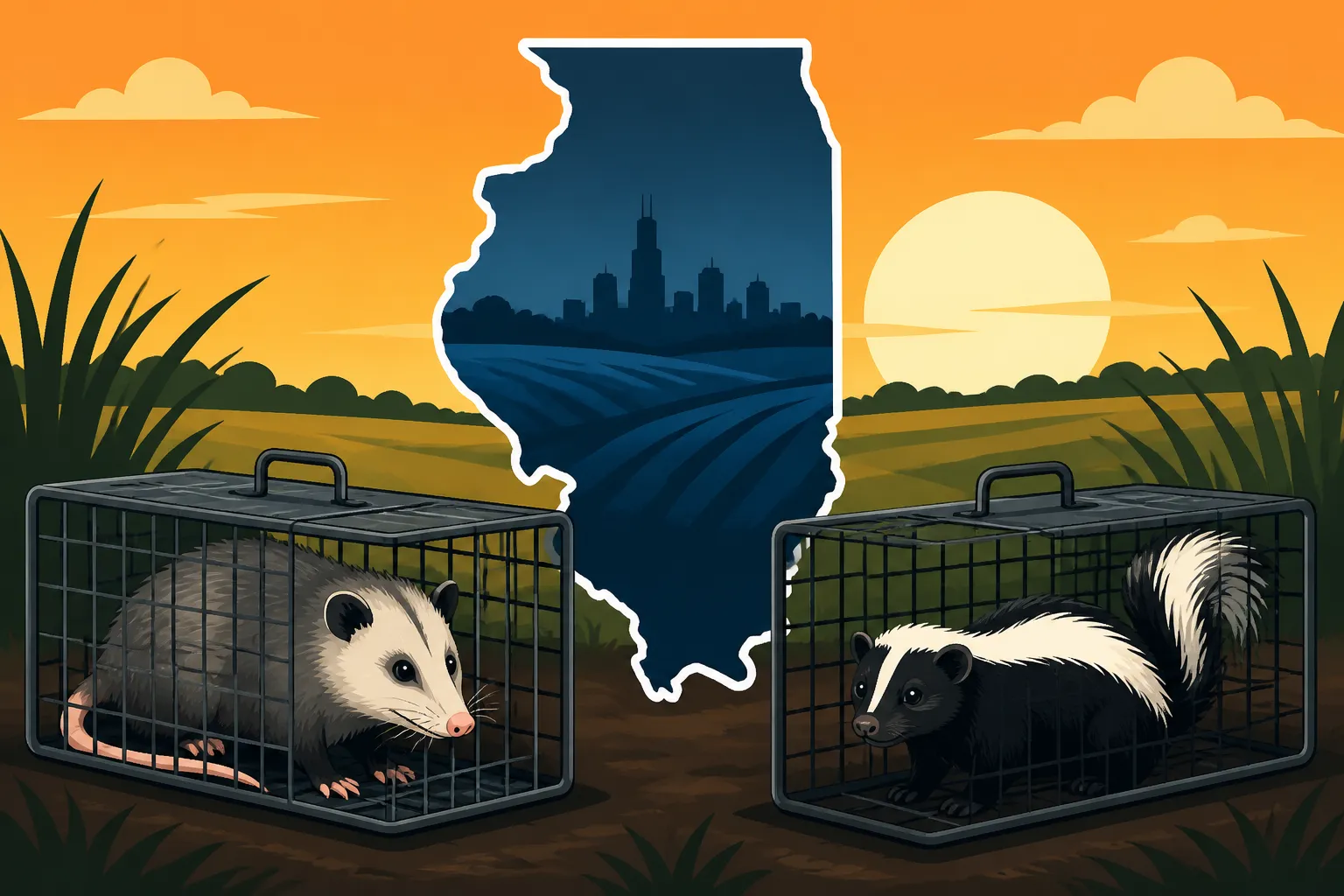
When it comes to opossums and skunks, live traps are almost always your best bet, especially if you're a homeowner dealing with a backyard nuisance. These are typically wire-mesh cages with a spring-loaded door that snaps shut once the animal steps on a trigger plate inside.
- Live Traps (Cage Traps): These are humane and allow for the safe handling of the animal, particularly important with skunks. Look for a sturdy, medium-sized trap (around 10"x12"x30" is a good general size). Some models even come with a solid baffle or cover near the trigger plate, which can help reduce the chance of a skunk spraying if you approach it carefully once it's captured. Brands like Havahart or Tomahawk are popular and widely available. The key advantage here is the ability to release non-target animals unharmed.
- Body-Gripping Traps (Conibears): While legal for furbearers during season, these are designed for quick dispatch and are generally not recommended for nuisance wildlife control around residential areas due to safety concerns for pets and children. They require advanced knowledge to set safely and effectively and are typically used by experienced trappers running a trapline.
- Foothold Traps: Also legal for furbearers, these are designed to hold an animal by the foot. Like Conibears, they come with strict regulations and require a good deal of skill and knowledge to set and check properly without injuring the animal or non-target species. Again, usually for experienced trappers, not typically for backyard nuisance removal.
For almost all home nuisance situations, stick with a good quality live trap. It minimizes risk and gives you options. You can learn more about general trapping practices in Running a Trapline in Rural Illinois.
Baiting and Set Placement Strategies
The right bait and location are crucial for success. You want to lure your target without attracting every other creature in the neighborhood.
- Bait for Opossums: Opossums are not picky. Almost anything smelly and edible will work. Canned wet cat food, fish (sardines or tuna in oil work well), overripe fruit, marshmallows, and even greasy kitchen scraps are all excellent choices. Place the bait at the very back of the trap, past the trigger plate, so the opossum has to fully enter the trap to get to it.
- Bait for Skunks: Skunks also respond well to strong-smelling baits. Peanut butter, sardines, canned cat food, and chicken scraps are highly effective. For skunks, you might consider putting a small trail of bait leading into the trap, but make sure the main portion is well past the trigger plate.
Set Placement:
- Identify Traffic Areas: Look for signs of activity: tracks in soft soil, disturbed trash cans, dug-up patches in your lawn, or entry points under structures. Place your trap directly in these pathways or near the suspected den entrance.
- Flat, Stable Surface: Ensure the trap is set on a level, stable surface so it doesn't wobble or tip, which could spook the animal.
- Concealment (Optional but helpful): While not strictly necessary for opossums and skunks, camouflaging the trap with some natural brush or placing it along a fence line or dense vegetation can make it appear less threatening and more like part of their natural environment.
- Avoid Direct Sunlight: If possible, try to place the trap in a shaded area to prevent the animal from overheating once captured, especially if you're setting it for overnight.
- Skunk-Specific Placement: For skunks, consider placing the trap inside a large cardboard box or covering it with a tarp or blanket after setting. This creates a dark, secure environment once they're caught, which can make them less likely to spray when you approach.
Remember to check your traps within 24 hours, ideally first thing in the morning. This is not only a legal requirement but also a humane practice.
Handling and Relocation/Dispatch Considerations
This is where dealing with opossums and skunks gets particularly interesting, especially the skunk part!
-
Handling Opossums: Once an opossum is trapped, approach the cage calmly. They might hiss or open their mouth to show their teeth, or "play 'possum." Keep your distance, wear thick gloves, and handle the trap carefully.
- Relocation: If you choose to relocate (and this is where checking current IDNR guidelines is crucial, as many states restrict relocation of nuisance wildlife), choose a suitable habitat several miles away from residential areas. Think dense woods with water sources. Release the animal by simply opening the trap door and stepping back. Never release an animal onto private land without the landowner's explicit permission.
- Dispatch: If relocation isn't an option or is restricted, dispatch needs to be done humanely and safely, away from public view. This often involves specific methods like CO2 chambers or a well-placed shot. If you are unsure or uncomfortable with this, contact a professional wildlife control operator.
-
Handling Skunks: This requires extra caution due to the spray.
- Minimize Spray Risk: If a skunk is in your trap, approach it slowly and quietly. Crucially, approach with a large tarp, blanket, or thick piece of cardboard held out in front of you. Drape it over the trap quickly and completely. The darkness and perceived security can calm the skunk and make it less likely to spray.
- Moving the Trapped Skunk: Once covered, carefully pick up the trap. Hold it at arm's length, or if possible, use a long stick to push or drag the trap to your vehicle. Keep the skunk covered during transport.
- Relocation/Dispatch: Similar to opossums, relocation requires checking IDNR rules. If allowed, release the covered skunk in a suitable, remote location by simply uncovering the door and stepping away. If dispatch is necessary, the same humane methods apply, and discretion is key. If you're dealing with a particularly persistent or aggressive skunk, or if you're simply not comfortable handling it, don't hesitate to call a professional wildlife control service. Getting sprayed is no fun, and the smell lingers for a very long time.
Remember, the goal is not just removal but also preventing future problems. Don't just catch and release a problem animal back into a similar situation.
Post-Trapping Considerations and Prevention
Removing the immediate problem is only half the battle. If you don't address why the opossum or skunk was attracted to your property in the first place, you're likely to have a repeat performance, perhaps even from a different animal. This proactive approach is where long-term peace of mind comes from.
Securing Your Property
The most effective long-term solution to nuisance wildlife is habitat modification and exclusion. Make your property less appealing and harder to access.
- Seal Entry Points: Critically inspect your home and outbuildings for potential entry points. Look under decks, sheds, porches, and around foundations. Opossums can squeeze through surprisingly small openings, and skunks are excellent diggers. Use heavy-gauge wire mesh (like hardware cloth) or sheet metal to seal off gaps, ensuring it extends into the ground at least 6-12 inches to prevent digging under. Don’t forget to check around pipes, wires, and vents. If you had a den under a shed, make sure it’s completely sealed after you’re certain no animals are still inside. Leaving one behind to starve is inhumane and can lead to a new, very smelly problem.
- Manage Attractants: This is perhaps the easiest and most impactful step.
- Secure Garbage Cans: Use cans with tight-fitting, locking lids. Consider securing them with bungee cords or keeping them in a shed or garage until collection day.
- Pet Food: Never leave pet food bowls outside overnight. Feed pets indoors or bring bowls in after feeding.
- Compost Piles: If you compost, use an enclosed, animal-proof composter.
- Bird Feeders: Clean up spilled birdseed regularly. The seeds themselves attract rodents, and the rodents attract predators like opossums and skunks.
- Harvest Fruit/Vegetables: Pick ripe produce from your garden promptly. Don't let fallen fruit rot on the ground.
- Brush Piles: Remove unnecessary brush piles, rock piles, or old lumber stacks where animals could den.
By eliminating these easy food and shelter sources, you significantly reduce the chances of a return visit. Think like a hungry, homeless critter: if your place offers nothing, they'll move on.
Disease Awareness and Handling Precautions
Both opossums and skunks can carry diseases that are transferable to humans or pets. While the risk might be low, it's always wise to exercise caution.
- Rabies: Skunks are one of the primary carriers of rabies in Illinois. If you encounter a skunk acting strangely (stumbling, aggressive, active during the day, excessive salivation), assume it might be rabid and keep a safe distance. Never handle a wild animal with bare hands. If you are bitten or scratched by any wild animal, seek immediate medical attention. If your pet is bitten, contact your veterinarian immediately. For general information on animal health, look up Illinois Wildlife Disease Monitoring or Reporting a Sick Animal in Illinois.
- Leptospirosis: This bacterial disease can be transmitted through contact with urine from infected animals. Wear gloves when handling traps or any areas where animals have been present. Clean up any urine or droppings with a bleach solution.
- Fleas, Ticks, and Mites: Wild animals often carry parasites. Be prepared to deal with these if you handle a trapped animal, and always wash your hands thoroughly after any contact.
Wearing heavy-duty gloves, long sleeves, and even a mask when cleaning up den sites or handling traps is a sensible precaution.
Ethical Trapping and Nuisance Wildlife Best Practices
Ultimately, dealing with nuisance wildlife involves a responsibility to do so ethically and humanely.
- Humane Traps: As discussed, live traps are the most humane option for most homeowners. Always set them properly and check them frequently.
- Minimizing Stress: Rapidly covering a trapped skunk with a blanket helps reduce stress for the animal (and yourself!). Releasing relocated animals quickly into suitable habitat minimizes their time in the trap.
- Understand Relocation Limitations: In Illinois, generally, you should release the animal on the same property it was captured, or, if off-site, with permission from the landowner of the release site. Releasing an animal in an unfamiliar territory can be very stressful for it and might just shift the problem to someone else. Some areas have strict rules against relocating certain species or moving animals across county lines due to disease concerns.
- Consider Professional Help: If you're uncomfortable with any aspect of trapping, handling, or dispatch, or if the problem persists, hiring a licensed nuisance wildlife control operator is always a smart choice. They have the expertise, equipment, and permits to handle the situation legally and safely. Services like those found through GoHunt often list reputable professionals.
Taking the time to understand the animals, the regulations, and best practices ensures that your efforts to reclaim your space are effective, safe, and responsible.
Disclaimer
This article is for general informational purposes only and does not constitute professional advice. Laws, prices and regulations vary by location and change over time. Consult a qualified professional for guidance on your specific situation.