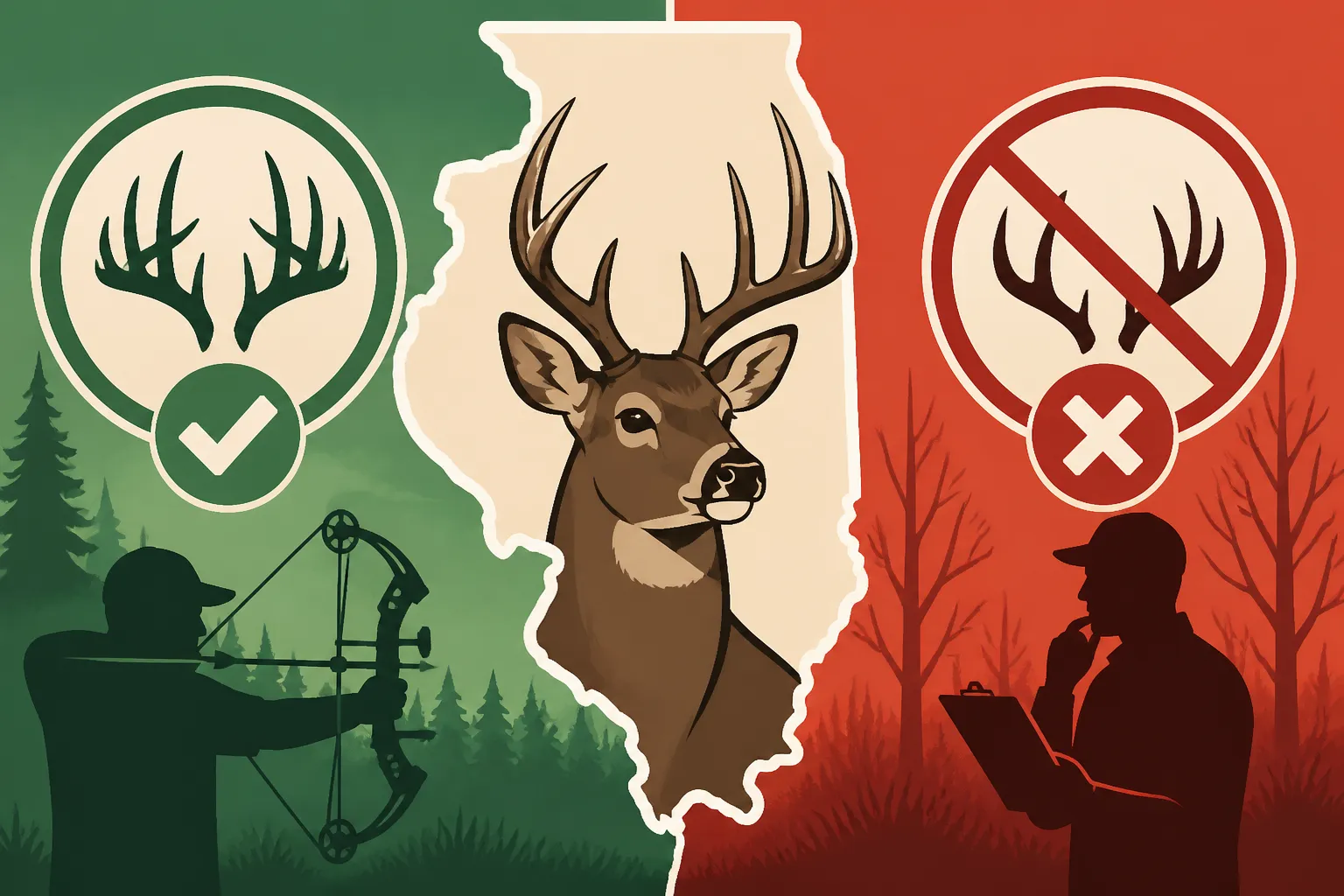
Illinois Deer Antler Restrictions Debate
Oh, the age-old debate about antler restrictions in Illinois deer hunting! It's a conversation that pops up in deer camps, at the local diner, and on online forums every single year. For many hunters, especially those of us who've spent decades watching deer herds, the idea of managing for "quality" is appealing, but the path to get there is fraught with strong opinions and practical challenges. This guide is going to peel back the layers of this complex discussion, looking at the arguments for and against antler restrictions, and where Illinois stands today.
Understanding Antler Restrictions in Deer Management
Antler restrictions (ARs) are exactly what they sound like: rules that dictate the minimum antler size or number of points a buck must have before it can be legally harvested. These aren't just arbitrary rules; they're rooted in a specific philosophy of deer management, often referred to as Quality Deer Management (QDM). The idea behind QDM is to shift the focus from simply harvesting any legal buck to allowing younger bucks to mature, thereby creating a more balanced herd with a higher proportion of older, larger-antlered bucks.
What Are Antler Restrictions and Their Core Goals?
At their heart, antler restrictions aim to protect young, yearling bucks from harvest. Imagine a two-and-a-half-year-old buck, full of potential, but still only sporting a modest 6-point rack. Without ARs, many hunters might harvest that buck. With an AR, perhaps a "3-points on one side" rule, that young buck gets another year, or two, to grow. The core goals are multifaceted:
- Improve Buck Age Structure: To allow more bucks to reach older age classes (3.5, 4.5, 5.5 years old and beyond). A healthy herd isn't just about total numbers; it's about the age distribution within that population.
- Enhance Antler Quality: Older bucks generally grow larger antlers, assuming good nutrition and genetics. By letting younger bucks walk, the hope is that hunters will see more impressive racks down the line.
- Reduce Pressure on Yearling Bucks: Yearling bucks (1.5 years old) are often the most vulnerable to harvest. ARs protect them, letting them contribute to the gene pool and grow into mature animals.
- Balance the Sex Ratio: While primarily focused on bucks, allowing more bucks to mature can indirectly lead to a more balanced adult buck-to-doe ratio, which can positively impact the rut and overall herd health.
These regulations can take many forms. Some states might implement a "3-points on one side" rule, meaning a buck must have at least three points (one inch or longer) on one side of its rack to be legal. Others might opt for a minimum inside spread, a minimum main beam length, or even a combination of these. Each approach has its nuances and intended effects on the local deer population.
The Philosophy of Quality Deer Management
Quality Deer Management (QDM) isn't just about big antlers, though that's often the most visible outcome. It's a holistic approach to managing deer populations and habitat to produce healthy deer, foster natural deer behavior, and provide a rewarding hunting experience. It recognizes that a deer herd is a complex ecosystem, and managing one aspect (like buck harvest) affects others (like doe populations, habitat use, and hunter satisfaction).
Key tenets of QDM include:
- Harvesting Does: Often, a crucial part of QDM is aggressively harvesting does to keep the overall herd population in check and balanced with the available habitat. This ensures deer have ample food, which is fundamental for body size and antler growth.
- Protecting Young Bucks: This is where antler restrictions come in, allowing bucks to reach physical maturity.
- Habitat Management: Improving food sources, cover, and water is vital. No matter the genetics, a deer won't reach its full potential without proper nutrition.
- Hunter Education and Involvement: QDM relies heavily on hunters understanding the goals and participating voluntarily or through regulations.
In many states, QDM has been implemented with varying degrees of success, often leading to increased hunter satisfaction due to more encounters with mature bucks and an overall healthier deer population. However, it's not a one-size-fits-all solution, and what works in one region might not be ideal in another, especially given differing hunter densities, habitat types, and existing Illinois Deer Population Estimate.
The Case For Antler Restrictions in Illinois
When you talk to hunters who advocate for antler restrictions in Illinois, their arguments often circle back to a desire for a different kind of hunting experience and a vision for the future of the deer herd. They're often looking at the long game, rather than just the immediate season.
Promoting a More Mature Buck Population and Trophy Potential
One of the loudest arguments for ARs is the direct impact on the age structure of the buck population. In areas without ARs, young bucks, often yearlings, are frequently harvested. These bucks, while legal and delicious, haven't had the chance to develop their full antler potential. Proponents believe that by implementing ARs, more bucks would survive past their first year or two, leading to a noticeable increase in the number of 3.5-year-old and older bucks in the woods.
Imagine walking into your hunting spot and seeing a higher ratio of mature bucks. The experience changes. The challenge intensifies, and the reward of harvesting a truly mature animal becomes more common. Many feel that this leads to higher hunter satisfaction in the long run, even if it means passing up smaller bucks for a few seasons. They look at states like Ohio or Iowa, which have statewide ARs, and see the success they've had in producing more mature bucks and trophy-class animals, often reflected in their Illinois Deer Record Book. This isn't just about growing huge racks, though that's a nice bonus; it's about seeing a healthier, more balanced herd where bucks have a chance to live longer, more natural lives.
Enhancing the Hunting Experience for Many
Beyond just antler size, many hunters argue that ARs create a better overall hunting experience. When there's a higher proportion of mature bucks, hunting often becomes more strategic and challenging. Hunters spend more time observing, identifying, and patterning specific animals. It encourages more thoughtful hunting rather than simply shooting the first legal buck that walks by. This mindset can lead to a deeper appreciation for the animals and the outdoors.
Furthermore, a healthy age structure can lead to a more pronounced and exciting rut. With more mature bucks competing for does, the breeding season often becomes more intense, with more visible chasing, fighting, and rubbing activity. This can be incredibly exciting for hunters, providing opportunities to witness natural deer behavior that might be less common in areas with a heavy yearling buck harvest. For those who enjoy the chess match of deer hunting, the opportunity to consistently pursue older, wiser bucks, perhaps with tools like GoHunt to analyze property data and identify potential travel corridors for these mature animals, is a significant draw.
The Argument for Improved Genetics and Herd Health
While genetics are complex and often oversimplified in hunting discussions, protecting younger bucks does allow more animals with desirable traits (like robust body size and antler growth potential) to breed. If all the "good" young bucks are harvested before they can pass on their genes, it could, theoretically, reduce the genetic potential of the herd over time. By allowing these bucks to mature and breed, they contribute to a stronger gene pool.
Moreover, ARs are often part of a broader QDM strategy that includes aggressive doe harvest and habitat improvement. When doe numbers are in check, and bucks are allowed to mature, the entire herd benefits from less competition for food, leading to healthier animals overall, not just bigger antlers. This approach aligns with broader conservation goals, ensuring the long-term vitality of the White-Tailed Deer Across Illinois.
The Case Against Antler Restrictions in Illinois
While many hunters see the benefits of antler restrictions, an equally passionate group voices strong opposition. Their concerns often focus on accessibility, practicalities, and different philosophies of what constitutes a "good" hunting experience or effective deer management.
Practical Challenges and Hunter Opportunity
One of the biggest concerns with statewide antler restrictions is the impact on hunter opportunity, especially for new hunters or those who primarily hunt for meat. For a new hunter, perhaps a youth hunter during Hunting the Illinois Youth Deer Weekend, being told they can only shoot a buck with a specific antler count can be incredibly frustrating. Learning to identify legal antlers, especially under low light or quick encounters, adds a layer of complexity and potential for error that some find unnecessary and discouraging.
Imagine a scenario where a hunter sees a legal-sized deer, but upon closer inspection, it doesn't meet the antler requirements. That's a passed opportunity that might not come again. For many, deer hunting is about putting food on the table, and they simply want to harvest a legal animal, regardless of antler size. Imposing ARs can significantly reduce the number of "shootable" bucks, leading to lower harvest rates and potentially a decrease in hunter participation, which could, in turn, affect conservation funding through license sales. It shifts the focus from a general deer hunt to a specific "trophy hunt," alienating a segment of the hunting community.
Focus on Habitat and Doe Management Over Antlers
Many opponents argue that putting a primary focus on antler restrictions distracts from the true drivers of deer quality: habitat and doe management. They contend that if you have excellent habitat, abundant food, and proper doe harvest to keep the population in balance, bucks will naturally grow larger antlers and better bodies, regardless of whether yearlings are harvested. "You can't grow big antlers on a skinny deer," is a common refrain.
They believe that managing doe populations is the most critical factor for herd health. Too many does lead to overbrowsing, reduced fawn survival, and overall less healthy deer, both bucks and does. If the habitat can't support the deer, even protected young bucks won't reach their full potential. They might point to regions in Illinois with rich farmland and good habitat where trophy bucks are already common, even without statewide ARs, simply because the nutrition is there. They argue that statewide regulations often ignore the nuanced differences in habitat quality and deer density found across Deer Density by Illinois Region.
The "Brown it's Down" Mentality and Misidentification
Another concern is the potential for hunters to mistakenly harvest illegal bucks. In the heat of the moment, with limited visibility or a fleeting shot opportunity, accurately counting points or judging spread can be incredibly difficult. This can lead to frustration, potential fines, and even deer left in the woods if a hunter realizes their mistake after the shot.
Furthermore, some critics worry that ARs can foster a "brown it's down" mentality when it comes to does, encouraging hunters to shoot any doe to meet their harvest goals or just to take something home, without necessarily considering the overall doe management plan for a specific area. While doe harvest is crucial for QDM, the argument is that ARs might incentivize indiscriminate doe harvest rather than thoughtful herd balancing. This also ties into the ethical considerations of deer hunting, where clean, ethical kills are paramount, and regulations that complicate target identification can be problematic.
Illinois's Current Stance and Future Outlook
Unlike some neighboring states, Illinois has historically shied away from implementing statewide antler restrictions. This isn't due to a lack of discussion or consideration, but rather a reflection of the complexities of managing a diverse deer herd across varied landscapes and hunter demographics.
Current Regulations and Site-Specific Rules
Currently, Illinois does not have any statewide antler restrictions for deer hunting. This means that if a buck has at least one antler that is three inches or longer, it is considered a legal buck during the appropriate seasons (archery, firearm, muzzleloader). This "one-antler-three-inch" rule is relatively straightforward and allows for a broad range of harvest opportunities.
However, it's crucial to understand that while there are no statewide ARs, some specific public hunting sites or private land cooperatives do implement their own antler restrictions. These are typically managed at the site level by the Illinois Department of Natural Resources (IDNR) or private landowners who are pursuing their own QDM goals. For instance, you might find a site-specific rule at a State Fish and Wildlife Area requiring bucks to have a minimum of four points on one side, or an inside spread of X inches. Hunters always need to check the specific regulations for the area they intend to hunt, as these can vary significantly. Resources like GoHunt maps or the IDNR website are invaluable for looking up these specific site rules and boundary lines, ensuring you're compliant with local regulations before heading into the field.
Why Statewide ARs Haven't Been Adopted
The IDNR has, over the years, conducted surveys and engaged in numerous discussions about the possibility of statewide antler restrictions. The reasons for not adopting them are multifaceted:
- Diverse Habitat and Herd Conditions: Illinois is a large state with highly diverse deer habitats, from the rugged hills of the Shawnee National Forest to the vast agricultural fields of Central Illinois. A regulation that might benefit one region could be detrimental or simply ineffective in another. A one-size-fits-all approach is difficult to implement successfully.
- Public Opinion and Hunter Acceptance: There's a strong, vocal contingent of hunters both for and against ARs. Implementing a statewide rule that doesn't have broad public acceptance can lead to compliance issues and reduced hunter satisfaction overall. The IDNR often weighs the biological benefits against the social impacts.
- Focus on Other Management Tools: The IDNR often emphasizes other management tools, particularly doe harvest, as more critical for overall herd health and population control. They provide ample opportunity for doe harvest through various permits and seasons to ensure the population remains in balance with the habitat. This is reflected in discussions around Illinois Deer Season Structure Explained and specific permit options.
- Complexity and Enforcement: Implementing and enforcing detailed antler restrictions across the entire state would add significant complexity for both hunters and conservation officers.
The Ongoing Debate and Future Possibilities
The debate over antler restrictions isn't going away in Illinois. As long as hunters strive to improve their hunting experience and the quality of the deer herd, these discussions will continue. On private lands, many hunting clubs and individual landowners already practice their own forms of QDM, including voluntary antler restrictions, sometimes even more stringent than anything the state would consider.
The future might see more site-specific regulations or regional approaches, rather than a blanket statewide rule. As hunting pressure and habitat conditions evolve, the IDNR continuously evaluates management strategies. Hunters can play a role by staying informed, participating in public input opportunities, and making responsible harvest decisions that align with their personal ethics and local deer management goals. Understanding factors like Illinois Buck Age Structure and Why Pike County Produces So Many Trophy Bucks can inform individual and group management decisions, whether or not statewide ARs are ever implemented.
Ultimately, the goal for most hunters is a healthy, sustainable deer herd that provides consistent opportunities. Whether antler restrictions are the best tool to achieve that goal in Illinois remains a topic of spirited discussion and diverse opinions.
| Argument Category | For Antler Restrictions (ARs) | Against Antler Restrictions (ARs) |
|---|---|---|
| Herd Health | Promotes older buck age structure, better buck-to-doe ratio. | Focuses on antlers, neglects crucial habitat and doe management. |
| Hunter Experience | Increases chances of seeing/harvesting mature bucks, more challenging hunts. | Reduces harvest opportunity, especially for new hunters and meat hunters. |
| Genetics | Allows more bucks with desirable traits to breed. | Overestimates impact of genetics, nutrition is more critical. |
| Practicality | Simple rules can lead to clearer harvest goals. | Difficult for hunters to identify under pressure, potential for illegal harvest. |
| Social Impact | Increases hunter satisfaction through quality encounters. | Alienates segments of the hunting community, may reduce participation. |
| Enforcement | Clear guidelines for conservation officers. | Increases burden on officers, difficult to prove intent. |
Disclaimer
This article is for general informational purposes only and does not constitute professional advice. Laws, prices and regulations vary by location and change over time. Consult a qualified professional for guidance on your specific situation.