Nonresident Access to Illinois Public Land
One of the biggest head-scratchers for out-of-state hunters eyeing Illinois isn't whether the game is here – it's where to hunt when you don't own land or know a farmer. Many dream of chasing our legendary whitetails or flocks of migrating waterfowl, but then hit a wall when trying to figure out how to access public hunting land without a resident's advantage. This guide is here to untangle that knot, offering a clear, realistic look at how a nonresident can successfully find and hunt public ground in Illinois, managing expectations, and pointing you toward the best strategies to make your hunt a reality.
The Landscape of Public Hunting in Illinois for Nonresidents
Illinois holds a special place in the hearts of many hunters, often synonymous with massive whitetail bucks and incredible waterfowl opportunities along the Mississippi and Illinois River Flyways. The reputation is well-earned, drawing folks from all corners of the country. However, for nonresidents, the dream can quickly collide with the reality of public land access. Unlike some western states with vast tracts of federal ground open for the taking, Illinois is largely private land. This means that while the hunting can be phenomenal, finding open ground to pursue it on requires a savvy approach and a good deal of planning.
Why Illinois Draws Hunters, and Where Public Land Fits In
Let's be honest, the whispers of those giant bucks from Pike County or the booming duck hunts along the Illinois River are what often lure nonresidents here. Illinois has a rich tradition of wildlife, supported by diverse habitats ranging from dense southern hardwood forests to expansive central prairies dotted with timber blocks and river bottoms. The wildlife population thrives in this mix, making it a truly desirable destination.
However, the sheer abundance of private land, much of it prime agricultural ground, means that the proportion of public hunting land is smaller than many out-of-state hunters might be used to. This isn't to say it doesn't exist – quite the contrary! But it does mean that simply showing up with a tag and a general hunting license expecting acres upon acres of open forest might lead to disappointment. Instead, nonresidents need to be particularly strategic and well-informed, understanding the nuances of how public access works here. You can get a broader overview of the options in our article, Public Hunting Land in Illinois.
Decoding Illinois's Public Land Categories
When we talk about public land in Illinois, it's not a monolithic entity. There are several different types, each with its own management rules, permit requirements, and typical levels of hunting pressure. Understanding these distinctions is crucial for a nonresident trying to plan a trip.
- State Fish and Wildlife Areas (SFWAs): These are managed by the Illinois Department of Natural Resources (IDNR) and are often prime spots for various game species. However, most SFWAs have very specific site regulations, and many require special permits obtained through a lottery system, often with limited to no nonresident quotas for popular species like deer and turkey. Always, always check the specific site's regulations before making plans. We delve deeper into these areas in Illinois State Fish and Wildlife Areas.
- Shawnee National Forest: This is Illinois's largest block of public land, covering hundreds of thousands of acres across the southern tip of the state. Unlike many SFWAs, much of the Shawnee is open for general hunting with statewide permits, though specific areas or species might have additional rules. Its rugged terrain means it's often less crowded than smaller, more accessible public parcels, especially if you're willing to hike in. Think big woods hunting, often requiring solid navigation and physical stamina. Our guide, Shawnee National Forest Hunting, offers a comprehensive look at what to expect there.
- State Parks and Recreation Areas: While some state parks offer hunting, it's typically highly regulated, often limited to specific seasons, species (sometimes archery-only deer), and sometimes through highly competitive quota hunts. Access can be very restricted, and nonresidents might find these even harder to draw into than SFWAs.
- National Wildlife Refuges (NWRs): These federally managed areas, such as Crab Orchard NWR or Cypress Creek NWR, often offer hunting opportunities but come with their own distinct regulations and permit processes, which can sometimes be more open to nonresidents than state-run lotteries, but still highly competitive. You'll need to check each refuge's specific hunting plan.
Navigating Nonresident Licenses and Permit Systems
Successfully hunting public land in Illinois as a nonresident isn't just about finding a piece of ground; it's about successfully navigating the state's licensing and permit system. This is where many out-of-staters hit their first major hurdle, as the process can differ significantly from what they're accustomed to in their home states.
Securing Your Base License and Specific Permits
Every hunter, resident or nonresident, needs a valid Illinois hunting license and a State Habitat Stamp to start. These are your foundational pieces of paperwork. However, for specific species like white-tailed deer or wild turkey, you'll need additional permits, and this is where the nonresident experience diverges sharply from residents.
For deer and turkey, Illinois typically allocates a limited number of permits specifically for nonresidents. These are almost always distributed through a lottery system, and the odds can vary wildly depending on the species, weapon choice, and specific county or zone you're applying for. For instance, obtaining an archery deer permit as a nonresident usually involves a lottery for specific zones or statewide options, with preference sometimes given to those who apply earlier or have been unsuccessful in previous years. Illinois Nonresident Deer Permit Costs also highlights that these permits are often more expensive than for residents, adding another layer to your planning. It's not uncommon for nonresidents to apply for multiple years before drawing a coveted tag in a prime area. The key here is early research and meticulous attention to application deadlines.
The Challenge of Site-Specific Public Land Permits
Beyond the statewide deer and turkey permits, many of Illinois's most attractive public hunting areas, particularly the State Fish and Wildlife Areas (SFWAs), require an additional "site-specific" permit. These permits regulate hunter numbers and pressure on specific pieces of ground, and they are almost universally distributed through their own lottery drawings.
The challenge for nonresidents here is twofold:
- Limited Quotas: Many SFWAs have extremely limited nonresident quotas for these site-specific permits, or in some cases, no nonresident quotas at all. This means that while a resident might have a decent chance of drawing into a local SFWA, a nonresident's odds could be infinitesimally small, or they might not even be eligible.
- Application Windows: These drawings have their own application periods, which might not align with the statewide permit lotteries. Missing a deadline for a site-specific permit can mean losing a potential hunting opportunity entirely.
This complex system underscores the importance of a thorough understanding of the Illinois Site Permit Application Process and careful planning well in advance of the season you intend to hunt. It's not a system designed for spur-of-the-moment trips for nonresidents; it requires dedication and foresight.
Smart Strategies for Nonresident Public Land Success
Given the challenges, a nonresident hunting public land in Illinois needs more than just a hunting license and a prayer. It requires strategic planning, effective use of technology, and a willingness to work harder and smarter than the average hunter.
Harnessing Technology for Effective Scouting
In today's hunting world, digital mapping tools are an absolute game-changer, and for nonresidents, they are arguably essential. You can't just drive around hoping to stumble upon open ground; you need to know exactly where you can legally hunt before you even leave home.
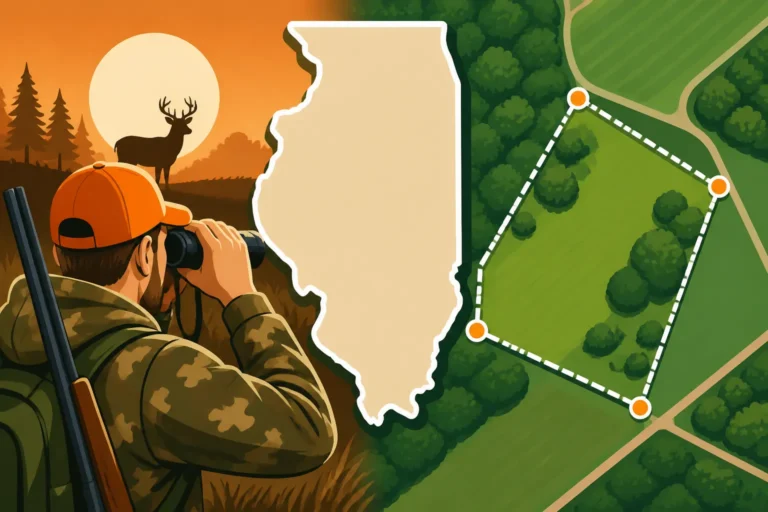
Applications like onX Hunt and GoHunt become your best friends. These platforms offer detailed satellite imagery, topographic maps, and crucial property line information. For a nonresident, this is gold. You can:
- Identify Public vs. Private: Instantly see where public land boundaries lie, helping you avoid accidental trespass, which is a serious concern in Illinois.
- Locate Access Points: Find official parking areas, fire roads, or seldom-used trailheads that might lead to less-pressured areas.
- Remote Scout for Habitat: Use satellite imagery to identify key habitat features like bottlenecks, pinch points, funnels, dense bedding cover, food sources, and water. You can mark potential stand locations or travel corridors from thousands of miles away. This remote scouting is critical for understanding Reading Aerial Photos for Southern Illinois Deer.
- Layer Data: Overlay public land boundaries with topographical maps to understand elevation changes, drainages, and ridge systems, helping you predict how deer might move through the landscape.
Investing time in these tools for Scouting Illinois Public Land Before Season will save you countless hours of unproductive boots-on-the-ground scouting and increase your chances of finding unpressured game.
Targeting Larger, More Generally Accessible Tracts
While the site-specific SFWAs can be tempting, the best bet for many nonresidents lies in focusing on the larger public land blocks where general statewide hunting permits are valid. The Shawnee National Forest is the prime example here. Its sheer size and ruggedness often mean that you can escape the crowds if you're willing to put in the effort.
Here's how to approach it:
- Go Deeper: Most hunters stick close to roads and easy access points. To find less-pressured game, particularly deer, you need to be willing to hike a mile or more from common entry points. This strategy of Finding Ground Others Walk Past is often the secret to success on heavily hunted public land.
- Embrace the Terrain: Southern Illinois's hills and hollows are demanding, but they also create natural barriers that funnel game and deter less-determined hunters. Learn to read the terrain and use it to your advantage.
- Consider Less-Pressured Species: If your primary goal is just to hunt and experience Illinois, consider species that might have less competition for public land access. Squirrel hunting in Illinois bottomland hardwoods can be fantastic and provides a great way to learn a new piece of public ground. Squirrel and Small Game Hunting in Illinois or Predator Hunting in Illinois might offer more straightforward public access without the intense lottery systems of deer and turkey.
| Public Land Type | General Nonresident Access | Specific Permit Requirements (Deer/Turkey) | Key Considerations |
|---|---|---|---|
| Shawnee National Forest | Generally good, statewide permits required | Statewide permits (lottery for deer/turkey, no site-specific required) | Large, rugged, less crowded deeper in; good for those willing to hike; check for specific weapon restrictions or closures. |
| State Fish & Wildlife Areas (SFWA) | Varies greatly by site, often limited | Many require special site permits via lottery; nonresident quotas can be very low or zero, or often only for residents. | Highly managed, often smaller, can be high pressure; critical to check each site's specific regulations in detail. |
| State Parks & Recreation Areas | Hunting often restricted or quota-based | Usually special site-specific permits; highly limited | Check specific park rules, often archery-only or highly restrictive; nonresidents may find very limited opportunities. |
| National Wildlife Refuges (NWR) | Varies, check specific refuge rules | Special refuge permits, often competitive lotteries for specific species | Federally managed, specific dates and species restrictions apply; check their individual hunting brochures meticulously. |
Realistic Expectations and Alternative Paths
Hunting Illinois public land as a nonresident can be incredibly rewarding, but it’s crucial to enter the experience with realistic expectations. The challenges are real, but so are the opportunities for those who are prepared and persistent.
Understanding Public Land Pressure and Opportunity
You simply cannot expect to find untouched wilderness on most Illinois public lands. Especially on smaller, more accessible tracts, you will likely encounter other hunters. This is just the reality of Hunting Pressure on Illinois Public Land. However, "pressure" doesn't mean "no game." It means the game is more educated, more nocturnal, and often retreats to the thickest, nastiest cover during daylight hours. Your success will often hinge on:
- Timing: Hunting mid-week, during inclement weather, or during less popular times of the season can reduce competition.
- Adaptation: Don't stick to the beaten path. If other hunters are funneling deer to a certain area, consider setting up downwind of that travel corridor, or pushing deeper into areas others avoid.
- Patience: Educated deer on pressured ground require patience. Long sits, especially during the rut, can pay off.
The opportunities are there, but they belong to the hunter willing to adapt, scout diligently, and endure.
The Private Land Alternative: A Strategic Approach
For many nonresidents, especially those primarily focused on trophy deer hunting, securing private land access often becomes a more reliable and less frustrating path to consistent success. While this isn't "public land," it's an important consideration for any out-of-state hunter.
- Asking Permission: It might sound old-fashioned, but knocking on doors and respectfully asking farmers for permission is still a viable strategy in many parts of Illinois. It requires time, good manners, and often starts with small game or predator hunting before graduating to deer. Our article, Getting Private Land Permission in Illinois, dives into this in detail.
- Hunting Leases: Another option, though often costly, is securing a hunting lease. These can range from small parcels to thousands of acres. Illinois Hunting Lease Costs can vary significantly based on location, habitat quality, and amenities. This provides exclusive access and can be a fantastic option for a group of nonresident hunters looking to invest in consistent opportunities.
- Outfitters and Guided Hunts: If your budget allows and your primary goal is a high-quality experience or a specific trophy, booking a guided hunt through an outfitter is a popular choice for nonresidents. Outfitters typically have access to vast tracts of well-managed private land and handle all the logistics, from scouting to often even processing.
Essential Planning and Preparation
Regardless of whether you ultimately lean towards public or private land, comprehensive planning is non-negotiable for a nonresident hunting in Illinois.
- Understand Regulations: Before anything else, thoroughly read the current Illinois hunting regulations and specific site rules for any area you intend to hunt. These change, so always check the latest version from the IDNR.
- License and Permit Acquisition: Apply for all necessary licenses and permits well in advance of deadlines. If you're counting on a lottery, have backup plans.
- Scout Remotely, If Not In Person: Use your mapping apps to understand the lay of the land, identify potential stand sites, and plan entry/exit routes. If possible, a pre-season scouting trip can provide invaluable on-the-ground intelligence.
- Gear Up Appropriately: Illinois weather can be unpredictable. Be prepared for everything from warm, humid days to bitter cold, especially during late deer season or waterfowl hunts. Think layers, waterproof gear, and reliable boots.
- Be Respectful: When on public land, respect other hunters, landowners near boundaries, and the resource itself. Pack out what you pack in, and leave no trace.
With careful planning, realistic expectations, and a willingness to adapt, a nonresident can absolutely find success hunting public land in Illinois. It's a challenging but rewarding endeavor, offering a chance to experience the heartland's incredible hunting heritage.
Disclaimer
This article is for general informational purposes only and does not constitute professional advice. Laws, prices and regulations vary by location and change over time. Consult a qualified professional for guidance on your specific situation.