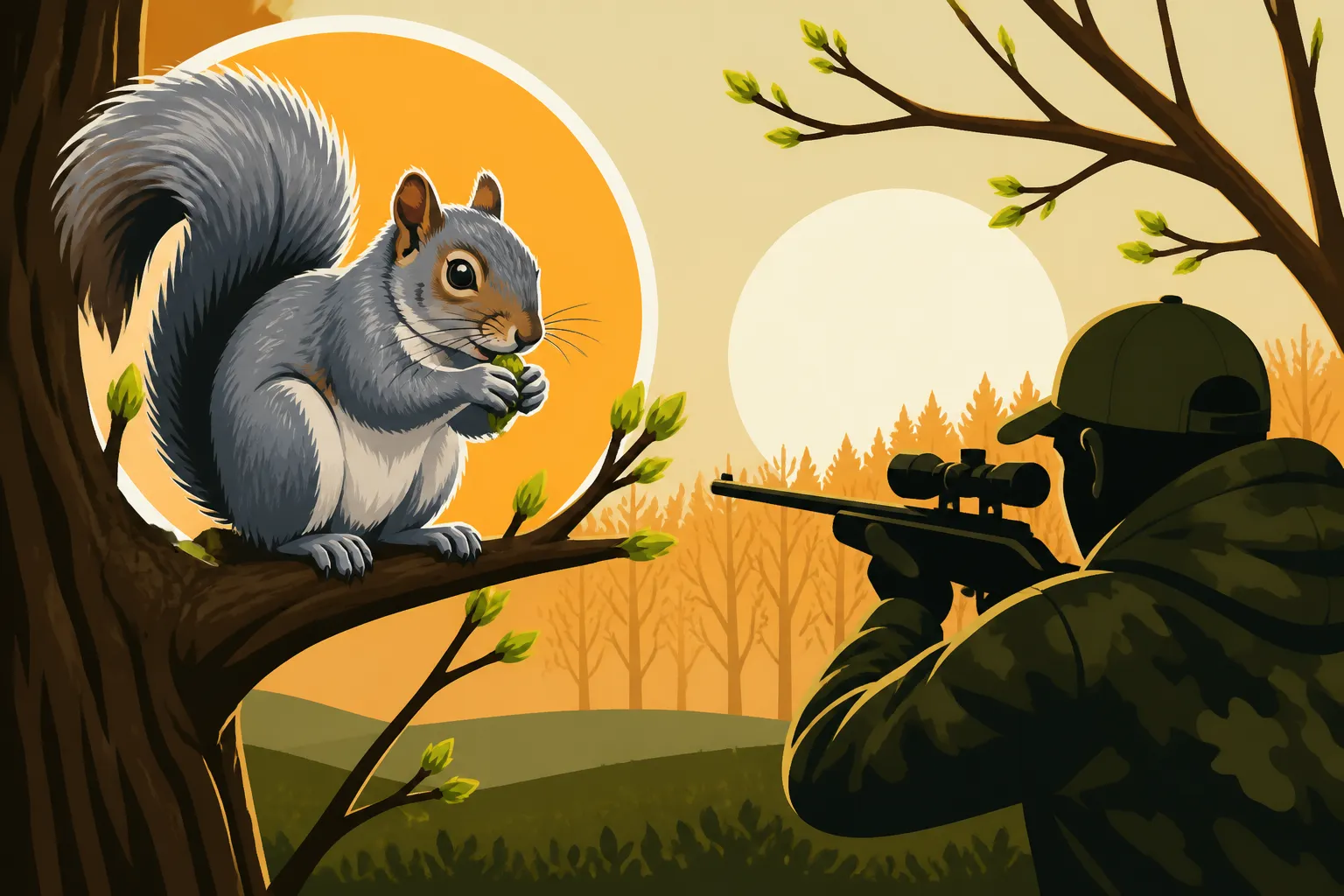
How Early Season Squirrels Give Themselves Away
The early season in Illinois can be a real challenge for squirrel hunters. The woods are often still thick with foliage, the weather can be downright muggy, and those little bushy-tails seem to have an uncanny ability to disappear into the green curtain. But don't despair! Squirrels are creatures of habit, and they leave a wealth of clues if you know how to read them. This guide will walk you through the distinct sounds and visual signs that give early season squirrels away, helping you fill your vest before the leaves even begin to turn.
The Sounds of the Squirrel Woods
One of the greatest tools a squirrel hunter has in the early season isn't their shotgun or .22, it's their ears. With dense leaves obscuring visual cues, learning to decipher the subtle sounds of the forest is paramount.
Barking and Chirping Alarm Calls
Squirrels are incredibly vocal animals, and their alarm calls are perhaps the most obvious way they announce their presence. You'll hear a variety of barks, chatters, and chirps, each with a slightly different meaning, but all indicating awareness.
When a squirrel spots you, or another perceived threat like a hawk or coyote, it will often begin a sharp, repetitive bark. This isn't just a random noise; it's a warning to other squirrels in the area. Pay close attention to the direction and intensity of these barks. A squirrel that's actively barking usually isn't going anywhere fast, as it's more focused on alerting others and tracking the threat (you!). If you hear a series of barks suddenly cease, it could mean the squirrel has moved or has decided the threat is gone. Sometimes, these barks can even lead you to a completely different squirrel that was reacting to the initial alarm. Learning to interpret the different barks can be key to success when you're Squirrel Hunting Illinois Bottomland Hardwoods.
The Distinctive Scratch and Rustle
Beyond their vocalizations, the physical movements of squirrels create a very specific acoustic signature. Their claws on bark and their scurrying through dry leaves have a rhythm that, once learned, becomes unmistakable.
Listen for the quick, almost frantic scratch of claws on tree bark as a squirrel ascends or descends. It's a rapid, light scratching sound that can be surprisingly loud in the still woods. When they're on the ground, the rustle they make in the leaf litter is unique. Unlike the slow, deliberate crunch of a deer, or the heavy stomp of a hog, a squirrel's movement is typically a series of quick, light scampers followed by pauses. If you hear a continuous, drawn-out rustle, it might be something larger, or even just the wind. But those short bursts of movement, especially when combined with the sound of claws, are almost certainly a squirrel. This is especially true when hunting in the calm, early morning hours before the wind picks up.
Chewing and Dropping Mast
Perhaps the most delicious sound a squirrel can make, from a hunter's perspective, is the sound of it actively feeding. Early in the season, before the major mast drop, squirrels are often working hard to access still-green or slightly ripened nuts.
When a squirrel is gnawing on a nut, especially a hard shell like a hickory or walnut, you'll hear distinct cracking and scraping sounds. These can be very faint, so it requires keen listening. Even more telling is the sound of falling fragments. As a squirrel strips the husk off a hickory nut or chews through an acorn cap, small pieces will often drop to the forest floor. A gentle, irregular tink or tap as these fragments hit leaves or branches below can pinpoint a feeding squirrel. Focus your attention on common mast trees in Illinois, such as various oak species (red, white, pin), hickory, and pecan. Finding productive Squirrel Hunting Illinois Hickory Groves often involves listening for these subtle feeding noises.
Visual Cues in the Thick Canopy
While sounds are crucial in the early season, don't underestimate your eyes. Even with heavy foliage, squirrels are constantly moving, and their movements leave tell-tale signs if you know what to look for.
The Tell-Tale Flick of a Tail
A squirrel's tail is more than just a bushy appendage; it's a vital communication tool and a dead giveaway to its presence. Even when the rest of the squirrel is perfectly camouflaged against a tree trunk or branch, that tail will often betray its position.
Squirrels frequently flick or twitch their tails, especially when agitated, curious, or about to move. In dense foliage, a slight movement or flash of the tail might be the only thing you see. Watch for any unnatural movement, even if it's just a subtle vibration or a momentary flash of lighter fur against the dark bark. The way light catches the fur on a twitching tail can create a flicker that stands out against the static background of leaves and branches. Sometimes, a squirrel will hold perfectly still, but its tail will still be nervously twitching. Train your eyes to scan for these tiny, rhythmic movements – they are often your first visual confirmation.
Movement in the Leaves and Branches
Even in the densest canopy, a squirrel's rapid movements will cause leaves and small branches to shake and sway in a way that is distinct from wind or other animals.
When a squirrel leaps from branch to branch or scurries along a limb, the leaves around it will momentarily shake and ripple. This movement often appears sharper and more erratic than what the wind would create. If you see a cluster of leaves shaking vigorously without a noticeable breeze, there's a good chance a squirrel is either there or just departed. Learn to differentiate this from birds, whose movements are usually lighter and often accompanied by wingbeats or distinct bird calls. Early morning, when dew is still on the leaves, can make these movements even more apparent as water droplets may visibly fly off the disturbed foliage. Keep an eye on the mid-story and upper canopy, especially around the crowns of large mast trees.
Dropping Cuttings and Shells
Just like the sound of dropping mast, the sight of it on the forest floor is a definitive sign of recent squirrel activity. This visual evidence can help you identify active feeding areas, even if you don't immediately see a squirrel.
As squirrels eat, they'll often drop the outer husks, shell fragments, and uneaten portions of nuts. Look for small, green or brown cuttings on the leaves and ground directly beneath oak, hickory, or walnut trees. A fresh pile of acorn caps or a scatter of hickory shell pieces beneath a specific tree indicates a favorite dining spot. These "dinner plates" are crucial for scouting. The fresher the cuttings, the more recently squirrels have been there. If the cuttings are damp or discolored, they're older. Bright, fresh cuttings mean squirrels are currently, or very recently, using that tree. Using a good mapping app like GoHunt to mark these specific trees can help you return to productive spots later in the season.
Interpreting the Environment and Behavior
Understanding where squirrels prefer to be and what drives their daily routines will greatly enhance your ability to find them in the early season. It's about thinking like a squirrel.
Identifying Active Feed Trees
Squirrels are perpetually focused on food, and the early season is all about locating their primary food sources. Different mast trees ripen at different times, and knowing which ones are active will guide your hunt.
Before the season even starts, or during your first few trips out, spend time scouting specific tree species. Look for signs of activity on the trees themselves: bark rubbed smooth from climbing, small teeth marks on developing nuts, or evidence of squirrels actually "cutting" green nuts prematurely from the branches. For instance, in late summer and early fall, many squirrels will be cutting green hickory nuts and carrying them off to bury or store. White oaks, red oaks, and pin oaks are consistently important, as are shagbark hickories and black walnuts. A great resource for identifying prime feeding areas is often available through detailed satellite imagery provided by platforms like GoHunt, which can help you locate promising timber stands before you even step foot in the woods. This initial scouting will help you prioritize where to focus your efforts for Hunting Illinois's Fall Turkey Zones as well, as turkeys will also key in on mast.
Squirrel Runs and Travel Lanes
Just like deer, squirrels often use the same travel routes to get from bedding areas to feeding trees, or simply to move through their territory. Identifying these "squirrel highways" can be a game-changer.
Look for consistent pathways squirrels take up and down tree trunks, along horizontal limbs, and even across fencerows or fallen logs on the ground. These routes often show subtle signs of wear, or simply become obvious through repeated observation. If you see a squirrel consistently using a specific limb to cross from one tree to another, that's a run. Setting up near these established runs, particularly those connecting a heavily mast-producing tree to thicker cover, can put you right in the action. Think about how squirrels would navigate the canopy to minimize ground travel, and you'll often find their preferred routes.
Utilizing Early Morning and Evening Activity
Squirrels, especially fox and gray squirrels in Illinois, are most active during specific times of the day, particularly in the warmer early season. Understanding these patterns allows you to optimize your hunting times.
The coolest parts of the day, typically the first few hours after sunrise and the last few hours before sunset, are when squirrels are most actively feeding and moving. During the midday heat, they often retreat to dens or simply lay motionless on shaded limbs to escape the temperatures. Planning your hunts around these peak activity periods significantly increases your chances of encountering squirrels. For example, focusing on shady, north-facing slopes or dense bottomland timber during midday can sometimes yield results, but the prime hours remain early morning and late afternoon. Knowing the Illinois Squirrel Season Dates and typical weather patterns for those dates will further help you plan.
Gear and Techniques for Sneaking Up
Even with all the knowledge of squirrel behavior, you still need to execute your hunt effectively. Stealth, good optics, and proper concealment are vital, especially when those leaves are thick.
Stealthy Movement and Observation
Early season woods are often noisy, with dry leaves underfoot. Moving quietly and deliberately is paramount to getting within range of a squirrel.
The "stop and go" method is incredibly effective for early season squirrels. Take a few slow, quiet steps, then stop and stand perfectly still for several minutes. During this pause, listen intently for the sounds mentioned above and scan the trees for any movement. Often, squirrels that were spooked by your initial movement will settle down and resume activity if you remain motionless. Remember, you're trying to integrate into the woods, not tromp through it. Move like a shadow, taking care with every footfall. This technique is often critical when Still-Hunting Southern Illinois Ridges for deer, and it's equally valuable for squirrels.
Optics for Spotting Hidden Squirrels
Even when you hear a squirrel, it can be incredibly difficult to locate it visually in thick foliage. This is where a good pair of binoculars comes into play.
A small, lightweight pair of binoculars (8×32 or 10×42) can make all the difference. When you hear a sound or see a flicker of movement, slowly bring your binoculars up and systematically scan the area. The magnification will help you penetrate the dense leaves, distinguishing a squirrel's outline from a knot on a tree or a clump of leaves. Using optics can save you countless minutes of straining your eyes and help confirm if that rustle was truly a squirrel or just a trick of the wind. They're also useful for long-range observation without giving away your position, a feature often recommended by experienced hunters on outdoor platforms like GoHunt.
Camouflage and Concealment
Blending into your surroundings is always important in hunting, but especially so in the early season when there's a lot of green and squirrels are keen-eyed.
Choose camouflage patterns that incorporate greens and browns to match the still-lush vegetation of early fall. A good face mask and gloves will help break up your human outline, which can be very obvious against a tree trunk. When you pick a spot to sit or stand, choose a large tree or a thick bush that breaks up your silhouette. Minimize movement, especially when scanning with binoculars. Think about the sun's position – try to keep it in front of the squirrels, making it harder for them to see you, and easier for you to spot them when light catches their fur. Remember, squirrels are always looking up, so ensure your head and shoulders are well-concealed.
Here's a quick summary of common squirrel sounds and what they often indicate:
| Sound | Description | Implication for Hunters |
|---|---|---|
| Sharp Barking | Repetitive, quick "quat-quat-quat" | Alarm call, threat detected (often you!), squirrel is alert and holding. |
| Chirping/Whining | Softer, more drawn-out "churr-churr" or "mew" sounds | Communication between squirrels, less direct alarm. |
| Scratching on Bark | Rapid, light, dry "skritch-skritch" | Squirrel is climbing or descending a tree. |
| Rustling Leaves | Quick, intermittent bursts of light footfalls through dry leaves | Squirrel is moving on the ground or in thick brush. |
| Gnawing/Cracking Nuts | Faint scraping, crunching, or cracking sounds | Squirrel is actively feeding, likely on a specific mast tree. |
| Dropping Fragments | Light "tap" or "tink" as small shell pieces hit leaves or branches below | Squirrel is feeding, pinpointing its location above. |
| Branch Shaking | Sudden, brief, vigorous movement of leaves/small branches without wind | Squirrel is leaping or running quickly through the canopy. |
By combining acute listening skills with careful visual scanning and an understanding of squirrel behavior, you'll find that early season squirrels aren't as elusive as they seem. Patience, stealth, and a keen sense of observation are your best allies in the Illinois woods.
Disclaimer
Hunting is an inherently dangerous activity. Always prioritize safety, understand and follow all Illinois Department of Natural Resources (IDNR) regulations, and ensure you have the appropriate licenses and permits before heading afield. This guide is for informational purposes only and does not substitute for proper hunter education and ethical hunting practices.