Running a Trapline in Rural Illinois
Trapping in rural Illinois is more than just setting steel; it's a deep connection to the land, an ongoing lesson in wildlife behavior, and a commitment to responsible harvest. For many, the idea of running a trapline conjures images of rugged pioneers, but in reality, it's a nuanced and rewarding pursuit that requires a keen eye, patience, and a thorough understanding of local regulations. If you've ever felt the pull of setting your own line, but the sheer volume of rules, equipment, and techniques feels overwhelming, this guide is designed to cut through the confusion and get you started on the right foot.
Understanding Illinois Trapping Regulations and Ethics
Jumping into trapping without a solid grasp of the rules is like trying to navigate the woods blindfolded – you’re bound to run into trouble. Illinois has specific regulations designed to manage furbearer populations, ensure ethical treatment of animals, and maintain public safety. It’s a lot to take in at first, but once you understand the framework, it becomes second nature.
Licensing, Seasons, and Species
Before you even think about buying your first trap, you need to ensure you’re properly licensed. In Illinois, any resident or nonresident 18 years of age or older must possess a valid hunting license and a State Habitat Stamp, along with a separate Illinois trapping license. It's not just a formality; it's how the state manages wildlife and funds conservation efforts. If you're wondering about the specifics, you can find detailed information on Illinois Trapping License Requirements through the IDNR website.
Once you have your license squared away, understanding the open seasons for various furbearers is paramount. Common species you might target in Illinois include raccoon, muskrat, beaver, mink, red and gray fox, opossum, and skunk. Each of these has a specific season, often varying by Northern and Southern zones, and sometimes even by specific permit areas. For instance, the Illinois Fox and Bobcat Trapping Season might start later or end earlier than, say, the Illinois Raccoon Season Dates. You'll want to consistently check the current Illinois Department of Natural Resources (IDNR) Digest of Hunting and Trapping Regulations. These dates can shift slightly year to year, and being caught trapping out of season isn't just a fine; it's a serious ethical breach. Remember, some species like bobcats are managed with limited permits and may require a CITES tag for legal possession and sale of their fur, adding another layer of regulation to understand.
Legal Setbacks, Trap Types, and Check Times
Now, let's talk about where you can place those traps and what kind you can use. Illinois law dictates specific setback distances from occupied dwellings, public roads, and designated public recreation areas. You can't just set a trap anywhere, and for good reason – public safety is a priority. These rules are crucial to prevent accidental catches of pets or injury to people. Always err on the side of caution when you're near residential areas or commonly used trails.
When it comes to trap types, Illinois permits a variety, each suited for different animals and situations. Foothold traps (or "legholds") are common, but there are restrictions on jaw spread and whether they need to be offset or padded. Body-grip traps (like Conibear-style traps) are highly effective for quick, humane dispatch, especially for aquatic animals, but they too have size limitations and often require specific placement (e.g., fully submerged in water or within a covered cubby) to prevent non-target catches. Snares are also legal but come with strict requirements regarding cable diameter, loop size, and break-away devices. Box traps are generally unrestricted and are a great option for live-capture and release if you're targeting specific animals. What's absolutely vital is to ensure you're using legal equipment and that it's set properly and safely.
Perhaps one of the most critical legal and ethical requirements is the daily trap check. All traps, snares, and other devices must be checked and tended to at least once every 24-hour period. This isn't just a rule; it’s a commitment to the animal’s welfare. Leaving an animal in a trap for an extended period causes unnecessary stress, exposure, and potential injury. A diligent trapper checks their line at first light, addressing any catches quickly and humanely. This commitment to swift dispatch and minimizing suffering is a cornerstone of responsible trapping and sets ethical trappers apart.
Essential Gear and Setting Up Your Trapline
Running a trapline isn't just about throwing a few traps out; it’s an art form that blends wilderness knowledge with strategic planning and the right tools. The gear you choose and how you deploy it will directly impact your success and efficiency. Think of your trapline as a system, and each piece of equipment plays a vital role.
Basic Trap Selection and Maintenance
Choosing the right traps for your target species is fundamental. For raccoons and opossums, common choices include foothold traps in sizes #1.5 to #2. Coilspring traps are popular for their compact size and ease of setting. For beaver, larger body-grip traps like a #330 are often used in underwater sets, while sturdy #3 or #4 footholds can be effective near lodges or dam breaks. Mink and muskrats, being smaller, often fall victim to smaller body-grip traps (#110 or #120) or even small footholds.
Beyond just buying the traps, maintenance is key. New traps need to be degreased and dyed to prevent rust and help them blend into the environment. Many trappers then wax their traps, which further protects against rust, lubricates the moving parts for faster firing, and helps shed water and mud. A well-maintained trap is a dependable trap. Always carry a small file or pliers for on-the-spot adjustments, and ensure all springs are strong and components move freely. And remember, your scent is a major deterrent. Always handle traps with clean gloves, preferably dedicated trapping gloves, to minimize human odor transfer. The more natural your trap setup looks and smells, the better your chances of success.
Lure, Bait, and Scent Management
The difference between a "trap" and a "catch" often comes down to what you're using to entice the animal. Lures, baits, and attractants are your silent partners in bringing furbearers to your sets. Baits are typically food items – think fish, sweet fruits, or even commercial pastes that mimic natural food sources. Lures, on the other hand, are often glandular or curiosity-based scents designed to mimic other animals, mark territory, or simply pique an animal's interest. A good example is a "canine" lure that smells like another coyote, drawing in territorial males. Attractants might be visual elements, like a bit of fluffy wool on a stick, or simply the disturbed dirt of a well-made dirt hole set.
Successful trappers understand the psychology of their target. Raccoons, for example, are highly food-motivated and respond well to sweet or fishy baits. Fox and coyotes are more wary and territorial, often drawn in by curiosity lures or glandular scents mimicking a rival. Placement is crucial: a pea-sized amount of lure is often enough, placed strategically to draw the animal's nose directly over the trap pan. Overdoing it can actually scare animals away. Also, consider the weather; some oil-based lures hold up better in rain, while others are quickly washed away. If you're looking for quality supplies, many trappers use specialty brands, and resources like GoHunt often feature articles on effective scent strategies. The goal is to make your set irresistible, without making it look like a human built a neon sign saying "FREE FOOD HERE!"
Reconnaissance and Trap Placement Strategy
Before you even carry a trap into the field, you should be carrying a map and your boots. Successful trapping starts with thorough reconnaissance. You need to scout for fresh sign: tracks along creek banks, scat on old logging roads, dens under fallen trees, or feeding areas where muskrats are cutting vegetation. Observing animal behavior patterns—where they travel, where they eat, where they den—is critical.
Utilizing modern mapping tools, like those found on the GoHunt app or the Using the Illinois DNR Map Tool, can give you a massive advantage. These tools allow you to identify pinch points, such as narrow strips of timber between open fields, old fence lines, ditch crossings, or beaver runs along a river. These are natural travel corridors where animals are funneled, increasing your chances of an encounter. Identifying public access areas is also crucial; you can learn more about Scouting Illinois Public Land Before Season to understand how to maximize your pre-season efforts. When scouting, you're not just looking for sign, you're looking for the perfect spot—a location that funnels the animal, provides natural concealment for your trap, and is easy for you to access regularly.
Land access is another foundational element. While there's some public land available, much of rural Illinois is private. Securing permission to trap on private land is often essential for a productive line. This means knocking on doors, introducing yourself, and demonstrating respect for the landowner's property. Providing game cameras in the off-season to monitor activity or offering to help with other farm tasks can build a strong relationship. Always be aware of Illinois Trespass and Permission Law and ensure you have explicit permission before setting a single trap. Your trapline layout should also be efficient, minimizing travel time between sets. This might mean setting up a circular route that you can drive and walk daily, rather than scattering traps haphazardly. A well-designed trapline is as much about logistics as it is about animal behavior.
Practical Trapping Techniques for Key Illinois Furbearers
Once you've got your gear and you've scouted your locations, it's time to put those traps in the ground or water. Each species has its habits, and tailoring your set to exploit those behaviors is what separates a novice from a seasoned trapper.
Raccoon and Opossum Sets
Raccoons and opossums are abundant across Illinois, making them common targets for trappers. They're often found along creek bottoms, at the edges of farm fields, near brush piles, and around old farmsteads. They're omnivores, so a wide variety of baits work well.
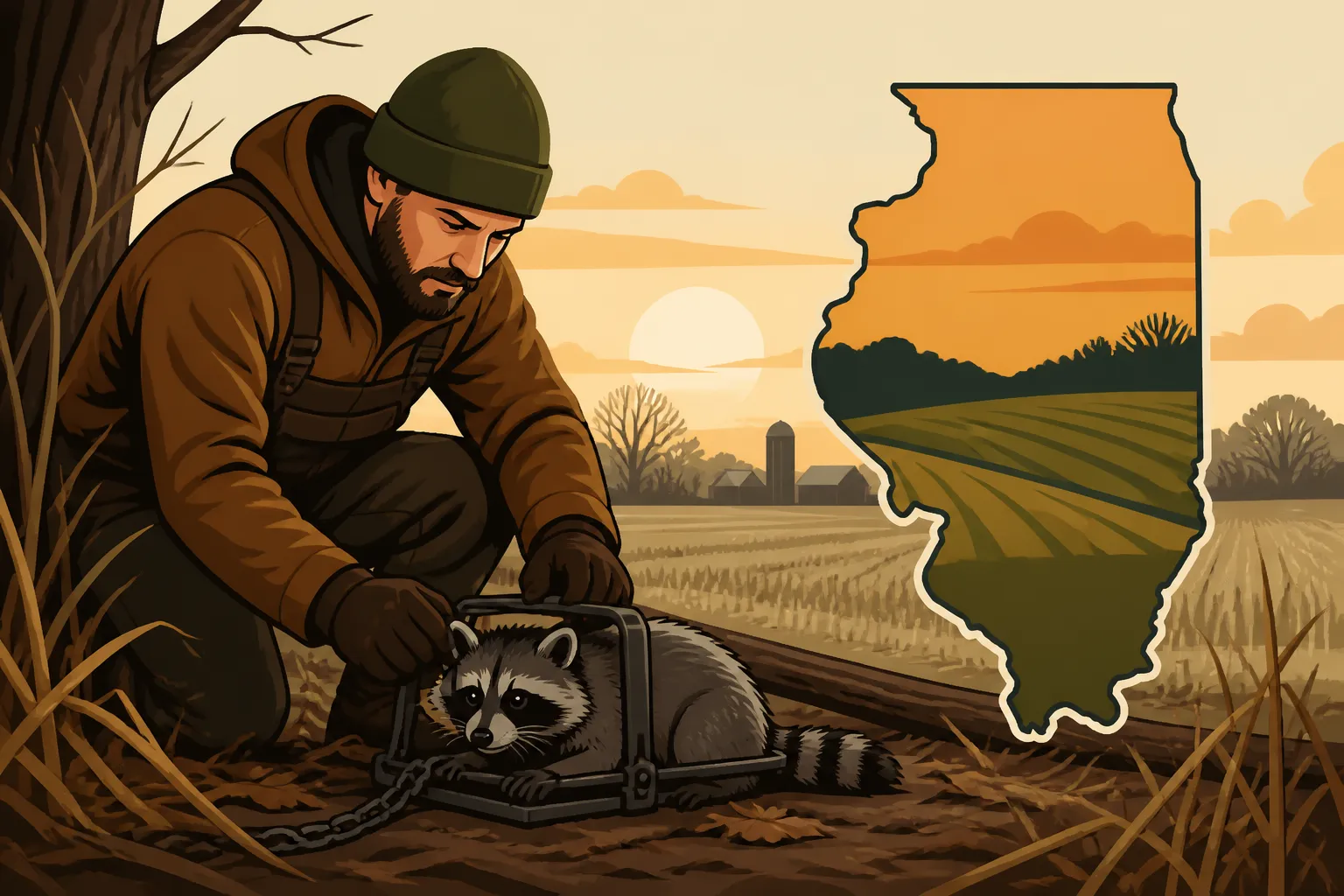
One of the most effective and widely used sets is the pocket set. This involves digging a shallow "pocket" into a bank, often along a creek or ditch, and placing bait deep inside. A foothold trap is then bedded just outside the entrance, covered carefully with dirt or leaves. The raccoon, drawn by the scent of the bait, reaches into the pocket and steps on the trap. Common baits include fish scraps, sweet pastries, or even commercial "coon crunch" mixes.
Another reliable method is the dirt hole set, which is excellent for both raccoons and opossums, and can also catch fox and coyotes. This involves digging a roughly 45-degree angled hole, about 6-8 inches deep and 3-4 inches wide, then placing bait and a small amount of lure at the bottom. The trap is bedded in front of the hole, a few inches back. The animal investigates the tempting scent, trying to dig out the "buried" treat, and steps on the trap. The key to a good dirt hole is making it look natural and clean.
Cubbies are also very effective, especially in cold or wet weather. These are essentially small, covered enclosures made from logs, rocks, or even old tires, with bait inside and a trap positioned at the entrance. They provide shelter for the animal while it investigates the bait, increasing confidence. Placing cubbies near known travel routes or food sources, like a stand of mature timber with good mast crops, can be highly productive.
| Set Type | Target Species | Typical Location | Key Bait/Lure Examples | Advantages |
|---|---|---|---|---|
| Pocket Set | Raccoon, Opossum | Creek/Ditch banks, water edges | Fish, sweet foods, marshmallows, commercial paste | Natural presentation, good for water routes |
| Dirt Hole Set | Raccoon, Opossum, Fox, Coyote | Field edges, timber, trail crossings | Call lure, curiosity lure, fish/meat scraps | Highly versatile, mimics natural digging |
| Cubby Set | Raccoon, Opossum, Mink | Brush piles, logs, under bridges | Fish, berries, curiosity lures | Sheltered, good in adverse weather, secure |
Fox and Coyote Sets
Trapping canines in Illinois, like red and gray fox and coyotes, presents a greater challenge due to their heightened wariness and keen sense of smell. These animals are widespread, with coyotes being especially prevalent even in suburban areas. When targeting these predators, meticulous scent control and natural-looking sets are paramount. You can find more information on Illinois Coyote Hunting Season Rules if you're interested in alternative methods for these animals.
The dirt hole set we discussed earlier is a staple for fox and coyote. The key here is not just the hole, but the "dirt pattern" around the trap. You want to make it look like another animal has been digging, attracting the target to investigate. Scent is critical, so always use clean gloves, and consider wearing rubber boots to minimize your human odor footprint. Lures that mimic a territorial intrusion, like a strong canine urine or gland lure, work exceptionally well when combined with a small piece of bait like a tainted meat scrap.
Another highly effective option is the flat set. This set is more subtle, often used when an animal might shy away from a prominent dirt hole. Instead of a hole, a flat set typically uses a small, natural object like a clump of grass or a piece of wood as an attractant. A small amount of lure or bait is placed near this object, and the trap is bedded directly in front of it. The idea is to make the animal step on the pan while investigating the subtle curiosity object. These are often placed along fence rows, logging roads, or field edges – areas where predators naturally travel while scent-checking.
For both fox and coyotes, the post set can also be effective. This involves placing a visually appealing object, like an old post, a tuft of grass, or even a bone, and scenting it with urine or a gland lure. Predators often stop to investigate and scent-mark such objects. The trap is bedded subtly in the approach path to the "post." The success of these sets lies in blending them perfectly with the natural surroundings. Using a GoHunt map to identify prime travel corridors, particularly where two different habitat types meet (e.g., timber edge and open field), will dramatically increase your chances.
Water Sets for Muskrat, Mink, and Beaver
Water trapping is a specialized skill, but Illinois's extensive waterways, including the Illinois River, Mississippi River backwaters, and countless creeks and farm ponds, offer prime opportunities for muskrat, mink, and beaver.
Muskrats are relatively easy to trap. They're creatures of habit, often using the same "runs" along muddy banks or through shallow water. A simple run set involves placing a body-grip trap directly in a muskrat run, ensuring it's fully submerged. Dive sets, where a trap is placed at the entrance to a bank den or feeding house, are also very effective. For more specific season details, check the IDNR guide on Illinois Muskrat and Mink Trapping Trends.
Mink are more elusive and solitary than muskrats, but they too stick close to water. They often travel along stream banks, under root wads, or through culverts. Cubby sets baited with fish or mouse scent, placed discreetly along the water's edge, are excellent. A small body-grip trap or a #1.5 foothold can be used in these sets. Look for their distinctive tracks and scat along the water.
Beaver are large, powerful animals, and trapping them requires robust traps and a good understanding of their engineering habits. A classic castor mound set involves creating a small mound of mud or grass near the water's edge and luring it with a strong castor-based beaver lure. Beaver are territorial and will swim over to investigate, stepping into a well-placed foothold trap (size #3 or #4) or even a submerged body-grip. Another effective method is a channel set, where a large body-grip trap (#330) is placed in a narrow channel or dam break that beaver are regularly using. Always secure your beaver traps with strong anchor points, as these animals are incredibly strong. You can learn more about the impact and habits of these industrious creatures in our guide to Illinois Beaver Population and Damage.
Water levels can fluctuate dramatically in Illinois, so adaptability is key. A rising creek might flood your bank sets, while a falling pond could leave your submerged traps high and dry. Constant monitoring and adjustment are part of the challenge and the reward.
Responsible Harvest, Fur Handling, and Troubleshooting
The trapline doesn't end with a successful catch. What happens next is just as critical, ensuring humane treatment, maximizing the value of the fur, and learning from every experience. It's about respect for the animal and the craft.
Humane Dispatch and Fur Care
The commitment to ethical trapping extends to the moment of dispatch. Quick, humane methods are essential for minimizing suffering and ensuring the quality of the fur. For most furbearers caught in footholds, a quick, precise blow to the head with a solid object is the most common and humane method. For aquatic animals caught in body-grip traps, they are often dispatched instantly by the trap itself. This is why daily trap checks are so crucial – to ensure any animal caught is dealt with as swiftly as possible.
Once the animal is dispatched, proper fur care begins immediately. In the field, protect the fur from dirt, blood, and extreme temperatures. If possible, keep the carcass cool. Back at camp or at home, skinning is the first step. This requires sharp knives and a clean workspace. Each species has a specific skinning pattern (e.g., open-skinned for raccoons, cased-skinned for fox and mink) to maximize fur quality and market value.
After skinning, the pelt needs to be fleshed – removing all fat and muscle tissue. This is a critical step for preventing spoilage and ensuring the fur dries correctly. Fleshing can be done with a specialized fleshing knife on a beam, which takes practice but yields excellent results. Finally, the pelt is stretched on a board or wire stretcher, shaped to industry standards, and allowed to air dry in a cool, well-ventilated area. Properly cared for fur will command a higher price and is a testament to the trapper's skill and respect for the animal.
Common Trapline Challenges and Solutions
Trapping is rarely a smooth, problem-free endeavor. You'll encounter challenges, and learning to troubleshoot them is a mark of an experienced trapper.
One of the most common frustrations is non-target catches. This might be a domestic animal like a dog or cat, or a protected species like an otter. If you catch a non-target animal, the priority is its safe release. Approach cautiously, speak calmly, and if possible, use a catch pole or heavy gloves to safely restrain the animal while you free it. Prevention is the best medicine: research your set locations carefully, use species-specific baits and lures, and be mindful of local populations.
Weather impacts can wreak havoc on a trapline. Freezing temperatures can lock up traps, making them impossible to fire. Heavy rain can wash away scent, flood sets, or fill dirt holes. Deep snow can bury traps entirely. Solutions include using antifreeze agents (like calcium chloride) in dirt holes, using waxed dirt, making elevated sets (like cubbies), and adjusting your trap placement to account for anticipated water levels. For water sets, keeping an eye on river gauges and weather forecasts is essential.
Theft and tampering are unfortunate realities in some areas. While disheartening, you can minimize risks by placing traps discreetly, away from public view, and using less obvious markers for your sets. Developing a good relationship with landowners on private property also helps deter unauthorized interference.
Finally, dealing with misses or periods of low catch rates is part of the game. Don't get discouraged! Analyze your sets: Was the trap bedded solidly? Was the lure fresh? Was there too much human odor? Sometimes, simply moving a trap a few yards can make all the difference. Animals learn, and sometimes the best move is to pull a set that isn't producing and try a new location. Keep a journal of your sets, baits, and results; this data is invaluable for improving your skills year after year. Every blank trap is a lesson waiting to be learned.
Disclaimer
Please note: Hunting and trapping regulations, seasons, and licensing requirements are subject to change. Always consult the most current Illinois Department of Natural Resources (IDNR) Hunting and Trapping Digest or their official website before engaging in any hunting or trapping activities. This guide is for informational purposes only and does not supersede official state regulations. It is the individual hunter's and trapper's responsibility to know and obey all applicable laws.