Hunting a Grain Elevator Adjacent Woodlot
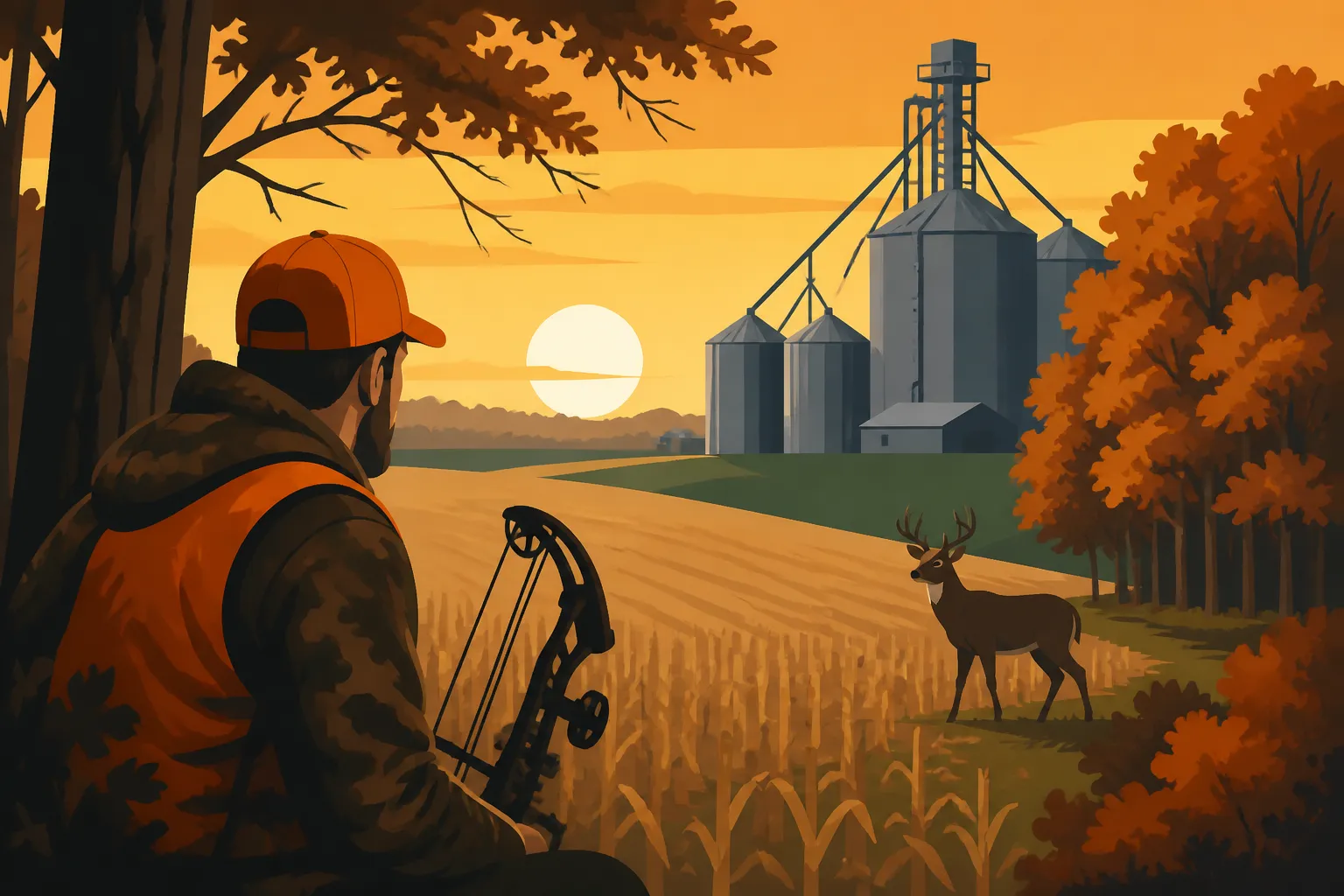
You know, it’s easy to get caught up in the romance of sprawling timber tracts or remote public land when we think about deer hunting in Illinois. But sometimes, the most overlooked spots are right under our noses, offering incredible, low-pressure opportunities. One such area that often gets completely ignored is that small, scruffy woodlot nestled right up against a grain elevator or other agricultural facility. Most hunters drive past these places, dismissing them as too close to human activity or too small to hold anything significant. But I’m here to tell you, that’s a mistake. This guide will dive deep into how to scout, strategize, and successfully hunt those surprising grain elevator adjacent woodlots, turning what others see as a nuisance into your next prime deer spot.
Understanding the Draw of Grain Elevator Woodlots for Deer
It might seem counterintuitive, right? A noisy, industrial area with trucks coming and going, machinery humming, and people constantly around. How on earth could deer thrive in such an environment? The truth is, these unassuming woodlots offer a unique combination of factors that make them incredibly attractive to whitetails, especially when surrounding habitat is heavily pressured or lacks diverse food sources. Deer are masters of adaptation, and they quickly learn where they can find sanctuary and sustenance without constant harassment.
The Hidden Food Source Advantage
Grain elevators, by their very nature, are a constant, if unintentional, buffet for wildlife. There's almost always spilled grain around—corn, soybeans, wheat, you name it. This isn't just a seasonal feast; it's a year-round availability of high-energy food that deer, turkeys, and countless other species are quick to exploit. While surrounding fields might be harvested or picked clean, that incidental spillage around the elevator provides a reliable supplement to their diet. During the late season, when natural food sources like acorns are long gone and most crop fields are nothing but stubble, this constant grain source becomes a magnet. Deer will travel surprisingly far to access such a concentrated food source. It's a goldmine that many hunters simply don't consider, often because they're focused on traditional food plot setups or natural mast crops. When there's Hunting After a Poor Acorn Year, these overlooked grain sources become even more critical for deer.
Unexpected Cover and Security
Another crucial aspect that draws deer to these areas is the sense of security they provide. Humans often equate "wild" with "remote," but deer have learned that areas with consistent human activity, paradoxically, can be some of the safest. Most hunters actively avoid these noisy, semi-industrial zones, creating an unintentional low-pressure sanctuary. The small woodlot itself, even if it's just a few acres, often provides dense, thick cover right next to this consistent food. Think about it: during the daylight hours, when other deer are being bumped around public land or pushed deeper into private timber, deer in these grain elevator woodlots might be bedding down just yards from a bustling facility, knowing that most predators (including human hunters) won't bother them there. This cover, combined with the human-induced "exclusion zone" for most hunters, makes these patches of woods an ideal place for deer to bed, browse, and stage before moving out into larger agricultural fields under the cover of darkness. They learn the patterns of human activity and adapt their movements accordingly, often becoming quite nocturnal near these sites.
Scouting and Strategy for Success in These Unique Spots
Hunting a woodlot adjacent to a grain elevator isn't like hunting a vast forest. It requires a different mindset and a tailored approach to scouting and strategy. You're dealing with a confined space, often with unique wind currents due to buildings, and a certain level of human disturbance. Ignoring these factors will lead to frustration; embracing them can lead to incredible success.
Leveraging Technology for Initial Recon
Before you even step foot near the property, your computer and smartphone can be invaluable tools. Use mapping apps like onX Hunt or even Google Earth to get a bird's-eye view. Look for the actual woodlot in relation to the grain elevator and any associated structures. Are there obvious travel corridors or pinch points? Deer love to use natural funnels, even if those funnels are created by man-made structures or fence lines. Identify any creek bottoms, drainage ditches, or fencerows that might lead into or out of the woodlot. Pay close attention to the prevailing wind direction in that specific area – sometimes buildings can create eddies or blockages that change how the wind moves compared to open terrain. Consider how deer might stage in nearby fields before entering the woodlot to feed on spilled grain. GoHunt is a fantastic resource for researching specific regions and understanding general deer movement patterns, which can help you predict how local deer might utilize such unique habitat. It might even show you public access points or nearby properties where permission might be easier to obtain, connecting the dots on a larger scale. This digital scouting is essential to formulate an initial game plan and identify potential access routes that minimize your impact. You can get a sense of how the topography affects deer movement, even in flat agricultural areas. Consider using satellite imagery to see if there are any subtle elevation changes or changes in vegetation density that might provide additional bedding cover. This is a great way to start Reading Aerial Photos for Southern Illinois Deer.
Boots-on-the-Ground Scouting Specifics
Once you've done your digital homework, it's time to put boots on the ground. This is where you'll validate your theories and find the real nuggets of information. Since these woodlots are often smaller, you need to be incredibly methodical and stealthy. First and foremost, you must secure permission if it's private land. If it's a small, neglected patch of woods, landowners might be more receptive, especially if deer are causing crop damage nearby.
Walk the perimeter, looking for definitive deer trails leading into and out of the woodlot, especially those coming from nearby standing corn, bean fields, or thicker cover. Pay close attention to the area immediately surrounding the grain elevator. Are there obvious tracks where deer are coming in to feed on the spilled grain? Look for fresh droppings, rubs, and scrapes, particularly along the edges of the woodlot or any interior travel lanes. These smaller woodlots can often feature intense scrape lines along their edges, as bucks use them as security cover and travel routes.
During your scouting, try to identify primary bedding areas within the woodlot. This might be a dense thicket of briars, a cluster of cedars, or an area with a lot of downed timber. Observe the terrain for slight rises or depressions that could offer a thermal advantage for bedding deer. Remember that deer in these high-traffic areas are incredibly sensitive to intrusion. Scout during the middle of the day, preferably after a rain or during a windy period to mask your scent and sound. Minimize your time in the woodlot itself to avoid "burning it out." Your goal is to gather information without alerting the deer to your presence. Also, carefully plan your entry and exit routes to avoid disturbing bedding deer or alerting them to your stand location. Scouting Illinois Public Land Before Season emphasizes minimal disturbance, and that principle applies even more so in these confined, sensitive areas.
| Aspect | Pros of Hunting Grain Elevator Woodlots | Cons of Hunting Grain Elevator Woodlots |
|---|---|---|
| Deer Activity | Consistent, year-round food source (spilled grain) | Deer can become highly nocturnal due to human activity |
| Low hunting pressure from other hunters | Increased risk of encountering non-hunting humans/workers | |
| Cover/Security | Dense, often overlooked bedding and sanctuary cover | Smaller woodlots mean less room for error in stand placement |
| Accessibility | Often easy to access from roads/fields | Parking and access might be restricted or require specific permission |
| Noise | Deer habituated to industrial noise | Industrial noise can mask deer movement or make calling difficult |
| Flexibility | Excellent late-season spot when other food sources are scarce | Wind patterns can be unpredictable due to buildings |
Effective Stand Placement and Hunting Tactics
Once you've done your thorough scouting, the next step is to choose your stand locations and refine your hunting tactics. This isn't a place for casual hunting; precision and careful execution are paramount.
Wind and Entry/Exit Routes
The wind is your absolute top priority, even more so than in open country. The buildings around a grain elevator can create unpredictable air currents, swirling winds, and downdrafts. You must know exactly what the wind is doing at your stand location. Use milkweed seeds or a powder bottle to test the air frequently. Never hunt a stand if your scent is blowing into a bedding area or a known travel corridor. Your entry and exit routes are equally critical. Since these woodlots are often small and surrounded by open fields or industrial zones, minimizing disturbance is key. Plan your approach to use ditches, fencerows, standing crops (if applicable), or the cover of darkness. The goal is to get to and from your stand without alerting a single deer. This means no crunching leaves, no slamming car doors, and no walking directly through areas where deer are likely to be bedding or feeding. Consider using the noise from the grain elevator itself as cover for your approach, but be very mindful of when trucks are running or other loud operations are in progress. Sometimes the best approach is to use the furthest point of entry, even if it adds a bit of a walk. Remember, you're trying to hunt deer that are likely already very wary of human presence, but paradoxically feel safe because they've learned to pattern it. This is similar to managing Wind and Thermals on a Southern Illinois Ridge, where currents can be tricky.
Choosing Your Stand Type
Given the nature of these woodlots, certain stand types will be more effective than others.
-
Tree Stands: If the timber allows, a well-placed ladder stand or hang-on can be incredibly effective. Look for trees that offer natural concealment and a clear shot opportunity over a trail or feeding area. Since the woodlots can be small, you'll want to be as high as possible to help your scent dissipate and get a better vantage point. You might only have one or two good trees in the entire woodlot, so choose wisely. Focus on pinch points where deer are forced to travel, or along the edges where they might be feeding on spilled grain. When considering specific trees, think about the backdrop and how you'll blend in. Remember, deer are often looking up in these environments because they're used to human activity at ground level.
-
Ground Blinds: Often, these woodlots don't have ideal trees for stands, or the cover is so thick that a ground blind becomes the superior option. A quality pop-up ground blind offers excellent concealment, scent containment (to some degree), and allows for more movement. You can brush it in naturally using local vegetation, making it practically invisible. Position it downwind of trails or feeding areas, ideally tucked into dense cover. Ensure your shooting lanes are clear but that you remain hidden. A ground blind also allows for quicker setup and takedown if you need to be mobile, or if you're only hunting for a few hours. This can be especially useful for a quick evening sit targeting deer coming in to feed at dusk. Using a ground blind also eliminates the need to find a perfect tree, which can be a real struggle in some of these smaller, younger woodlots. For tips on setting these up, refer to Using a Ground Blind on Illinois Public Land.
-
Elevated Box Blinds: If you're fortunate enough to gain long-term access and permission, an elevated box blind can be a fantastic, comfortable, and scent-controlling option. They offer a stable shooting platform, protection from the elements, and allow for less movement within the blind. However, they require significant investment and a permanent placement, so they're usually only feasible on private land with express permission from the landowner or grain elevator operator.
When placing your stand, think about the exact spot deer are going to be. Are they browsing along a fencerow, hitting a specific corner for spilled grain, or using a subtle ditch to enter the woodlot? Aim to intercept them where they feel safest and least pressured. Consider how deer might navigate a Hunting a Funnel Between Two Woodlots situation, as these small woodlots often act as funnels between larger agricultural areas.
Dealing with Unique Challenges in Grain Elevator Woodlots
Hunting these spots isn't without its peculiarities. The very things that make them attractive to deer also present unique challenges for the hunter. Anticipating and adapting to these challenges is crucial for success.
Adapting to Industrial Noise
One of the most obvious challenges is the constant industrial noise. The humming of machinery, the rumble of trucks, the clanging of metal—it can be distracting, to say the least. However, the deer are completely habituated to it. What sounds like a chaotic racket to us is just background noise to them. This can be a double-edged sword for the hunter. On one hand, the noise can mask your movements and sounds, allowing you to get away with a bit more than you would in a silent forest. On the other hand, it can also mask the sounds of approaching deer, making it harder to hear them coming through the brush.
My advice? Embrace it. Don't try to fight it. Wear good quality hearing protection that still allows you to hear subtle movements, or even active noise-canceling headphones if legal and comfortable. Focus intently on visual cues rather than relying solely on sound. Learn to distinguish the sounds of the facility from the subtle snaps and rustles of deer moving through the woodlot. If you plan to rattle or grunt, you'll need to adjust your volume significantly. Deer might not hear subtle calls over the machinery, so be prepared to call louder or time your calls with lulls in the industrial sounds. Remember, the noise is a constant, and deer have learned to filter it out, so you need to learn to do the same.
Managing Human Presence and Access
Another significant factor is the proximity to human activity. This isn't the wilderness; you're likely to encounter workers, landowners, or other non-hunters. Always be courteous, respectful, and transparent about your presence if asked. Clear communication with the landowner or facility manager is paramount. Make sure you understand exactly where your hunting boundaries are, where you can park, and what times are acceptable for access. This isn't just about being polite; it's about maintaining access to a potentially fantastic hunting spot.
Safety is also a huge consideration. Always be aware of your surroundings, especially if shotshells are being used. Ensure you have a safe backdrop for any shot and that you know what's beyond your target. Blaze orange requirements vary by season in Illinois, but consider wearing it even when not required, especially during entry and exit, just to be visible to any non-hunting human activity. You want to avoid any misunderstandings or safety concerns that could jeopardize your hunting privileges. These areas are often small, so be extra cautious with your movements and shot placement. You might even find that deer are so accustomed to seeing people that a quick, quiet entry and exit during a shift change might be less disturbing than trying to sneak in during quiet hours. Patience and persistence, coupled with respect for the property and those who work there, are key to long-term success in these unique hunting environments. You're trying to find ground that others walk past, as we discuss in Finding Ground Others Walk Past, and that often involves navigating human interfaces.
These grain elevator woodlots may seem unconventional, but with the right approach, they can be incredibly productive for Illinois deer hunters. They offer a consistent food source, unexpected security cover, and are often overlooked by the majority of hunters, making them a hidden gem in plain sight.
Disclaimer
Please remember that hunting regulations and land access policies can change. Always consult the latest Illinois Department of Natural Resources (IDNR) regulations and obtain proper landowner permission before hunting. Safety should always be your top priority.