Minimum Bullet Diameter for Illinois Rifles
Hunting in Illinois can feel like navigating a maze of regulations, especially when it comes to firearms. Many hunters get understandably frustrated trying to figure out exactly what's legal for deer, particularly with the specific rules around rifle calibers and cartridge types. This guide is designed to cut through that confusion, explaining the minimum bullet diameter for rifles in Illinois and delving into the critical details of cartridge length and design so you can hunt confidently and within the law.
Understanding Illinois Firearm Deer Season Regulations
Illinois has a unique approach to legal firearms for deer hunting, a system that has evolved over time. Unlike many states with broad allowances for centerfire rifles, Illinois has historically been more restrictive, focusing on specific types of ammunition to ensure hunter safety, especially in its densely populated and agricultural landscapes.
Historical Context of Illinois Rifle Restrictions
For many years, Illinois deer hunting with firearms was primarily a shotgun-slug affair. This was largely due to safety concerns in a state with significant human population density and vast open agricultural fields bordered by smaller woodlots. The idea was that shotgun slugs, while still powerful, generally had a shorter effective range and less potential for over-penetration compared to high-powered rifle cartridges, thus reducing the risk to bystanders and property. This created a strong tradition of slug hunting and a unique skill set among Illinois deer hunters. Many of us grew up meticulously sighting in our slug guns, knowing that a clean, ethical shot depended on mastering a firearm that wasn't designed for long-range precision.
However, as ammunition technology advanced and straight-wall rifle cartridges became more prevalent and effective, hunters began advocating for their inclusion. They argued that these newer rifle options offered increased accuracy, better energy retention, and often less recoil than traditional slugs, leading to more ethical kills. This push from the hunting community eventually led to significant changes in the regulations.
Current Legal Firearm Types for Deer Hunting
Today, during the regular Illinois Deer Season Structure Explained, hunters have more options than ever. The primary firearm deer seasons, including the Illinois First Firearm Season Dates and Illinois Second Firearm Season Dates, permit the use of shotguns loaded with slugs, muzzleloaders, and, critically, certain straight-wall centerfire rifle cartridges. This expansion has been a welcome change for many, allowing for greater versatility and often improved accuracy, especially for those accustomed to hunting with rifles in other states.
It's important to remember that these regulations are specific to deer and some other large game. Small game hunting or predator hunting, like Predator Hunting in Illinois, often have different, less restrictive firearm allowances. Always double-check the current Illinois Department of Natural Resources (IDNR) regulations before heading afield, as rules can occasionally be updated. Understanding these legal weapons is the first step to a successful and compliant hunt.
The Specifics: Minimum Bullet Diameter and Cartridge Length
Now, let's get down to the nitty-gritty of what qualifies a rifle for deer hunting in Illinois. It's not just about "rifles" in general; it's about very specific criteria designed to fit within the state's safety and ethical guidelines.
Illinois's Defined Minimum Caliber
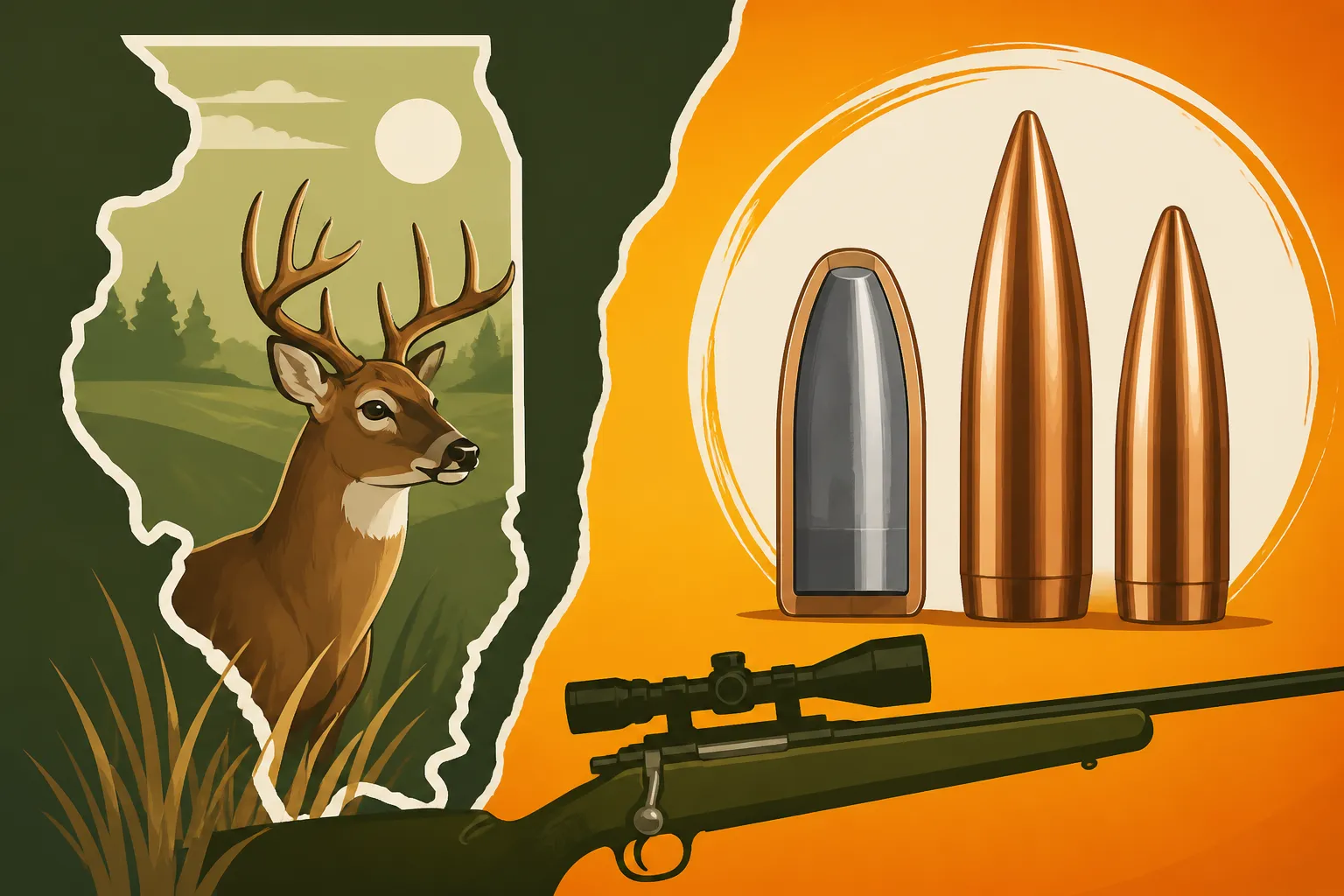
The Illinois hunting regulations are quite clear about the minimum bullet diameter for centerfire rifles used in deer hunting. The rule states that legal straight-wall cartridges must be at least .30 caliber. This means any bullet with a diameter smaller than .30 inches is not permitted for deer hunting during the firearm season. So, while your trusty .223 or .243 might be fantastic deer cartridges in other states, they are simply not legal for deer in Illinois because their bullet diameter falls below that .30-caliber threshold.
This minimum caliber ensures that the projectile has sufficient mass and frontal area to deliver effective energy and create a quick, humane kill on deer-sized game. It's a measure to promote ethical hunting practices by ensuring hunters are using cartridges designed for the task at hand. Therefore, when you're preparing for your deer hunt, you need to be thinking .30 caliber and up. This includes popular options like .350 Legend, .450 Bushmaster, and .45-70 Government, which we'll discuss in more detail shortly.
Straight-Wall Cartridge Requirement Explained
Beyond the minimum bullet diameter, the most significant restriction for rifles in Illinois is the "straight-wall cartridge" requirement. This is where many hunters, especially those new to Illinois or coming from other states, often get tripped up. A straight-wall cartridge is exactly what it sounds like: a cartridge case where the sides are straight from the base to the mouth, with little to no taper or "bottle-necking." This is in contrast to most conventional rifle cartridges, which typically have a distinct "shoulder" where the case narrows down to hold a smaller-diameter bullet.
The rationale behind the straight-wall rule is still rooted in the historical safety concerns that limited Illinois to shotgun slugs. Straight-wall cartridges, particularly those meeting the length restrictions, are generally perceived to have a shorter maximum effective range and tend to shed energy more quickly than bottlenecked rifle cartridges, like a .30-06 or .270 Winchester. This characteristic is believed to reduce the risk of a bullet traveling long distances and posing a danger in a state with a mix of agricultural fields and suburban areas. When you're Choosing Between Slugs and Straight-Wall Rifles, this straight-wall distinction is the most important factor.
Many of these straight-wall cartridges were originally designed for handguns or older lever-action rifles, where power was prioritized over extreme long-range ballistics. While modern ammunition has certainly pushed the capabilities of these cartridges, the straight-wall design remains a key differentiator in Illinois law. This rule means you absolutely cannot use common bottlenecked rifle cartridges like the .308 Winchester, 6.5 Creedmoor, or .270 Winchester for deer, no matter how precise or ethical they are for deer in other hunting contexts.
The Importance of Case Length
Adding another layer of specificity, Illinois regulations also dictate a minimum and maximum case length for these straight-wall cartridges. To be legal for deer hunting, the straight-wall centerfire cartridge must have a minimum case length of 1.17 inches and a maximum case length of 1.8 inches. This is a critical detail that sometimes gets overlooked.
This case length restriction further refines the types of cartridges allowed. For instance, while a .44 Magnum is a straight-wall cartridge and easily exceeds the .30 caliber minimum, its typical case length (around 1.28 inches) falls squarely within the legal range. The .45-70 Government, a classic straight-wall, has a case length of around 2.105 inches, which puts it outside the legal maximum, making it illegal for deer in Illinois despite meeting the other criteria. This is a common point of confusion and one that hunters must pay close attention to.
The combination of minimum bullet diameter, straight-wall design, and precise case length parameters creates a very specific legal framework. It means hunters need to be diligent in checking their ammunition specifications, not just relying on general caliber knowledge. A great resource for researching these details, especially when considering different ammunition, can be found using tools like the GoHunt app, which often provides detailed ballistics and cartridge specifications that can help you cross-reference with Illinois regulations. This due diligence ensures you're not just guessing, but are truly compliant with the law.
Common Calibers and Their Legality in Illinois
Navigating the nuances of Illinois's firearm regulations can be daunting, but focusing on the most commonly used and explicitly legal calibers can simplify things. Understanding why certain calibers are in and others are out is key.
Popular Straight-Wall Options for Deer
Thankfully, several excellent straight-wall cartridges meet Illinois's stringent requirements, providing hunters with powerful, accurate, and ethical options for deer. These calibers have become increasingly popular since the rule change, leading to a wider selection of firearms and ammunition on the market.
Perhaps one of the most popular new contenders is the .350 Legend. This cartridge was specifically designed to meet the legal requirements in states like Illinois that mandate straight-wall cartridges. With a bullet diameter of .357 inches (well over the .30 minimum) and a case length of 1.71 inches (comfortably within the 1.17-1.8 inch range), it's perfectly legal. The .350 Legend offers relatively mild recoil, good accuracy, and more than enough power for deer at typical hunting ranges. It's quickly become a favorite for many Illinois hunters, especially those who appreciate the rifle platform's ergonomics and precision.
Another strong choice is the .450 Bushmaster. This heavy-hitter also meets the requirements with a .452-inch bullet diameter and a 1.70-inch case length. The .450 Bushmaster delivers significant knockdown power, making it an excellent choice for larger deer or for hunters who prefer a larger projectile. While recoil is noticeably more substantial than the .350 Legend, its effectiveness is undeniable. Hunters often find themselves making confident shots, particularly when hunting in thick cover or doing Deer Drives on Illinois Public Land.
The venerable .44 Magnum and .357 Magnum, traditionally handgun cartridges, are also legal when fired from a rifle. The .44 Magnum (bullet diameter .429", case length 1.28") and .357 Magnum (bullet diameter .357", case length 1.29") both fit all the criteria. While their effective range for deer is generally shorter than the .350 Legend or .450 Bushmaster, they can be highly effective in dense timber or for hunters who appreciate the versatility of a pistol-caliber carbine. For those looking for a slightly more traditional feel, the .444 Marlin is another fantastic option, provided the specific factory load and firearm ensure the case length remains within the 1.8-inch maximum. It's crucial to verify the exact case length of any specific factory loaded ammunition you plan to use, as even slight variations can make a difference.
| Cartridge | Bullet Diameter | Case Length | Illinois Legal (Deer) | Notes |
|---|---|---|---|---|
| .350 Legend | .357" | 1.71" | Yes | Designed specifically for straight-wall states; popular, mild recoil. |
| .450 Bushmaster | .452" | 1.70" | Yes | Powerful, heavier recoil; excellent for larger deer. |
| .44 Magnum | .429" | 1.28" | Yes | Shorter effective range from a rifle, good in dense cover. |
| .357 Magnum | .357" | 1.29" | Yes | Good for close-range, ethical shots; lower recoil. |
| .444 Marlin | .430" | ~2.22" | No (Case Length) | Historically a favorite, but now generally too long for Illinois law. |
| .45-70 Government | .458" | ~2.10" | No (Case Length) | Classic big-bore, but too long for current Illinois deer regulations. |
| .30-30 Winchester | .308" | ~2.04" | No (Case Length) | Beloved lever-action, but bottlenecked and too long. |
| 6.5 Creedmoor | .264" | ~1.92" | No (Diameter & Wall) | Too small diameter, bottlenecked. |
| .308 Winchester | .308" | ~2.01" | No (Wall & Length) | Bottlenecked, case too long. |
(Note: Always verify current IDNR regulations and specific ammunition specifications before hunting.)
Why Certain Beloved Cartridges Are Excluded
It's natural for hunters to wonder why their favorite calibers from other states aren't legal in Illinois. The exclusions often stem from a combination of the straight-wall requirement, the minimum bullet diameter, and the case length restrictions.
As mentioned, popular bottlenecked rifle cartridges like the .308 Winchester, .270 Winchester, 6.5 Creedmoor, and even the classic .30-06 Springfield are all illegal for deer in Illinois. The primary reason is their bottlenecked case design. These cartridges are renowned for their flatter trajectories and longer effective ranges, which are precisely the characteristics the Illinois DNR sought to limit when crafting these specific regulations. While incredibly effective and ethical deer cartridges in most of North America, they simply don't fit the unique safety profile Illinois is aiming for.
Even some straight-wall cartridges, like the classic .45-70 Government or the .444 Marlin, are generally excluded. While they meet the .30-caliber minimum, their case lengths typically exceed the 1.8-inch maximum limit. This can be particularly frustrating for hunters who have a sentimental attachment to these powerful, traditional calibers. Similarly, the .30-30 Winchester, a staple in lever-action rifles, is usually excluded not only because its case length often exceeds the limit but also because it has a slight bottleneck, albeit a less pronounced one than other rifle cartridges.
The key takeaway here is that Illinois's regulations are specific and not based on general "rifle" acceptance. It's a system designed to balance modern hunting preferences with public safety concerns in a diverse landscape. Therefore, it's essential to educate yourself on these precise details rather than making assumptions based on experiences in other states. Using tools like the Illinois DNR Map Tool or an app like GoHunt can assist in cross-referencing firearm regulations with specific hunting zones and even help in Scouting Illinois Public Land Before Season to prepare for your hunt effectively.
Ensuring Compliance and Maximizing Success
Once you understand the regulations, the next step is to ensure you're fully compliant and set yourself up for a successful and ethical hunt. This involves more than just buying the right gun; it's about preparation and responsible hunting practices.
Double-Checking Your Ammunition
The most critical step in compliance is verifying your ammunition. Don't just assume a box of "straight-wall" ammo is good to go. Always check the specific caliber, bullet diameter, and, most importantly, the case length of the ammunition you intend to use. Most ammunition manufacturers print this information on the box, or it can be easily found with a quick online search. Remember, even a slight deviation in case length can render your cartridge illegal.
It's also a good idea to bring a physical copy of the current Illinois hunting regulations or have access to the IDNR website on your phone, just in case there's any ambiguity or a need to quickly reference a rule. Wildlife officers are there to ensure compliance and safety, and being able to demonstrate your knowledge and adherence to the rules shows respect for the law and for the resource. Consider practicing with your chosen ammunition and firearm well before the season opens. Familiarity with your rifle and its ballistics is crucial for making an ethical shot.
Ethical Considerations and Shot Placement
Beyond legality, ethical hunting dictates that you use a firearm and ammunition capable of making a quick, humane kill. While the .30-caliber minimum and straight-wall rules set a baseline, it's up to the hunter to know their equipment's capabilities and their own limits. Modern straight-wall cartridges like the .350 Legend and .450 Bushmaster are highly effective, but they still have practical maximum effective ranges. Understand your rifle's trajectory and practice shooting at various distances. A well-placed shot with a legal straight-wall cartridge is far more effective than a marginal hit with any firearm.
Remember the importance of shot placement. Aim for the vitals (heart/lungs) to ensure a swift and clean harvest. If you're hunting in dense cover, be aware of your surroundings and potential deflections. Consider the terrain; whether you're Hunting Central Illinois Farmland Deer or navigating the thicker woods of Southern Illinois, shot opportunities and distances can vary greatly. Proper Field Dressing a Deer in Cold Weather and prompt game recovery are also part of ethical hunting, ensuring the meat is handled correctly. Combining legal equipment with a commitment to ethical hunting practices is what truly defines a responsible hunter in Illinois.
Planning Your Illinois Deer Hunt
Preparing for your Illinois deer hunt involves more than just knowing your rifle's legality; it encompasses understanding the season structure, licensing, and scouting your hunting areas. Getting all your ducks in a row ensures a smooth and enjoyable experience afield.
Navigating Licenses and Permits
Before you even think about stepping into the woods, you'll need the proper licenses and permits. All hunters in Illinois, resident or nonresident, must possess a valid Illinois hunting license and a State Habitat Stamp. For deer hunting, you'll also need a specific deer permit, which can vary depending on whether you're a resident or nonresident. You can find details on the Illinois Resident Firearm Deer Permit Cost and other options on the IDNR website.
It's crucial to purchase these well in advance, especially for firearm permits which are often allocated through a lottery system for specific zones and seasons. Make sure your permits are for the correct county and season dates. For instance, if you're planning on Hunting the Second Firearm Season in December, ensure your permit is valid for those dates. Always carry proof of your licenses and permits while hunting, either digitally or physically.
Scouting and Public Land Access
Finding good hunting ground is paramount to success. Illinois offers a variety of public hunting lands, from state parks to Fish and Wildlife Areas and even portions of the Shawnee National Forest. However, these areas can experience significant pressure, especially during firearm season. Learning to read aerial photos, identify pinch points, and understand deer movement patterns can give you an edge. Many hunters use apps like GoHunt to scout and identify potential hunting spots, analyze terrain, and understand property boundaries. This is especially helpful when looking for quieter spots away from crowds.
If you're considering public land, research specific site regulations, as they can sometimes differ from statewide rules. Some areas may have quota hunts, specific check-in/check-out procedures, or other unique restrictions. Being familiar with regulations like Illinois Blaze Orange Requirements is also essential for safety on public lands. Don't forget the importance of pre-season scouting, looking for deer sign, and understanding food sources. Even a few days spent scouting can dramatically increase your chances of success.
Post-Harvest Requirements
Once you've successfully harvested a deer, there are mandatory reporting requirements in Illinois. All deer must be reported to the IDNR by 10 p.m. on the same day the deer was harvested. This can usually be done online through the IDNR website or via their mobile app. This reporting is crucial for the state's wildlife management efforts, helping biologists track deer populations and harvest trends, which feeds into future regulation decisions, such as those related to Illinois Deer Harvest Records.
Beyond reporting, proper care of your harvested deer is vital. Knowing how to Butchering a Deer at Camp or preparing it for a processor ensures the meat remains high quality. If you're hunting in a Chronic Wasting Disease (CWD) management area, there may be specific testing requirements or carcass movement restrictions, so always be aware of the CWD status of the county you're hunting in. Being prepared for these post-harvest steps completes the full cycle of a responsible and successful hunt.
Disclaimer
Please remember that hunting regulations can change. While this guide provides comprehensive information, it is always your responsibility to consult the most current Illinois Department of Natural Resources (IDNR) hunting regulations before heading into the field. This article is for informational purposes only and should not be considered legal advice.