Southern Hill Country Versus Prairie Deer
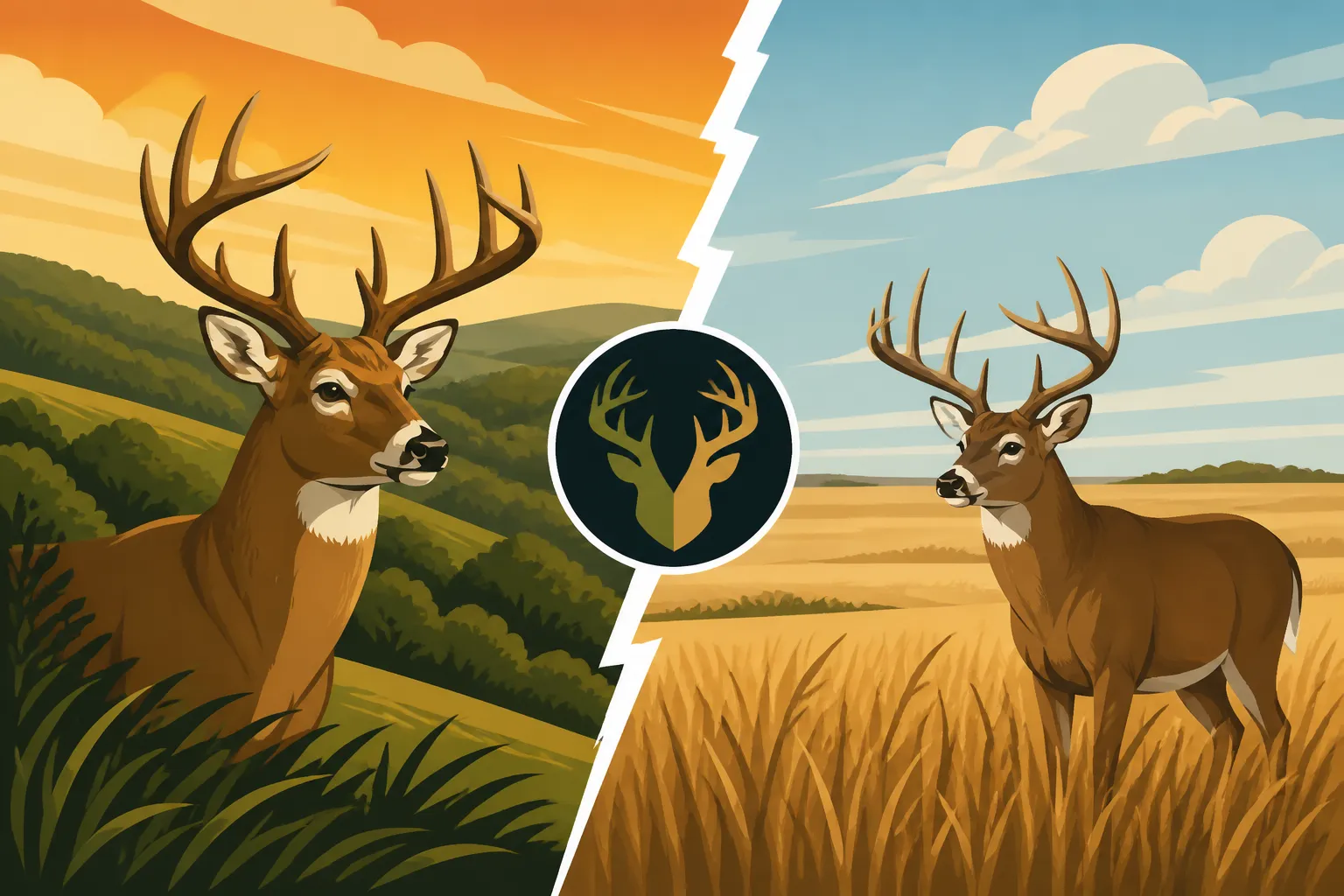
Many Illinois hunters grapple with the perplexing reality that deer across our great state aren't all cut from the same cloth. From the rugged southern hills to the vast northern prairies, the whitetails we pursue can feel like entirely different animals, leading to frustrating missteps if you don't understand their local adaptations. This comprehensive guide will dissect the distinct characteristics, behaviors, and challenges of hunting deer in Illinois's diverse southern hill country versus its expansive prairie regions, helping you tailor your approach for greater success wherever you choose to hunt.
The Lay of the Land: Understanding Illinois's Diverse Geography
Illinois is often stereotyped as nothing but flat cornfields, but anyone who's spent time exploring knows that's a massive oversimplification. Our state boasts a surprisingly varied topography, and these geographical differences fundamentally shape the deer herds that call each region home. Understanding the nuances of these landscapes is the first step in appreciating why the deer, and the hunting, differ so much.
Southern Illinois: Rugged Hills and Shawnee National Forest
When you drive south of Interstate 70, the landscape gradually transforms. The flat plains give way to rolling hills, steep bluffs, and dense, unbroken timber. This is the heart of the Shawnee Hills region, an area characterized by its unglaciated terrain, which means it wasn't flattened by ancient ice sheets. Here, you'll find elevation changes, creek bottoms, deep hollows, and vast expanses of hardwood forest. The crowning jewel of this region is the Shawnee National Forest, a massive tract of public land that provides habitat for countless deer.
These southern hills are a hunter's paradise for those who love to walk and explore. The thick timber, diverse understory, and dramatic elevation changes create complex deer habitat. While areas like the Shawnee National Forest Hunting can be challenging due to hunting pressure and the sheer scale of the woods, they offer a wilder, more primitive hunting experience. You'll find a mix of oak-hickory forests, cedar thickets, and even some scattered agricultural fields nestled in the valleys. This diverse environment means deer have a wider, albeit often less concentrated, array of natural food sources compared to their northern counterparts.
Central and Northern Illinois: The Endless Prairies and Farmland
Venture into central and northern Illinois, and the landscape shifts dramatically. Here, you're in the heart of the "Corn Belt," dominated by sprawling agricultural fields of corn and soybeans, interspersed with small woodlots, fencerows, and creek bottoms. This was historically tallgrass prairie, and while much of it has been converted to agriculture, the underlying topography remains largely flat to gently rolling.
Deer in these regions live in a patchwork quilt of cover and food. The woodlots, often no more than 10 to 50 acres, become critical sanctuaries, offering bedding and thermal cover. Fencerows and narrow creek drainages act as natural travel corridors, funneling deer movement across open fields. While there might not be the vast, unbroken timber of the south, the sheer abundance of high-calorie agricultural crops provides an almost unlimited food supply for deer. This environment demands a different kind of hunting strategy, one focused on understanding how deer use these limited pockets of cover and how they navigate the expansive open fields.
Deer Physiology and Behavior: Adapting to Environment
It's truly remarkable how deer adapt to their surroundings, and Illinois whitetails are no exception. The subtle, and sometimes not-so-subtle, differences in their physical traits and daily habits are direct responses to the challenges and opportunities presented by their respective habitats. It’s like they've evolved into different athletes depending on their playing field.
Hill Country Bucks: Tough, Agile, and Masters of Cover
Southern Illinois deer, especially the mature bucks, tend to be leaner, more agile, and incredibly tough. Their lives are spent traversing steep terrain, navigating dense thickets, and constantly being on high alert due to the prevalence of public land and hunting pressure. You won't often find the massive, heavy-bodied deer common in agricultural areas. Instead, expect bucks that are built for endurance and stealth.
Their antlers might not always reach the same colossal mass as prairie deer, but they are often still very impressive, reflecting the genetics and nutritional quality of natural browse and mast crops. Behaviorally, these deer are masters of using topography to their advantage. They'll drop into a hollow to disappear, skirt ridge lines, and bed in the thickest, most inaccessible spots imaginable. Understanding wind and thermals is paramount when Hunting the Shawnee Hills Region because a buck can vanish with a shift in air currents. They are adept at escaping danger by slipping away quietly, often unnoticed, rather than bolting in a full-blown panic.
Prairie Deer: Heavy-Bodied, Crop-Fed, and Field Savvy
Contrast this with the deer of central and northern Illinois, often affectionately dubbed "prairie giants." These deer live a life of luxury when it comes to food. Miles of corn, soybeans, and alfalfa provide an almost endless buffet of high-energy, protein-rich nutrition. This abundant diet translates directly into larger body weights and, often, significantly larger antler growth. It's not uncommon to hear tales of bucks weighing well over 200 pounds dressed in counties like Pike, Adams, or Fulton, areas renowned for Best Illinois Counties for Big Bucks.
Their behavior is also dictated by their environment. While they will use small woodlots and creek bottoms for bedding and sanctuary, they are highly accustomed to open spaces. They learn to use standing crops for cover, disappearing into a cornfield faster than you can blink. Their travel patterns often involve moving long distances between bedding cover and prime feeding areas, sometimes crossing wide-open fields, usually under the cover of darkness or low light. They are incredibly wary of human activity near field edges and will often circle downwind to scent-check potential threats before entering an open area. Their survival hinges on their ability to exploit abundant food while remaining invisible in fragmented cover.
| Characteristic | Southern Hill Country Deer | Central/Northern Prairie Deer |
|---|---|---|
| Body Size | Leaner, agile, built for endurance | Heavy-bodied, robust, larger frames |
| Antler Mass | Good, but often less overall mass | Often exceptional, significant mass |
| Primary Diet | Acorns, natural browse, diverse forbs | Corn, soybeans, alfalfa, agricultural waste |
| Typical Cover | Vast, unbroken hardwood timber, thickets | Small woodlots, fencerows, standing crops |
| Movement | Navigates steep terrain, uses hollows/ridges | Long-distance travel between cover and food, uses fields |
| Hunting Pressure | Can be high on public lands, spreads deer out | Concentrated pressure on small woodlots/corridors |
| Temperament | Elusive, uses stealth, highly adapted to topography | Wary of open spaces, uses crops for concealment |
Food Sources and Nutrition: Fueling the Differences
The old adage "you are what you eat" holds true for whitetails, perhaps more than any other game animal. The nutritional differences between the southern hills and the northern prairies are stark, directly influencing deer health, body size, and antler development.
Acorns, Hardwoods, and Browse in the South
In southern Illinois, particularly within the vast tracts of the Shawnee National Forest and surrounding timbered areas, deer primarily rely on natural food sources. Hard mast, especially acorns from various oak species, is king. When there's a good acorn crop, deer will gorge themselves, building up fat reserves for the winter. However, acorn crops can be cyclical, and a poor acorn year can significantly impact deer health and movement patterns. Hunters often find themselves Hunting After a Poor Acorn Year, requiring more focus on alternative food sources.
Beyond acorns, deer browse on a wide variety of woody plants, shrubs, and forbs found in the forest understory. Green briar, honeysuckle, sumac, and young regeneration in timber cuts all provide essential forage. While these natural foods offer a balanced diet, they don't typically pack the same caloric punch as vast agricultural fields. This leads to the leaner, tougher deer mentioned earlier, but also contributes to their incredible hardiness. The diversity of the habitat, however, means that even if one food source is scarce, others are often available, leading to more resilient, if less massive, deer herds. GoHunt's mapping tools can be invaluable for identifying diverse forest types and potential browse areas in these complex landscapes.
Corn, Soybeans, and Alfalfa in the North
Now, let's talk about the buffet line available to deer in central and northern Illinois. Picture endless fields of corn, rich in carbohydrates, and soybeans, packed with protein and fat. As farmers harvest their crops, vast amounts of waste grain are left on the ground, providing an easy and highly nutritious food source that can sustain deer well into the late season. Farmers might dread the sight of deer in their fields, but hunters know these are the fueling stations for trophy bucks.
Beyond corn and beans, many areas also grow alfalfa, a high-protein forage that deer readily consume. These agricultural resources provide an unparalleled nutritional boost, allowing deer to reach their maximum genetic potential in terms of body size and antler growth. It’s this consistent, high-quality diet that contributes to the phenomenal rack sizes seen in counties like Pike or Fulton. However, reliance on agricultural crops can also make deer more patternable, moving predictably between bedding cover and feeding areas. Understanding these patterns is key when Setting Up on a Central Illinois Field Edge, trying to intercept a buck heading out for his evening meal.
Hunting Pressure and Habitat: Impact on Deer Behavior
Human activity, particularly hunting pressure, plays a critical role in shaping how deer behave and where they choose to spend their time. The distribution of public versus private land in Illinois's different regions creates vastly different scenarios for deer and hunters alike.
Public Land Challenges and Pressure in Southern Hills
Southern Illinois boasts significantly more public hunting land, with the Shawnee National Forest being the largest example. While this is a huge advantage for hunters seeking accessible ground, it also means deer in these areas often face consistent and sometimes intense hunting pressure. Deer on public land quickly learn to avoid human contact, becoming incredibly wary and nocturnal, especially mature bucks. They'll use the remotest, steepest, and thickest parts of the forest as sanctuary, often where other hunters aren't willing to venture.
This constant pressure forces deer to adapt their routines. They might move primarily at night, bed in cover that's almost impenetrable, or utilize subtle terrain features to travel undetected. Hunters on public land often have to work harder, walk further, and scout more diligently to find unpressured pockets of deer. Using tools like GoHunt to analyze aerial photos and topography can help identify these overlooked sanctuary areas. Effective strategies often involve deep woods still-hunting or carefully planned ambush points along natural travel corridors that lead to remote bedding areas, away from the typical easy-access routes. Finding ground that sees fewer hunters is a constant challenge, but one that rewards perseverance.
Private Land Dominance and Sanctuary in the Prairies
In contrast, central and northern Illinois are predominantly private land, with vast agricultural holdings and comparatively fewer public hunting opportunities. This creates a different dynamic for deer. While hunting pressure exists, it's often more concentrated on smaller woodlots or restricted to specific areas by landowners. This means deer on private ground can sometimes feel less pressured, especially if the landowner implements quality deer management practices or limits hunting.
Private land also often provides de facto sanctuaries where hunting is limited or non-existent. These might be small brushy creek bottoms, old homesteads, or even standing crops like cornfields, which offer excellent cover during the early and mid-seasons. Deer learn where these safe havens are and use them extensively. The challenge for hunters in these areas is gaining access to quality private land. Building relationships with landowners, offering assistance, or securing leases are often necessary. Once access is gained, understanding how deer transition from thick bedding cover to expansive feeding fields becomes the key. The ability of bucks to virtually disappear into a standing soybean field or a dense fencerow makes precision scouting crucial.
Strategic Hunting Approaches for Each Region
Given the profound differences in deer behavior, habitat, and pressure, it stands to reason that your hunting strategies need to evolve when moving between Illinois's southern hills and its prairie heartland. What works like a charm in one area might be a complete bust in another.
Hill Country Tactics: Still-Hunting and Patience
Hunting the rugged hill country of southern Illinois demands a different mindset and approach. Forget sitting over a food plot waiting for deer to appear; that's generally not how it works here. Instead, think about becoming a part of the landscape, moving slowly and deliberately through the timber. Still-hunting is an incredibly effective tactic in these vast woods, allowing you to cover ground and search for active sign like fresh scrapes, rubs, or well-used trails. You're not just waiting for deer; you're actively hunting them in their environment.
Patience is key. You might only see a few deer in a day, but the deer you do encounter are often mature and wary. Focus on pinch points, saddles, and ridge-top saddles for rutting bucks that act as natural travel corridors. Pay close attention to wind direction and thermals, which can shift dramatically in hilly terrain. Setting up a stand in a strategic location that intercepts deer moving between bedding and feeding areas, or along a significant ridge line, can be highly effective. Consider carrying a lightweight treestand or a good ground blind setup, as permanent structures might not be feasible or legal on some public lands. The article on Still-Hunting Southern Illinois Ridges offers excellent advice for this style of hunting.
Prairie Strategies: Scouting Field Edges and Cover
Hunting in the prairie regions, with their patchwork of fields and woodlots, often revolves around understanding deer movement between these fragmented cover areas. Scouting is paramount. You need to identify the key bedding areas – often the densest, brushiest woodlots or creek bottoms – and the primary feeding areas, which are almost always agricultural fields. The art lies in intercepting deer as they transition between the two.
Treestand setups on field edges or along fencerows that connect woodlots are classic prairie tactics. Learning to read the subtle changes in terrain, even in flat country, like a slight rise that offers a travel advantage, can be a game-changer. During the rut, bucks will cruise these woodlots and fencerows, checking for does, making them vulnerable. Grunt Calls in Mature Illinois Timber and rattling can be effective during this period, drawing curious bucks out of cover. Consider using trail cameras extensively to pattern deer movement and identify specific entry and exit points from fields. OnX Hunt or GoHunt mapping apps are invaluable for identifying property lines and creating detailed plans, especially for Entry Routes Through Standing Corn or other high-cover areas.
Trophy Potential and Harvest Expectations
Every hunter dreams of a trophy buck, and Illinois certainly has a reputation for producing them. However, the definition of a "trophy" and the realistic expectations for harvesting one can vary significantly depending on whether you're hunting the southern hills or the northern prairies.
Quality Over Quantity in the Southern Hills
Let's be realistic: Southern Illinois, while producing some fantastic bucks, generally isn't going to have the same sheer number of Boone and Crockett contenders as the top prairie counties. That's not to say you won't find them – you absolutely can, especially with diligent scouting and a bit of luck. The trophy potential here is often more about the challenge of the hunt and the character of a hard-earned, wild woods buck.
Harvest rates for deer per square mile are typically lower in the southern hills compared to the agricultural regions, reflecting the lower overall deer density and the difficulty of the terrain. When you connect with a mature buck in the Shawnee, it's a testament to your woodcraft, perseverance, and ability to navigate challenging conditions. These deer are often older, wiser, and have earned their stripes in a tougher environment. The feeling of success after a hard-fought hunt in the timber is something truly special, regardless of inches of antler. Focus here is often on the experience and the "quality" of the hunt rather than just the antler size.
The Legend of the Prairie Giant
When people talk about Illinois's reputation for monster bucks, they are almost invariably talking about the prairie region. The combination of nutrient-rich agricultural crops and often limited, but secure, bedding cover creates the ideal conditions for bucks to grow massive antlers. Counties like Pike, Adams, Schuyler, and Fulton consistently produce some of the largest whitetails in the world, making the area famous for its Illinois Boone and Crockett Whitetails. The Illinois Deer Record Book is heavily populated with entries from these regions.
While harvesting a "prairie giant" is never guaranteed, the potential is undeniably higher here. However, this also often comes with increased competition for prime hunting ground, whether through expensive leases, long-standing private land access, or intense pressure on public parcels. Non-residents often flock to these areas, securing permits that allow them to hunt some of the best whitetail ground in the nation. The expectation in these regions can be less about seeing many deer and more about waiting for that one truly exceptional animal to present an opportunity, often during the peak of the rut, such as Hunting the Illinois Rut in Early November. It's a game of patience, precision, and leveraging every bit of available information to put yourself in the right place at the right time.
Disclaimer
Please remember that hunting regulations, season dates, and permit requirements in Illinois can change. Always consult the official Illinois Department of Natural Resources (IDNR) website or their current hunting guide before planning any hunting trip. This information is for educational and entertainment purposes only and should not be taken as legal advice.