Why West-Central Illinois Grows Trophy Bucks
The dream of tagging a true trophy whitetail often feels out of reach for many hunters. We pour over maps, scout endlessly, and still struggle to consistently find those elusive mature bucks that dominate magazine covers and online forums. If you've ever wondered where those giants come from, and how some regions consistently produce them, then you're in the right place. This comprehensive guide will pull back the curtain on why West-Central Illinois has earned its legendary status as a trophy buck haven and what factors contribute to its remarkable deer herd.
The Legend of West-Central Illinois
For decades, the name "Illinois" has been synonymous with giant whitetails, and at the heart of that reputation lies the west-central region of the state. Hunters from all over the country, and even the world, flock to this area with high hopes, chasing the dream of a buck that could easily make the record books. It’s not just hype; there’s a very real, tangible reason this area produces such impressive deer, year after year.
A Legacy of Giants
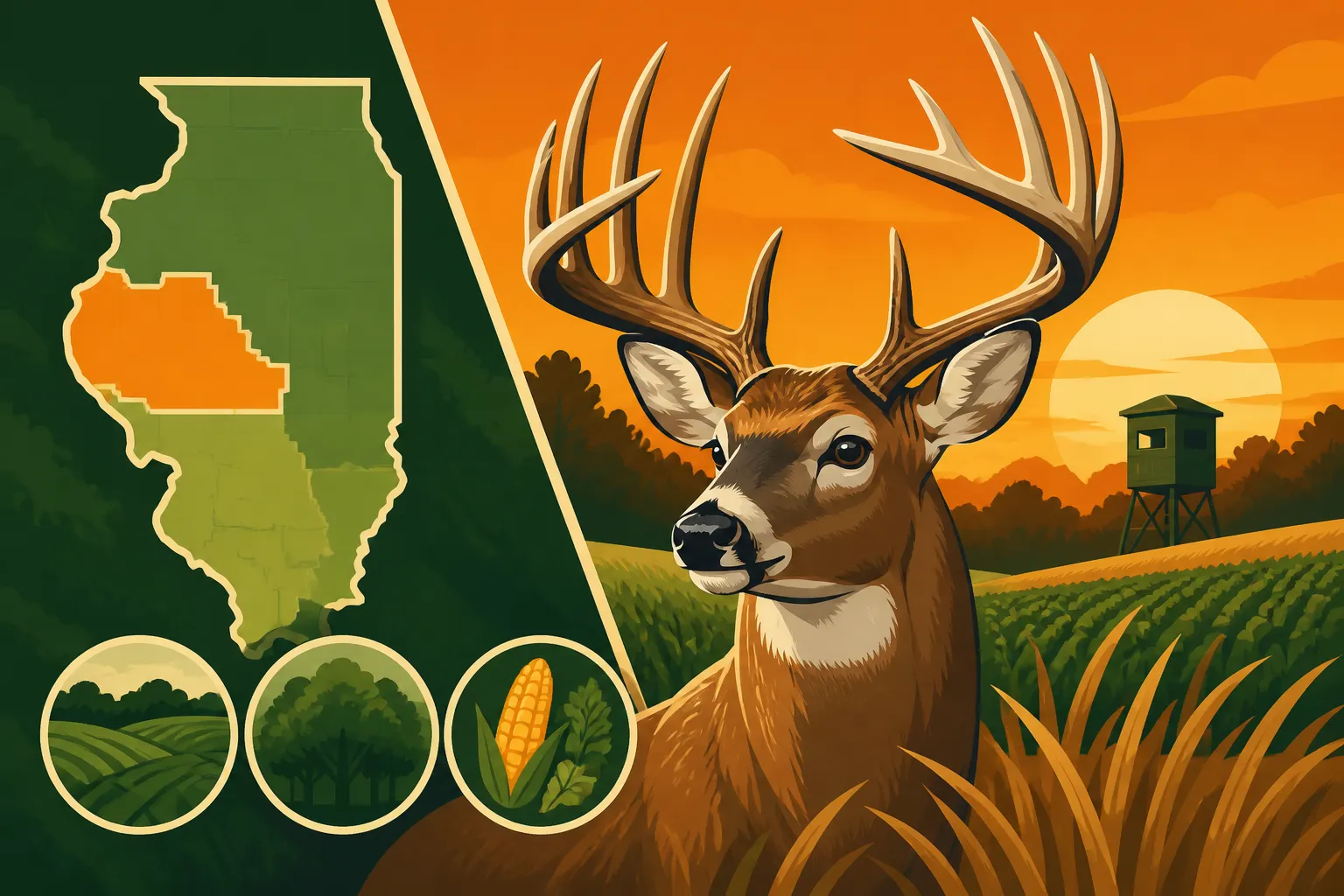
When you talk about West-Central Illinois, counties like Pike, Adams, and Brown immediately spring to mind. These aren't just names on a map; they are the bedrock of the "golden triangle" – a mythical region for many deer hunters. This legacy wasn't built overnight. It's the result of decades of ideal conditions converging to create an environment where deer not only survive but thrive to reach their maximum potential. The stories of 200-inch bucks aren't just campfire tales here; they're a part of the local hunting culture, fueling the dreams of every hunter who steps foot in the region.
The reputation of these counties specifically grew from hunters consistently taking enormous deer, year after year, especially as hunting publications and eventually, online forums, started to highlight the sheer number and size of bucks coming out of the area. When you look at the Illinois Deer Record Book, a disproportionate number of entries hail from this specific part of the state. This consistent output of mature, heavy-antlered deer has cemented its place in whitetail hunting lore, making it a bucket list destination for serious trophy hunters.
For many, the idea of hunting in West-Central Illinois is the pinnacle of whitetail pursuits. It represents the ultimate challenge and reward, a place where the dedication and skill of a hunter might finally be met with the opportunity to harvest a truly magnificent animal. The sheer potential keeps hunters coming back, even if they don't punch a tag every year. The knowledge that such deer exist, and that they are indeed catchable, is a powerful motivator.
Understanding the "Golden Triangle"
The "Golden Triangle" isn't an official geographical designation but rather a term coined by hunters and outfitters to describe the prime deer hunting ground within West-Central Illinois. While its exact borders might be debated, it generally encompasses a swath of fertile land primarily defined by the Illinois and Mississippi River valleys and the rich agricultural lands between them. This unique geographical blend is foundational to the region's deer-growing prowess.
Geographically, this area is characterized by a mix of rolling hills, deep river bottoms, and expansive agricultural fields. Picture vast corn and soybean fields interspersed with hardwood timber blocks, thick creek drainages, and brushy fencerows. This isn't monotonous flat prairie; it’s a dynamic landscape where deer can find everything they need in close proximity. The fertile river valleys themselves contribute significantly, offering diverse ecosystems with ample water, mineral-rich soils, and varying types of vegetation.
The crucial interplay of these elements is what makes the "Golden Triangle" so special. The timbered ridges and river bottoms provide security cover and diverse browse, while the adjacent agricultural fields offer a seemingly endless, high-octane food source. It’s this perfect storm of nutrition, cover, and genetics that creates an environment where whitetails can grow massive bodies and even more impressive antlers.
Prime Habitat and Nutrition
The foundation of any healthy, trophy-producing deer herd lies squarely in its habitat and the nutritional resources it provides. West-Central Illinois excels in both these categories, offering whitetails a near-perfect environment to grow large bodies and magnificent antlers.
Rich Soil and Abundant Food Sources
The heart of West-Central Illinois lies within some of the most fertile agricultural land in the world. The deep, rich topsoil, deposited over millennia by glaciers and river systems, is incredibly productive. This isn't just "good dirt" – it's phenomenal, black gold that fuels robust crop growth. Farmers here routinely produce bumper crops of corn, soybeans, and alfalfa, which are nutritional powerhouses for deer.
These crops translate directly into superior nutrition for the local deer population. Corn provides an incredible energy source, packing on critical fat reserves for the winter months and fueling antler growth and fawn development. Soybeans, especially when still green, offer high protein levels essential for muscle and antler development. Alfalfa fields, too, contribute significantly with their protein-rich forage. This year-round access to high-quality food means deer aren't just surviving; they're thriving, constantly packing on nutrients that contribute to overall body mass and impressive antler development.
Imagine a deer essentially living in a grocery store, with an all-you-can-eat buffet of high-energy and high-protein foods. That's the reality for many deer in West-Central Illinois. Unlike areas with limited food sources, where deer might struggle to reach their genetic potential, the deer here have everything they need to maximize growth. This consistent, high-quality diet allows younger bucks to quickly develop respectable racks and older bucks to push the limits of their genetic potential, often putting on an inch or two more each year than their counterparts in less fertile regions.
Diverse Cover and Sanctuary
Beyond the caloric bounty, West-Central Illinois also offers a phenomenal mosaic of cover, essential for deer to grow old and escape hunting pressure. The region isn't just open fields; it boasts extensive blocks of hardwood timber, often found along creek bottoms and river bluffs, providing crucial bedding areas and escape routes. These natural features, combined with CRP (Conservation Reserve Program) fields, dense brushy fencerows, and even standing crop fields, create a complex habitat structure.
These diverse cover types are more than just hiding spots; they are vital components of a deer's life cycle. The deep timber offers thermal cover during harsh winters, protecting deer from the elements. Thick CRP fields and brushy creek bottoms provide ideal fawning cover, protecting vulnerable fawns from predators. Most importantly, these areas offer sanctuary from human intrusion, allowing bucks to mature without excessive stress. A mature buck is a smart buck, and having secure places to retreat allows them to live long enough to reach their trophy potential.
The intricate interspersion of these cover types with the abundant food sources means deer rarely have to travel far to satisfy their needs. They can feed in a soybean field at night and retreat into a dense, almost impenetrable timber block or a deep ravine just a few hundred yards away at dawn. This proximity to food and safety reduces energy expenditure, further contributing to their overall health and antler growth. It’s a carefully balanced ecosystem where every piece plays a critical role in producing the giant deer that hunters dream about. For hunters looking to capitalize on these areas, understanding how deer move between these cover types and food sources is key. This is particularly true when Hunting Central Illinois Farmland Deer, where careful scouting of edges and funnels can pay off big.
Genetics and Herd Health
While habitat and nutrition lay the groundwork, the genetic makeup of the deer herd and its overall health are equally critical in consistently producing trophy-class animals. West-Central Illinois benefits from a strong gene pool and generally robust herd health, which allows bucks to fully express their antler-growing potential.
Strong Gene Pool
The phrase "good genetics" might sound like something out of a scientific paper, but in deer hunting, it simply means that the deer in a particular area have inherited traits that predispose them to grow larger bodies and more impressive antlers. In West-Central Illinois, these genetics have been honed over decades, largely due to the consistent abundance of resources that have allowed bucks with superior antler potential to survive and reproduce.
Over time, with proper habitat management and, on many private landholdings, a focus on letting younger bucks walk, the gene pool has undoubtedly been "bred up." Bucks that consistently produce large racks pass those genetic predispositions on to their offspring. This isn't to say every buck will be a giant, but the potential for exceptional antler growth is simply more prevalent in the West-Central Illinois herd compared to many other regions. When you combine this inherent genetic potential with optimal nutrition and the ability to age, you get the recipe for record-book whitetails.
Think of it like selective breeding, but on a natural scale, amplified by human hunting choices. When hunters on large private tracts consciously choose to pass on younger, smaller-racked bucks, those bucks are given the opportunity to mature and contribute their genetics to the next generation. This collective decision-making across vast stretches of private land has undoubtedly played a role in concentrating the "big buck" genes within the region, creating a self-reinforcing cycle of impressive deer.
Low Stress and Disease Management
Beyond genetics, a deer's ability to reach its full potential is heavily influenced by stress levels and overall herd health. Deer that are constantly stressed, whether by predators, harsh environmental conditions, or relentless hunting pressure, divert energy from growth to survival. In West-Central Illinois, while hunting pressure certainly exists, the vast amount of private land often acts as a buffer, creating sanctuaries where deer can age with less disturbance. This relative reduction in stress allows bucks to allocate more energy towards body mass and antler development, pushing them to their genetic limits.
Regarding disease, Illinois, like many states, has its challenges. Chronic Wasting Disease (CWD) is a persistent concern, particularly in northern Illinois. While West-Central Illinois hasn't been immune to CWD, the Illinois Department of Natural Resources (IDNR) has implemented various monitoring and management strategies. The disease's prevalence in the core West-Central trophy counties has historically been lower compared to some of the northern CWD management zones. However, hunters should always be aware of the Illinois's Chronic Wasting Disease Zone and mandatory testing protocols, as herd health is a dynamic factor.
EHD (Epizootic Hemorrhagic Disease) outbreaks can occur periodically, especially during hot, dry summers, and can temporarily impact local deer populations. However, these are typically localized and short-lived, with the resilient Illinois deer herd usually bouncing back quickly. Overall, the foundational health of the West-Central Illinois deer population, supported by prime nutrition and managed stress levels, remains robust, providing ideal conditions for trophy buck growth. The ability for deer to remain healthy and unstressed is a critical, though often overlooked, factor in growing truly large antlers.
Hunting Pressure and Management
The way land is managed and how hunting pressure is distributed significantly impacts the age structure of a deer herd and, consequently, the number of mature bucks available. West-Central Illinois offers a unique dynamic of private land management and relatively low widespread public pressure, contributing to its trophy buck reputation.
Private Land Domination and QDM
One of the most defining characteristics of West-Central Illinois is the overwhelming dominance of private land ownership. Unlike regions with extensive public forests, the landscape here is a patchwork of farms and private timber tracts. This reality is a double-edged sword for hunters. For landowners, it offers immense control over their property and the deer herd that inhabits it. Many of these private landowners, or the outfitters who lease their ground, practice some form of Quality Deer Management (QDM).
QDM principles typically involve letting young bucks walk, focusing harvest on does to balance the herd, and creating optimal habitat. When landowners on adjacent properties collectively adhere to these practices, the benefits multiply across a larger landscape. Bucks are allowed to reach older age classes, giving their antlers time to fully develop. This isn't just about passing on small bucks; it's about making conscious decisions that promote an older age structure within the male deer population. The prevalence of such management decisions has significantly shaped the quality of deer found in this region. Many landowners take advantage of Illinois Landowner Deer Permit Rules to manage their local deer populations effectively.
This localized, private land management aggregates to a regional benefit, creating a consistent supply of mature bucks. While not every landowner is a dedicated QDM practitioner, enough are, or enough land is leased by outfitters with a vested interest in trophy quality, that the overall effect is undeniable. This concentrated effort on private holdings means that bucks have a higher chance of surviving their younger years and growing into the monsters that West-Central Illinois is famous for.
Limited Public Access and Refuge
Compared to states with vast national forests or large tracts of BLM land, Illinois has a relatively limited amount of publicly accessible hunting ground. This is especially true in the prime West-Central counties, where most of the sought-after properties are privately owned. While public land certainly exists, it tends to be smaller, more fragmented, and often experiences significantly higher hunting pressure, especially during peak seasons. This dynamic means that many deer, particularly mature bucks, learn to avoid public land or use it only under the cover of darkness.
The scarcity of readily accessible public land, combined with the abundance of private parcels, essentially creates a vast network of de facto refuges. Even if a private landowner doesn't actively manage for trophy deer, the simple fact that their land is off-limits to general public hunting reduces overall pressure on the deer herd. Deer quickly learn where they are safe and where they are not. These private sanctuaries allow bucks to move and feed with less human disturbance, providing them the calm and security necessary to grow old.
A mature buck's survival instincts are incredibly refined. They know how to utilize dense cover, nocturnal movements, and the boundaries of private property to their advantage. This means that while public land in the region can be challenging to hunt, the pressure on those smaller parcels often pushes deer onto neighboring private ground, further reinforcing the private land's role as a refuge. This interplay between pressured public land and sanctuary-like private property is a key element in why the region consistently produces large, mature bucks year after year.
Accessing the Best Hunting Grounds
The allure of West-Central Illinois's trophy bucks is strong, but gaining access to the best hunting grounds can be a significant hurdle. Whether you're a local resident or a traveling hunter, understanding the avenues for access is crucial.
Building Relationships with Landowners
For many Illinois residents, the most traditional and often most rewarding path to hunting trophy bucks is by securing permission on private land. This isn't a quick fix or a guaranteed success, but it's a time-honored approach that relies heavily on respect, trust, and persistence. You can't just expect to knock on a door and be handed access to prime hunting ground. It takes effort and a genuine desire to build a relationship.
Start by offering to help farmers with tasks around their property. Before the season, offer to mend fences, clear brush, help with chores, or even assist during planting or harvest. Being a reliable, helpful presence in the off-season can build significant goodwill. When you do ask for permission, do so respectfully and be prepared for "no" – many landowners are already overwhelmed with requests or have existing arrangements. Be clear about your intentions, assure them of your ethical hunting practices, and offer to share some of your harvest. Finding success here often means understanding the local culture and being a good neighbor. For more detailed advice, check out Asking an Illinois Farmer for Permission.
Once you gain permission, uphold your end of the bargain. Always communicate your hunting plans, report any issues you observe, and leave the property in better condition than you found it. Respecting fences, crops, and livestock is paramount. A good reputation spreads, and securing access this way can lead to lifelong friendships and consistent hunting opportunities on prime ground. Remember, this is about reciprocity and earning trust, not just getting a place to hunt.
Navigating Public Land Challenges
For hunters who don't have private land access, public hunting grounds in West-Central Illinois can be challenging but not impossible. It's true that public land often sees heavy hunting pressure, especially on opening weekends or during the rut. However, the deer are still there, and the key to success lies in thorough scouting and a willingness to work harder than the next hunter.
Tools like GoHunt's mapping layers, or the Illinois DNR's mapping resources, are invaluable for pinpointing public land boundaries, identifying potential bedding areas, and scouting access points. Look for overlooked spots: small, isolated timber blocks, neglected creek bottoms that snake through fields, or pieces of public land that require a long walk to access. Often, areas that are difficult to reach deter other hunters, leaving pockets of undisturbed habitat where mature bucks can hide. Don't be afraid to put in the miles and get off the beaten path. This could involve exploring remote corners of state parks or fish and wildlife areas that allow hunting. Check out Scouting Illinois Public Land Before Season for more tips.
Another strategy is to focus on hunting pressure. Instead of trying to find unpressured deer, understand how pressure moves deer. During the first firearm season, for example, deer might be pushed out of highly accessible areas into thicker, less desirable cover. Being there to intercept them as they seek refuge can be effective. Consider using ground blinds in dense cover, or still-hunting slowly through thickets where others might rush. It’s about adapting your tactics to the realities of public land hunting.
Considering Guided Hunts and Leases
For many nonresident hunters, or those residents looking for a premium experience, guided hunts and hunting leases offer a direct route to prime West-Central Illinois hunting ground. Outfitters in this region have often spent years cultivating relationships with landowners and managing large tracts of private land specifically for trophy whitetails.
Booking a guided hunt can be a significant investment, but it provides access to proven properties, experienced guides, and often comfortable lodging. Outfitters typically manage their properties to ensure an older age structure, and they know the land intimately, increasing your chances of success. They handle the scouting, stand setup, and often the recovery and processing of your animal. For nonresidents, this can be particularly appealing given the limited availability and higher cost of Illinois Nonresident Deer Permit Costs. Understanding What a Guided Illinois Trophy Deer Hunt Costs is crucial when considering this option.
Hunting leases are another avenue, where a group of hunters or an individual pays a landowner for exclusive hunting rights to a property for a season or multiple years. Lease prices can vary widely based on location, acreage, and deer quality. While leases offer more control and flexibility than a guided hunt, they also require more personal effort in terms of scouting, stand placement, and management. Both options come with a price tag, but for many serious trophy hunters, they are a worthwhile investment to gain access to the legendary deer hunting West-Central Illinois has to offer.
Here’s a quick overview of some top West-Central Illinois counties known for producing trophy bucks:
| County Name | Average Antler Score (Estimated) | Notable Features |
|---|---|---|
| Pike County | 145-170+ inches | "Golden Triangle" centerpiece, river hills, agriculture |
| Adams County | 140-165+ inches | Borders Missouri, diverse habitat, heavy agriculture |
| Brown County | 135-160+ inches | More timbered than others, good genetics |
| Schuyler County | 130-155+ inches | Rolling terrain, good mix of timber and crops |
| Hancock County | 130-155+ inches | Mississippi River bluffs, rich bottomlands |
Note: Antler scores are estimates based on historical data and anecdotal reports. Individual buck sizes vary greatly.
Disclaimer
The information provided in this article is for general guidance and informational purposes only. Hunting regulations, seasons, and conditions can change rapidly. Always consult the latest official Illinois Department of Natural Resources (IDNR) regulations and local laws before planning any hunting activity. Responsible hunting practices and safety should always be your top priority.