Illinois Bison Before European Settlement
Many people think of Illinois as flat farmland, maybe a few scattered woods, and lots of deer. But what if I told you that centuries ago, this state was home to truly massive herds of an animal far larger than any whitetail, an animal that shaped the very landscape? It’s a powerful image, isn't it? This guide will dive deep into the forgotten history of bison in Illinois, exploring their profound impact before European settlement and what happened to them.
The Roaming Giants of Pre-Settlement Illinois
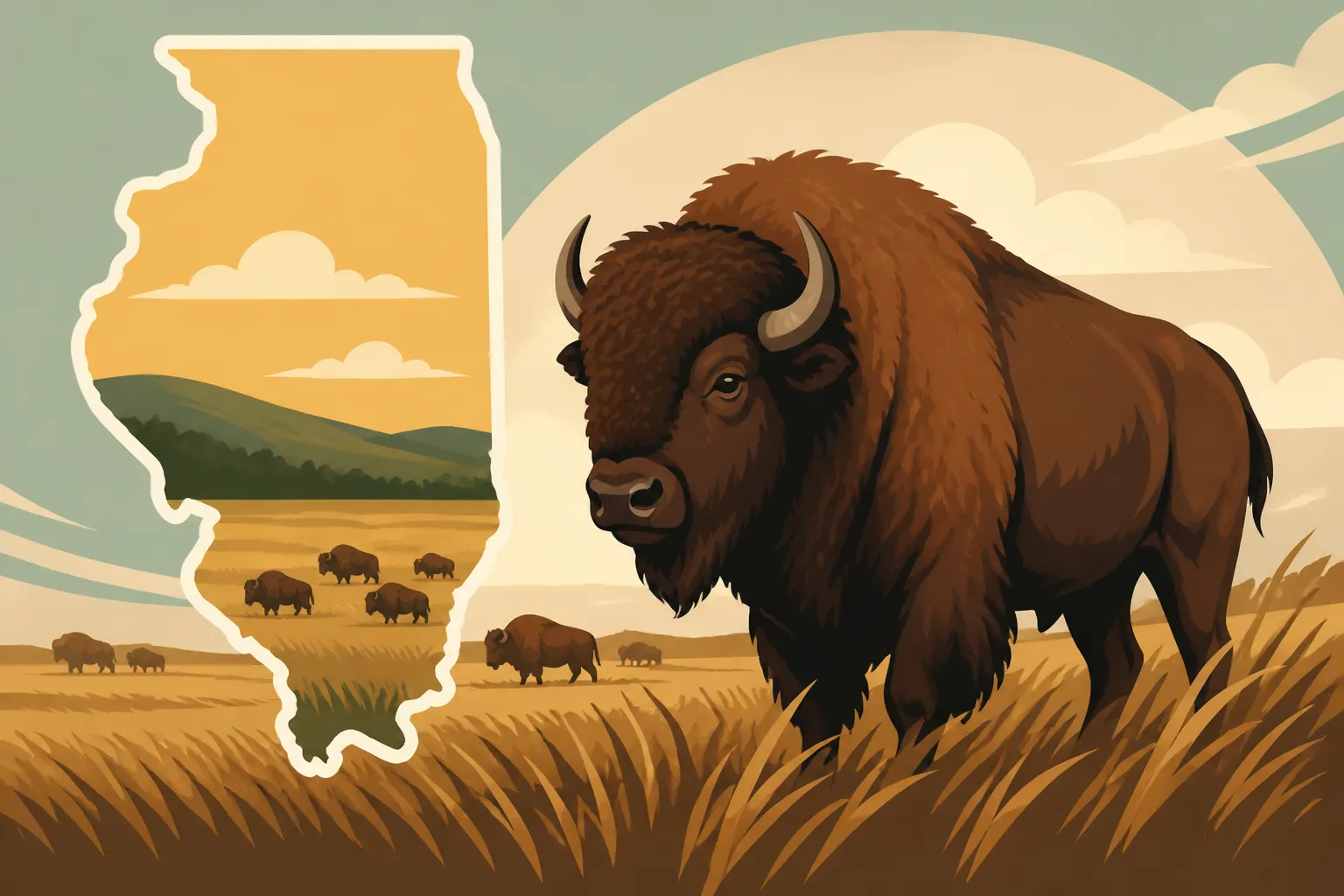
It's easy to picture the vast plains out west when you think of bison, but Illinois was once a crucial part of their eastern range. Before the arrival of European settlers, the prairie state wasn't just prairie; it was a dynamic ecosystem where millions of bison roamed, influencing everything from plant life to the very soil beneath their hooves. Their presence was so foundational that to understand Illinois's natural history, you simply have to understand the bison.
Pre-Columbian Era and Native American Interactions
For thousands of years before Europeans set foot on Illinois soil, Native American tribes lived alongside and relied heavily on the American bison. These magnificent animals weren't just a source of meat; they were an entire way of life. Tribes like the Illiniwek, Kickapoo, and Potawatomi expertly hunted bison, using every part of the animal for sustenance, shelter, tools, and clothing. Their deep understanding of bison behavior and migration patterns allowed them to sustain themselves without decimating the herds. It was a relationship built on respect, necessity, and a profound knowledge of the land, unlike the later, more destructive approaches. Imagine a time when following the bison herds was a primary mode of existence, with entire communities moving with the seasons and the animals' grazing routes. The land and its inhabitants were intricately connected through the movements of these beasts.
Early European Accounts and Observations
When the first European explorers and missionaries, such as Marquette and Jolliet, ventured into what would become Illinois in the late 17th century, they were astonished by the sheer abundance of bison. Their journals describe vast prairies teeming with these "wild oxen," herds so immense that they seemed to stretch to the horizon. These accounts provide invaluable snapshots of a landscape radically different from what we see today. They noted the incredible noise of the thundering hooves, the dust clouds rising from their movements, and the sheer scale of their numbers. These were not isolated sightings; they were descriptions of an ecosystem dominated by these powerful grazers. These early observations are critical because they confirm that Illinois was not merely a peripheral habitat for bison but a central part of their eastern distribution, long before significant human population pressures began to change the landscape.
Illinois as a "Prairie State" for Bison
Illinois's geography and ecology made it an ideal home for bison. The vast tallgrass prairies, interspersed with oak savannas and riverine forests, offered a perfect mosaic of forage and shelter. The rich soils nourished diverse grasses and forbs, providing a continuous buffet for these large herbivores. While some deer thrive in open prairie-woodland edges, bison truly made the prairie. Their grazing patterns, wallowing, and fertilizing habits were integral to maintaining the health and diversity of these grasslands. This unique combination of open prairies and river systems, like the Illinois River Valley, meant that bison could thrive, moving between prime grazing lands and the water sources they needed. Understanding this historical landscape helps us grasp why animals like whitetail deer are so prominent today, but also what kind of megafauna shaped the land before them.
The Ecological Engineers: Bison's Impact on the Landscape
It's easy to view bison as just another animal, but their role in shaping the Illinois landscape was far more profound. They weren't merely residents; they were active ecological engineers, influencing everything from soil composition to the prevalence of wildfires. Their movements and habits created a dynamic, ever-changing environment that supported a vast array of other species.
Grazing and Prairie Health
Bison are selective grazers, meaning they prefer certain types of grasses and forbs. This selective pressure, far from harming the prairie, actually promoted its health and diversity. By repeatedly grazing certain areas, they prevented dominant grass species from choking out others, allowing a wider variety of plants to flourish. Their constant nibbling stimulated new growth, and their digestive systems helped spread seeds across vast distances. Without these natural grazers, prairies would become less diverse, with certain plant species dominating and outcompeting others. This intricate dance between grazer and grassland created the robust and resilient tallgrass prairies that once defined Illinois. It's a prime example of how vital large herbivores are to the ecosystems they inhabit, much like deer help shape forest understories today, albeit on a different scale.
Bison Trails and Waterways
Imagine herds numbering in the thousands moving across the landscape. The sheer weight and repetitive movement of these animals carved deep, permanent trails into the earth. These "bison traces" were more than just pathways; they became significant landscape features. Over time, these depressions collected water, sometimes forming temporary wetlands or influencing drainage patterns, which in turn affected plant communities and provided crucial water sources for other wildlife. Early European settlers often utilized these pre-existing bison trails as routes for their own travel and, eventually, for early roads and railways. The impact was so significant that some of these ancient pathways can still be discerned in historical maps and, occasionally, even in modern topography if you know what to look for, a stark contrast to how we now might use tools like GoHunt to map out game trails.
Seed Dispersal and Biodiversity
Bison were incredibly effective, albeit unintentional, seed dispersers. Seeds would cling to their shaggy coats, be ingested and then deposited in their droppings far from the parent plant, or get carried in the mud caked to their hooves. This constant movement and dispersal played a critical role in maintaining genetic diversity and ensuring the spread of various plant species across the vast prairies. Their wallows, depressions created by bison rolling in the dirt, also created unique microhabitats. These disturbed areas, often holding water, became prime locations for specific plant species that thrive in open, less competitive ground, further boosting the prairie's biodiversity. This natural mechanism of dispersal is a testament to the complex interdependencies within healthy ecosystems.
The Unraveling: Decline and Extirpation from Illinois
The story of bison in Illinois isn't just about their impressive past; it's also a sobering tale of rapid decline and complete disappearance. The arrival of Europeans brought with it a cascade of changes that, within a relatively short period, led to the extirpation of these iconic animals from the state. It's a chapter in our history that serves as a powerful reminder of humanity's impact on the natural world.
Hunting Pressure and Market Demand
While Native Americans hunted bison for millennia in a sustainable manner, European settlers brought a different approach. The advent of firearms, coupled with a burgeoning market for hides and meat, led to an unsustainable slaughter. Commercial hunting became rampant, fueled by demand in eastern cities and, later, by the push for westward expansion. Hunters, often with little regard for conservation, could kill dozens, sometimes hundreds, of animals in a single outing. This intense pressure was simply too much for the bison populations to bear. The sheer scale of the hunting, driven by economic gain rather than subsistence, quickly decimated herds that had once been considered inexhaustible. This brutal efficiency contributed directly to the dramatic drop in their numbers, paving the way for the loss of Illinois Elk History and Extirpation as well.
Habitat Loss and Fragmentation
As European settlement intensified, the vast prairies that bison called home began to disappear under the plow. Farmers converted prime grazing lands into agricultural fields, breaking up the continuous stretches of habitat that bison needed to roam freely. The construction of fences, roads, and settlements further fragmented the remaining wild areas, making it impossible for large herds to migrate and find sufficient food. Bison are animals that require extensive, unbroken landscapes, and as their habitat shrank and became segmented, their ability to survive and reproduce dwindled. This loss of habitat was a one-two punch with hunting pressure, ensuring that even if some animals survived the gun, they had nowhere left to go. The concept of continuous, healthy habitat is something modern hunters still grapple with when considering Hunting Central Illinois Farmland Deer today, albeit on a different scale for different species.
The Final Years in Illinois
By the early to mid-19th century, bison populations in Illinois had plummeted to critical levels. The last known wild bison in Illinois was reportedly killed around 1832, though scattered individuals might have persisted a little longer in the remotest corners of the state. It's a stark date, marking the end of an era for Illinois's natural heritage. The disappearance wasn't gradual enough for people to truly grasp its finality until it was already too late. What was once a landscape alive with millions of these powerful animals became silent, their thundering hooves replaced by the quiet rustle of cultivated fields. The speed of their eradication from the state is a testament to the combined forces of unchecked hunting and habitat destruction.
Here’s a simplified timeline of bison in Illinois:
| Era | Key Characteristics | Bison Status in Illinois |
|---|---|---|
| ~10,000 BCE – 1600s CE | Indigenous cultures, sustainable hunting, vast prairies | Widespread, abundant, foundational to ecosystem and human life |
| Late 1600s – Early 1800s | European exploration, initial observations of abundance | Still widespread, but growing pressure from new settlers |
| Early 1800s – 1830s | Rapid settlement, market hunting, agricultural expansion | Steep decline, habitat fragmentation, targeted eradication |
| ~1832 | Last confirmed wild bison killed in Illinois | Extirpated from the state |
| Post-1832 | Focus on agriculture, complete absence of wild bison | Gone from the wild, only in preserves elsewhere |
Echoes of the Past: Bison's Legacy and Modern Connections
While wild bison no longer roam Illinois, their legacy is far from forgotten. Their powerful story continues to resonate, influencing our understanding of the state's ecological past and even informing modern conservation efforts. Although we can’t go out and hunt wild bison in Illinois today, their historical presence helps us appreciate the scale of change the land has undergone.
Place Names and Cultural Significance
Look around Illinois, and you'll find subtle reminders of the bison's former reign. Place names like Buffalo Grove, Buffalo Rock, and even some "Buffalo Trace" roads stand as linguistic monuments to where these animals once roamed. These names are more than just words; they are echoes of a time when these areas were integral to the bison's migration routes and grazing grounds. For many, these names spark curiosity about a wilder, grander Illinois, prompting a desire to understand the state's deep natural history. They remind us that the landscape we inhabit has a rich past, far removed from our current experience. This cultural memory, however faint, keeps the story of the Illinois bison alive.
Reintroduction Efforts and Conservation (Beyond Illinois)
While there are no plans for reintroducing wild bison to the broad landscapes of Illinois due to habitat constraints and human population density, their story has inspired significant conservation efforts elsewhere. Bison reintroductions have occurred in other states and on tribal lands, leading to thriving herds that help restore prairie ecosystems. Organizations and private landowners across the continent are working to bring bison back to areas where they can once again play their vital ecological role. The plight of the Illinois bison serves as a powerful cautionary tale and a motivator for these modern conservation success stories. Even if they aren't wild in Illinois, understanding their historical role helps us appreciate the importance of species like White-Tailed Deer Across Illinois and their management today.
Understanding Illinois's Lost Ecosystem
Learning about the bison helps us understand the true nature of Illinois's original ecosystem. It paints a picture of a vibrant, dynamic prairie that was home to a megafauna now largely absent. This historical perspective is crucial for understanding how habitat changes affect all species. For instance, comparing the extensive grasslands that sustained bison to today's fragmented habitats helps us appreciate the challenges facing species like Bobwhite Quail in Illinois or even how a modern hunter might use a tool like GoHunt to analyze land fragmentation and cover for present-day game. It also highlights the monumental shift from an ecosystem shaped by vast grazers to one dominated by agriculture. The more we know about what was lost, the better equipped we are to protect and restore what remains of Illinois's incredible biodiversity. The history of Illinois's bison is a compelling argument for careful land stewardship and a profound appreciation for our natural heritage.
Disclaimer
This article is for general informational purposes only and does not constitute professional advice. Laws, prices and regulations vary by location and change over time. Consult a qualified professional for guidance on your specific situation.