Squirrel and Small Game Hunting in Illinois
There's a unique satisfaction that comes from hunting small game in Illinois – a feeling of connecting with the land and the basics of the hunt that sometimes gets overshadowed by the pursuit of larger animals. For many, the idea of chasing big whitetails or elusive turkeys can feel daunting, requiring significant investment in time, gear, and scouting. But for those looking for a more accessible, consistent, and undeniably fun way to experience Illinois's rich outdoor heritage, or perhaps introduce a new hunter to the traditions, focusing on small game like squirrels and rabbits is an absolute game-changer. This guide is here to walk you through everything you need to know to get started and succeed in the fantastic world of small game hunting across our great state.
Why Small Game Hunting is So Rewarding in Illinois
Small game hunting, particularly for squirrels and rabbits, often serves as the foundation for many hunters' journeys, and for good reason. It's an accessible, low-pressure way to hone essential outdoor skills while enjoying the natural beauty of Illinois. Forget the intense stress of chasing a trophy buck; small game offers a chance to simply be in the woods, learn, and put some delicious wild meat on the table.
The Perfect Entry Point for New Hunters
One of the biggest hurdles for new hunters is the sheer amount of knowledge, gear, and physical stamina required for big game. Small game hunting, by contrast, offers a gentle introduction. The cost of entry is significantly lower, often requiring just a reliable .22 rifle or a modest shotgun, some comfortable boots, and the appropriate licenses. Success rates for small game are generally higher, providing that crucial early positive reinforcement that keeps new hunters engaged. When you're just starting out, bagging a squirrel or a couple of rabbits can be incredibly validating, boosting confidence in woodcraft, tracking, and shooting accuracy – skills that are directly transferable to larger game later on. It teaches patience, observation, and the importance of reading animal behavior without the pressure of a once-in-a-lifetime tag on the line.
A Chance to Reconnect with Simpler Times
For seasoned hunters, small game hunting is often a nostalgic trip back to their roots. It evokes memories of simpler days, perhaps hunting with a grandfather or a close friend, where the focus wasn't on antler size but on the pure joy of the chase and the camaraderie. There's a certain timelessness to still-hunting a timber stand for squirrels or pushing brush piles for rabbits. It encourages a deeper appreciation for the small details of the forest – the rustle of leaves, the chatter of a squirrel, the sudden burst of a rabbit from cover. It strips away the complexities of modern hunting, bringing it back to the core elements of woodsmanship, observation, and quick, ethical shooting. This kind of hunting allows you to slow down, truly absorb your surroundings, and appreciate the rhythm of nature without the overwhelming strategic planning often associated with big game.
Delicious and Sustainable Table Fare
Beyond the thrill of the hunt, small game provides some of the finest, most sustainable wild meat available. Squirrel and rabbit meat are lean, flavorful, and incredibly versatile in the kitchen. Many hunters consider them a delicacy, far surpassing what you'd find at a grocery store. Harvesting small game ethically means you're directly contributing to a sustainable food source, making the most of a natural resource. From slow-cooked stews and savory pies to fried squirrel and grilled rabbit, the culinary possibilities are endless. Plus, the satisfaction of preparing and sharing a meal sourced directly from the woods is an unparalleled experience, fostering a deeper connection to the food on your plate and the effort it took to acquire it. It's a healthy, organic protein that you can feel good about feeding your family, knowing exactly where it came from.
Understanding Illinois's Small Game Species
Illinois is home to a diverse array of small game, offering fantastic opportunities for hunters across the state. While squirrels and rabbits are undoubtedly the most popular, understanding their habits, habitats, and local populations is key to a successful hunt. Knowing what to expect from each species can significantly improve your chances and make your time afield more productive and enjoyable.
Squirrels: The Nimble Forest Dwellers
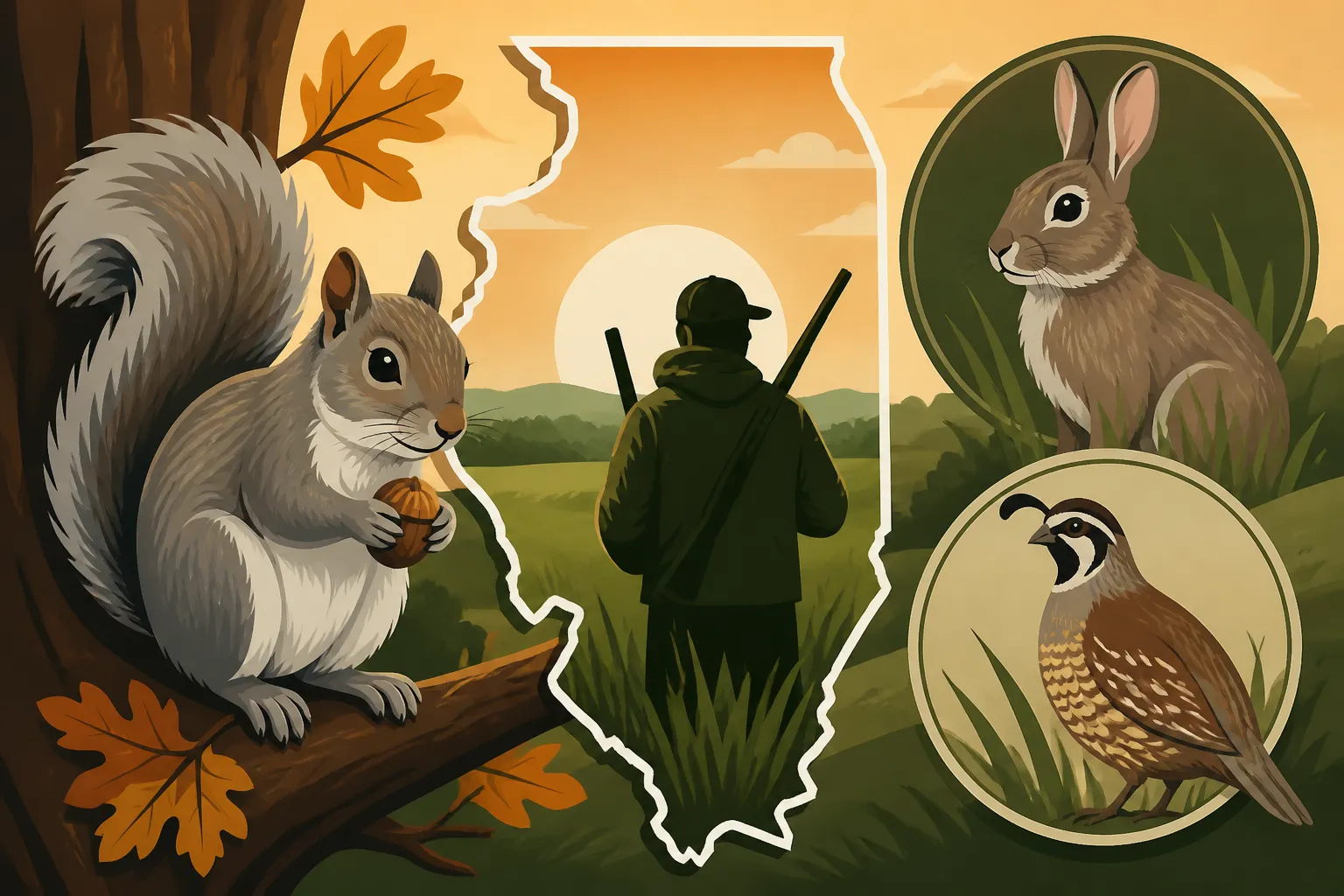
When most people think of squirrel hunting in Illinois, they're picturing either the Fox squirrel or the Gray squirrel, our two primary huntable species. Fox squirrels are the larger of the two, often sporting a reddish-brown coat with an orange belly. They prefer more open timber, often on the edges of agricultural fields or in smaller woodlots, where they can forage on the ground. You'll frequently find them in larger, mature oak and hickory stands, making use of the abundant mast crops. They tend to be a bit bolder and more curious, sometimes allowing a closer approach, but they are incredibly quick and agile when spooked.
Gray squirrels, on the other hand, are smaller, with a predominantly gray coat and a white belly. They thrive in denser, contiguous timber, especially in bottomland hardwoods and heavily wooded areas like those found along the Illinois River valley. Their habitat preferences mean they're often found in larger, more remote forest tracts. Gray squirrels are notoriously quick and can disappear into the canopy with surprising speed, making them a challenging target. Both species rely heavily on mast crops like acorns, hickory nuts, and walnuts, so scouting for these food sources is crucial. Successful squirrel hunting often involves locating these preferred habitats, whether it's the towering oaks of the Shawnee National Forest or the scattered hickory groves throughout the state.
Rabbits: The Elusive Brush Dwellers
The Eastern Cottontail is the main target for rabbit hunters in Illinois, and they are incredibly widespread. Cottontails are masters of camouflage and cover, preferring dense, brushy habitats such as fencerows, briar patches, abandoned farmsteads, tall grass fields, and creek bottoms choked with thickets. These areas provide both protection from predators and ample food sources like clover, grasses, and young shoots. Their populations tend to fluctuate based on habitat quality and weather, but generally, Illinois offers robust rabbit hunting opportunities.
Hunting rabbits often involves flushing them from their cover, which can be an exhilarating experience. They don't typically run far, often circling back to familiar territory, which makes them a fantastic species for hunters working with dogs or small groups. Unlike squirrels, which are often found high in trees, rabbits spend most of their time on the ground, utilizing dense undergrowth for security. Knowing their preferred bedding and feeding areas is key. Look for areas where fields meet woods, where old growth meets new, or anywhere you see tangled masses of briars and thickets. The more cover, the more likely you are to find rabbits. For example, focusing on areas with plenty of briar-choked fencerows, especially where they connect larger woodlots, can be incredibly productive for Rabbit Hunting Illinois Fencerows.
Other Upland Game Birds and Furbearers
While squirrels and rabbits typically steal the small game spotlight, Illinois offers other opportunities. Ring-necked pheasants are found primarily in the state's agricultural northern and central regions, with many being stocked birds on controlled hunting areas. Wild populations persist in pockets where suitable grassland habitat remains, though they've seen declines due to agricultural changes. Bobwhite quail, once abundant, have also experienced significant population declines across Illinois, though efforts are underway to restore their numbers. Hunting them requires specific habitat, often thick, brushy cover adjacent to open fields.
Crows, often considered pests by farmers, offer a challenging and fast-paced hunting experience, with open seasons and generous bag limits. They are incredibly intelligent and can be called in effectively with electronic calls. Additionally, various furbearers like raccoons and opossums can be hunted or trapped, particularly at night, providing opportunities for a different kind of small game pursuit. For those interested in more active predatory calling, coyotes are abundant year-round and can provide thrilling hunts, often overlapping with small game seasons. Illinois offers fantastic opportunities for Squirrel and Small Game Hunting in Illinois, even beyond squirrels and rabbits.
Key Seasons, Regulations, and Licensing for Small Game Success
Before you even step foot in the woods or fields, it's absolutely crucial to understand the regulatory framework governing small game hunting in Illinois. Ignoring these rules can lead to fines, permit revocation, and even loss of hunting privileges. The Illinois Department of Natural Resources (IDNR) website is your best friend here, always providing the most current information, but let's break down the general landscape.
Navigating Illinois's Small Game Seasons
Illinois offers some truly generous seasons for small game, providing ample opportunity from early fall well into winter. Squirrel season is often one of the first to open, usually in August, giving hunters a fantastic chance to get out before deer season kicks into high gear. This early start, when leaves are still on the trees, requires different tactics than late-season hunts after leaf fall. This season typically runs through early February. Rabbit season usually opens in November and extends through early February, offering exciting hunting opportunities during the colder months, especially after crops have been harvested and cover becomes more concentrated.
Pheasant and quail seasons generally open a bit later, typically in early November, and also run through the early part of January, with specific dates often aligning with rabbit season. It's vital to check the current year's Illinois Digest of Hunting and Trapping Regulations for precise dates, as they can shift slightly year to year. Certain public hunting areas may also have specific opening and closing dates or even require site-specific permits, so always verify before you head out. These extended seasons provide plenty of flexibility to plan multiple trips, making small game hunting a consistent part of your annual outdoor routine.
Essential Licenses and Permits
Every hunter in Illinois, regardless of residency, needs a valid hunting license. For Illinois residents, this means purchasing an Illinois Resident License Options. Non-residents will need to secure an Illinois Nonresident License Options. In addition to the base hunting license, all hunters 16 years of age and older are required to purchase an The Illinois State Habitat Stamp. This stamp directly funds vital habitat restoration and preservation efforts across the state, benefiting all wildlife. If you plan to hunt migratory birds, such as snipe or woodcock (which technically fall under small game, though less frequently pursued than squirrels or rabbits), you'll also need to register for the Harvest Information Program (HIP) certification.
Youth hunters, typically under the age of 18, often have specific rules regarding supervised hunting and may be eligible for apprentice licenses. Generally, anyone born on or after January 1, 1980, must complete an Illinois Hunter Education Requirements course before they can be issued a hunting license. This course covers firearm safety, wildlife identification, conservation ethics, and hunting regulations, ensuring that new hunters are well-prepared and responsible afield. The GoHunt platform can be a handy resource for checking current license requirements and even purchasing them online, streamlining the process so you can spend more time planning your hunt.
Legal Hunting Methods and Bag Limits
Illinois has clear guidelines on how small game can be pursued. For squirrels and rabbits, common methods include using shotguns (most popular gauges like 20ga or 12ga with shot sizes typically 6 or 7.5), .22 caliber rimfire rifles, and even air rifles. Archery equipment is also legal for small game. Using dogs, particularly beagles for rabbits, is a traditional and highly effective method. For pheasants and quail, shotguns are the primary weapon. It's crucial to understand the minimum legal bullet diameter for rifles if you choose to use one for deer hunting during overlapping seasons, but for small game, .22 rimfire is perfectly acceptable.
Bag limits are in place to ensure sustainable populations. For squirrels, the daily limit is typically 5, with a possession limit of 10. For rabbits, it's usually 4 daily and 8 in possession. Pheasant and quail limits are often 2 and 6 respectively. These limits are subject to change, so always consult the current regulations. Additionally, Illinois mandates specific How Much Blaze Orange Illinois Requires for hunters during certain seasons, primarily firearm deer season and pheasant/quail season, to ensure visibility and safety. Even if not strictly required for squirrel hunting outside of overlap, wearing some blaze orange is always a smart safety practice, especially on public land.
| Species | Typical Season Dates (Approx.) | Daily Bag Limit | Possession Limit | Legal Weapons (Common) |
|---|---|---|---|---|
| Squirrel | Aug 1 – Feb 15 | 5 | 10 | Shotgun, .22 Rifle, Air Rifle, Archery |
| Rabbit | Nov 1 – Feb 15 | 4 | 8 | Shotgun, .22 Rifle, Air Rifle, Archery |
| Pheasant | Nov 1 – Jan 15 | 2 | 6 | Shotgun |
| Quail | Nov 1 – Jan 15 | 8 | 16 | Shotgun |
| Crow | June 1 – Aug 31 & Oct 1 – Mar 1 | No Limit | No Limit | Shotgun, .22 Rifle, Air Rifle |
Note: Dates and limits are approximations and can change annually. Always verify with the current Illinois Hunting and Trapping Digest.
Choosing the Right Gear for Small Game Success
Having the right gear won't guarantee success, but it will certainly make your hunt more comfortable, efficient, and enjoyable. Unlike big game hunting that often demands specialized and expensive equipment, small game hunting can be done effectively with a relatively modest setup. The key is to choose reliable, appropriate tools that fit the specific type of small game you're pursuing and the conditions you'll encounter.
Firearms and Ammunition Choices
For squirrel hunting, many hunters favor a .22 caliber rimfire rifle. Its accuracy at typical squirrel ranges (25-75 yards) allows for precise headshots, preserving more meat and offering a quiet, ethical kill. Common choices include bolt-action or semi-automatic .22s from manufacturers like Ruger, Savage, or Henry. Pairing it with a good quality scope (2-7x or 3-9x magnification) will greatly improve your aim. Ammunition choices for .22s usually lean towards standard velocity or subsonic rounds for quietness, or high-velocity rounds for flatter trajectories. Alternatively, a shotgun, typically a 20-gauge or 12-gauge, loaded with 6 or 7.5 shot, is excellent for squirrels, especially when they're on the move in thicker cover. The wider pattern offers more forgiveness, but limits range.
Rabbit hunting often calls for a shotgun due to the fast-flushing nature of cottontails. A 12-gauge or 20-gauge, again with 6 or 7.5 shot, is ideal. The dense pattern helps connect with a rapidly moving target. For those who prefer a challenge or are hunting in very open areas, a .22 rifle can be used for rabbits, but it requires much quicker and more precise shooting. Air rifles, particularly powerful PCP (Pre-Charged Pneumatic) models, are also gaining popularity for small game due to their quiet operation and accuracy, especially in areas where firearms discharge might be restricted, or for backyard pest control. No matter your choice, always ensure your firearm is properly maintained, sighted in, and that you are proficient with it.
Apparel and Footwear for the Woods and Fields
Comfort and stealth are paramount when small game hunting. For squirrel hunting, especially in early season with leaves still on, camouflage clothing can be beneficial to help you blend into the timber. Later in the season, after leaf-fall, earth tones are sufficient. Layering is always a good idea, as temperatures can fluctuate throughout the day in Illinois. For rabbit and pheasant hunting, blaze orange is not just a safety recommendation but a legal requirement during certain periods (e.g., during firearm deer season overlap), so make sure you have enough to be visible. How Much Blaze Orange Illinois Requires is typically 400 square inches on your head, chest, and back. Look for briar-resistant pants or chaps, as you'll often be pushing through thorny thickets to flush rabbits.
Footwear is arguably the most critical apparel choice. You'll be doing a lot of walking, often through uneven terrain, mud, and possibly snow. Waterproof, comfortable boots with good ankle support are essential. Brands like Irish Setter, LaCrosse, or Muck Boots are popular among Illinois hunters for their durability and comfort. Avoid stiff, un-broken-in boots that will quickly lead to blisters. Think about the conditions you'll be hunting in – early season warmth, wet fall leaves, or cold, snowy winter days – and dress accordingly.
Essential Accessories and Field Tools
Beyond your firearm and clothing, a few key accessories will make your small game hunt much smoother. A good game vest or small backpack is invaluable for carrying your harvest, extra ammunition, water, snacks, and a small first-aid kit. A sharp, durable knife is essential for field dressing. Gloves can protect your hands from briars and sharp squirrel teeth. Binoculars (even compact 8×20 or 10×25) can help spot hidden squirrels or identify game in thick cover.
If you're using dogs, a GPS collar system like those from Garmin Alpha can be a lifesaver for keeping track of your hounds. For navigation, a handheld GPS unit or a smartphone app like GoHunt with offline maps is highly recommended, especially when exploring new public lands. GoHunt allows you to mark waypoints, track your path, and verify property lines, which is incredibly useful. Don't forget a compass and a physical map as a backup. A small squirrel call or rabbit distress call can also be a fun and sometimes effective tool to add to your arsenal, particularly when trying to locate wary animals.
Effective Strategies and Tactics for Squirrel and Rabbit Hunting
Small game hunting is rarely about sitting still for hours; it's a dynamic, engaging pursuit that demands constant attention, quiet movement, and an understanding of animal behavior. Whether you're patiently waiting for a bushytail or actively flushing a cottontail, having a solid strategy will greatly increase your odds of success.
Mastering Squirrel Hunting Techniques
The most common and often effective squirrel hunting technique is still hunting. This involves moving incredibly slowly through the woods, taking a few steps, then pausing for several minutes to listen and scan. Squirrels are often active early in the morning and late in the afternoon, especially on calm, overcast days. During your pauses, scan the tree trunks, branches, and the forest floor for any movement or "cuts" – the telltale pieces of nutshells dropped by feeding squirrels. After the leaves have fallen, identifying these cut zones becomes much easier. Focus on mature stands of oak, hickory, and walnut trees, as these provide crucial food sources. If you hear a squirrel barking or chattering, try to pinpoint its location and move stealthily towards it.
Another productive method is sitting. Find a spot with good visibility near active mast trees or along a known travel corridor, perhaps a logging road or a creek bottom. Sit quietly for 30-60 minutes, letting the woods settle down. Often, squirrels will emerge once they feel safe. Using a squirrel call can sometimes coax a hidden squirrel into revealing itself. The early season, when leaves are thick, makes spotting challenging, so listening for the rustle of leaves or the sound of nuts dropping is crucial. As the season progresses and leaves fall, visibility improves, making spotting easier but also making squirrels warier. Consider hunting after a light rain, as the damp leaves will muffle your footsteps, making your approach quieter.
Rabbit Hunting Methods: Dogs, Drives, and Stalking
Rabbit hunting is often a more active pursuit than squirrel hunting. The classic method, and arguably the most fun, involves using beagles or other rabbit dogs. These hounds are bred to track, flush, and chase rabbits, baying as they go, often circling the rabbit back towards the hunter. This requires hunters to position themselves strategically in areas where the rabbit is likely to circle. It's an incredibly social and exciting way to hunt, perfect for groups. When working with dogs, focus on areas with dense cover, briar thickets, and fencerows. Running Beagles on Illinois Cottontails is a time-honored tradition and one of the most effective ways to fill your vest.
For those without dogs, walking up or flushing is the primary method. Systematically walk through dense cover, kicking brush piles, circling briar patches, and moving through tall grass. Rabbits will often hold tight until you're nearly on top of them before bursting out. This can be physically demanding, so proper footwear and briar-resistant clothing are essential. Small drives with 2-4 hunters can also be effective. Designate one or two hunters as "blockers" positioned at likely escape routes, while others slowly push through a section of cover, moving rabbits towards the blockers. Always be mindful of your shooting lanes and the location of other hunters during a drive.
Reading the Landscape for Small Game Sign
Becoming proficient at small game hunting means learning to read the subtle clues the environment provides. For squirrels, look for cuttings – small pieces of nutshells, acorn caps, or mushroom stems on stumps, logs, or the forest floor. These indicate active feeding areas. Listen for the distinct sound of squirrels gnawing on nuts or running through leaves. Also, scan for squirrel nests (dreys) high in the trees, though squirrels often have multiple dens. The presence of mature oak, hickory, and walnut trees is a primary indicator of good squirrel habitat.
For rabbits, the sign is often found closer to the ground. Look for fresh tracks in mud or snow, particularly along fencerows, field edges, and near dense cover. Droppings, which are small, round pellets, also indicate their presence. More importantly, identify areas of thick cover – brush piles, fallen trees, briar patches, tall grass, and dense hedgerows. Rabbits rarely venture far from cover, as it provides them safety. Old, abandoned farmsteads with overgrown gardens and outbuildings can be rabbit havens. Pay attention to water sources as well, as these areas often have lusher vegetation that rabbits prefer. Using a mapping tool like GoHunt can help you identify these habitat features from aerial photos, allowing you to pinpoint potential hotspots before you even set foot on the property.
Finding Productive Small Game Hunting Spots in Illinois
One of the biggest challenges for any hunter, especially those new to an area, is finding good spots to hunt. Illinois offers a mix of public lands and private opportunities, each with its own benefits and considerations. Knowing where to look and how to gain access is paramount to a successful small game season.
Public Land Gems for Small Game
Illinois boasts a significant amount of public hunting land, ranging from sprawling national forests to smaller state fish and wildlife areas. The Shawnee National Forest in Southern Illinois is a massive expanse of timber that offers fantastic squirrel hunting opportunities, especially in its extensive oak-hickory stands. While known for deer, its vastness means there are always areas ripe for small game. However, these larger tracts can be physically demanding, with rugged terrain and elevation changes. For more detailed information on navigating this area, you might consult Reading a Ridge for Shawnee Forest Deer.
Closer to home for many, Illinois State Fish and Wildlife Areas (SFWAs) are often managed specifically for hunting and conservation. Many SFWAs stock pheasants and provide excellent rabbit habitat along their field edges and brushy tracts. You can use the Using the Illinois DNR Map Tool to locate SFWAs near you and check their specific regulations, as some may have unique rules or require site-specific permits. Popular choices include Jim Edgar Panther Creek State Fish and Wildlife Area, Wayne Fitzgerrell State Recreation Area, and Pyramid State Park. While these areas can experience hunting pressure, especially on opening weekends, deeper exploration or weekday hunts often yield great results. Remember that during certain big game seasons, small game hunting might be restricted or require additional blaze orange, so always check the site-specific rules before you go.
Navigating Private Land Permission
While public lands are accessible to everyone, gaining permission to hunt private land can often lead to less pressured hunting and more consistent success. Farmers and landowners in rural Illinois sometimes welcome small game hunters, especially if squirrels are damaging crops or rabbits are becoming a nuisance. The key is a respectful, well-prepared approach.
Start by identifying potential properties through aerial maps (GoHunt is excellent for this) and then approach landowners in person. Dress neatly, introduce yourself, and clearly state your intentions. Offer to share some of your harvest, help with chores, or assist with anything on their property in exchange for hunting access. Be sure to ask about specific areas where they'd prefer you to hunt or avoid. Always leave gates as you found them, respect fences, and clean up any trash. Building a positive relationship is crucial, as landowners are more likely to grant permission to someone they trust and who demonstrates respect for their property. Remember, Illinois trespass laws are strict, and you always need explicit permission to hunt private land. For more insights on this, you can look into Getting Private Land Permission in Illinois.
Identifying Prime Habitat: Woodlots, Fencerows, and Brush
No matter if you're on public or private ground, understanding prime small game habitat is your most powerful tool. For squirrels, focus on mature timber, particularly oak and hickory stands. These trees provide the mast (nuts) that squirrels rely on for food. Look for areas with a mix of tree ages and some downed timber, offering both food and cover. Creek bottoms and river bluffs often have excellent timber, as do larger, unbroken tracts of forest. Squirrel Hunting Illinois Hickory Groves can be especially productive, as these nuts are a favorite food source.
For rabbits, seek out edge habitat: where fields meet woods, where brush thickets abut open ground, or where abandoned fields are reverting to brush. Fencerows are classic rabbit magnets, providing cover, travel corridors, and food. Dense briar patches, overgrown ditches, and areas with brush piles offer rabbits the security they crave. These areas often attract a higher concentration of rabbits because they provide both escape cover and accessible food sources. Even small, isolated woodlots surrounded by agricultural fields can hold surprising numbers of rabbits and squirrels, often overlooked by hunters focused on larger tracts. Don't discount these smaller pockets of cover; they can be absolute gems for consistent small game action.
Ethical Considerations and Responsible Hunting Practices
Hunting is a privilege, not a right, and with that privilege comes a profound responsibility to uphold ethical standards and practice responsible conservation. Small game hunting, perhaps even more so than big game, provides an excellent opportunity to reinforce these principles, especially when introducing new hunters to the sport.
Respecting the Resource and Other Hunters
Ethical hunting begins with respect: respect for the animals you pursue, respect for the land, and respect for fellow outdoor enthusiasts. Always strive for a clean, humane kill. This means taking shots within your effective range and only when you have a clear, unobstructed view of your target. Avoid "sky-busting" or taking speculative shots that are likely to wound rather than kill. After a shot, make every reasonable effort to recover your game. Small game animals are often delicious, and wasting meat is a disservice to the animal and the hunting tradition.
When hunting on public land, be mindful of other users. Hikers, birdwatchers, and other hunters may be present. Maintain a safe distance, be courteous, and avoid encroaching on another hunter's setup. If you encounter other hunters, a friendly wave or brief, polite conversation goes a long way. Respecting posted property lines and knowing where you are hunting, perhaps with the help of a mapping tool from GoHunt, is non-negotiable. Trespassing, whether accidental or intentional, damages the public image of hunters and can jeopardize access for everyone. Be a good ambassador for hunting at all times.
Game Care and Field Dressing
Proper game care begins immediately after the harvest. The goal is to cool the meat as quickly as possible to prevent spoilage and ensure the best flavor. For squirrels and rabbits, this typically involves field dressing them shortly after the kill. This means removing the entrails, which helps the carcass cool down faster. Many hunters carry a small game shears or a sharp knife for this purpose.
Once field dressed, the animals can be placed in a game bag or cooler, especially if temperatures are warm. Avoid piling them up in a way that prevents air circulation. Back at camp or home, skinning and butchering can commence. There are numerous online tutorials and traditional methods for quickly skinning squirrels and rabbits. The quicker and cleaner you process your game, the better the final product will be. Utilize as much of the animal as possible, embodying the ethos of respecting the life taken.
Safety First: Firearms and Tree Stands
Safety is paramount in any hunting endeavor. For small game, this primarily revolves around firearm handling, but other considerations apply. Always treat every firearm as if it were loaded. Keep the muzzle pointed in a safe direction, keep your finger off the trigger until ready to shoot, and be absolutely sure of your target and what lies beyond it. When hunting with a group, establish clear zones of fire to avoid accidental injury. Wearing appropriate hunter orange, especially during times when big game seasons overlap or on high-pressure public land, significantly increases your visibility to other hunters, reducing the risk of being mistaken for game. Illinois Hunter Education Requirements is designed to instill these core safety principles in all new hunters, and even experienced hunters benefit from a refresher.
While tree stands are less common for small game, some squirrel hunters might use them to get an elevated view. If you do, always use a safety harness and follow proper safety procedures. Falls from tree stands are one of the leading causes of serious hunting injuries. For ground hunting, be aware of your surroundings, potential obstacles, and other people. Carry a first-aid kit, a fully charged phone, and let someone know where you are hunting and when you expect to return. Being prepared for the unexpected is a hallmark of a responsible hunter.
Disclaimer
The information provided in this guide is for general informational purposes only and does not constitute legal advice. Hunting regulations, seasons, and licensing requirements in Illinois are subject to change by the Illinois Department of Natural Resources (IDNR). It is the individual hunter's responsibility to consult the most current official IDNR Hunting and Trapping Digest or their website for up-to-date regulations before engaging in any hunting activities. Always prioritize safety and ethical hunting practices.