How Far to Walk From a Forest Road
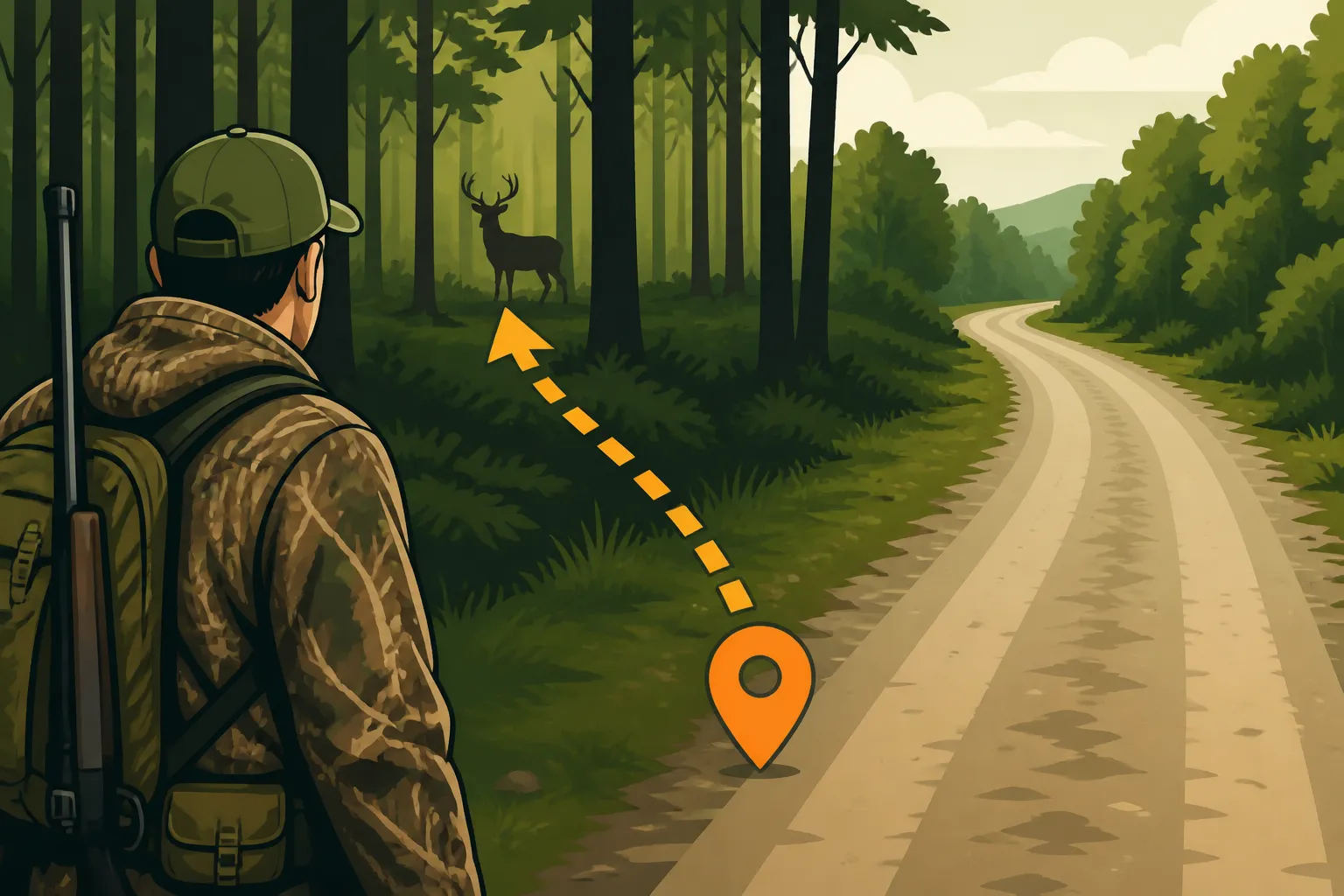
It’s a familiar sight on Illinois public land: truck after truck parked along a forest road, all within a quarter-mile of a trail or a clear cut. If you've ever felt like you're hunting someone else's leftovers, you're not alone. The truth is, deer, especially mature ones, often learn to avoid areas with heavy human activity. This guide will dive deep into understanding how far you truly need to walk from a forest road to find unpressured deer, and how to make that walk count, especially on those public land tracts that see a lot of boots on the ground.
The Invisible Pressure Line: Why Deer Go Deeper
Deer, particularly mature bucks and even older does, are incredibly adept at patterning human behavior. They quickly learn that the closer they are to roads, trails, and easily accessible points of entry, the higher their chances of encountering hunters. This isn't just a theory; it's a deeply ingrained survival mechanism that dictates their daily movements and bedding choices, especially once hunting pressure begins to build.
Think about it from a deer's perspective. Every sound, every smell, every visual disturbance emanating from a road or a well-worn trail is a potential threat. Over time, the deer that survive and grow old are the ones that have learned to associate these human incursions with danger. They adapt by moving into areas where they perceive less threat, creating an "invisible pressure line" that pushes them deeper into the woods, into thicker cover, or into more challenging terrain that most hunters simply won't bother with. This makes Hunting Pressure on Illinois Public Land a critical factor.
This doesn't mean deer are never near roads; young deer, or deer in areas with very little pressure, might be an exception. But if you're targeting older animals, understanding and respecting this pressure line is paramount. The goal isn't just to walk away from the road, but to walk beyond where most hunters are willing to go, finding those pockets of sanctuary that deer instinctively seek out. This often means embracing a more strenuous, less convenient approach, but it can pay off significantly when everyone else is seeing little more than tracks.
More Than Just Miles: Terrain and Habitat as Your Allies
While distance from a road is a crucial factor, it’s not the only piece of the puzzle. The type of terrain and the quality of the habitat you're moving through play an equally significant role in determining how far you truly need to walk to escape the crowds and find undisturbed deer. A quarter-mile through a dense, briar-choked swamp or up a steep, rocky bluff can be a far more effective deterrent to other hunters than a mile walk on a wide, flat logging road.
Consider the physical barriers and natural cover that might amplify the effect of your walk. Is there a creek you have to cross that most people won't wade through? Is there a particularly steep ridge or a dense cedar thicket that makes for challenging travel? These features act as natural filters, funneling other hunters to easier ground and leaving the tougher spots relatively untouched. Deer understand this dynamic intuitively, often bedding in these harder-to-reach pockets precisely because they offer a sense of security. Sometimes, just Reading a Ridge for Shawnee Forest Deer can point you to these secluded spots.
Furthermore, the quality of the habitat dictates where deer will want to be, regardless of pressure. If you're walking into an area with prime bedding cover, diverse food sources, and adequate water, deer will likely be there, and if that area is also difficult for humans to access, it becomes a sanctuary. Conversely, walking a long distance through open, sparse timber with little cover or food might get you away from people, but it won't necessarily put you on deer. It's about combining distance with strategic access to prime, less-pressured habitat.
Understanding the "Edge" Effect
When we talk about public land, especially around forest roads, we often see what's known as the "edge effect" in terms of hunting pressure. The first 100-300 yards from any easily accessible road or trail usually receives the brunt of the hunting activity. This is where most hunters stop, set up a quick stand, or do a short still-hunt. The deer know this. They'll often feed and move at night near these edges but retreat to deeper, thicker cover during daylight hours.
Your goal as a hunter looking for unpressured deer is to penetrate beyond this initial edge. This often means making a conscious decision to push deeper than what feels comfortable or convenient. It's not about being a marathon runner; it's about being strategic. Maybe that means going an extra 400 yards into a nasty tangles of multiflora rose and honeysuckle, or cresting one more ridge than most would. You might be surprised at the difference an extra 10-15 minutes of hard walking can make in terms of deer sign and actual sightings. It's about Finding Ground Others Walk Past.
This "edge" also applies to topography. Flat, open areas near roads are typically heavily hunted. Deer will gravitate towards draws, saddles, steep hillsides, or dense low-lying areas that offer security cover. Learning to identify these overlooked features on a map, even if they're not a vast distance from the road, can be just as effective as covering miles of flat ground.
Varying Your Distance by Public Land Type
The "how far" question is rarely a one-size-fits-all answer. It changes dramatically depending on the specific type of public land you're hunting in Illinois. A small state park, for instance, will likely require a different approach than a sprawling national forest. The overall size, the density of hunting pressure, and the availability of cover all play a role.
For instance, hunting a larger tract like Shawnee National Forest Hunting in Southern Illinois might demand a longer walk simply because of the sheer scale and the expectation of heavy pressure during firearm seasons. Here, a mile or more might be necessary to truly get away from the immediate road hunters. Conversely, a smaller state fish and wildlife area, while possibly still pressured, might have very specific unpressured pockets that are only a half-mile in, but require navigating dense wetlands or a particularly steep, rocky ascent. Illinois State Park Hunting often presents unique challenges due to size and varying regulations.
Understanding the typical hunting patterns for the specific public land you're on is key. Are there designated trails? Is it known for heavy waterfowl pressure that keeps deer moving? Does the terrain naturally funnel hunters in certain directions? All of these elements will influence your target distance and direction from the main access points.
| Public Land Type | Typical Terrain | Expected Pressure Near Roads | Suggested Minimum Walk Distance | Key Strategy |
|---|---|---|---|---|
| Shawnee National Forest (Large) | Rolling hills, bluffs, timber | High (especially rifle season) | 0.75 – 1.5+ miles | Climb ridges, cross creeks, use aerial maps |
| Illinois State Fish & Wildlife Area | Varied; often bottomland, dense | Moderate to High | 0.5 – 1 mile | Focus on thickest cover, wetlands, difficult access |
| Smaller State Parks (Limited hunting) | Varied, often fragmented | Moderate to High | 0.25 – 0.75 miles | Target isolated thickets, small draws, overlooked corners |
| River Bottoms (e.g., Illinois River) | Flat, dense, often wet | High (access often via boats) | 0.5 – 1.5 miles | Seek out islands, thick sloughs, less accessible areas |
Mapping Your Miles: Tools for Deeper Access
You wouldn't navigate a dense forest without a compass, and you shouldn't scout or plan a hunt without modern mapping tools. These technologies have revolutionized how we approach public land hunting, making it far easier to identify those hard-to-reach, unpressured areas away from forest roads. Digital mapping applications are no longer a luxury; they're an essential part of any serious public land hunter's toolkit.
Before you even step foot in the woods, these tools allow you to virtually "walk" the landscape, identifying potential pinch points, bedding areas, and overlooked sanctuaries that would be difficult or time-consuming to find on the ground. They help you visualize the terrain, understand elevation changes, and pinpoint barriers that might deter other hunters but also offer you an advantage. Learning to use them effectively can drastically cut down on wasted time and energy.
Moreover, these apps aren't just for pre-scouting. They're invaluable in the field, helping you track your distance, navigate unfamiliar terrain, and ensure you're pushing past those initial pressure points. They provide confidence that you're heading in the right direction and that your long walk is actually taking you to productive, less-disturbed ground.
Unleashing the Power of Digital Mapping Apps
Tools like onX Hunt have completely changed the game for public land hunters. No longer are you guessing where property lines are, or wondering if that thick patch of timber holds deer. With onX Hunt, you can:
- Identify Public/Private Land Boundaries: This is critical, especially when Hunting Small Private Tracts in Illinois or when public and private land are intermingled. You can see precisely where you can legally hunt, avoiding accidental trespass.
- Study Topography and Elevation Changes: The topographical maps and 3D views allow you to identify subtle dips, rises, saddles, and benches that might not be obvious on a flat map. These terrain features often dictate deer movement and can be key to finding unpressured pockets.
- Analyze Aerial Imagery: High-resolution satellite imagery is your best friend. You can pick out thick cover, natural funnels, potential bedding areas, water sources, and even subtle changes in vegetation that indicate different habitat types. This is essential for Reading Aerial Photos for Southern Illinois Deer or any timbered area.
- Mark Waypoints and Tracks: As you scout or hunt, you can drop pins for promising sign, potential stand locations, or even just to mark your truck. The tracking feature shows you exactly how far you've walked, allowing you to gauge if you've truly gone "far enough."
- Utilize Specific Layers: onX Hunt often includes layers for things like timber cuts, food plots (on some private lands), or even soil types that can tell you about potential food sources. For Illinois, layers showing wetlands, agricultural fields, or specific forest types are incredibly useful.
Before you even lace up your boots, spend hours with your chosen app. Virtually scout every inch of the public land you intend to hunt. Look for areas that are difficult to access, either due to distance, thick cover, or challenging terrain. These are your prime targets for finding unpressured deer.
Integrating Traditional Scouting with Modern Tools
While digital mapping is powerful, it's not a replacement for boots-on-the-ground scouting. Instead, it's a force multiplier. Use the insights you gain from onX Hunt or similar tools to direct your physical scouting efforts. For example, if your map shows a remote, dense cedar thicket a mile from the nearest road, that's where you focus your physical scouting. You might discover a hidden spring or an old logging road that isn't on the map, further refining your approach. Scouting Illinois Public Land Before Season is always recommended.
Another great way to use these tools is to mark other hunters' access points. If you consistently see trucks parked at a certain pull-off, you know that area will receive heavy pressure. Use your mapping app to then find an alternative, more challenging access point that leads to the same general area but circumvents the crowds. The beauty of these applications is their ability to continually update and adapt your strategy. Even advanced platforms like GoHunt can help you dissect game movement and pressure patterns.
During your physical scouting, pay close attention to the subtle signs of deer and other hunters. Fresh rubs, scrapes, and tracks tell you where deer are moving. Old blazes on trees, discarded flagging tape, or faint trails indicate previous human activity. Cross-reference these observations with your map. Are these signs where you expect them, or are deer using a totally different path to avoid human contact? This combination of technology and field experience is how you truly master hunting pressured public land.
Making the Long Haul Count: Strategies for Success
Deciding to walk further is only the first step; making that long walk effective is where the real skill comes in. It's not about mindlessly hiking for miles. It's about being efficient, quiet, and having a plan that maximizes your chances of encountering unpressured deer once you reach your destination. Every step from your vehicle should be part of a calculated strategy.
This means considering everything from your entry and exit routes to the gear you carry, and even your physical conditioning. A hunter who is exhausted and noisy by the time they reach their spot has likely negated much of the advantage gained by walking further. The goal is to arrive at your intended hunting area fresh, focused, and ready to hunt effectively.
Furthermore, success isn't just about the initial walk in. It's about how you hunt once you're there. Are you still-hunting, planning to sit a stand, or trying a mini-drive with a buddy? The strategy you employ after your long walk needs to be tailored to the unpressured nature of the area you've worked so hard to reach.
Strategic Entry and Exit Routes
Your path to and from your stand is almost as important as the stand location itself. On public land, especially when trying to get deep, you need to minimize your disturbance.
- Walk in the dark: If you're heading to a morning sit, get into the woods well before first light. Use a headlamp with a red or green light setting to preserve your night vision and be less conspicuous. The cover of darkness provides a cloak of invisibility that significantly reduces your chances of spooking deer on your way in. This also ties into being aware of Wind and Thermals on a Southern Illinois Ridge for morning movements.
- Use natural cover: Don't just walk a straight line. Utilize ditches, creek beds, thick fencerows, or dense timber to mask your approach. The more cover between you and potential deer bedding areas, the better. Your goal is to be as invisible and silent as possible.
- Mind the wind: Always, always, always approach your stand with the wind in your favor. A long walk against the wind might make sense for your physical comfort, but it will carry your scent directly into the areas you're trying to hunt, rendering your efforts useless. Plan your entry and exit routes based on the prevailing wind direction for that day.
- Vary your routes: Deer are smart. If you use the same path every time, they'll learn it. If possible, have multiple entry and exit routes for each stand location, allowing you to adapt to changing wind conditions or minimize repeated pressure on a single trail.
Remember, the moment you leave your vehicle, you are hunting. Your long walk is an extension of your hunting strategy, not just a means to an end.
Efficient Gear and Physical Conditioning
A longer walk inherently means carrying your gear further, so efficiency in what you pack and your physical ability to carry it are crucial.
- Lighten your load: Every ounce counts. Evaluate every item you carry. Do you really need it? Can you substitute a lighter alternative? A quality lightweight backpack, a minimalist stand, and essential tools are key. Consider things like water bladders instead of bulky bottles, or compact calls instead of multiple large ones. If you're Hanging a Stand on a Southern Illinois Ridge, you'll appreciate lighter gear.
- Layer your clothing: You'll be generating body heat during your walk, especially if it's strenuous. Layering allows you to shed clothes to avoid sweating on the way in, then bundle back up once you're on stand. Sweating excessively on the walk in not only makes you uncomfortable but leaves a significant scent trail.
- Stay in shape: This might sound obvious, but it’s critical. If you're huffing and puffing after a half-mile, you won't be able to push a mile or more effectively. Regular exercise, particularly cardio and leg strength training, will make those longer walks feel manageable and allow you to stay quieter and more alert when you arrive. Don’t neglect your physical preparation.
- Comfortable, quiet footwear: Invest in good quality, comfortable hunting boots that are broken in. Blisters or sore feet will quickly derail your resolve to walk further. Also, ensure your clothing and gear are quiet. Nothing ruins a stealthy approach like noisy zippers or rustling fabric.
The combination of smart gear choices and good physical conditioning means you can cover more ground with less effort and less disturbance, ultimately increasing your chances of finding that undisturbed buck or gobbler.
Hunting the Unpressured Zone
Once you've made the commitment and the long walk into an unpressured zone, how you hunt changes. Deer in these areas often behave differently than those constantly harassed near roads.
- Move slowly, observe constantly: If you're still-hunting, slow down to a snail's pace. Take five steps, then stop and scan for minutes. Use your binoculars more than your feet. Deer in these areas might not be as skittish as road-edge deer, but they're still wild animals. Look for subtle movements, a flick of an ear, or a horizontal line that breaks up the vertical lines of the forest. This is especially effective when Still-Hunting Southern Illinois Ridges.
- Be patient: You've made the effort to get deep; now let the woods work for you. Give the area time to settle down after your approach. If you're in a stand, be prepared for long sits. Deer that feel safe tend to move more naturally, and that might mean later in the morning or earlier in the afternoon.
- Call more aggressively (sometimes): In areas with low pressure, deer might respond better to calls. They haven't heard a thousand grunt tubes or rattling antlers, so they might be more curious. This isn't a hard and fast rule, but it's worth experimenting with calls in these deeper zones. Understanding Rattling and Grunting in Illinois techniques can be beneficial.
- Focus on bedding areas: Deer go deep for sanctuary, which means they're often bedding in the thickest, nastiest cover. If you're hunting an unpressured zone, try to set up on the downwind side of known or suspected bedding areas, or along the travel corridors leading to or from them. This is Where Shawnee National Forest Bucks Bed becomes crucial.
Remember, the goal of walking far is to get to where the deer feel safe. Once you're there, think like a deer. What would make you feel secure? What path would you take? By combining your effort with smart tactics, those long walks will lead to more rewarding experiences in the Illinois woods.
Disclaimer
This article is for general informational purposes only and does not constitute professional advice. Laws, prices and regulations vary by location and change over time. Consult a qualified professional for guidance on your specific situation.