Franklin County Public Land for Deer
Finding prime deer hunting ground can feel like a never-ending quest, especially when you're navigating the patchwork of public lands available in Illinois. Franklin County, nestled in the southern part of the state, presents a unique set of opportunities and challenges for the whitetail hunter, with its blend of agricultural fields, timber, and even some reclaimed mining lands. This guide aims to peel back the layers and give you a thorough understanding of what to expect and how to approach deer hunting on public land in Franklin County, helping you pinpoint those overlooked spots and increase your chances of success.
Understanding Franklin County's Deer Habitat
Franklin County offers a diverse landscape that, while perhaps not as famous as some of the "trophy belt" counties, holds a robust deer population for those willing to learn its nuances. It's not a monolithic block of timber; rather, it's a dynamic mix that influences deer movement and behavior in significant ways.
A Mix of Timber, Agriculture, and Reclaimed Land
When you look at a map of Franklin County, you'll immediately notice the distinct blend of habitat types. Large tracts of hardwood timber, often found hugging creek bottoms and higher ridges, provide crucial cover and bedding areas for deer. These timber blocks are interspersed with vast agricultural fields—corn, soybeans, and winter wheat are common—which serve as undeniable food magnets for much of the year. This creates classic timber-to-field patterns that deer hunters live for.
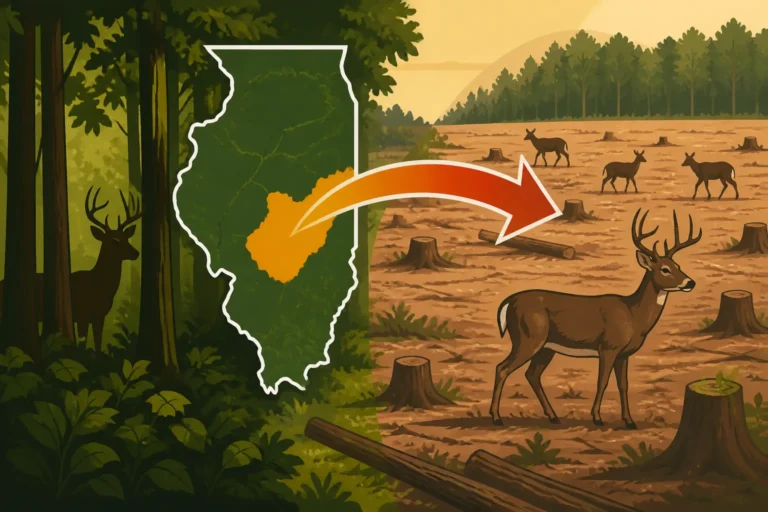
What truly sets some parts of Franklin County apart, however, is the presence of reclaimed strip-mined land. These areas, often characterized by brushy thickets, small ponds, and rolling hills, might look rough to the untrained eye, but they are absolutely goldmines for deer. The dense, thorny vegetation creates impenetrable bedding cover, offering deer sanctuary from pressure. The edges of these reclaimed lands, where they meet timber or agricultural fields, become natural travel corridors and feeding transition zones. Understanding these different habitat types and how they interact is the first step to unlocking Franklin County's potential. Deer will move from the security of thick cover in the reclaimed areas or deep timber to feed in the agricultural fields, especially during the low-light hours of dawn and dusk. Identifying these transition points and pinch points, where deer are funneled by topography or cover, is key to setting up an effective ambush.
Deer Density and Hunter Pressure in Franklin County
Franklin County maintains a healthy deer population, reflective of southern Illinois's overall whitetail abundance. You might not hear it mentioned in the same breath as some of the legendary big buck counties, but there are definitely mature deer roaming these woods. The deer density is generally good, supported by the ample food sources from agriculture and diverse cover from timber and reclaimed lands. This means you’re very likely to encounter deer if you put in the time and effort.
However, like any public land in a state known for its hunting, hunter pressure is a real consideration, especially during the firearm seasons. Weekends and opening days can see increased activity, pushing deer into thicker, more secluded areas. This isn't necessarily a bad thing; it just means your tactics need to adapt. Instead of hunting easily accessible field edges, you might need to push deeper into the cover or focus on areas that are harder to reach. The deer that survive the early season often become masters of evasion, utilizing the thickest tangles and overlooked corners. Knowing that others might be in the woods should inform your strategy: think about entry and exit routes that minimize disturbance, consider still-hunting through cover rather than just sitting a stand, and always be aware of your surroundings. Some of the reclaimed mining lands, due to their rugged terrain and thick vegetation, naturally deter less determined hunters, offering pockets of reduced pressure even during peak times.
Key Public Hunting Areas in Franklin County
When you're looking to hunt deer in Franklin County, there are a few standout public land tracts that should be on your radar. Each offers a slightly different experience and requires specific approaches to be successful.
Wayne Fitzgerrell State Park
Wayne Fitzgerrell State Park is arguably the most prominent public hunting area in Franklin County, encompassing thousands of acres around the northern reaches of Rend Lake. It's a massive complex that truly offers diverse hunting opportunities. The park features extensive timber blocks, ranging from mature hardwoods to younger stands, providing excellent bedding and travel corridors. These woods are often interspersed with managed open fields and agricultural plots, creating ideal food-to-cover scenarios. Due to its size and diverse habitat, deer are well distributed throughout the park.
Hunters here can expect a mix of tactics to work. Archery hunters will find success by Scouting Illinois Public Land Before Season and identifying key trails connecting bedding areas to feeding grounds. During firearm seasons, the park sees increased pressure, making it crucial to find those hard-to-reach pockets. Consider focusing on areas deeper within the timber, away from easy road access, or using natural barriers like creeks to get into less disturbed zones. Site-specific regulations often apply, so always check the latest IDNR rules for Wayne Fitzgerrell before heading out. They might have specific sign-in procedures, hunter quotas, or restricted access areas that are vital to know. The varying terrain around the lake can also create unique wind and thermal patterns, so pay close attention to how air currents might carry your scent.
Rend Lake State Fish and Wildlife Area
Adjacent to Wayne Fitzgerrell State Park, the Rend Lake State Fish and Wildlife Area (SFWA) offers additional public hunting acreage. While it shares some characteristics with the state park, it has its own distinct feel and hunting opportunities. This area is characterized by more extensive bottomland hardwoods, especially along the numerous fingers and coves of Rend Lake. You'll also find various fields, some actively farmed and others managed for wildlife, including native grasses and food plots. These diverse habitat types make it an excellent choice for a variety of hunting styles.
The bottomland areas, with their mix of mature trees and often dense undergrowth, are prime for deer during all seasons. These low-lying areas can act as natural funnels, especially where higher ground meets the floodplain or where small creek channels intersect. For example, Hunting Illinois River Bottom Funnels tactics can often be adapted for the creek bottoms and low areas surrounding Rend Lake, as deer will naturally use the easiest path through thick cover. Access can be a mix of well-maintained roads and more primitive trails. During wet periods, some areas might become difficult to traverse, which can actually work to your advantage by reducing pressure. Just like Wayne Fitzgerrell, it’s imperative to review the specific regulations for Rend Lake SFWA, as they can differ from statewide rules and change from year to year. You can generally find this information through the Illinois State Fish and Wildlife Areas resources provided by the IDNR.
Other Smaller Tracts and County Forests
While Wayne Fitzgerrell and Rend Lake are the giants, Franklin County also boasts a scattering of smaller public land tracts, some managed by the county or other state entities. These smaller parcels often get overlooked by hunters who gravitate towards the larger, more well-known areas, which can make them hidden gems. They might be just a few hundred acres, but a few hundred acres of quality deer habitat with less pressure can be more productive than thousands of acres saturated with hunters.
The key to finding these smaller tracts is effective mapping and scouting. Tools like onX Hunt or GoHunt are invaluable here. Their robust mapping features allow you to overlay public/private land boundaries, identify land ownership, and even view detailed aerial imagery. You can use these apps to zoom in on areas that appear to have good cover, water sources, and proximity to agricultural fields, then cross-reference with official IDNR maps. Remember to use features like onX Layers for Illinois Land Status to confirm public access. These smaller tracts might require more legwork to scout, as they often don't have extensive trail systems or marked parking. However, the reward can be significant: less competition, and potentially a more relaxed deer herd that sticks to more predictable patterns. Always double-check with the managing authority (county, state, or even local municipality) for specific hunting regulations on these smaller parcels, as rules can vary widely.
Strategies for Successful Deer Hunting in Franklin County Public Land
Public land deer hunting demands adaptability and persistence. In Franklin County's varied landscape, a strategic approach, considering the season and hunting pressure, will yield the best results.
Early Season and Archery Tactics
When Illinois's Bowhunting Illinois's Long Archery Season opens, Franklin County deer are often still in their relatively predictable summer patterns, focused on food and cover. During the early archery season, deer are heavily reliant on abundant food sources. In Franklin County, this means targeting stands of oak trees heavy with acorns, particularly white oaks, or transitioning to agricultural fields like soybeans or alfalfa. As these food sources change through the early fall, so too will deer patterns. Water sources are also critical, especially if it's a warm early autumn. Look for heavily used trails leading from bedding areas in thick timber or reclaimed land to these prime feeding or watering spots.
Setting up your stand or ground blind on pinch points—areas where deer movement is naturally funneled due to topography or changes in vegetation—can be highly effective. A ridge top saddle, a narrow strip of timber between two fields, or a creek crossing can all be excellent ambush locations. Scent control is paramount during these warmer early weeks; deer are not yet pressured and will easily detect foreign odors. Focus on quiet entry and exit, and consider using light grunt calls or estrous bleats sparingly, just to pique a buck's curiosity, as outlined in strategies like Grunt Calls in Mature Illinois Timber. Remember, deer behavior is often governed by consistency this time of year, so once you find a pattern, capitalize on it.
Firearm Seasons and Pressure Management
The firearm seasons, including Illinois's Two Firearm Deer Seasons, bring a dramatic shift in deer behavior due to increased hunter pressure. What was once a predictable travel route might become abandoned as deer seek refuge in the thickest, nastiest cover they can find. This is where truly understanding the terrain and embracing a more aggressive approach can pay off. Deer will often retreat to dense brushy areas, deep ravines, or the nearly impenetrable reclaimed mining lands. Your strategy should shift from ambushing deer along primary trails to actively pursuing them in these sanctuaries, or waiting them out on escape routes.
One effective tactic is to identify these high-pressure refuges and position yourself on the downwind side of escape routes or natural funnels that deer would use to flee. Deer drives, even with just Deer Drives With Three or Four Hunters, can be highly effective in pushing deer out of thickets and into waiting hunter’s laps, particularly on larger public tracts where multiple hunters can coordinate safely. However, if you're hunting solo, consider still-hunting slowly and deliberately through thick cover, paying attention to wind direction and using short bursts of movement. The key is to hunt where others won't or can't go, forcing deer to make a mistake in areas they thought were safe. Always be mindful of other hunters and wear plenty of blaze orange for safety.
Late Season Opportunities and Food Sources
As the season progresses into the late archery and muzzleloader periods, Franklin County deer are once again driven by a primal need for calories, especially as temperatures drop. Late-Season Food Sources for Illinois Whitetails become the absolute primary determinant of deer location. Remaining standing corn or soybean fields, brassica plots, or winter wheat fields become magnets for deer, drawing them out even during daylight hours. Green food plots, whether managed by the state or neighboring private landowners, will be particularly attractive.
Focus your scouting on identifying these prime late-season food sources and the thick thermal cover deer use for bedding nearby. South-facing slopes, which catch more sunlight and offer warmth, can be excellent bedding areas. Creek bottoms, with their dense undergrowth, also provide critical thermal protection. Cold-Weather Sitting Strategy in Illinois involves using insulated ground blinds for warmth, or investing in high-quality cold-weather gear for stand hunting. Deer will often move in the late morning and early afternoon to feed and soak up warmth. Hunters willing to brave the cold and patiently sit over these food sources, especially after a fresh snowfall, often find success when other hunters have packed it in.
Essential Tools and Considerations for Public Land Hunting
Hunting public land successfully in Franklin County, or anywhere for that matter, goes beyond just knowing where the deer are. It requires preparation, adherence to rules, and the right gear.
Navigating Public Land Boundaries and Access
The single most crucial tool for any public land hunter today is a reliable mapping app. With public and private parcels often bordering each other with invisible lines, accurately identifying Finding Illinois Property Lines is not just smart hunting—it's essential for legal hunting. Apps like onX Hunt or GoHunt use GPS to show your exact location relative to land ownership boundaries, preventing accidental trespassing and helping you confidently navigate unfamiliar terrain. Make sure to download offline maps before you head out, as cell service can be spotty in remote areas.
Beyond boundary lines, understanding legal access points is vital. Many public areas have designated parking lots or access roads. Vehicle Rules on Illinois Public Land often prohibit driving off marked roads or trails. Always look for official signage. Identifying hidden access points—perhaps a small pull-off that leads to a less-used trail—can get you into areas that see less pressure. Respect for the land is paramount. Pack out everything you pack in, avoid damaging vegetation, and leave no trace of your presence. This not only preserves the hunting opportunities for others but also demonstrates responsible stewardship.
| Public Hunting Area | Primary Habitat | Key Features | Typical Hunting Pressure | Access Considerations |
|---|---|---|---|---|
| Wayne Fitzgerrell State Park | Mixed Hardwood Timber, Managed Fields, Lake Shore | Large, Diverse Habitat, Extensive Trails | Moderate to High (Firearm) | Multiple Entrances, Site-Specific Permits, Boat Access Possible |
| Rend Lake State Fish & Wildlife Area | Bottomland Hardwoods, CRP, Agricultural Fields | Marshy Areas, Numerous Coves, Water Access | Moderate to High (Firearm) | Roadside Parking, Some Boat Ramps, May have Wet Areas |
| Smaller County/State Tracts | Varies (often pockets of timber, reclaimed land) | Less Defined Trails, More Remote | Low to Moderate | Often Limited/Informal, Requires Detailed Map Scouting |
Understanding Regulations and Permits
Illinois hunting regulations, especially on public land, can be intricate and vary significantly from statewide rules. It's not enough to simply have your general hunting license. Many public areas, including those in Franklin County, operate under site-specific regulations. This means checking the IDNR website or the specific site's regulations pamphlet is non-negotiable before each hunt. These rules can cover everything from legal weapons, hunting hours, specific season dates (which might differ from statewide), hunter quotas, and permit requirements. For example, some sites might require a "site permit" in addition to your Illinois Resident Deer Permit Options, often obtained through an online draw or available over-the-counter.
Pay close attention to reporting requirements too; Illinois has strict rules for checking in harvested deer. Misunderstanding or ignoring these specific rules can lead to serious legal trouble, fines, and even loss of hunting privileges. Always carry a copy of the site regulations with you, along with your license and permits.
Trail Cameras and Scouting Strategies
Pre-season scouting is a critical component of successful deer hunting, especially on public land. Before the season opens, dedicate time to physically walk the areas you intend to hunt. Look for deer sign like rubs, scrapes, tracks, and droppings. Identify natural travel corridors, bedding areas, and food sources. Reading Aerial Photos for Southern Illinois Deer through mapping apps can give you a fantastic overview, allowing you to pinpoint potential hotspots from home. Combine this digital scouting with boots-on-the-ground confirmation.
Trail cameras can be an invaluable asset for understanding deer movement patterns and identifying specific animals. However, Trail Camera Rules on Illinois Public Land can vary greatly by site. Some public lands prohibit them entirely, while others have strict rules about labeling, placement, and retrieval. Always verify the rules for your specific hunting area before deploying cameras. If allowed, focus on placing cameras near pinch points, water sources, or along heavily used trails leading to food. This intel will help you time your hunts effectively and confirm the presence of target animals. Even if cameras aren't allowed, simply walking the trails and observing fresh sign will give you a significant advantage.
Disclaimer
This article is for general informational purposes only and does not constitute professional advice. Laws, prices and regulations vary by location and change over time. Consult a qualified professional for guidance on your specific situation.