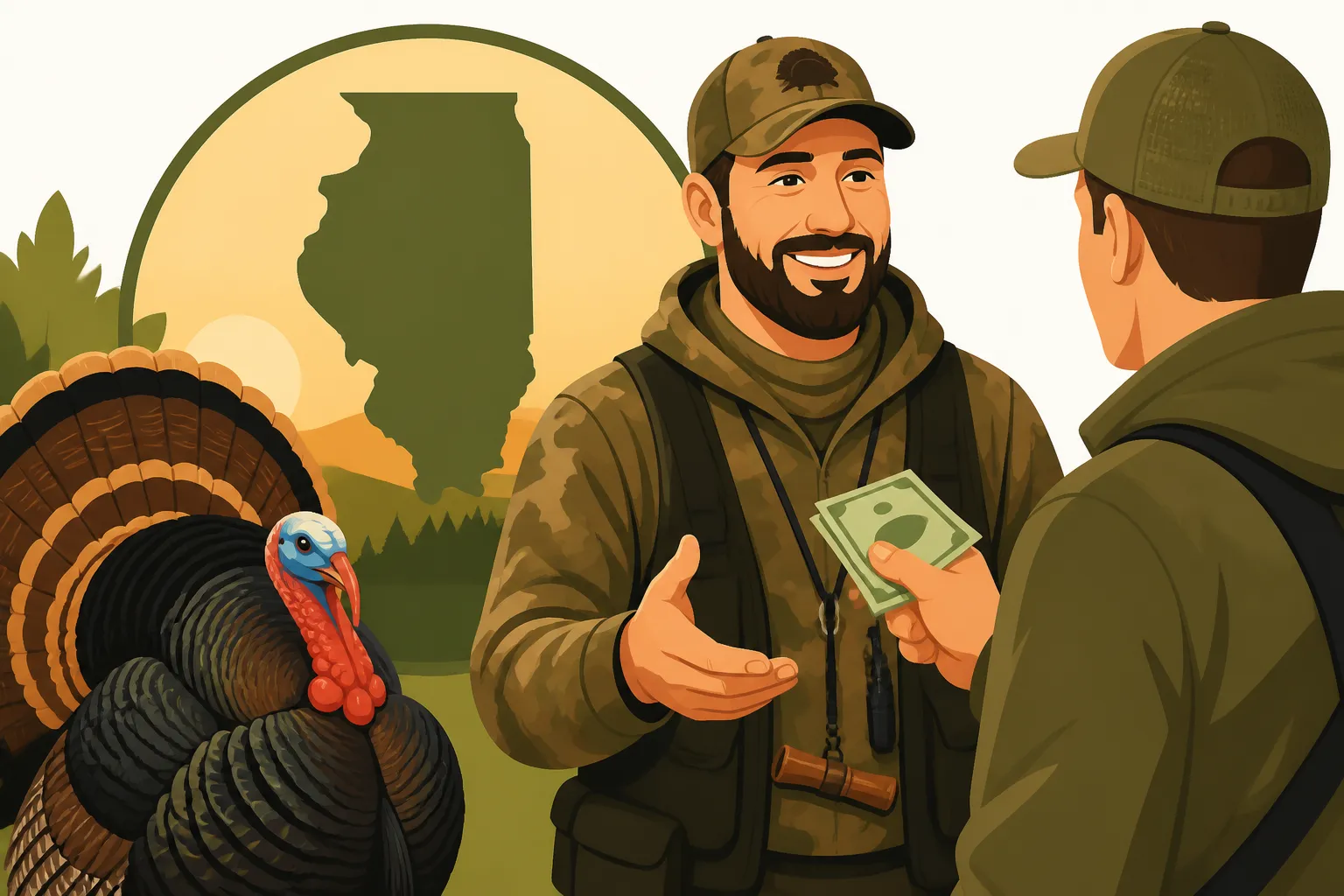
How Much to Tip a Turkey Guide
The excitement of a spring gobbler hammering on the roost or the thrill of calling in a fall flock can be an incredible experience, and for many hunters, especially those new to a specific area or new to turkey hunting altogether, a good guide makes all the difference. But once the hunt is over and the photos are taken, a question often pops into mind that can feel a little awkward: "How much should I tip my turkey guide?" It's a common confusion, and this guide aims to demystify the art of showing appreciation for the hard work that goes into a successful Illinois turkey hunt.
Why Tipping a Turkey Guide Matters
Let's be honest, turkey hunting isn't always glamorous. It often involves early mornings, long walks, mosquito bites, and plenty of patience. A good guide doesn't just show up; they've put in countless hours long before you ever set foot in the woods. Tipping isn't just a nicety; it's a fundamental part of the hunting guide industry, reflecting the value you place on their expertise, effort, and the overall experience they provide.
Understanding the Guide's Role
A turkey guide's job is so much more than simply walking you to a blind or making a few calls. They are essentially your concierge, your scout, your strategist, and often your therapist when the birds just aren't cooperating. Before you even arrive, they've likely spent days, if not weeks, scouting specific roost locations, identifying travel corridors, and monitoring bird activity. They've checked trail cameras, walked countless miles, and probably lost a fair bit of sleep thinking about how to put you on a bird.
Think about the effort involved in learning the nuances of a particular flock or the subtle changes in turkey behavior from one season to the next. They need to understand the terrain, predict weather impacts, and have backup plans for when the birds inevitably do something unexpected. They often have multiple properties to manage and dozens of hunters to cater to throughout the season. All this background work directly contributes to your chances of success and enjoyment, even if you don't see it happening firsthand.
The Investment Guides Make
Guiding isn't just a hobby; for many, it's a full-time profession or a significant seasonal income. Guides invest heavily in their trade, from equipment like calls, decoys, and blinds to maintaining their vehicles and securing access to prime hunting grounds. Many guides work tirelessly to cultivate relationships with landowners, ensuring consistent, quality hunting opportunities for their clients.
Beyond the tangible costs, there's the investment of time and expertise. Good guides are constantly learning, adapting, and refining their techniques. They've spent years honing their calling skills, understanding turkey vocalizations, and learning how to read the woods. This isn't knowledge you can just pick up overnight; it's earned through seasons of dedication. Your tip acknowledges this significant investment and helps sustain the quality of service for future hunters, potentially even for yourself if you plan to return.
Industry Norms and Expectations
When it comes to tipping, there isn't a universally mandated amount, which is why it can feel so awkward. However, there are well-established norms within the hunting industry that can serve as excellent guidelines. Understanding these helps you arrive at a fair and appropriate amount without feeling like you're guessing in the dark.
General Tipping Guidelines in Hunting
Across the hunting industry, whether it's for deer, waterfowl, or turkeys, a common guideline for tipping a guide typically falls within a percentage of the hunt's cost or a flat daily rate. This isn't set in stone, of course, but it provides a starting point for your calculations. Most hunters aim for a range that reflects their satisfaction and the guide's performance, much like tipping in the service industry.
It's important to remember that the guide's base fee often covers their time, access, and basic expenses. The tip is essentially a bonus for exceptional service, hard work, and going above and beyond. It’s a way to say "thank you" for the countless details they handle, from ensuring your safety to making that crucial last-minute call change that put a gobbler in range.
What Influences the Tip Amount
Several factors can and should influence the size of your tip. It's not just about whether you harvested a bird. While success is certainly a factor, a great guide can provide an incredible experience even if the turkeys are being uncooperative. Consider the effort they put in, the quality of their communication, and the overall atmosphere of the hunt. Did they adapt well to changing conditions? Were they patient and encouraging? Did they share valuable insights about Wild Turkeys in Illinois?
Think about the amenities. Was it a basic "guide-only" service, or did it include meals, lodging, and bird cleaning? The more comprehensive the service, the more hands are usually involved, and the higher the expectation might be for the overall tip pool. What a Guided Illinois Turkey Hunt Costs can vary greatly depending on these inclusions, so factor that into your thought process.
| Factor to Consider | Higher Tip Justification | Lower Tip Justification |
|---|---|---|
| Effort & Attitude | Guide worked tirelessly, positive, knowledgeable, adapted to conditions, went extra miles. | Guide seemed disengaged, minimal effort, poor communication. |
| Success | Successful harvest due to guide's direct efforts. | Unsuccessful hunt, but guide still gave 110%. (Still tip well!) |
| Services Beyond Hunt | Provided transport, cleaned bird, offered valuable scouting tips, excellent camaraderie, went out of their way. | Basic guiding, no extra services, strictly transactional. |
| Hunt Duration | Multi-day hunt with consistent dedication. | Shorter hunt, less demanding for the guide. |
| Overall Experience | Fun, memorable, educational, felt safe and well-cared for. | Unpleasant, felt unsafe, lacked professionalism. |
Factors to Consider When Deciding Your Tip
Deciding on the exact tip amount can feel like a bit of a balancing act. You want to be generous and show your appreciation, but you also need to be realistic about your own budget. The key is to weigh various aspects of the guide's performance and the overall experience.
Performance and Effort
It's easy to base a tip solely on whether you bagged a turkey. However, that's often an unfair metric. Turkey hunting can be unpredictable, and sometimes, despite a guide's best efforts, the birds just don't cooperate.
Did They Work Hard?
This is perhaps the most crucial factor. Did your guide put in the effort? Did they scout before you arrived, taking into account Illinois Turkey Population Trends and recent movements? Were they up before dawn, ready to go, and did they stay engaged until the very end of legal shooting hours? Did they try multiple tactics – aggressive calling, silent stalks, setting up on different Where Illinois Gobblers Roost? Even if the birds were tight-lipped, a guide who constantly adapted, moved you to different spots, and maintained a positive attitude deserves to be recognized for their dedication. Think about the physical demands on them as well, especially during a Run-and-Gun Turkey Tactics on Public Land scenario.
Success vs. Effort
Harvesting a turkey is a fantastic bonus, but it shouldn't be the sole determinant of your tip. If your guide called in multiple birds, put you in prime positions, and educated you on Calling an Illinois Gobbler Off the Roost or Decoy Placement for Pressured Illinois Birds, they've delivered value regardless of whether you pulled the trigger. Conversely, a guide who just dropped you off and disappeared, even if you somehow managed to get a bird, probably doesn't warrant the same tip as someone who was actively involved in every step of the hunt. An experienced hunter might even derive more satisfaction from a challenging hunt where the guide demonstrated superior woodsman skills, even if it didn't end with a bird.
Services Provided and Expectations Met
The scope of a guided hunt can vary wildly, from a bare-bones "guide only" service to an all-inclusive lodge experience. Your tip should reflect the range of services provided and how well those services met, or even exceeded, your expectations.
Amenities, Food, and Lodge Experience
If your guided hunt included lodging, meals, and other amenities, remember that there are often other staff members involved in providing that comfort. While your primary guide is the focus, a portion of the tip pool might indirectly benefit others, or you might consider separate tips for lodge staff, cooks, or cleaners. Were the accommodations comfortable and clean? Was the food delicious and plentiful? Did the overall lodge atmosphere make your trip more enjoyable? These details contribute significantly to the total experience and reflect well on the outfitter as a whole. Outfitters often list typical inclusions when you're looking at options on platforms like BookYourHunt.
Extra Services e.g., Bird Cleaning, Photos
Some guides go above and beyond, offering services that weren't explicitly part of the initial package. Did they expertly clean your turkey? Did they take fantastic photos to capture your memory? Did they help you transport your gear, or offer advice for your next hunt in a different Illinois Spring Turkey Zones and Periods? These "extras" are where a guide truly shines and demonstrates their commitment to client satisfaction. These gestures of goodwill are prime reasons to increase your tip beyond the standard percentage.
Your Budget and the Hunt's Overall Cost
While generosity is admirable, a tip should also be within your means. No guide wants a client to go broke showing appreciation. However, it's also important to understand that a guide's income often heavily relies on tips.
Balancing Generosity with Financial Reality
Before you even book a hunt, it's wise to factor in the tip when budgeting for the total cost. Most reputable guides or outfitters will be transparent about their expectations if you ask, and sites like GoHunt often have reviews where past clients discuss tipping. It’s always better to discuss this upfront if you have concerns. If your hunt was on the lower end of the cost spectrum, a slightly higher percentage tip might be appropriate, as a small percentage of a small fee can result in a very meager tip for hard work. Conversely, if you paid a premium for a high-end, all-inclusive package, the standard percentage will likely yield a very generous tip.
The Impact of Hunt Duration
A multi-day hunt often means more work for the guide, more scouting, more time away from their family, and a greater overall commitment. If you're on a Half-Day Versus Full-Day Turkey Guide Rates hunt, the daily tip might be different than for a longer trip. For instance, a Single-Day Turkey Guide Rates in Illinois hunt might warrant a slightly higher daily percentage to adequately compensate for the intense effort compressed into a shorter timeframe. For longer trips, the percentage might be consistent across days.
Practical Tipping Guidelines and Examples
Now for the nitty-gritty: how much money are we actually talking about? While there's no official rulebook, these guidelines are widely accepted in the hunting community.
Standard Percentages and Daily Rates
Most hunters use one of two methods to calculate their tip: a percentage of the hunt cost or a flat daily rate.
The Percentage-Based Approach
This is a very common and straightforward method. Most industry experts recommend tipping anywhere from 15% to 20% of the total hunt cost.
- 15%: This is generally considered a good, solid tip for a guide who provided competent service, worked hard, and met expectations. If you had a good time, the guide was professional, and the experience was positive, 15% is a respectful amount.
- 20%: This is for exceptional service. If your guide went above and beyond, showed incredible dedication, demonstrated superior knowledge, made the hunt truly memorable, or even helped you bag a trophy bird after an incredibly challenging hunt, 20% is a fantastic way to show your gratitude.
Example: If your guided turkey hunt cost $1,000 for a weekend, a 15% tip would be $150, and a 20% tip would be $200. This is a common range for What a Guided Illinois Turkey Hunt Costs.
The Daily Rate Approach
Some hunters prefer to calculate a flat daily tip, especially for shorter hunts or if the hunt package lumps in many other services. A common range for a daily guide tip for a turkey hunt is around $100-$200 per day.
- $100-$150/day: This is a good baseline for a guide providing solid, professional service.
- $150-$200+/day: This would be for guides who truly knocked it out of the park, perhaps on a Hunting an Early South Zone Turkey Period where conditions were tough, or they pulled off a miraculous call sequence.
Example: If you hunted for two days, a guide who put in good effort might receive $100-$150 per day, totaling $200-$300. An outstanding guide might receive $150-$200+ per day, totaling $300-$400+. This method can sometimes feel more direct, particularly for Run-and-Gun Turkey Tactics on Public Land where the guide's physical effort is paramount.
When to Deviate from the Norm
While these percentages and daily rates are good starting points, there are times when you might adjust them.
Exceptional Service or Tough Conditions
If your guide performed flawlessly under adverse conditions—think torrential rain, high winds, or extremely pressured birds—and still managed to keep spirits high and deliver opportunities, a higher tip is definitely warranted. Maybe they had to relocate multiple times, dealing with unexpected crowds on Opening Weekend Crowds on Illinois Public Land, or they showed incredible patience with a new hunter. That extra effort in challenging situations deserves extra recognition. Similarly, if they provided extensive education on Illinois Fall Turkey Season Rules or local turkey behavior, making you a better hunter, that's added value.
Subpar Experience (Rare, but It Happens)
It's rare, but sometimes a guide's performance might genuinely be subpar. This isn't about not harvesting a bird, but about a lack of effort, professionalism, safety concerns, or a negative attitude. If you feel the guide genuinely did not earn a tip, it's acceptable to offer less or even withhold a tip entirely, though this should be a last resort. Before doing so, consider discussing your concerns with the outfitter's management. Such instances are typically few and far between with reputable services found on platforms like BookYourHunt or GoHunt, but it's important to know you have that option. However, if the guide tried their best and the birds just weren't cooperating, a standard tip for effort is still the right thing to do.
How to Present Your Tip
The act of giving the tip can be as important as the amount itself. It should be a moment of sincere appreciation, not an awkward exchange.
Cash is King
Always try to tip in cash. It's universally appreciated, avoids any processing fees, and ensures the guide receives the full amount immediately. Place the cash in a sealed envelope and hand it directly to your guide at the end of the hunt, ideally when you're saying your goodbyes. This allows for a private exchange and avoids any discomfort.
A Personal Touch
As you hand over the tip, take a moment to genuinely thank your guide. A heartfelt "Thank you for an incredible hunt, I really appreciate all your hard work and expertise," goes a long way. Mention specific things you enjoyed or learned. This personal acknowledgment reinforces that you recognize their effort and that the tip isn't just a transaction, but a token of your gratitude. Remember, building rapport with a guide can be beneficial for future hunts, especially if you plan on booking Finding a Turkey Guide in Illinois again.
A Word on Outfitters and Other Staff
While your primary turkey guide is often the focus of your tipping consideration, it's important to remember that many guided hunts involve a team of dedicated individuals who contribute to your overall experience. Especially on all-inclusive trips, others play a crucial role.
Tipping Beyond Your Primary Guide
For larger operations, particularly those with a lodge or a more extensive support staff, it’s good etiquette to consider those who worked behind the scenes to make your trip comfortable and successful.
Lodge Staff and Cooks
If your hunt package included lodging and meals, there were likely cooks, housekeepers, and other lodge staff who ensured you had a warm bed, clean facilities, and delicious food after long days in the woods. These individuals work hard to make your stay pleasant. A general guideline is to have a separate "lodge staff" tip, often around $50-$100 for a multi-day stay, which can be given to the lodge manager to distribute or left in a designated tip jar. This shows appreciation for the entire team that contributed to your experience, from breakfast before you head out to chase birds for Illinois Turkey Hunting Hours to dinner after you're back.
Bird Cleaners and Drivers
Did someone clean your turkey after the hunt? Did a driver pick you up from the airport or transport you between hunting spots? These are often separate services or individuals who also rely on tips. If your guide didn't handle the bird cleaning or transportation, a smaller, separate tip of $20-$50 for these individuals is a thoughtful gesture, depending on the service provided. They're making your overall experience seamless, allowing you to focus on the hunting itself.
Group Hunts and Shared Tips
Hunting with friends can be a blast, but it can complicate the tipping process if not discussed beforehand.
Coordinating With Your Hunting Buddies
If you're on a group hunt with multiple people being guided by the same individual, it's best practice to coordinate your tips. Decide as a group on an appropriate amount (using the percentage or daily rate guidelines) and collect the money from everyone. One person can then present the combined tip to the guide on behalf of the group. This avoids awkward individual tipping, ensures a fair amount, and allows the guide to receive a single, substantial show of appreciation. It's often easier than having several people fumble for cash. Discussing this during your trip planning, perhaps when reviewing Questions to Ask Before Booking an Illinois Hunt or planning your travel, can save a lot of last-minute scrambling.
Conclusion
Tipping your turkey guide is more than just a financial transaction; it's a critical way to show respect for their profession, acknowledge their hard work, and express gratitude for the memories they helped create. By considering their effort, the services provided, and using the general guidelines of 15-20% of the hunt cost or $100-$200 per day, you can confidently offer a tip that truly reflects your appreciation. Remember, a good guide can turn a challenging hunt into an unforgettable adventure, and their dedication deserves to be recognized. The best tips are given with a genuine smile and a heartfelt thank you, ensuring that both you and your guide leave the field with a positive experience.
Disclaimer
This article is for general informational purposes only and does not constitute professional advice. Laws, prices and regulations vary by location and change over time. Consult a qualified professional for guidance on your specific situation.