Reading Illinois Mud for Fresh Deer Movement
You've just finished a scouting trip, maybe even put in a long, quiet morning on stand, but did the deer cooperate? The biggest challenge many Illinois hunters face isn't just finding deer sign, it's knowing if that sign is fresh. A track in the mud can tell you a story, but only if you know how to read the chapters. This guide will walk you through deciphering those muddy messages, helping you pinpoint exactly when and where deer are moving.
Decoding the Language of Deer Tracks in Mud
Finding deer tracks is one thing; understanding what they mean is another entirely. Mud, especially after a rain or during a thaw, is an incredible canvas for deer activity. Learning to read these imprints can be the difference between a wasted sit and an incredible encounter. It's not just about seeing a hoofprint; it's about seeing the story of that hoofprint.
The Tell-Tale Signs of a Fresh Track
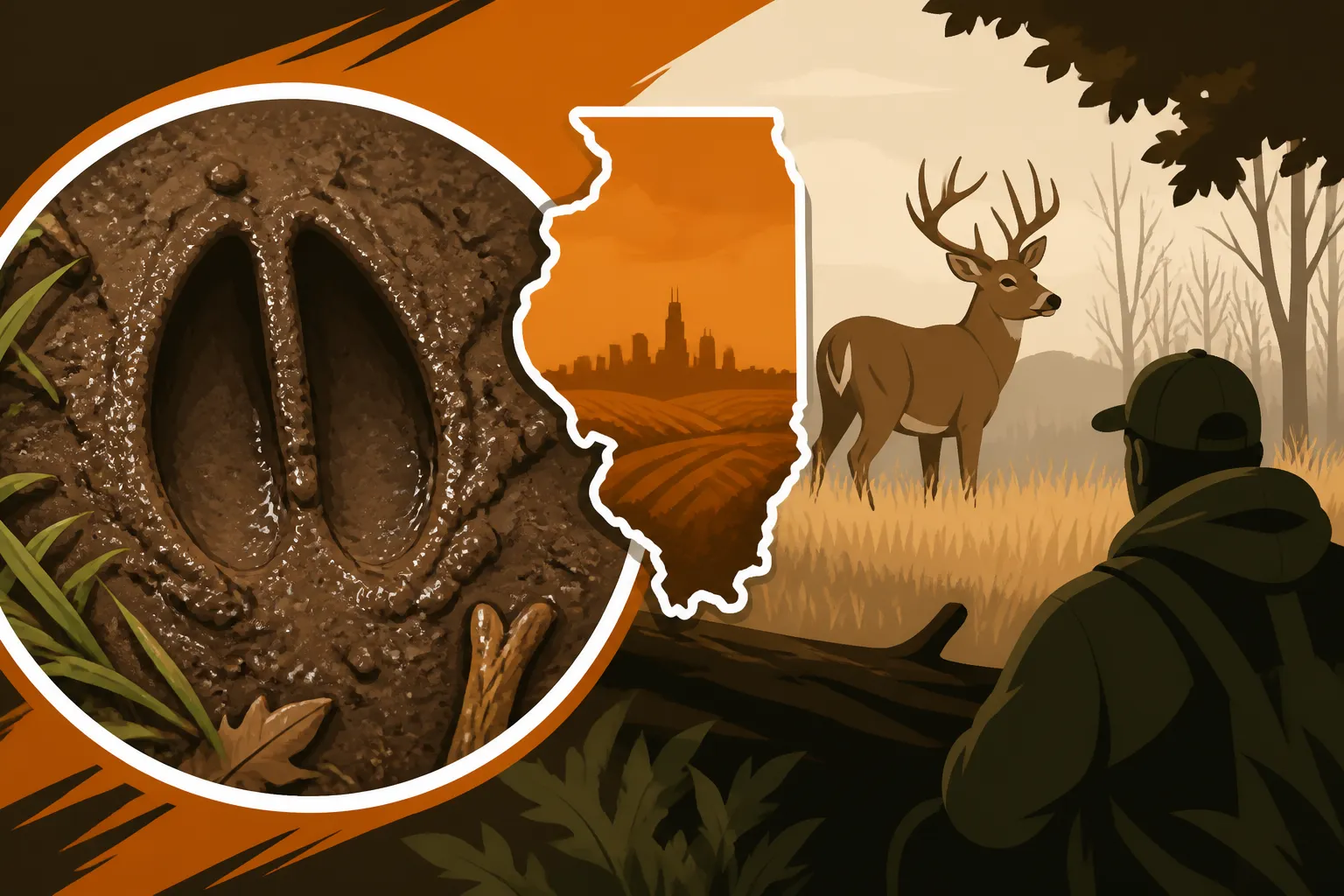
When you stumble upon a track in the mud, your first thought is always, "How old is this?" A truly fresh track has several unmistakable characteristics that practically scream "a deer was just here!" First, look at the edges of the print. A fresh track will have crisp, sharp edges, almost like it was pressed into soft clay just moments ago. There won't be any crumbling or drying around the perimeter. The displaced mud inside the track will often still look wet and glossy, especially if the ground is saturated. You might even see small flecks of mud still standing upright from where the hoof pulled out, or a thin film of water beginning to seep back into the deepest part of the print.
Contrast this with a track that's even a few hours old, and you'll see a noticeable difference. The edges will begin to lose their definition, becoming slightly rounded or crumbly as the mud dries. The displaced mud inside will start to dull, losing its wet sheen. This is particularly true in Illinois's typically fluctuating temperatures and often breezy conditions. Recognizing these subtle differences comes with practice, but focusing on those crisp edges and the appearance of the mud itself is your best bet for determining true freshness.
Distinguishing Buck from Doe Tracks in the Muck
Beyond freshness, every hunter dreams of deciphering if that track belongs to a mature buck or a smaller doe. While it's not always an exact science, especially with young bucks, mud can offer some excellent clues. Generally, mature buck tracks tend to be larger and more rounded, almost heart-shaped, compared to the more pointed or oval shape of a doe's track. Look for tracks that are noticeably wider and often deeper, indicating the greater weight of a buck. The dew claws (the two small, rear hooves) are also key. On a large, heavy buck, especially when moving at a quicker pace or through softer mud, those dew claws will often register in the print, appearing as two small indentations behind the main hoofprint.
Does and younger bucks are less likely to leave dew claw impressions unless they are running or in extremely deep mud. Another subtle indicator can be the "drag" mark. A large, heavy buck, especially when walking slowly and deliberately, might slightly drag its hooves, leaving a faint scuff mark in the mud directly in front of the main print. This is less common with lighter deer. Remember, these are guidelines, not rules set in stone, but when you combine multiple indicators – size, shape, dew claw presence, and even drag marks – you can start to form a strong hypothesis about the deer that passed through. As you're out scouting, consider using a tool like GoHunt to mark and analyze these distinct track locations, helping you build a pattern over time.
Mud as a Time Capsule: Weather's Impact on Track Freshness
Mud doesn't just record a deer's presence; it records the timing of that presence. The condition of the mud itself is directly tied to the recent weather, which in turn acts as a natural clock for how old a track truly is.
Rain, Moisture, and the Reset Button
Think of a good rain as pressing the "reset" button on all the deer sign in an area. Once the rain has stopped and the ground is saturated, any new tracks laid down are the freshest possible. If you find tracks immediately after a heavy downpour, and the tracks still look wet and defined, you know that deer was there very recently. However, the drying process begins almost immediately once the rain stops and the sun or wind appears.
A track left in soft, wet mud will begin to dry from the edges inward. The sun bakes it, and the wind pulls moisture away. In just a few hours, those crisp edges can soften, and the displaced mud can lose its sheen. If you're out Scouting Illinois Public Land Before Season, pay close attention to the weather forecast. Knowing when the last rain occurred and what the conditions have been like since can give you a remarkable advantage in aging tracks. For instance, if it rained hard last night and you find tracks this morning that are already showing signs of drying, you know that deer passed through hours ago, likely in the dark or at first light. If they're still pristine and wet, the deer might still be bedded nearby.
Temperature and Wind: Accelerating the Clock
Beyond rain, temperature and wind are huge factors in how quickly a track ages. A track laid down on a warm, sunny, windy day will dry out and lose its freshness much faster than one left on a cool, cloudy, still day. Imagine a muddy field on a brisk, sunny afternoon; tracks left in the morning could be almost dry and crumbly by evening. Conversely, a track in a shaded, damp creek bottom after a cool, misty night might stay looking fresh for a much longer period.
This is where understanding local microclimates can be invaluable. A track on an exposed, wind-swept ridge will age differently than one in a sheltered draw or a dense patch of timber. Consider the concept of Wind and Thermals on a Southern Illinois Ridge – these same atmospheric movements that dictate deer travel can also affect how quickly sign becomes "old." For example, if you're hunting in late fall, when temperatures hover just above freezing, tracks might retain their wet look for an entire day, especially in shaded areas. But if a warm front pushes through and the sun beats down, that freshness can vanish in a matter of hours.
| Feature | Fresh Track (0-6 hours) | Medium Track (6-24 hours) | Old Track (24+ hours) |
|---|---|---|---|
| Edges | Crisp, sharp, well-defined | Slightly rounded, minor crumbling | Faded, crumbly, indistinct |
| Inner Mud | Wet, glossy, displaced material stands up | Dull, drier, flattened | Dry, hard, blended with ground |
| Dew Claws | Clear, distinct impressions | Faded or absent | Absent or indistinguishable |
| Moisture | Visible moisture, soft to touch | Damp but firm | Dry, hard, cracked sometimes |
| Surrounding | Minimal debris, clear impression | Some debris, softening edges | Covered with debris, indistinct |
Beyond Hoofprints: Other Muddy Clues
While hoofprints are the most obvious indicators of deer movement in mud, they are far from the only ones. A truly observant hunter will look for the full spectrum of muddy clues to piece together the complete picture of deer activity.
Scrapes, Rubs, and Droppings in the Soft Earth
Deer don't just walk through mud; they interact with it. During the rut, you might find scrapes that are not just disturbed earth but clearly defined patches of churned mud, indicating recent pawing and urination. A fresh scrape in the mud, especially if it's still wet or glossy, is a potent sign that a buck was actively communicating his presence. The "licking branch" above it might also show signs of recent fraying or even mud transferred from the buck's mouth. Similarly, while rubs are typically on trees, you'll often find parallel mud trails leading to and from them, or even small patches of mud transferred from a buck's antlers to a sapling.
Droppings, too, can tell a story in the mud. Fresh deer droppings will be moist, dark, and often clumped, whereas older droppings will be dry, hard, and scattered. If you find fresh droppings pressed into the mud, still looking wet and undisturbed by insects or drying, it's a very clear indicator of recent activity. This is particularly valuable when you're focusing on Late-Season Food Sources for Illinois Whitetails, where deer are often congregated and leaving a lot of sign. These smaller, often overlooked details, when combined with hoofprints, paint a much more vivid picture of recent deer presence.
Bedding Areas and Muddy Approaches
Deer love security, and often that means bedding in thick cover or on specific terrain features. But even secure bedding areas can have muddy approaches or exits, especially after rain. If you find fresh tracks leading directly into a dense cedar thicket or a sheltered creek bottom, it's highly probable that a deer is bedded nearby, waiting out the day. These approaches often act as funnels, concentrating sign.
Look for patches of mud where deer have clearly paused or milled around, perhaps even laying down for a brief rest before moving into a more secure bed. These "loafing" spots, characterized by multiple overlapping tracks and disturbed mud, can be invaluable for identifying staging areas or pathways between bedding and feeding. Combining this muddy evidence with topographical maps on a platform like GoHunt can help you predict exactly Where Shawnee National Forest Bucks Bed or in similar large public land settings, allowing you to plan your approach with minimal disturbance.
Integrating Mud Sign with Your Hunting Strategy
Understanding mud sign isn't just an academic exercise; it's a crucial component of effective hunting strategy in Illinois. It helps you confirm travel patterns, optimize stand placement, and even aids in the critical task of recovering game.
Confirming Travel Routes and Funnels
Deer are creatures of habit, often using the same travel routes between bedding, feeding, and watering areas. These routes often become superhighways of deer activity, and after a rain, the mud turns them into undeniable corridors of sign. If you've been scouting a particular Hunting a Funnel Between Two Woodlots or an Entry Routes Through Standing Corn, fresh mud tracks are the ultimate confirmation that your hypothesis is correct. You can see not only that deer are using the funnel, but when they're using it, based on the freshness of the tracks.
Focus on pinch points, creek crossings, and field edges after a rain. These are natural locations where deer movement is concentrated, and thus, muddy sign will be most evident. If you find a series of fresh tracks heading from a known bedding area towards a specific food source, you've just identified a hot travel corridor. Mark these locations precisely with your GPS or a mapping app like GoHunt. This real-time, undeniable evidence of current movement is far more valuable than old, dried-up sign.
Optimizing Stand and Blind Placement
Once you've identified active travel routes and funnels through fresh mud sign, the next logical step is to optimize your stand or blind placement. Knowing exactly where deer are stepping, and how recently, allows you to set up with surgical precision. If you're considering a tree stand, look for a setup that gives you a clear shot along the freshest track lines. If you prefer Using a Ground Blind on Illinois Public Land, position it downwind of where the most recent muddy sign is found, ensuring your scent doesn't spook incoming deer.
For example, if you find fresh buck tracks consistently entering a soybean field from a particular corner during evening hours, that's your cue to set up a stand or blind covering that exact entrance, rather than a generalized field edge. This hyper-specific placement, guided by tangible, fresh sign, dramatically increases your odds. It takes the guesswork out of "where should I sit today?" and replaces it with "I know they were just here."
Tracking a Deer in Challenging Conditions
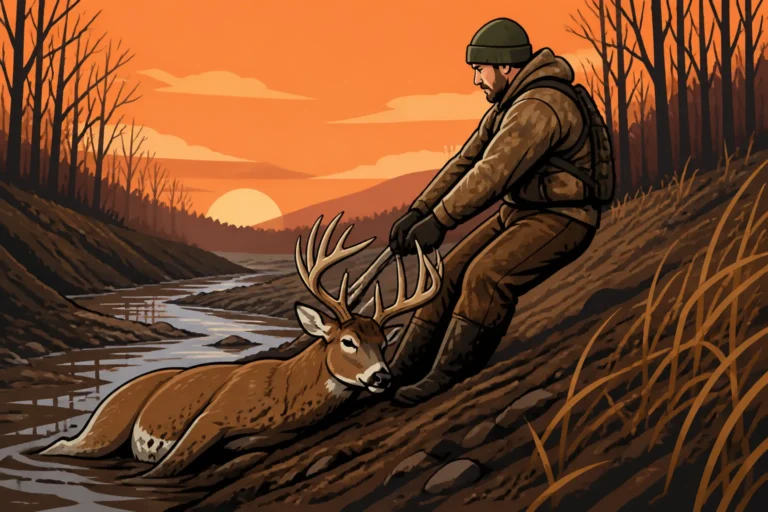
Perhaps one of the most critical uses of mud sign comes after the shot. If you've made a questionable hit, or are struggling to find a blood trail, mud can be your best friend for Tracking a Deer in Fresh Illinois Snow or even just mud itself. A wounded deer will often alter its gait, leaving a more erratic or pronounced track. The key is to slow down and meticulously follow every single print.
Look for subtle changes in the track – perhaps a wider splay, a deeper impression on one side, or even a scuff mark where the deer might be struggling. Even if blood is sparse, consistent tracks in mud can guide you, step by painstaking step, to your animal. Remember to note the direction of travel, and if the tracks appear labored, it's a strong indication of a wounded animal. This method is especially useful in dense cover where visibility is limited, as the disturbed earth becomes your only guide.
Disclaimer
Hunting is an inherently dangerous activity. Always prioritize safety, follow all Illinois Department of Natural Resources regulations, and obtain proper licenses and permits before heading afield. This guide provides informational tips only and should not replace professional guidance or personal experience. Be respectful of private land and practice ethical hunting principles.