Working a Creek Bottom for Late-Season Deer
When the Illinois deer season stretches into the late months, and the landscape turns stark and cold, many hunters find themselves battling increasingly wary deer and challenging conditions. Fields are cut, leaves are down, and deer movement often feels sporadic and unpredictable. It's a frustrating time when finding consistent deer activity can feel like an impossible puzzle. But there's a secret weapon that savvy hunters often turn to during this tough period: creek bottoms. These low-lying areas, often overlooked in the early season, transform into vital late-season havens for whitetails, offering a unique combination of necessities that can turn a slow hunt into a successful one. This guide will walk you through exactly how to effectively work these natural magnets for late-season deer in Illinois.
Why Creek Bottoms Become Late-Season Hotspots for Illinois Deer
Creek bottoms aren't just random ditches or drainage areas; they are complex ecosystems that provide critical resources for deer, especially when winter's chill sets in. The unique microclimates and vegetation within these areas make them indispensable when other parts of the habitat have little to offer. Understanding why deer flock to them is the first step in successful late-season hunting.
Unbeatable Cover and Thermal Protection
As the leaves drop from the trees and fields are harvested, much of the landscape loses its ability to conceal deer. Creek bottoms, however, often retain thick, dense cover year-round. Think about it: tangled briar patches, thickets of multiflora rose, honeysuckle, and cedars often thrive along these moist corridors. This dense undergrowth provides excellent visual cover, allowing deer to move with confidence, feeling less exposed to predators, including hunters.
Beyond visual cover, these depressions offer crucial thermal protection. The banks and surrounding vegetation create a natural windbreak, shielding deer from bitter winter winds. On those brutally cold December days in Illinois, a deer bedded down on a sheltered bank can retain body heat much more efficiently than one exposed on an open ridge. The slightly warmer air trapped in these depressions can make a significant difference in a deer's ability to conserve energy, which is paramount when food sources are scarce. This thermal advantage isn't just about comfort; it's about survival, making creek bottoms prime bedding locations.
Reliable Food and Water Sources
While deer need cover, they also need to eat and drink. In the late season, accessible food and water become critically important. Creek bottoms often harbor natural food sources that persist even after hard freezes. Browse like honeysuckle, green briar, and various woody stems can still be palatable and provide some nutritional value. Furthermore, agricultural fields adjacent to creek bottoms often offer residual grain after harvest. Deer will travel along the protected creek lines to access these food plots or cut fields, especially during the colder parts of the day. You might find them browsing on waste grain in a cut soybean field, for instance, after emerging from the thick cover of the creek bottom.
Perhaps most importantly, creek bottoms provide consistent access to water. While Illinois winters can freeze smaller puddles and even ponds, larger creeks often continue to flow, providing open water sources. Deer, like all animals, need hydration, and having a reliable water source within or directly adjacent to their bedding and feeding areas is a huge draw. This combination of protected movement, persistent browse, residual agricultural food, and readily available water makes creek bottoms an irresistible package deal for deer struggling through the challenges of late winter in Illinois. It's truly a one-stop shop for survival, concentrating deer activity in a predictable manner.
Scouting Your Illinois Creek Bottom for Success
Even with the knowledge that creek bottoms are prime late-season spots, you can't just wander into any old drainage and expect results. Effective scouting is crucial, both from your couch and with boots on the ground, to pinpoint the most productive areas. This focused effort will save you time and greatly increase your chances of success when you finally hit the woods.
Pre-Season Aerial Scouting and On-The-Ground Recon
Before you even step foot in the woods, the best scouting often begins with aerial maps. Tools like GoHunt's mapping features or other mapping applications are invaluable for identifying promising creek bottoms. Look for areas where the creek forms significant bends, creating larger pockets of timber or thick cover. Pay attention to where multiple drainages converge, as these can act as natural funnels. Identify sections where the creek bottom parallels crop fields or known late-season food sources like standing corn or oak groves that might still hold acorns.
Once you have some target areas, it's time for on-the-ground reconnaissance, ideally before the season, or at least before heavy hunting pressure sets in. Walk the creek banks, but don't just stick to the easy paths. Push into the thicker stuff. Look for subtle elevation changes, small benches, or inside corners of bends that offer natural bedding spots with good visibility downwind. Note any dense thickets of cedars or briars that provide exceptional thermal cover. This early scouting allows you to understand the terrain without disturbing current deer activity. When you're Scouting Illinois Public Land Before Season, focus on these types of features in creek systems. Identify potential stand trees or ground blind locations that offer good shooting lanes while remaining concealed. Pay close attention to entry and exit routes that allow you to get in and out undetected.
Interpreting Fresh Sign in the Cold
Late-season deer sign can be subtle, but in a creek bottom, it can be amplified. Once you're in season, or during specific scouting trips, look for fresh tracks in the soft earth along the creek bank, especially after a fresh snowfall. Reading Illinois Mud for Fresh Deer Movement can be particularly telling. Are the tracks heading to a specific food source? Are they entering and exiting a thicket? These patterns reveal travel corridors.
Beyond tracks, look for fresh rubs and scrapes. While the rut might be over, bucks will still make rubs, especially as they move between bedding and feeding, often just to release energy or mark their territory. Small scrapes might also appear, signaling recent deer activity. Droppings are another key indicator; fresh droppings near a thicket suggest a nearby bedding area, while numerous droppings near a food source confirm a feeding destination. If you find multiple fresh signs concentrated in a particular stretch of creek, you've likely found a late-season hot pocket. The colder it gets, the more deer will rely on these protected corridors, often pushing deeper into the thickest cover, so be prepared to put in the effort to find where they're truly hunkering down.
Strategic Hunting Approaches for Creek Bottoms
Hunting creek bottoms in the late season requires a nuanced approach. It’s not just about finding the deer, but understanding how they use the terrain and adapting your tactics to maximize your chances. The strategies you employ can make all the difference between seeing a deer and getting a shot.
Stand Placement for Different Scenarios
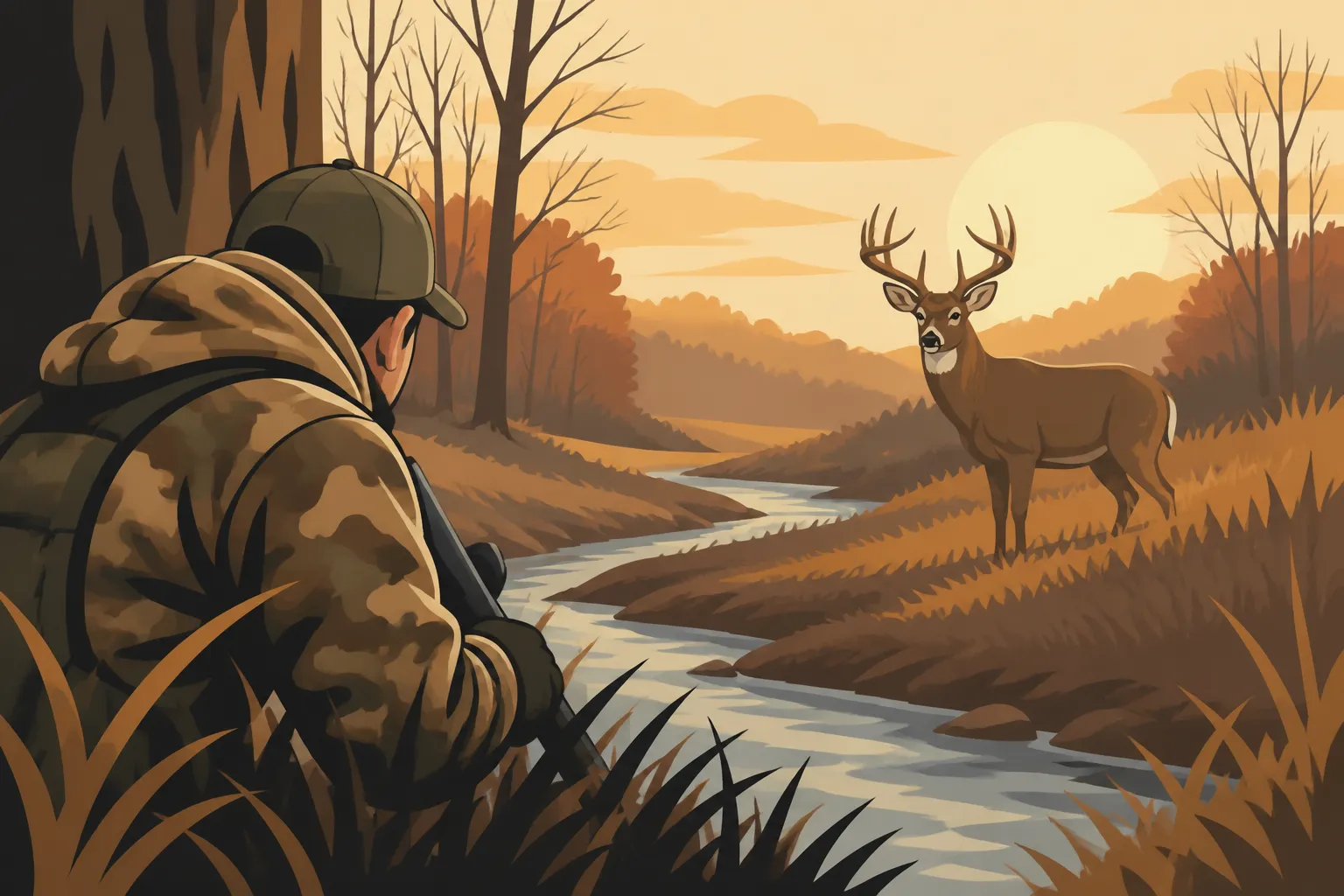
When you're ready to set up, careful stand placement is paramount. A common mistake is to set up directly on the creek bank. While this might seem logical for water access, deer often travel along the banks or slightly up the adjacent ridges, using the terrain to their advantage. Instead, consider setting your stand slightly off the main creek, perhaps on a small bench or a rise just above the bottom, overlooking a well-used trail. This often gives you a better vantage point without being right on top of their primary travel path.
Another effective strategy is to identify pinch points. These are areas where the creek bottom narrows, or where thick cover forces deer into a tighter corridor. A funnel created by a creek winding between two ridges, or a section where a fallen tree creates a bottleneck, can be an ideal spot. You want to place your stand where you can intercept deer moving through these natural funnels, whether they are heading to a Late-Season Food Sources for Illinois Whitetails or moving between bedding areas. Always consider prevailing winds and how your entry and exit routes will impact the deer in the area. Try to come in from a direction that keeps your scent out of the primary travel corridors and bedding areas.
Still-Hunting and Ground Blind Advantages
While treestands are effective, the dense cover of many creek bottoms also makes them perfect for still-hunting or using ground blinds, especially during the Hunting the Late-Season December Lull. Still-hunting involves moving slowly and deliberately, taking a few steps, then pausing for several minutes to scan for deer. Use the natural contours of the creek and the thick vegetation to your advantage, moving from cover to cover. This method is particularly effective when you suspect deer are bedded down in the thickets and you want to bump them gently or catch them moving between bedding and feeding.
Ground blinds are another excellent option, especially if you can set them up a week or two in advance to allow deer to get used to them. The natural brush and thickets along creek bottoms make it easy to brush in a pop-up blind, allowing you to stay warm, dry, and concealed. A well-placed ground blind near a consistent travel path or a small pocket of browse can be deadly. When you're Using a Ground Blind on Illinois Public Land, ensure you adhere to all regulations regarding blind placement and duration. The key is to blend in seamlessly with the environment and offer maximum concealment for a motionless hunter.
Mastering Wind and Thermals in Bottomlands
Understanding wind and thermals is critical in any hunting situation, but it becomes even more pronounced and complex in creek bottoms. Unlike open ridge tops where wind might be more consistent, creek bottoms create their own micro-thermals. In the mornings, as the sun begins to warm the ground, thermals tend to rise, carrying your scent up out of the bottom. In the evenings, as the air cools, thermals reverse and pull scent down into the bottom.
However, prevailing winds can override thermals, and the winding nature of a creek can cause currents to swirl. Always consult a reliable wind forecast, but also be prepared for localized changes. Use milkweed seeds, a puff bottle, or a simple string to constantly monitor wind direction. On cold, still mornings, a thermal rising out of a creek could allow you to approach from above. Conversely, a cold evening might mean your scent is pooling in the bottom, making an approach from higher ground risky. Sometimes, the best strategy is to set up on a crosswind, allowing deer to pass either upwind or downwind of your position without directly crossing your scent cone. Remember, in these tight corridors, Wind and Thermals on a Southern Illinois Ridge might behave differently than in a winding creek bottom, so constant vigilance is key.
Essential Gear for a Productive Late-Season Creek Hunt
Hunting late-season deer in Illinois, especially when working a creek bottom, means battling the elements as much as the deer. Being prepared with the right gear isn't just about comfort; it's about staying focused and safe, ensuring you can sit long enough for success.
Staying Warm and Dry
The late season in Illinois can be brutally cold, often with biting winds and the potential for snow or freezing rain. Layering is absolutely paramount. Start with a good moisture-wicking base layer to pull sweat away from your skin. Add a mid-layer for insulation, like fleece or down. Your outer layer needs to be windproof and waterproof, capable of shedding precipitation while trapping heat. Brands like Sitka, Kuiu, or even more budget-friendly options from Cabela's or Bass Pro Shops offer excellent cold-weather hunting apparel designed for these conditions. Don't forget a warm hat, a neck gaiter or balaclava, and heavily insulated, waterproof gloves or mittens. Hand warmers are also your best friend and can be placed in pockets or gloves for an extra boost of warmth, especially during a Cold-Weather Sitting Strategy in Illinois.
Footwear is another critical component. Insulated, waterproof boots are non-negotiable. Look for boots with at least 800-1200 grams of Thinsulate or equivalent insulation. Merino wool socks, worn in layers if necessary, will help keep your feet warm and dry. Consider bringing a small, portable seat cushion or a foam pad to sit on. Sitting directly on frozen ground or a cold stand platform will quickly sap your body heat, making it almost impossible to stay in the woods for an extended period. A hot thermos of coffee, tea, or even just hot water can also provide a comforting internal warmth.
Navigation and Recovery Tools
Navigating dense creek bottoms, especially in low light or unfamiliar territory, can be challenging. A reliable GPS device or a smartphone app like GoHunt with downloaded offline maps is essential. Mark your stand locations, potential bedding areas, and clear entry/exit routes. A headlamp or powerful flashlight is critical for getting to and from your stand in the dark, and make sure to carry extra batteries. If you're using a treestand, always wear a safety harness and be familiar with its use.
Should you be fortunate enough to harvest a deer, the recovery process in a creek bottom can be tough. The uneven terrain, thick brush, and potential for water crossings make dragging a deer a serious challenge. Consider bringing a quality game cart if the terrain allows, or at least a strong drag rope. A sharp knife, gutting gloves, and zip ties for tagging are standard. Finally, know your route out and be prepared to Tracking a Deer in Fresh Illinois Snow or through thick cover. Having a plan for field dressing and extraction, especially if you're hunting alone, will ensure a smooth and respectful recovery of your hard-earned venison.
Disclaimer
The information provided in this guide is for informational purposes only and is not a substitute for official regulations. Hunters are responsible for knowing and adhering to all current Illinois Department of Natural Resources (IDNR) hunting laws, rules, and regulations. Always prioritize safety and ethical hunting practices.