Southern Illinois Deer Density
It’s a common misconception that deer hunting in Illinois is all about vast, flat cornfields and easy trophy bucks. While the central and western parts of the state certainly have their reputation, Southern Illinois offers a completely different hunting experience, one that often leaves hunters scratching their heads about deer numbers. Many folks arrive in the rolling hills, eager to hunt the expansive public lands, only to wonder why the deer sign seems sparse or the hunting feels "tougher." This guide aims to shed light on deer density in Southern Illinois, helping you understand the unique challenges and opportunities this rugged, beautiful region presents.
The Unique Landscape of Southern Illinois and Its Impact on Deer Density
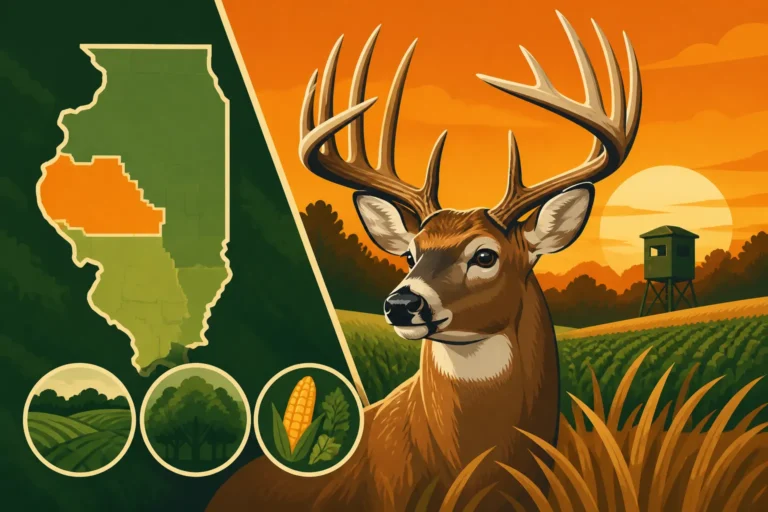
Southern Illinois is a world apart from the flat, fertile farmlands that define much of the rest of the state. Here, you'll find the northern reaches of the Ozark foothills, characterized by steep ridges, deep hollows, hardwood forests, and vast tracts of public land like the Shawnee National Forest Hunting. This topography, while stunningly beautiful, creates a different environment for white-tailed deer compared to the corn and soybean belt further north. Understanding this landscape is the first step to truly grasping deer density in the region.
The Influence of Terrain and Forest Cover
Unlike agricultural areas where deer thrive on abundant row crops, Southern Illinois deer rely heavily on natural browse, acorns, and other mast crops found within the extensive timber. The sheer amount of forest cover, especially in areas like the Hunting the Shawnee Hills Region, can give the impression of lower deer density, even if the actual numbers per square mile are respectable. Deer simply have far more places to hide, bed, and forage without crossing open fields. This makes them less visible to hunters and means they often don't concentrate in obvious "hot spots" in the same way deer do around standing corn.
The steep, rugged terrain also influences deer movement and distribution. Bucks and does alike often stick to the thickest cover on ridges and in deep creek bottoms, only venturing out into more open timber or food sources when conditions are right. You might find pockets of higher density around natural funnels, pinch points, or specific mast crops, but these are often localized, requiring keen scouting to pinpoint. Tools like GoHunt can be invaluable here, allowing you to examine topographical maps and identify potential travel corridors or bedding areas that might hold higher concentrations of deer.
Habitat Quality and Food Availability
The quality and availability of food sources are paramount to deer density. In Southern Illinois, the primary diet of deer comes from native browse, forbs, and the cyclical acorn crops from oak, hickory, and other hardwoods. While diverse, this natural food base can be less consistently abundant than the agricultural bounty found in central Illinois. A poor acorn year, for instance, can disperse deer widely as they search for alternative sustenance, making them seem scarcer.
Furthermore, specific habitats within Southern Illinois, like older growth timber or areas recovering from logging, offer varying degrees of forage. Regenerating clear-cuts or prescribed burn areas can initially provide excellent browse, attracting deer and boosting local density for a period. However, as these areas mature, their value as deer forage can diminish. Understanding these ecological cycles is key to predicting where deer might congregate. A good practice is to always be Scouting Illinois Public Land Before Season to understand the current mast crop and habitat conditions.
Decoding Deer Density: What the Numbers Mean for Hunters
When we talk about "deer density," we're usually referring to the number of deer per square mile or per thousand acres. However, this number alone doesn't tell the whole story, especially in a region as varied as Southern Illinois. For hunters, it's not just about the raw count, but how those deer are distributed and how that translates to huntable populations and opportunities.
Understanding Population Estimates Versus Harvest Data
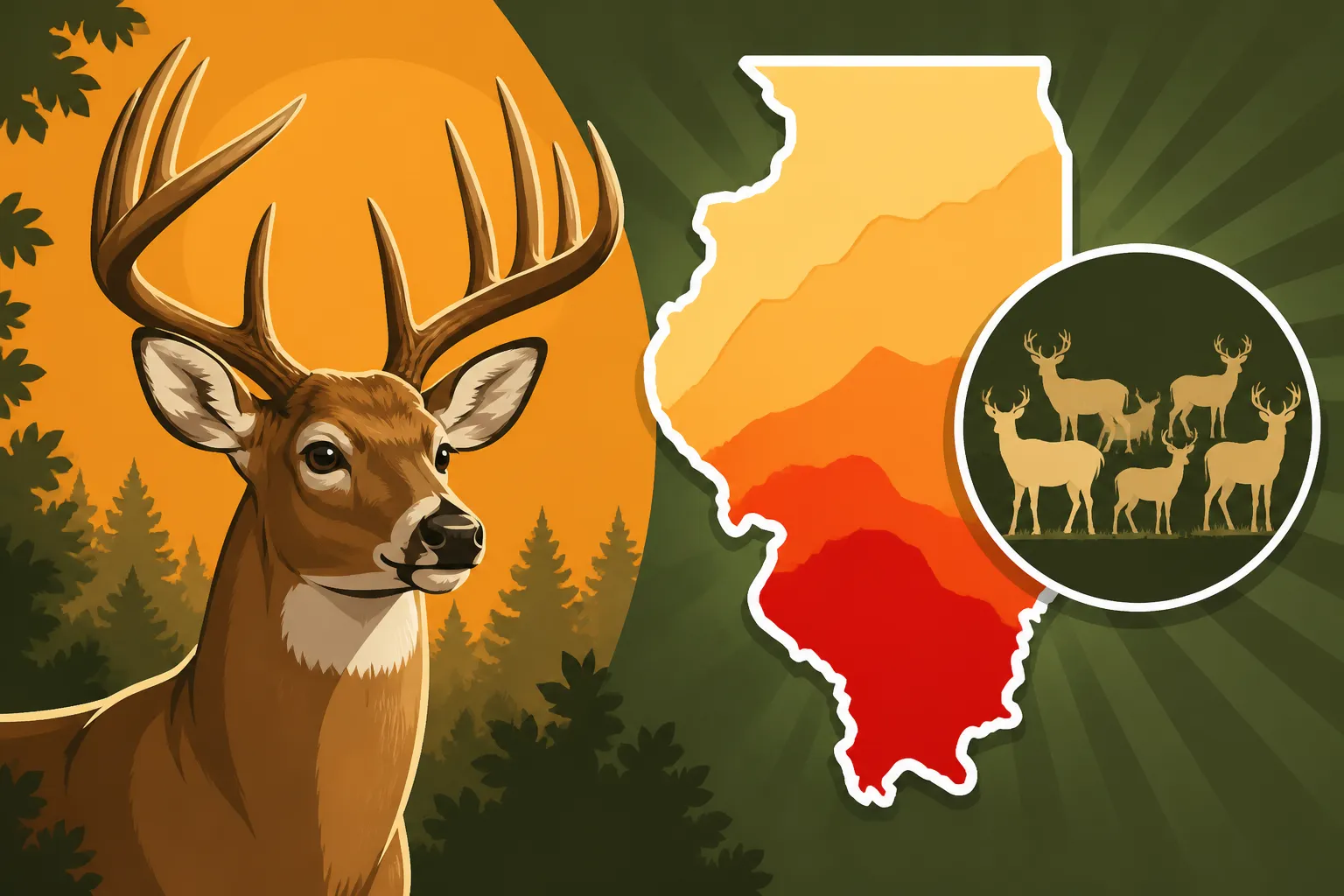
The Illinois Department of Natural Resources (IDNR) monitors deer populations through various methods, including spotlight surveys, aerial counts, and hunter harvest data. These estimates give biologists a broad understanding of the Illinois Deer Population Estimate across the state and help inform permit allocations. Southern Illinois generally has stable, healthy deer populations, but often at lower densities per square mile compared to the prime agricultural counties of West-Central Illinois.
Harvest data is another critical piece of the puzzle. Looking at Illinois Deer Harvest Records for specific Southern Illinois counties can provide insights into hunter success rates and overall deer presence. A county with a high overall harvest might indicate a robust deer population, but it could also signify high hunting pressure. Conversely, a lower harvest might mean fewer deer, or it could mean deer are simply harder to hunt due to habitat and terrain. This is where combining official data with on-the-ground scouting and local knowledge becomes essential. Just because a number is lower doesn't mean the quality of hunting isn't high for those willing to work for it.
The Nuance of "Huntable" Density
For a hunter, "deer density" isn't just a biological statistic; it's about the likelihood of encountering deer during a hunt. In Southern Illinois, even if the overall density might be lower than some other regions, pockets of "huntable" density often exist. These are areas where deer activity is concentrated due to specific food sources, bedding cover, or travel corridors.
Consider a mature oak ridge loaded with acorns, a thick cedar stand providing thermal cover, or a natural funnel between two steep hollows. These localized areas can have a much higher effective deer density for a hunter than the surrounding, more open timber. It's about finding these concentrations, which often means getting off the beaten path, away from easy road access and into the deeper woods. This is especially true for elusive bucks, as you might learn more about in resources discussing Where Shawnee National Forest Bucks Bed. Tools like GoHunt can help you visualize these pockets by layering public land boundaries with satellite imagery and topographic maps.
Key Factors Influencing Deer Populations in Southern Illinois
Several interconnected factors play a crucial role in shaping deer populations and their density across Southern Illinois. These aren't static elements; they change season to season, year to year, and understanding them helps in predicting deer movement and presence.
Habitat Fragmentation and Land Use
While Southern Illinois boasts large tracts of contiguous forest, even here, habitat fragmentation occurs. Road networks, small agricultural fields, suburban expansion around towns like Carbondale or Marion, and clear-cutting for timber production all impact how deer move and where they establish their core ranges. Less fragmented, larger blocks of timber tend to hold more stable and consistent deer populations, as deer feel secure and have extensive areas for breeding and foraging.
Conversely, areas with a mix of small woodlots and agriculture, even in Southern Illinois, can see deer concentrated on those edges, offering different hunting scenarios. This contrasts sharply with regions like Hunting Central Illinois Farmland Deer where agricultural patterns dominate. The checkerboard of public and private ownership also influences deer density and movement. Deer often seek refuge on private land adjacent to pressured public ground, creating challenges for public land hunters.
Predation and Disease Pressure
Coyotes are common throughout Illinois, including the southern region, and can exert some level of predation pressure on fawns. While not typically a primary limiting factor for healthy deer populations, especially in areas with good habitat, it's one piece of the ecological puzzle.
Disease, particularly Hemorrhagic Disease (EHD), can sometimes cause localized deer die-offs, temporarily reducing density in specific areas. While not as prevalent as Chronic Wasting Disease (CWD) in some northern counties, Southern Illinois is not immune. The Illinois's Chronic Wasting Disease Zone technically extends to some southern areas, though prevalence is much lower than in the northern CWD counties. Always be aware of local reports and guidelines from the IDNR regarding disease outbreaks.
Hunting Pressure and Hunter Access
Hunting pressure is a significant factor in how deer density "feels" to a hunter, even if the actual biological numbers remain stable. On popular public land areas, concentrated hunter presence can quickly push deer into thicker, less accessible cover. Deer become more nocturnal and wary, making them harder to locate during daylight hours. This can make a biologically moderate density area feel very low in huntable deer.
Areas with more challenging access—steep terrain, long walks in, or limited parking—often hold higher quality hunting experiences, as these deer are less pressured. This is where Reading Aerial Photos for Southern Illinois Deer and using mapping apps like GoHunt to identify overlooked pockets becomes invaluable. By finding those remote draws or ridges, you might discover areas of higher effective deer density, even if the overall county average isn't the highest in the state. Counties like Union County Public Land Access or Jackson County Public Hunting Access have vast tracts where getting away from the crowds is possible with effort.
Strategies for Hunting High-Density and Low-Density Areas in Southern Illinois
Regardless of the official deer density numbers, hunters in Southern Illinois can find success by adapting their strategies to the local conditions and understanding deer behavior in this unique terrain.
Adapting to Lower Perceived Density on Public Land
When hunting large public tracts, it’s easy to feel like the deer density is low because you’re simply not seeing many deer. The key here is not to give up, but to adjust your expectations and tactics.
1. Go Deep and Find Remote Pockets: Deer on public land in Southern Illinois often gravitate towards areas that are difficult to access. This means hiking further, navigating steeper terrain, or crossing creeks. Look for thickets, deep hollows, or isolated benches that other hunters overlook. These spots can concentrate deer and offer a higher "huntable" density. Utilize tools like GoHunt to mark potential remote bedding areas or less-traveled ridges where deer might feel secure.
2. Focus on Cover and Food Transitions: Even in heavily wooded areas, deer will gravitate towards specific food sources (especially acorns during mast years) or thick thermal cover. Scout for areas where different habitat types meet, such as where an old growth timber transitions into younger regeneration, or where a dense cedar thicket meets an oak flat. These transition zones often act as natural travel corridors. Wind and Thermals on a Southern Illinois Ridge will play a huge role in how deer use these areas, especially during cooler months.
3. Patience and Still-Hunting: Unlike hunting a field edge up north, still-hunting through the timber or sitting for long periods in carefully selected locations often proves more effective in Southern Illinois. Deer may move subtly through the dense cover. Being patient, quiet, and observant can lead to success where aggressive tactics might fail.
Maximizing Opportunities in Areas of Higher Density
While Southern Illinois isn't known for the ultra-high densities found in some agricultural counties, localized areas can certainly hold more deer. This might include river bottoms, areas adjacent to private land with food plots, or specific regions with exceptional habitat.
1. River Bottom Funnels: The major river systems like the Mississippi and the Ohio, and even smaller tributaries, create excellent deer habitat. River bottoms often have a mix of hardwoods, dense undergrowth, and agricultural fields, concentrating deer movement along natural funnels. Deer densities can be quite high in these areas, especially during rut, as bucks travel extensively along these corridors. Understanding Hunting Illinois River Bottom Funnels can be crucial here.
2. Scout for Concentrated Food Sources: When mast crops are abundant, deer will predictably gravitate towards them. A stand of white oaks dropping acorns can be a magnet for deer, temporarily creating a very high-density hunting area. Spend time scouting for fresh sign – droppings, tracks, rubs, and scrapes – around these food sources. Pay attention to how deer approach these areas, considering wind and cover.
3. Adjacent Private Land: Often, deer densities appear higher on private lands due to less pressure and often, intentional habitat management or food plot planting. While access can be challenging, identifying public land boundaries adjacent to prime private parcels can provide excellent hunting. Deer will often cross these boundaries, particularly during nighttime or at dawn and dusk. Using mapping tools to identify these interfaces can be a game-changer.
Here's a quick comparison of general deer density characteristics you might observe in different Southern Illinois environments:
| Feature | Typical Terrain / Habitat | Perceived Deer Density | Hunter Strategy Implications |
|---|---|---|---|
| Shawnee National Forest (Deep Woods) | Steep ridges, deep hollows, extensive hardwoods, thickets | Moderate to Low | Hike deep, find remote pockets, focus on thick cover/mast |
| River Bottoms (e.g., Mississippi/Ohio) | Floodplains, mixed hardwoods, swamps, adjacent agriculture | Moderate to High | Identify funnels, hunt near water, seek transition zones |
| Mixed Public/Private Land Edges | Small woodlots, fields, creek drainages, adjacent private | Variable (can be high) | Focus on boundary crossing points, evening field edges |
| Regenerated Timber (Recent Cuts) | Thick browse, dense young growth, some older timber | Can be High (localized) | Hunt edges of thickets, trails through regeneration |
By thoroughly understanding the unique characteristics of Southern Illinois deer density, and applying adaptive strategies, hunters can turn what might initially seem like a sparse deer woods into a rewarding hunting experience. The challenges here aren't about a lack of deer, but about deer distribution and adapting to their habits in a truly wild and beautiful landscape.
Disclaimer
This article is for general informational purposes only and does not constitute professional advice. Laws, prices and regulations vary by location and change over time. Consult a qualified professional for guidance on your specific situation.