Why Illinois Treats Hogs as Unprotected
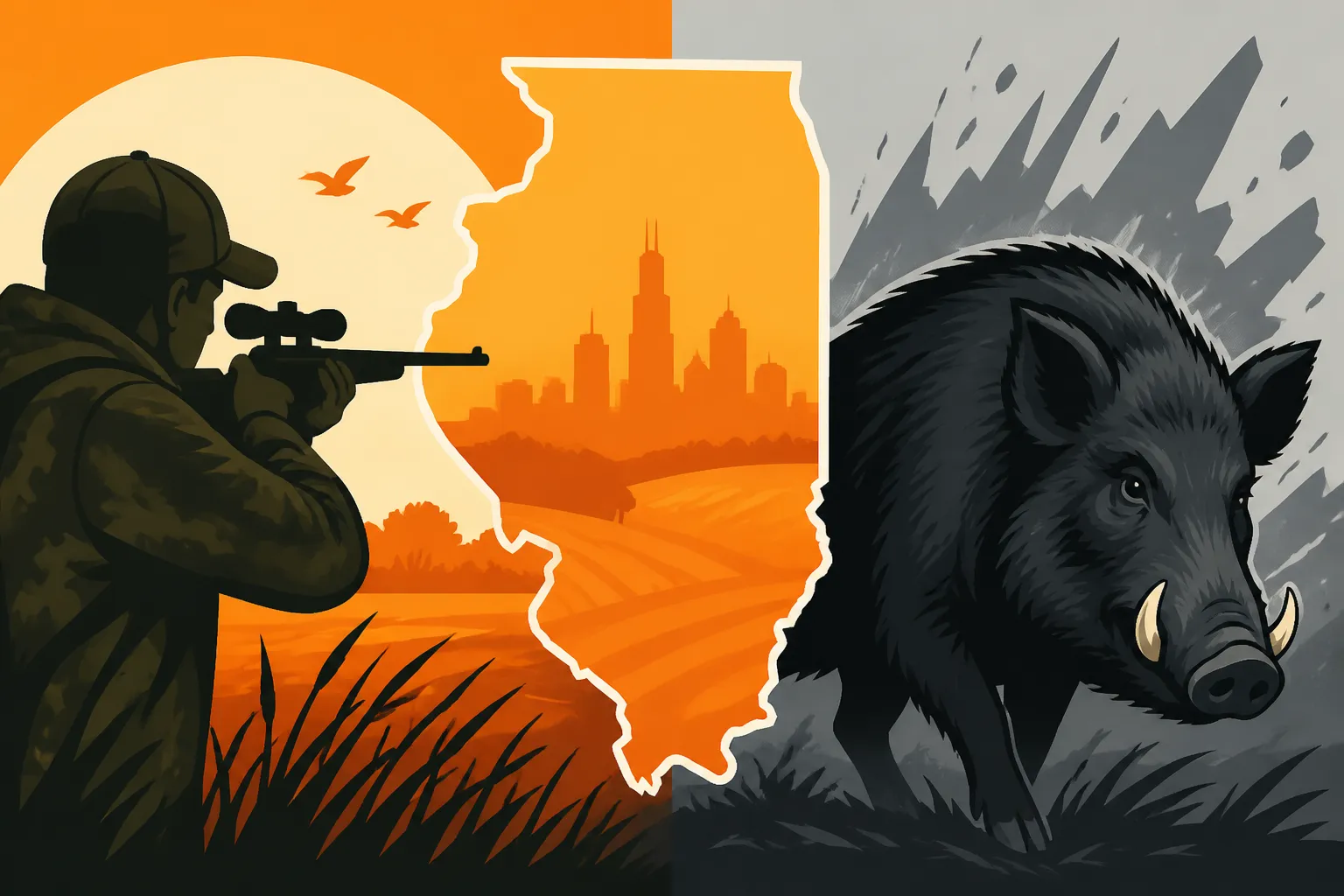
Navigating the world of hunting regulations in Illinois can sometimes feel like trying to untangle a particularly stubborn knot, and few topics raise as many eyebrows or prompt as many questions as feral hogs. Many hunters are accustomed to strict seasons, bag limits, and specific permits for game animals, so when they hear that wild pigs are considered "unprotected," it can be genuinely confusing. This guide will cut through that confusion, explaining precisely why Illinois has taken this unique stance on feral hogs and what it means for anyone looking to help manage this invasive species.
The Feral Hog Problem in Illinois: More Than Just a Nuisance
Let's be real, when you first hear about wild hogs, you might picture something exciting, a challenging hunt. But the truth in Illinois, and across much of the country, is far less romantic. Feral hogs are an ecological and agricultural disaster, and their presence is a problem that the state is actively working to eradicate, not manage for sport.
Understanding the Destructive Nature of Wild Pigs
These aren't your grandpa's barnyard pigs, though they descended from them. Feral hogs are incredibly destructive, and their impact on the Illinois landscape is devastating. Picture a field of freshly planted corn, then imagine a sounder of pigs moving through it, rooting up everything in their path. They're not just eating; they're actively tilling the soil with their powerful snouts, seeking out roots, tubers, and invertebrates. This rooting activity destroys crops, degrades natural habitats, and causes massive erosion, especially along streambanks and in wetland areas. Farmers can face significant economic losses from a single night of hog activity.
Beyond agricultural damage, their wallowing habits, which help them cool down and shed parasites, create muddy pits that destroy native plant communities and contaminate water sources. It's a double whammy for local ecosystems. But perhaps even more insidious is their role as disease vectors. Feral hogs can carry and transmit a host of serious diseases, including pseudo-rabies (PRV), swine brucellosis, leptospirosis, and even E. coli, posing risks to domestic livestock, wildlife, and potentially humans. Imagine the threat this poses to a healthy deer herd or a local cattle operation. They also directly compete with native wildlife, like deer, turkeys, and squirrels, for vital food resources, putting further strain on already challenged populations. The impact is far-reaching and incredibly costly.
How Wild Hogs Spread Across Illinois and Beyond
The story of feral hogs in Illinois is one of relentless expansion. These animals are incredibly adaptable, intelligent, and, frankly, prolific breeders. A sow can become sexually mature as early as six months old and can have two litters a year, with each litter averaging four to eight piglets. Do the math, and you'll quickly see how quickly a small group can explode into an unmanageable population. They're essentially biological engines of destruction.
Many of these animals originated from domestic pigs that escaped captivity, but it's a known problem that some were intentionally released by individuals hoping to establish a hunting population – a terribly misguided and ultimately destructive practice. They quickly revert to a wild state, growing tusks, becoming nocturnal, and developing keen senses to avoid detection. From their initial strongholds, often in the southern counties like Alexander, Union, and Johnson, they fan out, following river bottoms, timbered corridors, and agricultural fields. Their ability to travel long distances and survive in diverse habitats, from deep swamps to suburban edges, makes containing them a monumental challenge. If you're looking at property to hunt, a tool like GoHunt can sometimes show historical data or help you scout areas where hogs might appear, though their movements are unpredictable. This rapid colonization highlights why states like Illinois cannot treat them as traditional game animals.
Illinois's Unprotected Status: A Management Strategy, Not a Free-for-All
Given the serious threat feral hogs pose, Illinois's "unprotected" designation isn't about promoting sport hunting. Instead, it's a critical component of a broader, aggressive strategy aimed at total eradication. It’s a direct response to an ecological emergency.
The Legal Framework: Why No Seasons or Bag Limits?
When an animal is designated as "unprotected" in Illinois, it means exactly that: there are no closed seasons, no daily or annual bag limits, and no restrictions on legal hunting hours for these specific animals. Furthermore, specific weapon restrictions that apply to deer or turkey generally do not apply to hogs, allowing hunters to use a wider range of firearms, including high-powered rifles, on private land with permission. This is a stark contrast to regulated game species, where every aspect of the hunt, from weapon choice to hunting hours, is meticulously controlled to ensure sustainable populations. For example, consider the highly structured Illinois Deer Season Structure Explained or the specific rules for Spring Turkey Hunting in Illinois. With hogs, the goal isn't sustainability; it's elimination.
While you don't need a specific "hog permit," hunters generally still need a valid Illinois hunting license to be afield, especially if they are carrying a firearm or bow. The intent is to empower any hunter who encounters a feral hog to remove it immediately, without having to worry about specific dates or quotas. This approach reflects the severity of the problem and the urgency of control. Many states grapple with how to best manage hogs, and Illinois's method is one of the most aggressive, recognizing that any attempt to "manage" them as a game species would simply lead to their further proliferation. The official stance is detailed in the Illinois Feral Hog Regulations.
The "Shoot-on-Sight" Approach and Its Rationale
The "shoot-on-sight" policy, often associated with feral hog control, is less about promoting sport and more about immediate threat neutralization. The idea is simple: if you see a feral hog, you are encouraged to harvest it. This opportunistic approach acknowledges that hogs are intelligent and quickly learn to avoid pressure. If hunters were restricted to specific seasons, hogs would simply go nocturnal or move to areas of less disturbance during those periods, making control efforts far less effective.
The rationale is rooted in preventing the establishment of stable populations. Any delay in removal allows sows to reproduce, increasing the number of animals exponentially. Traditional hunting, with its focus on fair chase and allowing animals to breed, would actually work against eradication efforts. If hunters were only allowed to harvest a certain number, or only during specific times, it could inadvertently create an incentive for some to protect or even propagate hogs to ensure future hunting opportunities. Illinois aims to avoid this self-defeating cycle entirely. This strategy is also why there are no Illinois Hog Hunting Permit Requirements – the state wants minimal barriers to removal.
Practical Implications for Hunters and Landowners
Understanding Illinois's "unprotected" stance is one thing; putting it into practice ethically and effectively is another. For hunters, it offers unique opportunities, but for landowners, it presents a serious challenge that often requires more than just a rifle.
Hunting Feral Hogs Ethically and Effectively
For hunters wanting to contribute to the eradication effort, the unprotected status opens up various methods. Since there are no specific time restrictions, night hunting is a popular and often effective strategy, as hogs are predominantly nocturnal to avoid human activity. Using thermal imaging or night vision devices, combined with proper lighting (where legally allowed on private land with landowner permission), can be highly successful. Check out Night Hunting Hogs With Lights on Private Land for more details on that method. When engaging in night hunting, always prioritize safety, ensuring you have a clear backstop and know what's beyond your target.
Another effective, albeit often controversial, method involves the use of hunting dogs. Dogs can be invaluable for locating hogs in thick cover, baying them up, or even catching them, depending on the breed and training. Guides often offer services specifically for this. For insights into this method, you might look into resources about Dog-Drive Hog Guide Services. Regardless of the method, shot placement is paramount. Hogs are tough animals, and a poorly placed shot can lead to a wounded animal that suffers or escapes to continue its destructive behavior. Aim for the vitals (heart/lungs) or a head shot if confident. Remember, the goal is humane dispatch as part of an eradication effort.
Landowner Responsibilities and Control Methods
While hunting can remove individual hogs, it's generally not the most effective strategy for complete sounder removal, especially when dealing with large, established populations. Landowners battling persistent hog problems often find that trapping is the most efficient and humane method for eradicating entire family groups (sounders). This typically involves large corral traps equipped with smart gates that can be triggered remotely once an entire sounder has entered. These "whole sounder" traps are designed to capture all the hogs at once, preventing the survivors from becoming trap-shy and more difficult to catch later.
Landowners are encouraged to work with the Illinois Department of Natural Resources (IDNR) or USDA Wildlife Services, who can offer expertise, equipment, and even direct assistance in control efforts. They have specialized knowledge on trap placement, baiting strategies, and disease monitoring. For landowners, a good mapping tool like GoHunt can be indispensable for identifying hog travel corridors, feeding areas, and optimal trap locations on their property. Understanding Illinois's Year-Round Hog Rule on Private Land is key, as it provides the legal basis for these aggressive control measures. Preventing new infestations and quickly responding to sightings are critical steps.
| Feature / Species | White-tailed Deer (Regulated Game) | Feral Hog (Unprotected Invasive Species) |
|---|---|---|
| Legal Status | Game Animal | Unprotected, Destructive Nuisance Animal |
| Hunting Season | Defined seasons (e.g., archery, firearm) | Year-round (no closed season) |
| Bag Limit | Specific limits (e.g., one buck, one antlerless) | No bag limit (take as many as possible) |
| Permit Required | Yes (specific deer permits) | No specific hog permit, but general hunting license often required |
| Weapon Restrictions | Specific (e.g., shotgun slugs, straight-wall rifles, archery) | Generally fewer restrictions (within general hunting laws) |
| Hunting Hours | Typically 30 minutes before sunrise to 30 minutes after sunset | No time restrictions, night hunting often encouraged (with permission) |
| Management Goal | Sustainable population management, recreational harvest | Eradication, population reduction |
The Bigger Picture: Eradication Efforts and Future Outlook
The fight against feral hogs in Illinois is a long-term commitment, driven by the understanding that these animals represent a clear and present danger to the state's natural resources and agricultural economy.
The Challenges of Feral Hog Eradication
Eradicating feral hogs is a monumentally challenging task. It requires significant financial investment, extensive coordination between state and federal agencies, and the active participation of landowners and hunters. The hogs' evasiveness, intelligence, and incredibly high reproductive rate mean that control efforts must be persistent and comprehensive. You can remove a hundred hogs from an area, and if even a small group remains, they can quickly repopulate. The cost of damage they inflict on crops, forestry, and natural habitats far outweighs the cost of control, making eradication a necessary investment.
Tracking How Many Feral Hogs Illinois Has or observing Feral Swine Sightings in Southern Illinois reveals the scale of the problem. While eradication remains the ultimate goal, it's a marathon, not a sprint. The success of these efforts hinges on consistent funding, innovative trapping techniques, and public vigilance. Without aggressive measures, the economic and environmental toll, including significant Crop Damage Hogs Cause in Illinois, would only continue to mount.
The Role of Public Awareness and Reporting
For the average citizen, and especially for hunters and landowners, playing an active role in reporting sightings is crucial. Every piece of information helps the IDNR and USDA track populations, understand movement patterns, and target control efforts more effectively. If you see a feral hog or signs of their activity (like rooting or wallowing), contacting the appropriate authorities is vital. This helps map the presence of Which Illinois Counties Have the Most Hogs and informs strategic responses.
This collaborative approach is essential for protecting Illinois's ecosystems and agricultural interests. By understanding why Illinois treats hogs as unprotected, hunters and landowners can contribute to a critical conservation effort. Beyond simple sightings, if you ever observe a sick or deceased hog, reporting it immediately is important for Illinois Wildlife Disease Monitoring and helping prevent the spread of potential illnesses. This collective vigilance is our best defense against this formidable invasive species.
Disclaimer
This article is for general informational purposes only and does not constitute professional advice. Laws, prices and regulations vary by location and change over time. Consult a qualified professional for guidance on your specific situation.