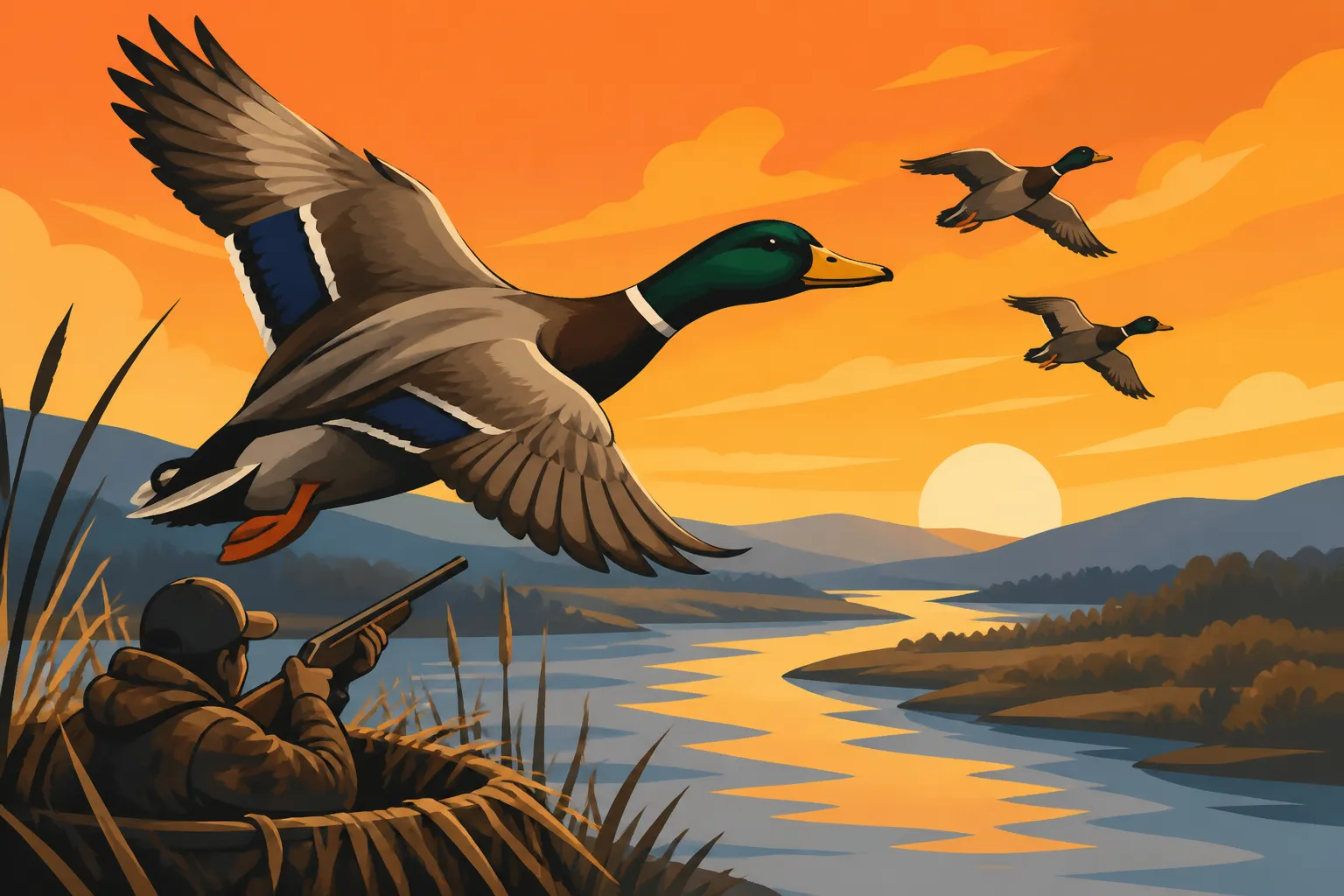
Hunting Illinois River Valley Diving Ducks
Hunting diving ducks in the Illinois River Valley can feel like chasing ghosts sometimes, especially when those fast-flying birds seem to appear out of nowhere, disappear into the chop, and then reappear just as quickly out of range. It's a different game than puddle duck hunting, demanding specific strategies, a bit of specialized gear, and a deep understanding of the river itself. This comprehensive guide will pull back the curtain on the unique challenges and incredible rewards of pursuing diving ducks in one of North America's premier waterfowl flyways, giving you the insights to make your next hunt a success.
Understanding the Illinois River Valley's Diving Duck Allure
The Illinois River Valley is legendary among waterfowl hunters, and for good reason. It’s a critical artery on the Mississippi Flyway, funneling millions of migratory birds south each fall and north each spring. For diving ducks, in particular, the expansive open waters, deep channels, and abundant aquatic vegetation create an irresistible habitat that holds them for weeks, sometimes even months, during their journey.
A Natural Migration Highway
Think of the Illinois River as a superhighway for ducks. Starting north of Starved Rock and stretching down to its confluence with the Mississippi near Grafton, the river carves through the state, offering a continuous corridor of suitable habitat. The numerous backwaters, oxbows, and floodplain lakes that once defined the valley have been somewhat altered over the years, but critical areas remain, attracting a diverse array of waterfowl. Diving ducks, with their preference for larger, deeper bodies of water, find ideal conditions in the main river channel and the larger, more stable lake systems adjacent to it. Their migration timing often means they hit the Illinois River Valley during periods of stable weather, allowing hunters prime opportunities. To truly understand the full scope of this region's importance, a deeper dive into Waterfowl Hunting the Illinois River Valley reveals why it remains a bucket list destination for many.
Rich Aquatic Ecosystems Attract Divers
What really makes the Illinois River Valley sing for diving ducks is the buffet it offers. While puddle ducks prefer shallow, marshy areas to dabble for seeds and invertebrates, divers are built for underwater foraging. They feed on mussels, snails, small fish, and the tubers and roots of submerged aquatic vegetation like wild celery and sago pondweed. The Illinois River, despite its challenges with sedimentation, still retains significant areas where these food sources flourish. The currents keep areas ice-free longer, providing critical late-season feeding grounds when shallower waters elsewhere might be locked up. This consistent food supply and the safety of vast open water are what draw species like canvasbacks, redheads, and bluebills in such impressive numbers. Knowing the optimal Illinois Waterfowl Migration Timing can give you an edge, as different species arrive and depart throughout the season.
Key Diving Duck Species in the Illinois River Valley
While many duck species pass through Illinois, certain divers are the true stars of the Illinois River Valley. Identifying them correctly on the wing and understanding their specific behaviors is crucial for successful hunting and adherence to bag limits.
Canvasbacks, Redheads, and Scaup
These three species often make up the bulk of a diver hunter's bag in the Illinois River Valley. Canvasbacks, with their distinctive sloped profile and chestnut-red heads, are often considered the "king of ducks" by many hunters, renowned for their incredible speed and delicious meat. Redheads are similar in color but have a more rounded head and a shorter bill. Both species prefer larger, more open water and tend to raft up in big groups, making them challenging to decoy. Scaup, often called bluebills, come in two varieties: greater and lesser. They are notoriously hard to tell apart in flight, but both are common and provide fast-paced shooting. They are smaller than canvasbacks and redheads, with a dark head and chest, white flanks, and a noticeable white wing stripe in flight.
Buffleheads, Goldeneyes, and Ring-necks
While not as numerous as the "big three," these smaller divers are still common and provide exciting hunting opportunities. Buffleheads are tiny, mostly black and white ducks, with drakes sporting a large white patch behind the eye. They are incredibly agile fliers and are often seen in smaller groups, diving frequently. Common goldeneyes are striking ducks with iridescent green-black heads and a distinct round white spot between the eye and the bill. They are tough, fast fliers, often flying low over the water. Ring-necked ducks, despite their name (the "ring" is often hard to see), are another common sight. They have a peaked head, black back, grey flanks, and a white ring on their bill. These smaller divers often tolerate slightly shallower water than their larger cousins and can sometimes be found in mixed bags with puddle ducks, though they still prefer diving for food. It’s important to familiarize yourself with the current Illinois Duck Daily Bag Limit as regulations can vary by species.
Diving Duck Identification Key
To help differentiate between these often similar-looking birds, here’s a quick identification guide focusing on common characteristics visible to hunters.
| Species | Key Drake Identification Features | Flight Pattern | Preferred Habitat | Common Decoy Spreads |
|---|---|---|---|---|
| Canvasback | Large, sloped black bill, chestnut head, white body, black chest | Fast, direct, often high, V-formations | Large open water, deep channels | Large, open U or J-hook |
| Redhead | Rounded red head, blue bill with black tip, grey body | Fast, agile, often in loose flocks | Open lakes, larger rivers, coastal bays | Smaller open spreads, near reeds |
| Greater Scaup | Iridescent green/purple head, white flanks, white wing stripe | Very fast, erratic, often in tight bunches | Large open water, deep estuaries | Large numbers, tight rafts |
| Lesser Scaup | Similar to Greater but smaller, less iridescence on head | Fast, often erratic, tight bunches | Smaller lakes, ponds, backwaters | Smaller numbers, tight rafts |
| Bufflehead | Small, blocky black & white with large white cheek patch | Erratic, very fast wingbeats, constantly diving | Small open water, protected bays, river eddies | Small groups, often near blind |
| Goldeneye | Iridescent green head, round white spot, white flanks | Very fast, strong, stiff-winged | Open water, rocky shorelines, swift currents | Smaller groups, often in choppy water |
| Ring-necked | Peaked head, black back, grey flanks, white bill ring | Fast, direct, often in smaller groups | Shallow-to-medium depth lakes, marshes | Mixed with puddle ducks, small groups |
Essential Gear and Setup for Diving Duck Hunting
Diving duck hunting in the Illinois River Valley isn't just about showing up with a shotgun. The conditions, the birds, and the vastness of the water require specialized gear to be safe, comfortable, and successful.
The Right Watercraft and Decoys
When you're hunting diving ducks on a big river like the Illinois, your boat isn't just for transport—it's often your blind, your lifeline, and your command center. A sturdy, stable boat, ideally 16-20 feet, with a reliable motor is non-negotiable. Jon boats are common, but many hunters opt for a V-hull aluminum boat for better handling in choppy conditions. Safety gear like life jackets, throw cushions, an anchor, and navigation lights are absolutely paramount, especially when you're dealing with shifting sandbars, submerged obstacles, and commercial barge traffic.
As for decoys, forget your standard mallard spreads. Diving ducks want to see a lot of other diving ducks. Large spreads of 50 to 100+ diver decoys are common. Many serious diver hunters use magnum-sized decoys to increase visibility from a distance. Key species like canvasbacks and redheads should be prominently featured, often in a distinct "spread" or "pod" configuration that mimics their rafting behavior. Scaup, bufflehead, and goldeneye decoys can be mixed in, especially on days when the bigger divers aren't flying as much. Don't overlook the importance of realistic paint jobs and proper keel weighting to ensure your decoys ride naturally in the often-rough river currents. Many hunters swear by companies like Avery or GHG for their realistic diver spreads. For specific strategies on Diver Hunting on the Illinois River, focusing on decoy spreads is often the biggest takeaway.
Specialized Blinds and Camouflage
Unlike puddle duck hunting, where you might hide in cattails or a cornfield, diver hunting on the Illinois River often means being on the open water. Permanent blinds are common in some areas, but many hunters use portable boat blinds or layout boats. A boat blind needs to be well-camouflaged, breaking up the boat's outline against the sky and water. Natural vegetation from the riverbank, such as willow branches or reeds, can be incredibly effective when woven into a boat blind frame. Layout boats, like those from Bankes Boats or Tanglefree, offer an extremely low profile, allowing hunters to lie prone and blend seamlessly with the decoy spread. This tactic is particularly effective in large, open water areas where there's no natural cover. Remember, divers have excellent eyesight, so your camouflage, from your clothing to your face paint, needs to be top-notch.
Effective Tactics for Decoying Diving Ducks
Decoying diving ducks successfully on the Illinois River involves a combination of understanding their behavior, strategically placing your spread, and being patient. It's a game of subtlety and presentation.
Large Spreads and Strategic Placement
As mentioned, bigger is often better with diver spreads. Divers are attracted to large groups of their own kind, signaling safety and a good food source. A typical diver spread might involve a main raft of decoys, often arranged in a "J" or "U" shape, with the open end facing into the wind where you expect the birds to land. This allows incoming ducks to cup their wings and settle into the "landing zone" right in front of your blind. Spacing is important; while puddle ducks like a more open spread, divers often raft up tighter. Consider using a long main line to anchor your large groups, with individual decoys or smaller strings attached.
Beyond the main raft, many hunters use a "confidence" string of decoys stretching out from the main spread. These might be a mix of species, signaling that the area is active. Another effective tactic, particularly for wary birds, is to create a "hole" or "pocket" in your spread directly in front of your blind. This open water acts as an invitation for birds to land. Some hunters will also strategically place a few coot or goose decoys on the fringes of the spread, further enhancing the illusion of a safe haven. On big water, finding subtle features like a slight current break or a deeper channel edge can be crucial. Sometimes, focusing on Hunting Illinois River Bottom Funnels for general waterfowl movement can also clue you into diver travel lanes.
Motion Decoys and Calling
While diver hunting isn't typically associated with aggressive calling, a well-timed diver call can certainly help seal the deal. Canvasback and redhead calls, often low growls or purrs, can draw attention from passing flocks. Scaup calls are often a sharp "brrrrp" sound. The key is subtlety and realism. Over-calling can spook wary divers.
Motion decoys, while very popular for puddle ducks, are used a bit differently for divers. Spinning-wing decoys can be effective early in the season, but as the birds get more pressured, they can sometimes flair divers, who are naturally wary of anything unnatural on open water. Instead, diver hunters often employ jerk strings or simple current-activated motion decoys that mimic diving and feeding behavior. These subtle movements can add a layer of realism to a static spread, making it more appealing to wary birds. Even something as simple as a few decoys on short jerk strings that you can activate from the blind can make a big difference on calm days.
Navigating Challenges and Safety on the Illinois River
Hunting the Illinois River Valley isn't without its challenges. The dynamic nature of a major river system demands respect and preparation, especially when targeting diving ducks in open water.
Weather, Currents, and Ice
The Illinois River can be a formidable environment, and understanding its nuances is critical for both safety and success. Weather can change rapidly; what starts as a calm morning can quickly turn into white-capped waves with strong winds, making boat travel hazardous. Always check the forecast and river conditions before heading out, and be prepared to cut your hunt short if the weather deteriorates. Currents, especially in the main channel, are powerful and demand constant vigilance. Dropping an anchor needs to be done carefully, ensuring it's set properly to avoid dragging or capsizing, particularly in high water.
As winter sets in, ice becomes a major factor. While diving ducks often keep areas of open water through their constant activity, rapidly dropping temperatures can quickly lock up stretches of the river. Navigating through slush and ice floes can damage your boat or leave you stranded. Pay close attention to temperature forecasts and ice reports. Consider utilizing mapping tools like GoHunt that can help you identify open water areas and safe travel routes, even showing real-time weather overlays. Being aware of potential ice-forming conditions and having a plan for recovery if your boat gets stuck is paramount.
Commercial Traffic and Navigation
The Illinois River is a working river, heavily trafficked by commercial barges. These massive vessels have the right of way and create enormous wakes that can easily swamp a small boat. Always give barges a wide berth and be aware of their approach. Their blind spots are huge, and they cannot stop or maneuver quickly. Recreational boat traffic can also be heavy, especially on weekends. It's crucial to practice safe boating, maintain proper lookout, and ensure your boat's navigation lights are functioning, particularly during low light conditions or fog.
Navigating the ever-changing river bottom requires attention to detail. Sandbars can shift, and submerged stumps or wing dams can pose significant hazards. A reliable GPS unit with up-to-date river charts is a valuable tool. Plotting your course and marking potential hazards or productive hunting spots can save you a lot of trouble. Always run slowly in unfamiliar waters, and remember that local knowledge from experienced river hunters is invaluable. Consider joining local waterfowl hunting clubs or talking to seasoned guides to learn the intricacies of specific stretches of the river.
Optimizing Your Hunt: Scouting and Timing
Successful diving duck hunting on the Illinois River Valley often comes down to being in the right place at the right time, and that requires dedicated scouting and an understanding of seasonal patterns.
Pre-Season and In-Season Scouting
You can't just show up on opening day and expect to find divers stacked up in your favorite spot every year. Their patterns shift with weather, food availability, and hunting pressure. Pre-season scouting is about identifying key areas: deep water sections, bends in the river that offer protection from wind, areas with abundant submerged aquatic vegetation, and historical resting or feeding grounds. Use aerial maps and apps like GoHunt to mark potential areas, then spend time on the water, glassing with binoculars. Look for rafts of ducks, their flight lines, and where they seem to be concentrating.
In-season scouting is even more critical. What worked last week might not work today. Drive access roads, launch your boat for quick reconnaissance runs, and observe bird movements. Pay attention to changes in wind direction, temperature, and river levels, as these factors directly influence where divers will be feeding and resting. Divers are often creatures of habit; if you find a pattern, try to capitalize on it for a few days before it shifts. Remember that while Scouting Illinois Public Land Before Season is always important, river conditions require constant adaptation.
Understanding Migration Patterns and Weather Influences
Diving ducks are highly migratory, and their presence in the Illinois River Valley is entirely dependent on the timing of cold fronts and the availability of open water further north. Generally, the early part of the season might see more local birds and early arrivals, but the prime diver hunting often kicks off with the first significant pushes of arctic air in late October and November. This is when the big rafts of canvasbacks and redheads start pouring down the flyway. Later in the season, as ice forms up north, the Illinois River can become a crucial staging and wintering area, holding birds well into December.
Weather doesn't just push birds; it affects their behavior daily. Calm, sunny days can make divers wary, often forcing them to raft far out in the middle of the river. Choppy, overcast, and windy days, however, are often ideal for diver hunting. The rough water breaks up their vision, makes decoys look more realistic, and encourages birds to fly lower and work spreads more readily. Strong winds can also funnel birds along predictable flight paths, making pass shooting opportunities more frequent. Keeping an eye on long-range forecasts can help you plan your hunts for optimal conditions, giving you an edge when it comes to Hunting the Late-Season December Lull.
Disclaimer
Hunting is an inherently dangerous activity. This guide provides general information and recommendations only. Hunters are solely responsible for understanding and complying with all local, state, and federal hunting regulations, including licensing, bag limits, and safety requirements in Illinois. Always prioritize safety, use appropriate gear, and hunt ethically. Conditions on the Illinois River can be unpredictable, and caution should always be exercised.