Entry Routes Through Standing Corn
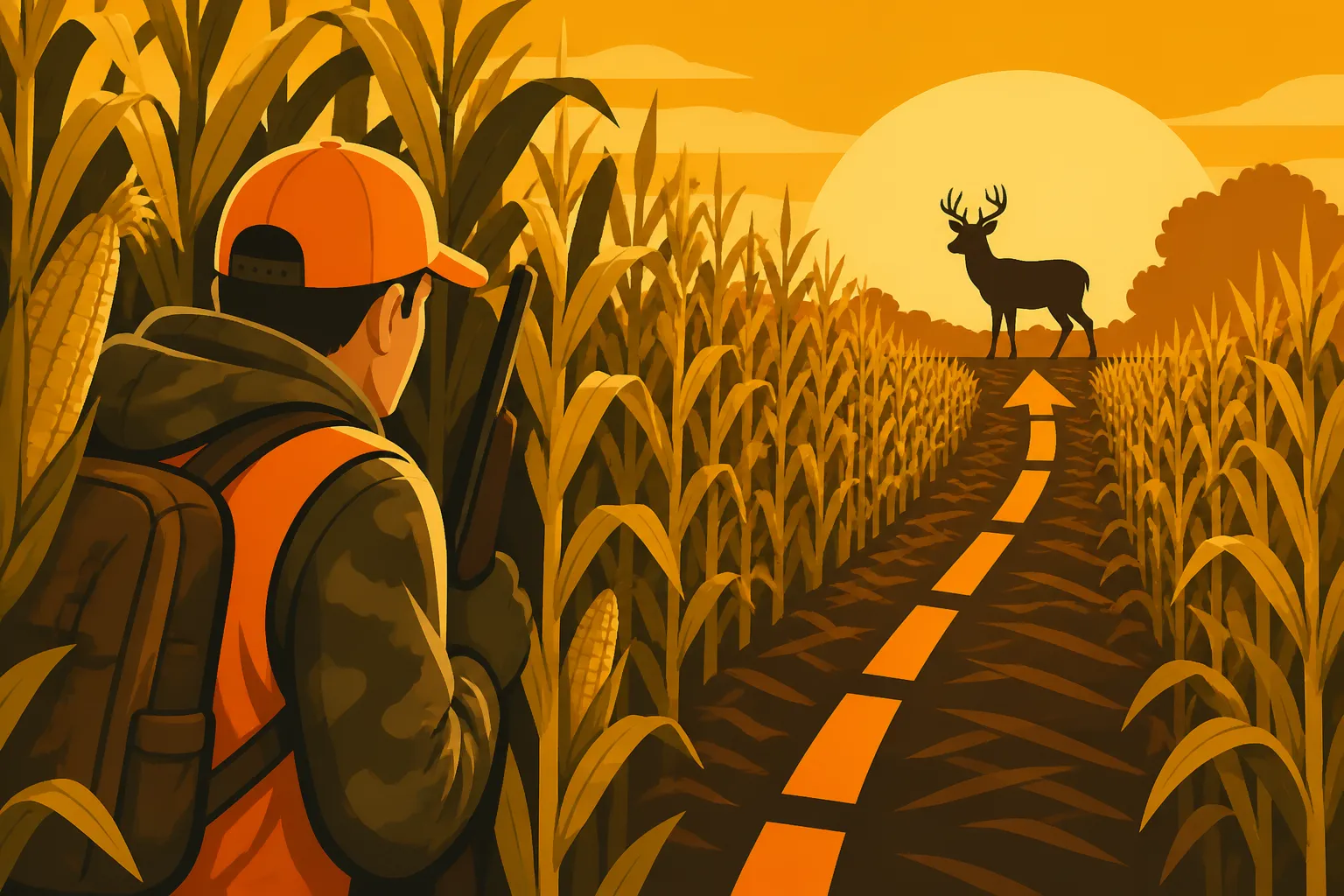
Hunting around standing corn in Illinois can feel like trying to find a ghost in a maze. You know the deer are in there, feeding and bedding, but getting to your stand without blowing them out is a whole different ballgame. It’s a common frustration for hunters, especially as the season progresses and those golden stalks stand tall. This guide will walk you through effective strategies for developing and executing successful entry routes through standing corn, minimizing your disturbance, and maximizing your chances for a successful hunt.
The Unique Challenge of Standing Corn for Illinois Deer Hunters
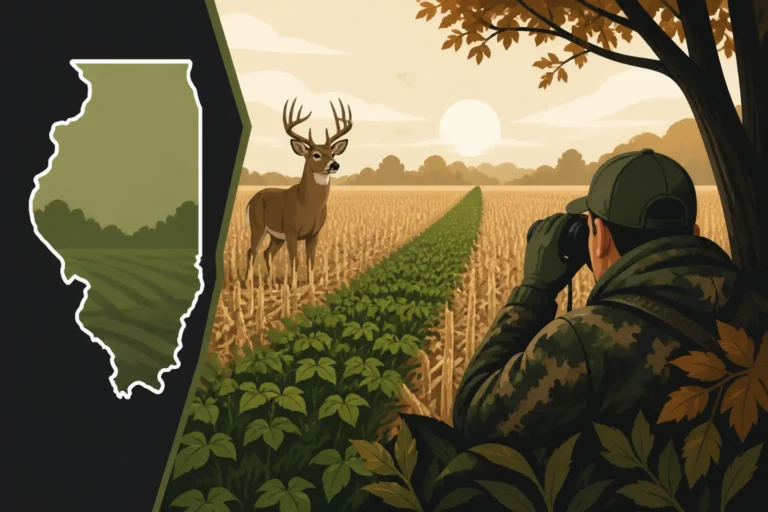
Standing cornfields are a double-edged sword for deer hunters in Illinois. On one hand, they're an irresistible buffet and an almost impenetrable fortress for whitetails, offering both food and unparalleled security. Deer can literally disappear into acres of towering stalks, feeling completely safe from prying eyes. On the other hand, this same dense cover makes it incredibly difficult for us to approach unnoticed. The rustle of dry leaves, the limited visibility, and the swirling thermals within a cornfield can betray your presence long before you reach your setup, sending those wary bucks deeper into the maze.
Why Deer Love Standing Corn
Deer gravitate to standing corn for very simple, yet powerful reasons. First and foremost, it's a high-energy food source. As the season progresses into late fall and early winter, corn becomes one of the most reliable and nutritious options available, especially in areas where acorns might be scarce or picked over. Deer will often bed deep within the corn during the day, feeling secure from predators and human activity, and then shift to feeding within the same field or adjacent woodlots as evening approaches. This creates predictable patterns, but only if you can figure out how to intercept them.
The Hunter's Dilemma: Noise, Scent, and Visibility
The biggest headache for hunters trying to navigate standing corn is managing their footprint. Every step you take produces noise as the dry leaves brush against your clothing or break underfoot. Even on a calm day, the rustle can carry further than you'd expect, especially in the still, cold air of late season. Then there's scent. Cornfields, especially dense ones, can create weird wind currents and thermals that make it incredibly hard to predict where your scent will drift. A seemingly favorable wind at the field edge can quickly become a swirling disaster once you're 50 yards deep into the stalks, blowing your scent directly into a bedding area. And finally, visibility is minimal. You're essentially walking blind, making it tough to scout on the fly or adjust your approach if you bump deer. This all adds up to a high-stakes game of stealth.
Scouting for Effective Entry Points
You can't just dive into a cornfield blindly and expect success. Effective entry routes through standing corn require meticulous scouting, often before the season even begins, or at least well in advance of your hunt. You need to think like a deer, understanding where they enter, exit, and move within the field, and then find the path of least resistance for yourself. This isn't about finding a trail to the corn; it's about finding a trail through it.
Identifying Natural Funnels and Travel Corridors
The first step is always to identify how deer are accessing and utilizing the cornfield. Look for distinct trails that lead into the corn from adjacent timber, fencerows, or creek bottoms. These are often the most heavily used travel corridors. Pay close attention to corners of the field, especially those bordering a woodlot or a thick patch of cover. Deer often prefer to hug these edges, using the cover of the corn as they transition. Also, look for "seams" within the cornfield itself – rows that are slightly less dense, areas where drainage ditches or old field roads cut through, or even spots where equipment has created a wider lane. These subtle breaks in uniformity can act as natural funnels that deer will exploit, and you can too. When Hunting Central Illinois Farmland Deer, these natural funnels become absolutely crucial for success.
Using Technology to Map Your Approach
Modern mapping tools like GoHunt can be invaluable for planning your entry. Utilize satellite imagery to identify field patterns, potential pinch points, and areas where corn might meet other cover types. Look for slight elevation changes or drainage features that could offer a low-impact path. Some hunters even use these apps to mark specific rows or lanes they plan to follow, creating a virtual breadcrumb trail to their stand location. Don't forget to mark potential bedding areas you identify from outside the field, as well as known feeding zones. This visual planning helps you pick a route that keeps you downwind and avoids likely deer concentrations. For instance, you might use an aerial map to plan your route to a stand when Setting Up on a Central Illinois Field Edge.
Scouting the Field Edge for Sign
Before committing to an entry point, walk the perimeter of the cornfield. Look for tracks entering and exiting, especially where the corn meets a woodline or a brushy ditch. Pay attention to how fresh the tracks are. Are there any rub lines or scrape lines indicating mature buck activity along the edge? Often, bucks will scent-check the perimeter before committing to enter or exit, leaving clues to their preferred paths. If you find a well-used trail, follow it a short distance into the corn, carefully, and see if it continues deeper or leads to a distinct destination like a small water source or a favored bedding pocket. Remember, Reading Illinois Mud for Fresh Deer Movement can provide critical insights into their patterns.
Executing Your Entry Route: Tactics and Considerations
Once you've identified a promising entry route, the real challenge begins: executing it flawlessly. This requires a calculated approach, paying close attention to every detail that could alert a deer to your presence. From your clothing to your pace, every element plays a role in remaining undetected.
Wind Direction and Scent Control
This is paramount. Always, always choose an entry route that keeps the wind in your face or quartering away from any suspected deer activity. Inside a dense cornfield, wind can swirl more than in open timber, but generally, having it at your back is a recipe for disaster. Think about using a wind checker frequently as you move. A quality scent elimination spray and clean hunting clothes are also non-negotiable. Some hunters even take a full shower with scent-free soap right before heading out. The goal is to be as odorless as possible, knowing that deer noses are incredibly keen. If the wind isn't right for your planned entry, it's better to find an alternative route or, truthfully, stay home. It's not worth educating a mature buck.
Minimizing Noise and Movement
Moving through standing corn is inherently noisy, but you can mitigate it. Wear quiet clothing that won't rustle excessively. A soft fleece or wool outer layer is often better than stiff synthetics. Walk slowly and deliberately, lifting your feet rather than dragging them, and try to step where the ground is softest, avoiding brittle stalks or fallen leaves. If you're carrying a pack or a bow, ensure nothing is rattling or clanking. When in doubt, pause. Take a few steps, then stop, listen, and scan what little you can see. Use the sound of natural wind gusts or distant farm equipment to mask your own movement. This slow, deliberate approach is key to avoid bumping deer that might be bedded closer than you think.
Timing Your Entry for Success
The timing of your entry is almost as critical as the route itself. For a morning hunt, you want to be in your stand well before first light, giving the woods time to settle down after your approach. This means starting your entry while it's still dark, which adds another layer of challenge to quiet movement. For an evening hunt, aim to get into your stand a few hours before dark, allowing ample time for deer to begin moving naturally from their bedding to feeding areas without encountering you. Avoid entering during peak deer movement times if your route passes directly through high-traffic areas. This is especially true if you are hunting the peak of Hunting the Rut in Early November, when deer movement can be more unpredictable.
| Consideration | Morning Entry | Evening Entry |
|---|---|---|
| Timing | 1.5 – 2 hours before legal shooting light | 2 – 3 hours before last light |
| Stealth Focus | Extreme quietness, low light navigation | Wind consistency, scent management |
| Deer Activity | Deer moving to bedding or already bedded | Deer beginning to move to feed |
| Visibility | Minimal, rely on mapped route | Declining, but still some light for navigation |
| Thermals | Falling, carrying scent downhill/out of corn | Rising, carrying scent upwards/into corn |
| Primary Goal | Get to stand undetected for morning movement | Get to stand undetected for evening movement |
Common Mistakes and How to Avoid Them
Even the most experienced hunters can make mistakes when navigating the tricky world of standing corn. It's a humbling environment that demands respect and a precise approach. Recognizing common pitfalls can save you from a ruined hunt and prevent you from educating the very deer you're trying to pursue.
Rushing Your Approach
One of the most common errors is rushing to get to your stand. The desire to reach your destination quickly, especially when it's cold, dark, or you're simply eager, can lead to noisy movements, heavy breathing, and less attention to wind shifts. As mentioned, every rustle, every loud step, can broadcast your presence far beyond what you'd imagine in the still air. Instead, force yourself to slow down. Take frequent pauses, especially if you hear a rustle that isn't your own. It's far better to arrive at your stand 15 minutes later and undetected than to arrive on time and have spooked every deer within earshot.
Ignoring Wind Shifts Within the Field
As mentioned earlier, cornfields are notorious for creating micro-thermals and swirling winds, even on seemingly calm days. A steady breeze at the field edge can become a chaotic mess once you're deeper into the dense stalks. Many hunters make the mistake of trusting the general wind direction without constantly checking it as they move. Always carry a wind checker and use it frequently, especially at critical junctures of your path or if you perceive a change in the air. If the wind starts swirling badly or shifts to put you in a vulnerable position relative to suspected deer bedding, you have a tough choice: either adjust your path dramatically, try to wait it out, or quietly back out and hunt another area. Sometimes, the best hunt is the one you don't make.
Not Having a Backup Plan or Exit Strategy
Relying on a single entry route without considering alternatives is another pitfall. What if your planned route is suddenly compromised by unforeseen deer activity, a new mud puddle, or an unexpected wind shift? Having a secondary entry route mapped out can be a game-changer. Similarly, consider your exit strategy. How will you leave your stand after the hunt without spooking deer? Often, an exit route might be different from your entry route, perhaps taking advantage of later natural light or deer movement patterns. A good strategy might be to enter with the wind in your face and exit with it at your back, pushing any remaining deer deeper into the corn or timber without them identifying the source of the disturbance. This is especially important when Hunting the Late-Season December Lull, where deer activity can be highly concentrated in specific food sources.
Neglecting Off-Season and Pre-Season Scouting
The best time to scout your cornfield entry routes is often before the corn gets too tall, or even in the off-season. When the corn is short or nonexistent, you can walk the terrain, identify drainage ditches, old field roads, subtle elevation changes, and natural funnels more easily. This allows you to plan your routes when there's less pressure and better visibility. Even in-season, take advantage of any opportunities after a significant rain when tracks are fresh to confirm deer movement patterns. A tool like GoHunt can overlay property lines and topo maps, making it much easier to plan these routes from home. You can also hang trail cameras on field edges or internal lanes to gather intelligence on deer movement without creating a lot of disturbance, then use that data to refine your approach, much like you would when Scouting Illinois Public Land Before Season.
Creating Stand Locations Within Cornfields
Beyond just entering the cornfield, strategically placing your stand is critical for success. This isn't always about setting up right in the densest part of the corn, but rather identifying key interception points. Your stand location should complement your entry route, not contradict it.
Hunting Internal Lanes and Funnels
One of the most effective ways to hunt inside a cornfield is to set up along an internal lane or funnel that deer are consistently using. This could be a natural drainage ditch, a tractor path left by farming equipment, or even a subtle depression in the topography that deer prefer. These lanes offer both slightly better visibility and clearer shooting lanes than the dense stalks. The challenge is often finding a sturdy enough tree or setting up a ground blind discreetly. If you can find a cluster of trees or a larger brush pile within the corn, these become prime locations. When hunting these internal lanes, your entry route should ideally align with the lane itself, minimizing noise and disturbance to either side.
Setting Up on Cornfield Edges Near Cover
Often, the most productive stand locations aren't deep inside the corn but rather on its immediate edge, especially where the corn meets a woodlot, a thick fencerow, or a creek bottom. Deer frequently stage in the cover of the timber before entering the corn to feed, or bed down in the corn and then pop out to browse along the edge. These transition zones are high-traffic areas. Your entry route, in this case, might skirt the cornfield entirely, approaching your stand through the timber and using the corn as a visual and scent barrier from bedding areas. It's a classic setup when you're Hunting a Funnel Between Two Woodlots but one of those woodlots is now a standing cornfield. Consider hanging your stand on the edge of the timber, overlooking the corn, and ensuring your wind is blowing from the corn towards you, carrying any scent away from their approach.
Utilizing Ground Blinds for Flexibility
Ground blinds offer immense flexibility when hunting standing corn. They can be set up quickly and moved as deer patterns change, which is a huge advantage as the season progresses and corn is harvested. A well-brushed-in ground blind on a key internal lane or a strategic field edge can provide excellent concealment and a warm, dry place to hunt. The key is to set it up well in advance, if possible, allowing deer to get used to its presence. If you're putting a blind up just before a hunt, make sure to use natural materials to break up its outline as much as possible. You can even strategically cut a few corn stalks to create shooting lanes into the corn, providing a peek into their world. Learning Using a Ground Blind on Illinois Public Land effectively can greatly enhance your cornfield hunting success.
Final Thoughts on Mastering Cornfield Entries
Hunting standing corn in Illinois is tough, no doubt about it. It requires patience, meticulous planning, and a commitment to stealth that few other hunting scenarios demand. But the rewards can be incredible. A mature buck that feels secure in his golden fortress is often less cautious than one skirting open timber. By understanding their movements, scouting diligently, and executing your entry and exit routes with precision, you can unlock the secrets of these incredible habitats. It's about respecting the deer's senses and outsmarting them on their own terms, turning a frustrating challenge into a fulfilling success.
Disclaimer
Hunting is an activity with inherent risks. Always prioritize safety, understand and adhere to all Illinois Department of Natural Resources (IDNR) regulations, and obtain appropriate licenses and permits before engaging in any hunting activity. The information provided in this guide is for informational purposes only and should not replace professional advice or personal judgment regarding safety and legal compliance.