Calling Crows Over a Winter Feed Site
Winter hunting in Illinois often conjures images of deer or waterfowl, but if you’ve ever been frustrated by the sheer cunning and evasiveness of crows, you know the unique challenge and reward they offer. These incredibly intelligent birds can be notoriously difficult to get close to, especially in the lean winter months when food is scarce and their vigilance is at an all-time high. This comprehensive guide will walk you through the ins and outs of effectively calling crows over their winter feed sites, helping you unlock successful cold-weather hunts for these wary birds.
Understanding Winter Crow Behavior and Feed Sites
To consistently put crows in your sights during the colder months, you first need to understand their daily rhythms and what draws them to specific locations. Winter crow hunting isn't just about making noise; it's about understanding their world.
The Daily Commute: Roost to Feed
Crows in Illinois, particularly in winter, exhibit fascinating, predictable patterns driven by survival. As the days shorten and temperatures drop, crows will abandon their smaller, dispersed family groups of summer and fall, consolidating into massive communal roosts. These roosts can sometimes hold hundreds, even thousands, of birds. Think of it as a huge, bustling city where they gather for safety in numbers against nocturnal predators like owls and coyotes.
Every morning, like commuters heading to work, these vast congregations will break up into smaller, manageable feeding groups. These groups then disperse, sometimes flying many miles, to various food sources. They’ll spend the daylight hours foraging, constantly alert, before making their return flight to the safety of the main roost site as dusk approaches. This daily flight path, from roost to feed and back, provides crucial interception points for hunters who understand the pattern. Observing these flights and mapping them, perhaps using tools like GoHunt to mark potential flight corridors and roost locations, is your first step.
Identifying Prime Winter Food Sources
Crows are opportunists, and in winter, "prime" simply means "available and abundant." Their diet is incredibly varied, but during the lean winter months, they zero in on calorie-rich options. In Illinois, with its vast agricultural landscape, this often means focusing on leftover crops.
You’ll typically find crows congregating in:
- Standing or Cut Corn Fields: Corn is a crow magnet. Whether it's still standing or has been harvested, there are always kernels left on the ground, or even ears missed by combines. Crows will systematically work these fields, often in large groups, to scavenge. Look for fields adjacent to timber, as crows prefer to stage in trees before dropping down to feed, and they'll retreat there if spooked.
- Soybean Fields (Post-Harvest): While not as calorically dense as corn, harvested soybean fields still offer a bounty of missed beans. Crows will work these too, especially if other options are scarce.
- Feedlots and Cattle Operations: Any place where livestock are fed grains is a goldmine for crows. Spilled feed, supplement blocks, and even animal waste can attract large numbers of birds. If you have access to private land with such operations, these can be incredibly productive spots.
- Roadkill and Scavenged Meat: Crows are nature's cleanup crew. Any deer, raccoon, or other animal that meets its unfortunate end on an Illinois roadway will eventually attract crows. While you might not set up directly on a carcass, areas where roadkill is common can indicate crow presence.
- Landfills and Waste Transfer Stations: Though less accessible for hunting, these sites are undeniable crow magnets. If you live near one, it's worth noting the flight patterns of crows heading to and from these areas.
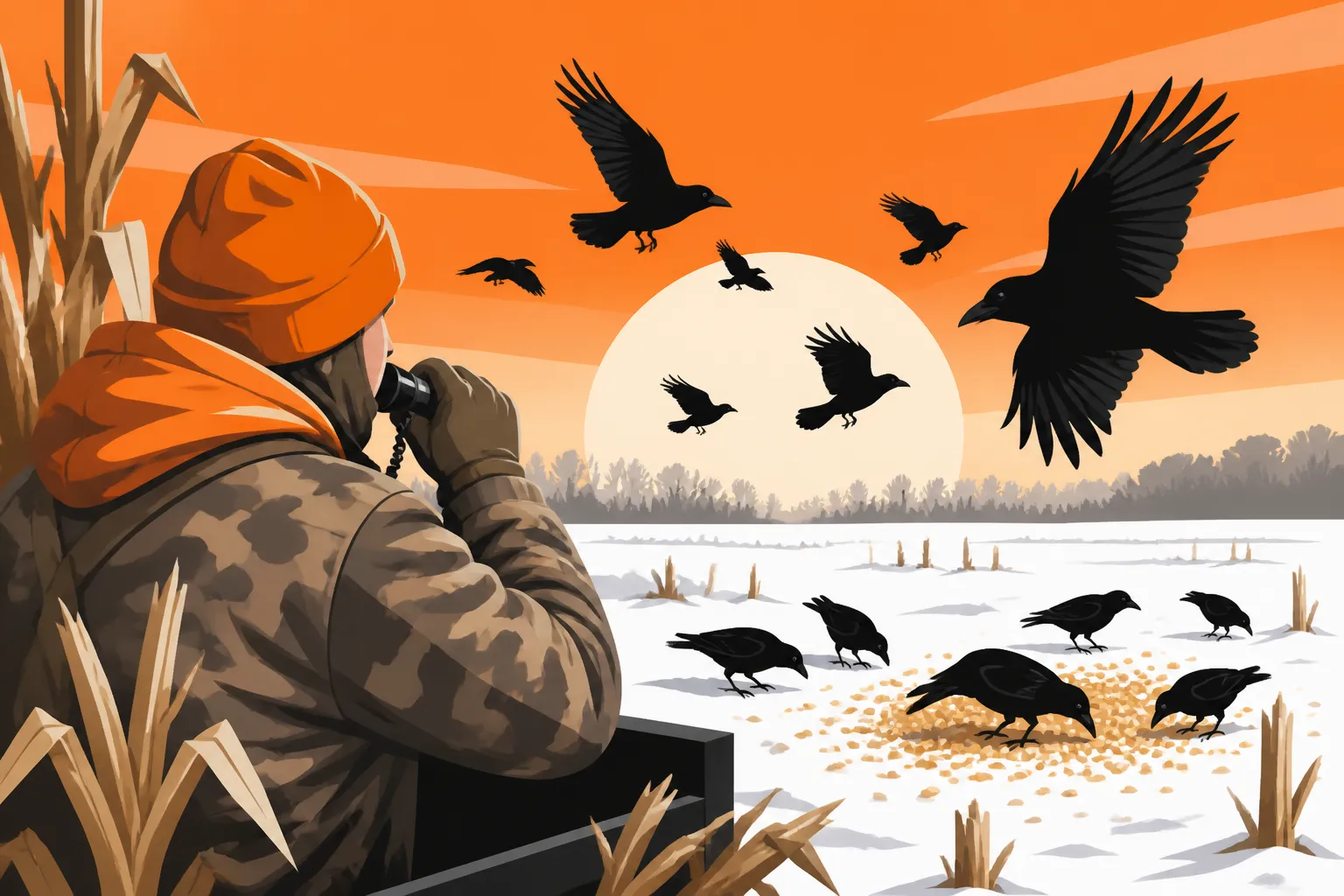
Scouting is paramount here. Drive rural roads, scan fields with binoculars, and use mapping apps like GoHunt to identify potential feed sites, adjacent cover, and property boundaries. Pay attention to fence rows, ditches, and any small stands of timber near these food sources, as crows will often use these as initial landing zones before dropping into a field. This kind of diligent observation will reveal where the birds are spending their day and where your ambush should be set.
Essential Gear for Winter Crow Calling
Hunting crows in winter, especially over feed sites, demands specific gear. Cold weather, wary birds, and open agricultural landscapes mean you need to be prepared with the right tools for concealment, calling, and comfort.
Calls and Decoys
Your calling setup is the heart of your crow hunting strategy. You need to be able to mimic their vocalizations accurately and convincingly.
- Electronic Callers: These are incredibly effective, especially for attracting large numbers of crows. Top brands like Foxpro or Primos offer units pre-loaded with a variety of realistic crow sounds:
- Distress Calls: The most common and effective. These mimic a crow in trouble, often being attacked by a predator. Other crows will come to investigate, mob the predator, or simply assess the danger. Start with this.
- Fighting Crows: A more aggressive call that signals a territorial dispute or a fight over food. This can draw in curious and competitive birds.
- Crow Rally/Comeback Calls: These are basic "hello" or gathering calls. Use them to get the attention of distant crows or to make your spread seem more lively.
- Owl/Hawk Calls: Sometimes, integrating a predator call (like a great horned owl or red-tailed hawk) can enrage nearby crows, bringing them in closer to mob the "threat."
You can program complex sequences with an e-caller, controlling volume and duration precisely, which is a huge advantage when crows are circling warily.
- Mouth Calls: While more challenging to master, mouth calls (like those from Primos or Haydel's) offer a level of nuance and realism an electronic call sometimes can't replicate. They are excellent for fine-tuning your sounds or adding a personal touch to a sequence. You can easily transition between different calls and adjust volume quickly. A good strategy is to use an e-caller for initial attraction and then switch to a mouth call for close-in birds that might be wary of the sustained, repetitive electronic sound.
- Decoys: Decoys are crucial for visual confirmation. Crows have excellent eyesight and will often hang up at a distance if they don't see other crows on the ground.
- Full-Body Decoys: These are realistic and effective, especially when placed in feeding postures. A dozen or more can create a convincing spread.
- Silhouette Decoys: More portable and less expensive, these work well in numbers.
- Motion Decoys: Flapping wing decoys or even a few strung-up crow carcasses (where legal and ethical) can add invaluable realism, especially on calm days. Crows are drawn to movement.
A common setup involves placing 10-20 crow decoys in various feeding and sentinel postures within easy shooting range of your blind. You might also add a fake owl or hawk decoy placed strategically near your crow decoys to enhance the distress call scenario.
Concealment and Clothing
Crows are sharp-eyed, and winter conditions often mean sparse cover. Your concealment needs to be top-notch.
- Full Camouflage: Head-to-toe camo is non-negotiable. This includes gloves, face masks or paint, and a hat. Break up your outline as much as possible. Choose patterns that match the winter landscape – browns, grays, and whites, or specific patterns for standing corn fields.
- Ground Blinds: A portable ground blind is often the easiest and most effective way to disappear, especially in open agricultural fields. Look for blinds with shoot-through mesh windows. Brush in your blind extensively with local vegetation – corn stalks, soybean stubble, or whatever is available at the feed site. You want it to look like it belongs there. Positioning your blind with the sun at your back can also help obscure you from incoming birds, as they will be looking into the glare. When considering blind placement, consult a tool like GoHunt to understand property lines and optimal concealment spots along field edges.
- Natural Cover: If a blind isn't feasible, you'll need to use natural cover to your advantage. A thick fencerow, a brush pile, the base of a large tree, or even a depression in the ground can work. The key is to be absolutely still and to not move when crows are looking your way. This is particularly challenging in winter when cover can be scarce.
- Warm Clothing: You’ll be sitting still in potentially freezing temperatures. Layering is key: a good base layer to wick moisture, insulating layers (fleece, down), and a waterproof/windproof outer shell. Hand warmers, insulated boots, and a warm hat are also essential for comfort and staying focused on the hunt. Nothing ruins a hunt faster than shivering uncontrollably. Consider taking a thermos of hot coffee or soup to stay warm and alert.
Calling Techniques for Cold-Weather Crows
Crows are intelligent and wary, and successful calling requires more than just blasting an electronic call. It's about strategy, timing, and reading the birds.
Mastering the Call Sequence
Think of your calling sequence as a conversation. You want to pique their interest, draw them in, and ultimately commit them to your setup.
- Start with Observation: Before you even touch a call, take a few minutes to observe. Are crows already in the area? What are they doing? Are they flying high, or are they working a distant field? This initial observation helps you gauge their mood and location.
- Initial Attraction – Distant Birds: If crows are far off or just passing by, start with a medium-volume crow rally call or a general basic caw sequence. This is like saying "hello" or "come gather." If you don't get a response, then transition to a distress call at a higher volume. The idea is to grab their attention from afar. A burst of distress, followed by silence, and then another burst can simulate a real-life struggle. You want them to think something interesting (or dangerous) is happening.
- Drawing Them Closer – Increasing Intensity: As crows respond and start heading your way, adjust your calling. If they're coming in strong, you might back off the distress slightly, perhaps mixing in some fighting crow calls. This creates a scene of competition or a ongoing skirmish. If they seem hesitant, circling at a distance, go back to short, sharp bursts of distress to convince them to commit. Avoid continuous, loud calling once they are close, as this can sound unnatural and spook them.
- The "Kill" Call – Closing the Deal: Once crows are within a few hundred yards and are clearly committed to investigating, this is where you can get more aggressive. A very loud, excited string of fighting calls or intense distress calls can often bring them over the final distance, especially if they see your decoys. Some hunters will even integrate the sound of an owl hoot or hawk shriek, followed by enraged crow caws, to make the scenario irresistible. The goal is to make them think they need to join the mob or chase off a predator.
Reading Crow Reactions
Crows are masters of communication, and their reactions to your calls will tell you everything you need to know about how to adjust your strategy.
- Circling High and Wide: This often means they're interested but wary. They're trying to spot a predator or verify the distress call. This is when your decoys become crucial. Maintain a consistent, but not overwhelming, distress call. If they continue to circle without dropping, try adding a few "lost crow" calls or softer rally calls, as if the commotion is dying down, which might entice them to come in closer to investigate. Sometimes, a period of silence can be effective, making them think the "threat" has passed.
- Cawing Back: When crows caw back at your calls, it's a good sign! They are communicating, confirming your presence. If they're returning a "rally" call, they're likely trying to locate the gathering. If it's an agitated caw, they might be warning others or expressing annoyance at the "intruder." Respond in kind, matching their intensity.
- Flaring or Leaving: If crows suddenly flare away or turn to leave, you've likely overcalled, moved, or they spotted something unnatural. Immediately go silent. Give them a few minutes. Sometimes, they'll come back around. If they do, reduce your call volume and intensity significantly. Less is often more with pressured crows. The key is to learn from these reactions; if they spook, analyze what might have gone wrong—was it too loud, too repetitive, or did your concealment fail?
- Committing to the Decoys: This is what you want! When they drop their elevation, set their wings, and head directly for your decoys, get ready. They're coming in for the shot. At this point, you can usually go silent or just offer a few soft, reassuring caws.
A good crow hunter is a good listener. Pay attention to how the birds are reacting and adjust your calling dynamically. Every flock and every day can be different, so flexibility is key.
Setting Up Your Winter Crow Ambush
Once you understand crow behavior and have your gear ready, the next step is executing a flawless ambush. This involves careful planning and precise execution to maximize your chances of success.
Strategic Placement Near Feed Sites
Choosing your exact setup location is arguably the most critical factor for success. It needs to align with the crow's natural approach and provide you with maximum concealment.
- Wind Direction is Key: Always set up so the wind is blowing from your back towards the direction you expect crows to approach. Crows, like most birds, will typically land into the wind. This means they will fly past your setup and turn to face the wind, presenting broadside or slightly quartering shots. If the wind is at your face, they'll often approach directly into it, flying over you before turning, making for difficult overhead shots or spotting you from above. Consider how the wind might shift throughout your hunt.
- Sun Position: Early morning or late afternoon hunts are often best for crow activity. Try to set up so the sun is behind you, making it harder for incoming crows to see into your blind or position. They'll be looking into the glare, giving you an advantage.
- Optimal Distance from the Feed Site: You don't necessarily want to be right in the middle of the feed site. Crows are constantly moving, landing, and taking off. A good rule of thumb is to set up along a natural approach corridor, perhaps 20-50 yards from the densest part of the feeding area. This allows you to intercept them as they come in or are working the edges. Look for a slight rise or a dip in the terrain that offers a natural break in their line of sight.
- Access Routes: Consider your entry and exit. You want to get into your blind or concealed spot without being seen by crows already in the area. Plan your approach to use ditches, fencerows, or tree lines for cover. Similarly, plan your exit to avoid disturbing any lingering birds, as you might want to return to that spot. Using an app like GoHunt to mark your planned routes, your blind location, and the prime feeding zones can streamline this process. It allows you to visualize the terrain, property lines, and potential crow approach vectors, minimizing disturbance.
Optimal Decoy Spreads
Decoys are your visual bait, and how you arrange them can make or break your hunt. The goal is to create a believable, inviting scene.
- Quantity Matters: While a few decoys are better than none, crows are gregarious birds. A spread of 10-20 full-body or silhouette decoys creates a much more convincing impression of a bustling feed site or a large gathering. More decoys mean more visual appeal from a distance.
- Varied Postures: Don't just line them up. Mix feeding postures (heads down, picking at the ground), sentinel postures (heads up, alert), and perhaps a few fighting postures if you're using fighting calls.
- Creating a "Landing Zone": Leave a clear, open shooting lane in front of your blind, within shotgun range, where you expect the crows to land. Arrange your decoys around this zone, but not in it. Crows want to land amongst other crows, so create that inviting space for them.
- Adding a Predator Decoy: As mentioned earlier, placing a realistic owl or hawk decoy (especially one with a menacing pose) a few feet from a few "distressed" crow decoys can dramatically enhance the realism of your distress calling. Crows will often mob perceived predators, and seeing one in the spread makes your calls even more convincing. Ensure the predator decoy is clearly visible to incoming crows.
| Call Type | Purpose | When to Use | Volume |
|---|---|---|---|
| Rally/Comeback | Gather distant crows, signify presence | Initial calls, or to re-engage distant birds | Medium-High |
| Distress | Mimic a crow in trouble, attract investigation | Primary attraction call, when crows are circling | Variable |
| Fighting | Signal competition or territorial dispute | As crows approach, to excite them or draw closer | High |
| Lost Crow | Sound lonely, curious | When crows are wary, circling high, or to calm them | Low-Medium |
| Owl/Hawk Mob | Enrage crows by simulating a predator attack | When crows are hesitant, combined with distress/fighting | High |
Dealing with Pressure
Crows are exceptionally intelligent and learn quickly. If you hunt the same spot too often, they will become "call shy" or "blind shy."
- Move Your Spots: Don't overhunt a single feed site. Crows remember locations where they've been shot at. Try to have several potential setups identified in your scouting. Rotate between them to keep the crows guessing. This also means you might need multiple landowner permissions if hunting private land, or knowing several public land options. Look for areas on public land that might see less pressure by utilizing a tool like Hunting Pressure on Illinois Public Land.
- Vary Your Calling: Don't use the exact same call sequence every time. Change up the types of calls, their intensity, and duration. Sometimes, less calling is more effective. Other times, an aggressive, sustained series is needed. Keep them guessing.
- Hunt Under Cover of Bad Weather: Overcast, windy, or drizzly days can often be excellent for crow hunting. The reduced visibility and increased wind noise make crows less wary and harder to spot hunters. This is when their guard might be down, and they might commit more readily.
- Adapt and Learn: Every crow hunt is a learning experience. Pay attention to what worked and what didn't. Did they flare at a specific sound? Did they ignore a certain decoy setup? Keep refining your techniques. Remember, the goal is not just to shoot a crow, but to understand their intricate social structure and outsmart them.
By meticulously planning your setup, effectively deploying your decoys, and being mindful of crow pressure, you'll significantly increase your success rate in calling crows over winter feed sites. Don't forget that consistent scouting, perhaps aided by tools like Scouting Illinois Public Land Before Season or Reading Aerial Photos for Southern Illinois Deer, will always be your strongest asset in finding productive areas. If you're hunting near agricultural land, understanding how to effectively navigate and hunt specific areas, such as Hunting a Standing Soybean Field or planning Entry Routes Through Standing Corn, will be invaluable. You might even find success in transition zones, like when considering Hunting a Funnel Between Two Woodlots that crows use between roost and feed. Utilizing techniques like Using a Ground Blind on Illinois Public Land will keep you concealed. And if the crows aren't biting, perhaps the similar skills needed for Coyote Calling in Illinois Farm Country could translate!
Disclaimer
Hunting is an inherently dangerous activity. This guide provides informational content only and does not supersede local, state, or federal hunting regulations. Always consult the Illinois Department of Natural Resources (IDNR) for current hunting seasons, bag limits, licensing requirements, and specific regulations for crow hunting in Illinois. Be aware of all firearm safety rules, wear appropriate blaze orange if required for other overlapping seasons, and always obtain proper permission before hunting on private land. Respect wildlife and fellow hunters.