Mange in Illinois Coyotes and Foxes
It's never a pleasant sight to see a wild animal, whether it's a sleek coyote or a bushy-tailed red fox, looking rough around the edges, sickly, and losing its fur. For hunters and landowners across Illinois, encountering an animal suffering from mange is a common, yet disheartening, experience. You see them scratching constantly, their coat thin and crusty, and you can't help but feel for the poor creature, while also wondering what it means for the rest of the wildlife and even your own pets. This guide aims to shed some light on mange in Illinois's coyotes and foxes, helping you understand what it is, its impact, and what you can realistically do if you spot an affected animal.
Understanding Mange: The Scourge of Illinois Canids
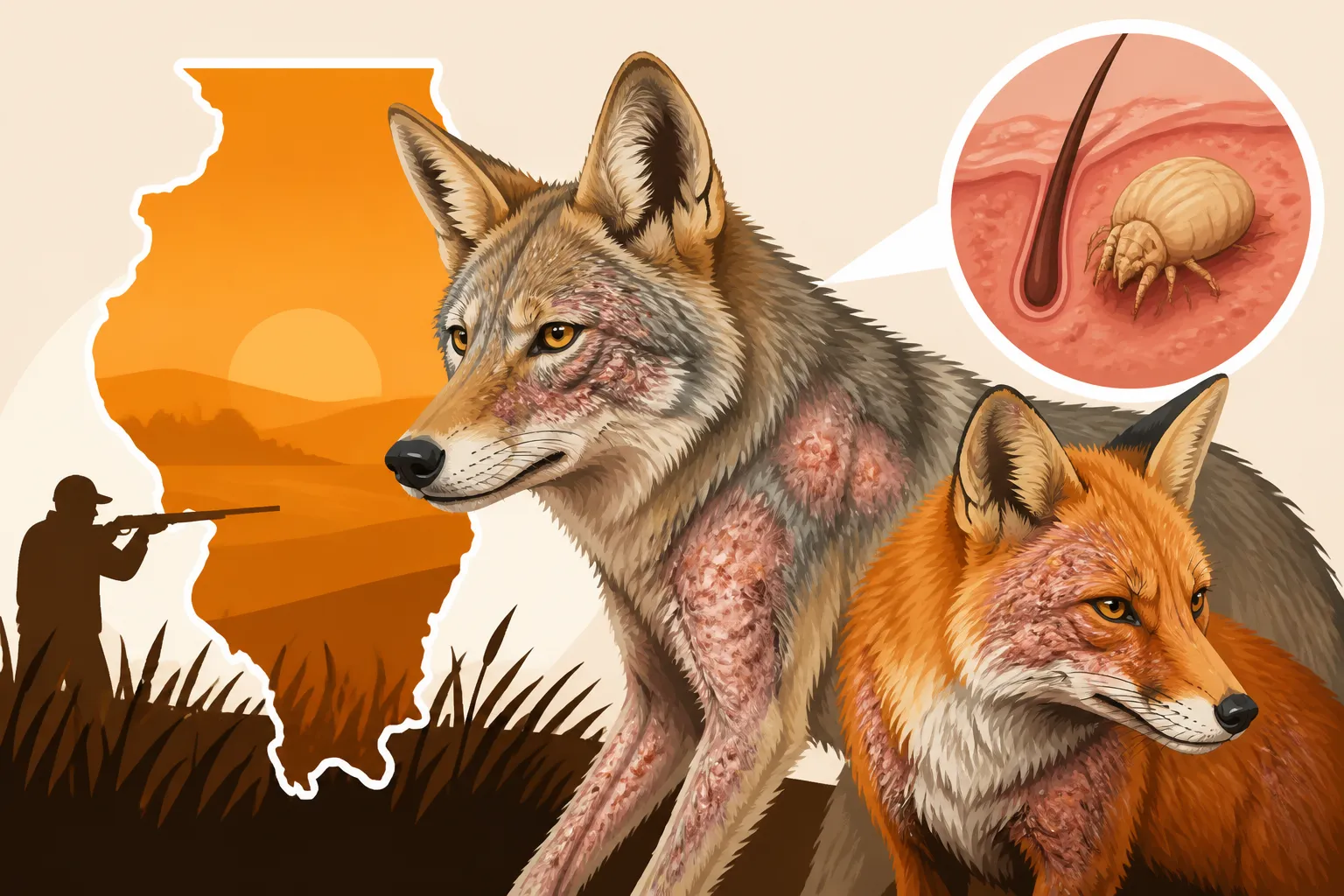
When you see a coyote or fox that looks like it's been through a blender, losing patches of fur and covered in scabs, chances are you're looking at an animal suffering from mange. It's a parasitic skin disease caused by tiny mites, and it can range from a mild irritation to a life-threatening condition for wild canids.
What Exactly is Mange? Sarcoptic vs. Demodectic
Mange isn't just one thing; there are a couple of main types, but the one you're most likely seeing in a wild fox or coyote in Illinois is sarcoptic mange, often referred to as "scabies." This nasty condition is caused by the Sarcoptes scabiei mite. These microscopic critters burrow into the skin, laying eggs and causing intense itching, irritation, and eventually, hair loss. Imagine having invisible bugs tunneling under your skin all day, every day – it’s pretty miserable.
The other type, demodectic mange, is less common and usually less severe in wild animals, but it's worth knowing about. It's caused by Demodex mites, which are actually a normal part of a mammal's skin flora. Problems only arise when an animal's immune system is weakened, allowing these mites to multiply out of control. This can lead to localized hair loss, but rarely the widespread, crusty skin you see with sarcoptic mange. For the purposes of what most of us see afield, we're almost always talking about sarcoptic mange. It's truly a brutal condition that leaves animals vulnerable.
How Mange Spreads Among Illinois Wildlife
Mange is highly contagious, and that's precisely why it can sweep through local populations of coyotes and foxes, making it a concern for wildlife managers and anyone who cares about the health of our game species. The primary mode of transmission is direct contact with an infected animal. This means a lot of things in the wild:
- Social Interactions: Coyotes and foxes are social creatures, especially when raising pups or within a pack structure. A simple nuzzle, shared den space, or even playing can easily transfer mites. Imagine a litter of fox pups, where one gets infected; it's almost guaranteed the rest of the litter will follow.
- Shared Spaces: Mites can survive off a host for a period, though usually not for long. This means that if a mangy animal rests in a particular bed, uses a specific den, or even rubs against a favored tree or brush pile, it can leave mites behind. The next animal to come along and use that same spot can pick them up. This is particularly true in areas of high coyote density or where fox territories overlap.
- Scavenging and Predation: While less common for direct transmission, if an uninfected animal feeds on the carcass of a mangy one, or even uses a kill site recently occupied by an infected individual, there's a small chance of mite transfer.
Because of these close-quarter interactions, mange can spread rapidly within a family group or a localized population. This is why you might see several animals in the same area showing symptoms, prompting concerns for the overall health of White-Tailed Deer Across Illinois and Wild Turkeys in Illinois, as healthy predator populations are part of a balanced ecosystem.
Recognizable Symptoms in Coyotes and Foxes
Identifying mange isn't usually difficult, especially in its more advanced stages. The symptoms are quite distinctive and often heartbreaking to witness. When you're out scouting with your GoHunt app or just enjoying some time afield, keep an eye out for these tell-tale signs:
- Intense Itching: This is usually the first and most persistent symptom. An affected animal will scratch, bite, and rub itself constantly against trees, rocks, or anything it can find to try and relieve the unbearable itch. This constant scratching leads to further skin damage.
- Hair Loss: As the disease progresses, hair loss becomes very noticeable. It often starts around the face, ears, and elbows, then spreads across the body. The animal can become almost entirely bald, sometimes resembling a different species altogether due to the lack of fur. A fox losing its beautiful red coat is a particularly sad sight.
- Crusty, Thickened Skin: The skin in affected areas will become red, inflamed, and often covered in thick crusts and scabs. This is due to the mites, the constant scratching, and secondary bacterial infections that can set in. The skin can look leathery and wrinkled.
- Weight Loss and Emaciation: The constant itching and discomfort can stress an animal severely. They might spend so much time scratching that they neglect hunting or foraging, leading to significant weight loss. Their immune system is also constantly fighting the mites and any secondary infections, draining their energy reserves.
- Lethargy and Weakness: A severely mangy animal will often appear tired, listless, and weak. Their movements might be slow and uncoordinated. Their eyes might look dull and sunken. This is a direct result of the chronic stress, pain, and sometimes fever associated with widespread infection.
It’s important to remember that these symptoms can mimic other conditions, but the combination of intense itching and progressive hair loss is usually a strong indicator of mange.
The Impact of Mange on Illinois Coyote and Fox Populations
Mange isn't just an unsightly skin condition; it has serious repercussions for individual animals and can, in some cases, affect local predator populations. Understanding this impact helps put your sightings into perspective.
Effects on Individual Animals and Survival Rates
For an individual coyote or fox, sarcoptic mange is often a death sentence if left untreated. The suffering is immense. The constant itching is debilitating, leading to relentless scratching that causes open wounds. These wounds are perfect entry points for secondary bacterial infections, which can quickly become systemic and life-threatening.
Beyond infection, the extensive hair loss severely compromises the animal's ability to regulate its body temperature. Imagine a cold Illinois winter, and a fox or coyote is nearly bald. They can't stay warm, leading to hypothermia and frostbite. This makes them less effective hunters, further contributing to emaciation. A weakened, sick animal is also far more susceptible to other diseases and predation itself, becoming an easier target for larger predators or even vehicle collisions as they might wander into less familiar areas in search of food. Pups born to or infected with mange have a very low survival rate, further impacting the next generation.
Broader Ecological Considerations
While mange can be devastating to individual animals, its impact on the overall Illinois coyote and fox populations is a bit more nuanced. In localized areas, particularly where predator densities are high, mange outbreaks can cause a temporary dip in numbers. For instance, if a specific territory has several infected animals, their reproductive success might plummet, and many adults could succumb to the disease.
However, coyotes and foxes are generally resilient species with good reproductive rates. While mange can reduce numbers in the short term, it usually doesn't lead to a long-term, widespread decline across the entire state. Nature has a way of balancing things out. A reduction in predator numbers might temporarily allow prey species to increase, but then the predator population often rebounds. It's more about local pockets of impact rather than an existential threat to Coyotes and Predators in Illinois overall.
One thing to consider is how widespread disease might affect public perception and management. If mangy animals become very visible, there might be increased public calls for management actions, even if the overall population isn't at risk. Using tools like GoHunt can help you understand the general distribution of these species and contextualize what you're seeing on the ground.
Mange and Hunter Encounters
For hunters, encountering a mangy coyote or fox presents a unique ethical and practical dilemma. If you're out Predator Hunting in Illinois and a mangy animal presents itself, what do you do?
- Ethical Considerations: Many hunters feel a strong sense of compassion for a suffering animal and choose to humanely dispatch a severely mangy individual. This can be seen as an act of mercy, ending prolonged suffering and potentially reducing the spread of mites to other healthy animals. This aligns with responsible wildlife stewardship.
- Harvesting and Carcass Handling: If you choose to harvest a mangy animal, it's crucial to handle the carcass with care. While transmission to humans is rare (sarcoptic mites are species-specific, meaning human scabies is typically a different mite species), it's always best to wear gloves when handling any sick animal. The meat from a severely mangy animal is generally not recommended for consumption due to the animal's compromised health and potential secondary infections. However, the pelt, even if damaged, might still be collected if local regulations allow, though its value would be significantly diminished.
- Reporting: Regardless of whether you harvest the animal, reporting your sighting to the Illinois Department of Natural Resources (IDNR) is a good practice. This helps wildlife biologists track disease prevalence and understand local population health. You might be asked to provide details about the animal's condition and location. This data is vital for Illinois Wildlife Disease Monitoring.
| Symptom | Description | Severity on Animal | Spread Risk |
|---|---|---|---|
| Intense Itching | Constant scratching, biting, rubbing against surfaces | High discomfort | Indirectly via rubbing |
| Hair Loss | Patches of fur missing, often starting on face, ears, legs | High, leads to hypothermia | High, mites on skin/fur |
| Crusty/Thickened Skin | Red, inflamed skin with scabs, lesions, and a leathery appearance | Severe pain, infection risk | High, mites in skin |
| Weight Loss | Emaciation, visible ribs, hip bones due to inability to hunt/forage | High, leads to weakness/death | Low, but indicates severe infection |
| Lethargy | Slow movement, lack of energy, disinterest in surroundings | High, leads to vulnerability | Low, but indicates severe infection |
What Hunters and Landowners Can Do About Mange
While it might feel helpless when you see a mangy animal, there are practical steps you can take as an Illinois hunter or landowner to contribute positively to wildlife health and understanding.
Reporting Sightings to Illinois Authorities
One of the most important things you can do is report sightings of sick or mangy animals to the Illinois Department of Natural Resources (IDNR) or your local wildlife agency. This isn't about getting the animal "taken care of" by a state official, necessarily, but about providing crucial data. Wildlife biologists use these reports to:
- Track Disease Distribution: Understanding where mange is prevalent helps them map out disease hotspots and potential corridors of spread.
- Monitor Population Health: Frequent sightings of severely mangy animals in a specific area can indicate localized stress on the coyote or fox population.
- Inform Management Decisions: While there aren't specific widespread treatment programs for mange in wild populations, this data can inform broader management strategies or educational campaigns.
When you report, be prepared to provide details like the exact location (GPS coordinates are best), the species of animal, an estimate of its condition, and the date and time of the sighting. Photos or videos can be incredibly helpful if you can safely obtain them. Don't be shy about reaching out; they rely on public input to monitor these situations. You can find contact information for reporting sick animals on the IDNR website. This is a critical part of Reporting a Sick Animal in Illinois.
Preventing Spread and Managing Your Property
While you can't cure wild animals of mange, landowners and hunters can play a role in reducing artificial concentrations of animals that might facilitate disease spread.
- Responsible Feeding Practices: Avoid intentionally feeding coyotes or foxes. While this might seem like a good idea to some, it concentrates animals in unnaturally high densities, increasing the chances of direct contact and therefore, disease transmission. Bird feeders, if not properly maintained, can also attract rodents which in turn attract predators, creating a localized hotspot.
- Carcass Disposal: If you harvest a deer or other game animal on your property, dispose of the carcass responsibly. Leaving gut piles in easily accessible areas can attract multiple predators, bringing them into closer contact than might naturally occur. Burying carcasses or ensuring they are out of the way can minimize this.
- Monitor Trapping and Hunting Efforts: If you're engaged in Trapping Illinois Furbearers or Coyote Calling in Illinois Farm Country, being observant of the health of the animals you encounter can provide valuable insights. If you trap an animal with severe mange, you're making a management decision that removes a vector of disease.
Remember, the goal isn't to eradicate these animals, but to foster healthy populations. Part of that means not inadvertently creating conditions that lead to widespread disease. When planning your property management or hunting strategy, consider the health of the entire ecosystem.
Dispelling Myths About Mange Transmission
There's often a lot of fear and misinformation surrounding wildlife diseases, and mange is no exception. It's important to understand the realities of transmission to protect yourself and your domestic animals without undue panic.
- Human Transmission is Rare and Fleeting: While Sarcoptes scabiei mites can temporarily get on human skin, they typically cannot complete their lifecycle on humans. They might cause a temporary, itchy rash, but it's usually self-limiting and resolves quickly because human skin isn't their preferred host. It's not the same as human scabies, which is caused by a human-specific mite. Still, good hygiene, like washing hands thoroughly after any potential contact, is always wise.
- Pet Transmission is Possible, But Preventable: This is where awareness is key. Domestic dogs can contract sarcoptic mange from wild canids, and it's highly contagious among dogs. Symptoms in dogs are similar: intense itching, hair loss, and scabs. The good news is that it's treatable by a veterinarian. The best prevention is to keep your dogs from having direct contact with wild animals, especially sick ones. If your dog frequently roams areas with known mangy wildlife, discuss preventative parasite control with your vet. Many modern flea and tick preventatives also protect against mites. Cats are generally not susceptible to dog or wild canid sarcoptic mange.
- No "Cure" for Wild Populations: Despite some rumors, there are no widespread, effective, or ethical methods to "cure" entire wild populations of mange. Administering medication to individual wild animals is impractical and often stressful for the animal. Targeted culling efforts might reduce local prevalence but are not a long-term solution for widespread disease. This underscores the importance of letting nature take its course in most instances, with the exception of humane dispatch by hunters.
Understanding these facts allows you to react to sightings responsibly, without succumbing to unnecessary fear or promoting ineffective interventions. Being informed helps protect our cherished Illinois Coyote Range and Density and Illinois Fox and Bobcat Trapping Season.
Mange and Human/Pet Interaction in Illinois
The sight of a mangy coyote or fox near your home, particularly in more suburban or rural-residential areas of Illinois, naturally raises concerns about the safety of your family and pets. Let's address those practical worries head-on.
Risks to Domestic Animals and Humans
While direct transmission of mange mites from a wild animal to a human causing a full-blown, chronic infection is incredibly rare, the primary concern lies with our furry companions, especially dogs.
- To Domestic Dogs: Sarcoptic mange, also known as canine scabies, is highly contagious among dogs. If your dog comes into direct contact with a mangy coyote or fox, or even rubs against a spot where a mangy animal recently rested, they could pick up the mites. Once on your dog, these mites will burrow into the skin, causing severe itching, hair loss, and skin irritation. It's a truly miserable experience for a dog, and without veterinary intervention, it can lead to secondary infections and a decline in health. This is why vigilance is so important if you live in an area where you know mangy wildlife are present. Discussing a robust parasite prevention plan with your veterinarian, especially one that covers mites, is a smart move if you're concerned.
- To Cats: While theoretically possible, it's far less common for cats to contract sarcoptic mange from wild canids. Cats usually have their own species-specific mites, and they tend to be less prone to direct contact with coyotes or foxes than dogs are.
- To Humans: As mentioned earlier, human skin is not the preferred host for the mites that cause sarcoptic mange in coyotes and foxes. If you do get mites on you (e.g., from handling a mangy carcass without gloves, or your dog brings them in), they might cause a temporary, itchy rash. This is usually mild and self-limiting, as the mites can't properly burrow and reproduce on human skin. It's uncomfortable for a few days, but it's not a lasting health threat. Still, prevention through careful handling and good hygiene is the best policy.
The most significant risk from a mangy animal is not necessarily the mange itself, but the fact that a severely compromised animal might be more unpredictable or desperate. A sick, weakened animal might be more likely to approach human habitation in search of easy food or shelter, potentially leading to conflicts with pets or people.
Protective Measures for Pets and Families
Knowing the risks, here are some actionable steps you can take to protect your household in Illinois:
- Supervise Pets Outdoors: This is probably the most crucial step. Don't let your dogs or cats roam unsupervised, especially in areas where you've seen mangy wildlife. Keep dogs on a leash when walking, particularly in wooded areas or along field edges where coyotes and foxes frequent. Hunting Illinois's Year-Round Feral Hogs means we understand the importance of managing what's out there on our lands.
- Secure Your Property: Make your yard less attractive to wildlife. Secure trash cans, clean up fallen fruit or pet food left outdoors, and remove any dense brush piles or structures that could serve as shelter for a wild animal. Even if you're not seeing mangy animals, these practices are generally good for preventing human-wildlife conflicts.
- Regular Vet Care and Preventatives: Talk to your veterinarian about year-round parasite prevention for your dogs. Many broad-spectrum products protect against fleas, ticks, heartworms, and intestinal parasites, and some also include protection against mites. This is your best line of defense against your pet contracting mange.
- Educate Children: Teach children not to approach or touch wild animals, even if they appear sick or friendly. Emphasize that wild animals, particularly those that are unwell, can be unpredictable.
- If You See a Mangy Animal Near Your Home: Avoid direct contact. If it's acting aggressively or appears to be suffering greatly and posing a risk to itself or others, contact your local animal control or the IDNR. They can provide guidance on specific situations and potentially intervene safely. Do not attempt to capture or "help" a wild animal yourself.
By taking these sensible precautions, you can significantly reduce the risk of mange impacting your family and pets, while still maintaining a healthy respect for the wildlife that shares our Illinois landscapes.
Disclaimer
This article is for general informational purposes only and does not constitute professional advice. Laws, prices and regulations vary by location and change over time. Consult a qualified professional for guidance on your specific situation.