Combining a Turkey and Hog Trip in Illinois
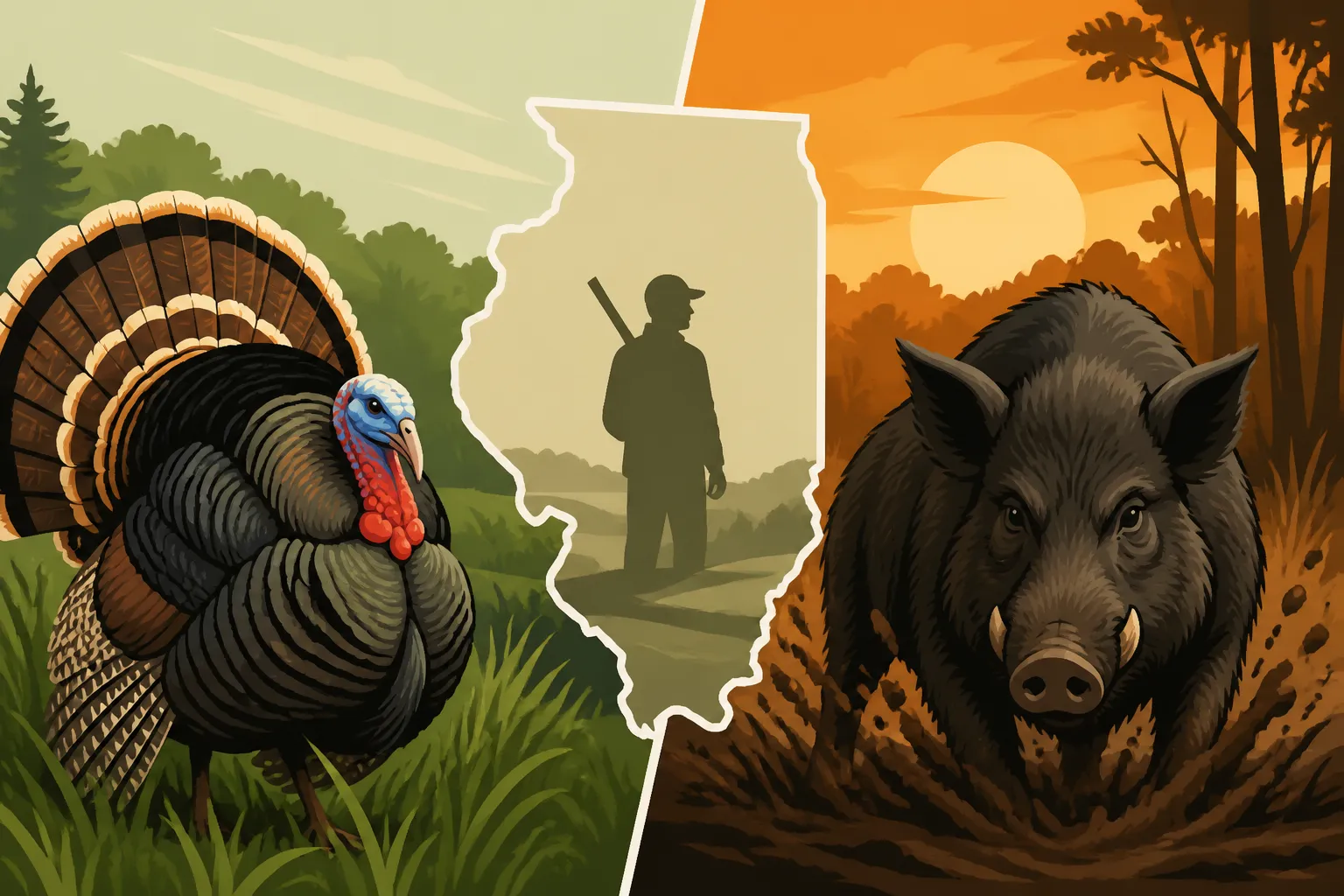
For many hunters, especially those traveling from out of state or simply trying to make the most of limited time off, the idea of rolling two hunting adventures into one trip is incredibly appealing. If you're eyeing Illinois for spring turkey, you might be wondering how you can also squeeze in some action against those wily feral hogs. This guide will help you understand the dynamics and logistics of combining a spring turkey hunt with a feral hog hunt in the Prairie State.
The Appeal of a Combo Hunt in Illinois
Let's face it, time in the field is precious. Between work, family, and all of life's other demands, it's tough to justify multiple long trips if you can accomplish more on one. That's where the beauty of a turkey and hog combo hunt in Illinois truly shines.
Maximizing Your Time and Investment
Think about it: you've already invested in travel, lodging, and taking time away from your daily grind. Why not make every moment count? Turkey season, particularly in the spring, offers a prime opportunity because many areas where turkeys thrive also see activity from feral hogs. While spring turkey hunting often occupies the early morning hours, the rest of the day can sometimes feel like dead time. This is where hogs step in as the perfect complement.
Instead of sitting around camp during the midday lull, or packing up early, you can switch gears. Hogs don't operate on the same strict seasonal schedule or daily patterns as turkeys, making them ideal targets to fill those gaps. You're already there, your gear is mostly suitable, and the landscapes often overlap. It's an efficient use of your resources, stretching your adventure without necessarily stretching your budget proportionally. The sheer thrill of pursuing two different game animals with distinct challenges on a single trip is a massive draw for many, offering a diverse and rich hunting experience.
Understanding Illinois's Unique Regulations for Each Species
Before you even start packing, it's absolutely crucial to grasp the regulatory differences between turkey and hog hunting in Illinois. They are managed in vastly different ways, and knowing these rules is the foundation of a successful combo trip.
Wild turkeys in Illinois are considered a prized game species, and their hunting is tightly regulated through a permit system and specific seasons. For spring turkey, you'll need to secure the appropriate permits for the zone and hunting period you intend to hunt. These permits are often allocated through a lottery system, particularly for prime periods or non-residents, though over-the-counter options might exist for later seasons or specific zones. Illinois Spring Turkey Zones and Periods offers a deep dive into how these seasons are structured. You also have strict legal shooting hours, typically from one-half hour before sunrise until 1 PM, and specific weapon restrictions.
Feral hogs, on the other hand, are viewed as an invasive, destructive species in Illinois, and as such, they are largely unregulated by the state. This is a game-changer for hunters. There is no closed season, no bag limit, and generally no permit required to hunt feral hogs in Illinois. This "unprotected" status means they can be hunted year-round, day or night, with a broader range of weapon choices, especially on private land. This extreme flexibility is precisely what makes them such a fantastic addition to a seasonal turkey hunt. However, and this is a big "however," while state regulations are loose, you must have landowner permission to hunt hogs on private land. For public lands, the rules for hog hunting can vary wildly, from outright prohibition to specific site-specific regulations, so you absolutely need to check with the managing agency for any public ground you consider. For a comprehensive overview, read about Illinois Feral Hog Regulations.
Strategic Planning for a Successful Combo Trip
Combining two distinct hunts successfully isn't just about showing up with two different guns. It requires careful planning that considers timing, location, and gear to ensure you're ready for both opportunities.
Timing Your Hunt for Optimal Overlap
Given that feral hogs can be hunted year-round, your combo trip timing will naturally revolve around the Illinois spring turkey season. This season typically runs from early April into May, split into various zones and periods. The key is to pick a period where conditions might be favorable for both species.
Early in the spring turkey season, say the first or second period in the South Zone, turkeys are often still quite vocal on the roost and actively seeking hens. The foliage is generally sparse, making it easier to spot hogs moving through timber or across fields. However, early spring can also bring unpredictable weather—cold snaps, rain, and even late snow, which can make both types of hunting challenging. If you are considering Hunting an Early South Zone Turkey Period, you'll need to be prepared for this variability.
As the season progresses into late April and May, the weather typically warms up, and the woods green up considerably. Turkeys might become a bit more "henned up" and less responsive to calls, but hogs become very active, especially around agricultural fields as crops begin to emerge. The thicker cover can make spotting hogs harder but can also provide excellent ambush opportunities around their feeding areas. Hunting a Late North Zone Turkey Period might offer warmer weather but denser cover. The sweet spot often lies in those middle periods when turkeys are still active but not completely locked down, and hogs are moving freely.
Location, Location, Location: Finding the Right Ground
This is perhaps the most critical element for a successful combo hunt. You need to find areas where both wild turkeys and feral hogs have a strong presence. In Illinois, prime areas for both often include:
- River Bottoms: The Illinois River Valley and other major river systems are historically rich in wildlife. These areas offer a mix of dense timber, water sources, and often adjacent agricultural fields. Turkeys love the big timber for roosting, and hogs frequent the thick underbrush, water sources, and adjacent crop fields for food. Hunting the Illinois River Valley provides a great overview of these productive areas.
- Southern Illinois Timber and Farmland: The Shawnee Hills region in southern Illinois, with its rugged terrain, dense forests, and interspersed small farms, is known for robust turkey populations and has seen increasing hog activity in recent years. The mix of cover, water, and food sources makes it ideal.
- Agricultural Areas with Large Timber Blocks: Central Illinois is renowned for its deer, but areas with significant timber stands bordering vast crop fields can hold both turkeys and hogs. The hogs will root in the fields, and the turkeys will roost and feed in the timber.
The biggest hurdle for finding suitable ground is almost always access. While you can hunt turkeys on many public lands, public land hog hunting opportunities are generally very limited or non-existent in Illinois. Your best bet for consistently finding hogs and having the flexibility to hunt them effectively will be on private land. This means securing permission from landowners, which can be a process in itself. Finding good private land that holds both species is like hitting the jackpot. Don't be afraid to read up on Getting Private Land Permission in Illinois to boost your chances. Some outfitters also specialize in multi-species hunts, and this is where tools like BookYourHunt might come in handy for finding private land access or guided trips that cater to both turkeys and hogs.
Gear Considerations for Dual-Species Hunting
Packing for a combo hunt means thinking versatile. While you'll likely have specific items for each, there's overlap that can save you space and weight.
| Category | Turkey Hunting Focus | Hog Hunting Focus | Combo Considerations |
|---|---|---|---|
| Camouflage | Spring patterns (leafy green, lighter browns) | Darker patterns, adaptable to low light/night | Versatile pattern that blends with spring foliage but isn't too light |
| Firearms | 12 or 20 gauge shotgun, tight choke, turkey loads | AR-style rifle (.223, .300 Blackout), .308, .450 Bushmaster, pistol caliber carbine | If using two firearms, ensure proper transport & licensing. Shotgun for turkey, rifle for hogs. |
| Optics | Red dot/scope (low magnification) on shotgun | Thermal or night vision for night hunting (private land), traditional scope for day | Binoculars for scouting both. Flashlight/headlamp for field dressing. |
| Calls | Diaphragm, box, slate calls for turkey | None typically, though some use distress calls | Dedicate a pouch/pocket for turkey calls. |
| Decoys | Turkey hen or jake decoys | None for hogs | Lightweight, packable turkey decoys. |
| Scent Control | Less critical for turkeys, but always a good idea | Very important for hogs, as they have an excellent nose | Scent-eliminating spray or carbon clothing. |
| Footwear | Waterproof, comfortable for walking and sitting | Durable, waterproof for varied terrain | High-quality, broken-in waterproof boots are essential for both. |
| Backpack | Capable of carrying decoys, calls, food, water | Space for extra ammo, water, potential recovery tools | A modular pack system or a larger pack with good organization. |
| Game Care | Field dressing knife, game bags | Field dressing knife, game bags, cooler, ice | Ample cooler space and ice are critical for warm spring weather. |
For firearms, you'll almost certainly want to bring two separate weapons: a shotgun patterned specifically for turkey hunting, and a rifle for hogs. While a shotgun with slugs could technically be used for hogs, a rifle offers far more accuracy and ethical shot placement, especially at range or in low light. When you're Choosing Between Slugs and Straight-Wall Rifles for deer, some of those calibers like .450 Bushmaster are also great for hogs. If you plan to hunt hogs at night on private land, a thermal optic or night vision scope for your rifle is almost indispensable and worth the investment. Remember to understand all local regulations on weapon use and transportation.
Executing Your Illinois Turkey and Hog Hunt
With the planning out of the way, it’s time to hit the woods. The key to a successful combo hunt is flexibility and making the most of the natural patterns of each animal.
Turkey Tactics During a Combo Hunt
Your mornings will almost certainly be dedicated to turkeys. This is when they are most active, vocal, and susceptible to calling.
- Roost Hunting: Get to your chosen area well before first light. Listen for gobblers on the roost and try to set up strategically to call them in shortly after they fly down. Patience is key. Listening for those first morning gobbles is an irreplaceable experience. You can find detailed strategies in Calling an Illinois Gobbler Off the Roost.
- Mid-Morning Scenarios: If the early morning hunt doesn't pan out, don't give up. Turkeys can still be called in later in the morning, especially lone gobblers or those separated from hens. This is where Run-and-Gun Turkey Tactics on Public Land can come into play, allowing you to cover ground, listen for distant gobblers, and quickly set up on new birds.
- Using Lulls: Once the gobbling activity naturally slows down, usually around mid-morning to noon, you'll have a few hours before the 1 PM closing time for turkeys. If you've filled your turkey tag, or if the birds just aren't cooperating, this is your transition window.
Transitioning to Hog Hunting
Once your dedicated turkey hunting time is over for the morning, or if you've bagged a bird, it's time to shift focus to hogs. This is where their year-round, less-restricted nature becomes incredibly valuable.
- Midday Scouting and Ambush: During the midday, hogs often bed down in thick cover, but they will still move to water sources or wallows. Use this time to scout for fresh sign: rooting, tracks, scat, and rubs. Look for areas where they've been recently active, especially near water or transition areas between dense cover and feeding grounds. Setting up an ambush near a fresh rooting area or a well-used trail can be effective.
- Late Afternoon and Evening Movement: Hogs typically become more active in the late afternoon and evening, moving out of bedding areas to feed. This is a prime time for spot-and-stalk or sitting a known travel corridor or food source.
- Night Hunting (Private Land Only): This is where hog hunting truly diverges from turkey hunting and offers a unique opportunity. On private land, with landowner permission, you can legally hunt hogs at night in Illinois. This is often the most productive time, as hogs feel safer under the cover of darkness. Thermal optics are a huge advantage here, allowing you to spot hogs at great distances in complete darkness. Make sure you've read up on Night Hunting Hogs With Lights on Private Land for specific tactics and safety considerations. Companies like BookYourHunt often list outfitters that provide guided thermal hog hunts, which could be a natural add-on to a spring turkey booking.
Logistics and Game Care in the Field
Warm spring weather presents a challenge for preserving your harvest.
- Prompt Field Dressing: Whether it's a turkey or a hog, prompt and thorough field dressing is paramount in spring temperatures. Get the entrails out quickly to allow the carcass to cool.
- Cooling and Transport: For both animals, especially hogs, have plenty of ice and large coolers ready. Hogs are large animals, and their meat can spoil quickly if not cooled. Plan your recovery route and how you'll get the animal back to your vehicle or camp efficiently. This is where having a good dragging sled or even a small game cart can be invaluable. Even small details like Blood Trailing After Dark in Illinois can impact your recovery, so be prepared for any scenario.
- Processing: If you're on a multi-day trip, consider how you'll process your game. Will you quarter it in the field and debone it, or take it to a local processor? If you're staying at a lodge, confirm their facilities. For general guidance on post-harvest care, articles like Butchering a Deer at Camp offer relevant principles that apply to other large game.
Potential Challenges and How to Overcome Them
No hunting trip is without its potential headaches, and a combo hunt can amplify some of those challenges. But with a bit of foresight, you can overcome most of them.
Weather Variability
Illinois spring weather is notorious for being unpredictable. You can experience all four seasons in a single week, or even a single day. A chilly, damp morning perfect for turkeys can give way to a scorching, humid afternoon that makes hog hunting uncomfortable and game care critical.
Solution: Pack layers! Bring waterproof outer shells, insulating layers, and lightweight breathable clothing. Monitor the forecast closely, but be prepared for sudden changes. Having extra changes of clothes in your vehicle is always a good idea. This adaptability extends to your hunting strategy; don't force a particular method if the weather dictates otherwise.
Managing Priorities and Expectations
It's easy to get caught up in the excitement of a new hog sign or an active gobbler and let one pursuit overshadow the other. The risk is that you end up with neither, or a half-hearted attempt at both.
Solution: Set clear, realistic goals for your trip. Prioritize your turkey hunt during peak turkey hours. Once that window closes, fully commit to hog hunting. Be mentally prepared to switch gears. If you've tagged a turkey, then all your focus can shift to hogs, which often makes the hog hunting more successful. Remember, bagging both on one trip is fantastic, but enjoying the experience is the ultimate goal. Don't let the pressure of a "combo" hunt detract from the fun.
Navigating Public vs. Private Land Rules for Hogs
As mentioned, public land hog hunting can be a minefield of restrictions or simply unavailable. If you've secured a turkey permit for a specific public land site, don't assume you can also hunt hogs there.
Solution: Always, always, always verify the regulations for feral hogs on any public land you intend to hunt. The Illinois Department of Natural Resources (IDNR) website or a direct call to the site superintendent is your best resource. For a truly dedicated hog hunt, especially if you want to utilize night hunting tactics or specific weapons, private land is usually the only viable option. This is where services like GoHunt or BookYourHunt can be valuable, as they may list private land leases or guided hunt packages that specifically include hog hunting alongside other game. Many non-residents, in particular, find booking a guided or semi-guided hunt through an outfitter that has access to both turkey and hog habitat on private land to be the most streamlined and successful way to execute a combo trip.
Turkey vs. Hog Hunting Elements Comparison
Here's a quick comparison to help you visualize the differences and plan accordingly for your combo hunt.
| Feature | Wild Turkey Hunting (Spring) | Feral Hog Hunting (Illinois) |
|---|---|---|
| Seasonality | Specific spring periods (April-May) | Year-round |
| Permits Required | Yes, specific for zone/period (lottery/OTC) | Generally no state permit (private land) |
| Primary Habitat | Mature timber, mixed hardwoods, field edges | Dense cover, river bottoms, swamps, agricultural areas |
| Best Time to Hunt | Early morning (roost), late morning for calling | Late afternoon, evening, and especially night (private land) |
| Typical Gear | Shotgun, turkey calls, decoys, full camo | Rifle (often with thermal), high-power flashlight, sturdy boots |
| Main Challenges | Wary birds, "henned up" gobblers, changing weather | Elusive nature, excellent senses, rapid reproduction, heat spoilage |
| Legal Hours | Half-hour before sunrise to 1 PM | Day or night (private land, with landowner permission) |
| Species Status | Game animal | Unprotected/invasive |
Combining a turkey and hog trip in Illinois offers an incredible opportunity to double your hunting enjoyment and make the most of your time afield. With careful planning, a solid understanding of the regulations, and adaptable tactics, you can experience the thrill of both pursuing a strutting gobbler and intercepting a destructive sounder of hogs in the same memorable adventure.
Disclaimer
This article is for general informational purposes only and does not constitute professional advice. Laws, prices and regulations vary by location and change over time. Consult a qualified professional for guidance on your specific situation.