Hunting Illinois River Bluff Country
For many hunters, the image of Illinois conjures up vast fields of corn and soybeans, flat and predictable. But tucked away along the winding path of the Illinois River lies a completely different beast: the rugged, timbered bluffs. These areas can be incredibly frustrating to hunt, with their steep inclines, deep ravines, and swirling winds, often making you feel like you're climbing a ladder or lost in a maze. This guide is here to unravel the complexities of hunting Illinois River bluff country, helping you navigate its unique challenges and unlock its potential for trophy deer and gobbling turkeys.
Understanding the Illinois River Bluff Ecosystem
Before you even think about hoisting a stand or setting out decoys, it's crucial to grasp what makes the Illinois River bluff country so distinct. This isn't your typical Midwest woodlot; it's a dynamic, demanding landscape that requires a specific approach and a deep respect for its natural intricacies. Understanding these foundational elements will be your first step toward consistent success.
The Unique Terrain and Its Challenges
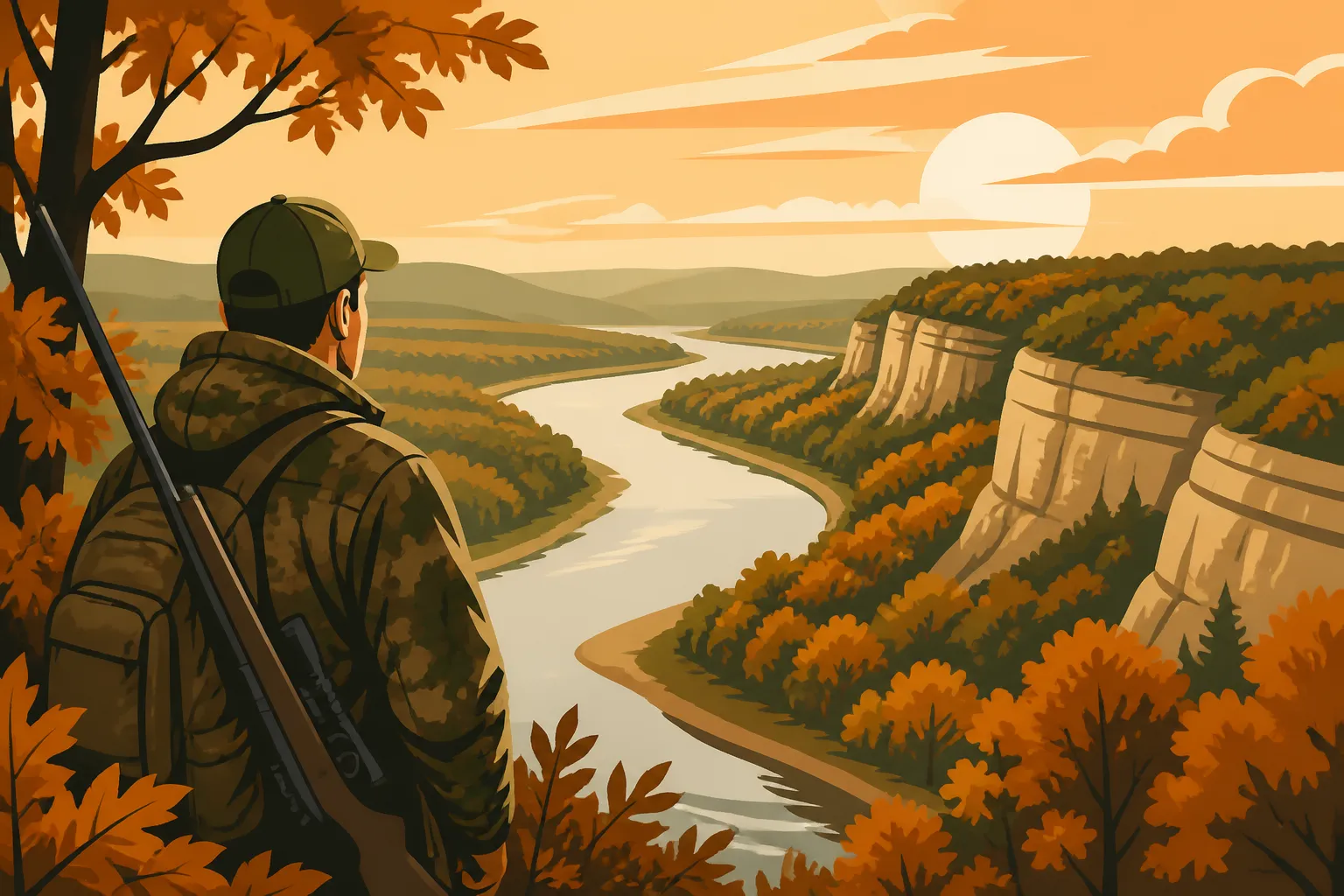
The Illinois River bluffs are a geological marvel, a dramatic departure from the gently rolling plains that define much of the state. Imagine a series of ancient, forested hills and ridges carved out by millennia of river flow and glacial retreat, creating a tapestry of steep ravines, sharp drop-offs, and deep, dark hollows. You'll find a mix of mature hardwood forests – think towering oaks, hickories, and maples – providing abundant mast crops, interspersed with dense thickets of multiflora rose, greenbrier, and young saplings in the bottoms and on less steep slopes. This dense undergrowth provides incredible security cover for wildlife but can be an absolute nightmare for a hunter trying to move quietly or retrieve a downed animal.
Beyond the physical challenge of navigating these steep grades, the terrain presents unique hunting hurdles. Those dramatic elevation changes create an intricate dance of thermal currents and erratic wind patterns that can make predicting scent dispersal a maddening endeavor. What you think is a favorable wind on your ridge top might be swirling unpredictably in the hollows below. Furthermore, access can be a significant issue. Many prime bluff areas are isolated, with limited road frontage, making it tough to get in and out discreetly. It’s a physically demanding environment that tests your stamina, your navigational skills, and your patience, but the rewards can be truly exceptional.
Key Game Species in the Bluffs
While the Illinois River bluffs might challenge your legs and lungs, they absolutely teem with wildlife, offering prime habitat for several popular game species. At the top of the list are the white-tailed deer, which thrive in this broken country. The dense cover, varied mast crops, and natural security of the steep hillsides provide everything a deer needs. Mature bucks, in particular, often gravitate to the bluffs, using the topography to their advantage by bedding on leeward slopes or hidden benches where they can detect threats from multiple directions. They become incredibly adept at navigating the rugged terrain, making them elusive trophies. For a broader perspective on their presence statewide, consider learning more about White-Tailed Deer Across Illinois.
Wild turkeys are another species that finds the bluff country to be an ideal home. The tall, mature hardwoods along the ridgetops provide perfect roosting sites, while the draws and benches offer ample feeding grounds rich with insects, seeds, and nuts. Hearing a gobbler thunder from a bluff-top roost at dawn, echoing across a misty river bottom, is an experience unlike any other. These birds are savvy, and hunting them in this broken country requires stealth and strategic calling. You'll also encounter plenty of small game, like squirrels and rabbits, especially in the transition zones between timber and agriculture. Furbearers such as coyotes and bobcats are also prevalent, utilizing the dense cover for hunting their prey.
Essential Scouting Techniques for River Bluffs
Hunting bluff country isn't something you can just wing. Successful trips are built on diligent, detailed scouting. If you try to simply wander in on opening day, you'll likely spend more time getting lost and busting game than actually hunting. Think of scouting here as piecing together a complex puzzle, with each piece of information bringing you closer to understanding where and how the game moves.
Reading Topography and Water Features
Your scouting journey for the bluffs absolutely starts from home with digital mapping tools. Forget old paper maps for a moment; services like GoHunt or OnX Hunt are indispensable for dissecting this complex landscape. Zoom in and study the contour lines like a hawk studying a field. Look for distinct features: sharp changes in elevation that create natural funnels, subtle benches that run along a hillside (often secret highways for deer), and saddles where two ridges dip and connect. These are prime locations where deer prefer to travel, especially when moving between bedding and feeding areas. Pay particular attention to how these fingers of timber and ravines lead down into the main river bottom, as these often act as major thoroughfares. Hunting Illinois River Bottom Funnels is a strategy that's tailor-made for these environments.
Beyond the dry topography, seek out water features. In bluff country, these can be less obvious than full-blown creeks. Look for tiny spring seeps along hillsides, small intermittent streams, or even pockets where water collects after a rain. These smaller, hidden water sources become critical congregation points for deer and turkeys, especially during dry spells in the late summer and early fall. Identifying these subtle, often overlooked features can give you a significant advantage. Remember, even a small, muddy puddle can be a magnet for game. Overlaying historical aerial photos can also reveal old logging roads or trails that animals still use, offering insights that current satellite imagery might miss. This virtual legwork is crucial groundwork before ever setting foot on the ground.
Identifying Key Deer and Turkey Sign
Once you've done your digital homework, it's time to lace up your boots and hit the ground. When you're Scouting Illinois Public Land Before Season, your mission is to verify your map findings and locate fresh sign. For deer, start by walking those benches and saddles you identified on your map. Look for fresh rub lines, where bucks have scraped their antlers on saplings and small trees. These often follow the contours of the bluffs or occur on the edges of thick cover. Scrape lines—areas where deer have pawed the ground and urinated—will be less common on steep slopes but are absolute gold when found on a relatively flat bench or a small opening. These are clear indicators of deer travel and presence.
For turkeys, listen for gobbling activity at dawn, but also keep your eyes peeled for physical evidence. Look for large dusting bowls, depressions in soft soil where turkeys wallow to clean their feathers, often found on sunny, south-facing slopes or open ridgetops. Droppings and individual strut marks from toms are also telltale signs. Perhaps most importantly, look for fresh scratchings in the leaf litter. Turkeys are constantly foraging, raking leaves back with their feet to uncover insects, seeds, and acorns. The fresher the scratching, the more recently birds have been in the area. Pay close attention to dominant mast trees like oaks and hickories; if they're dropping acorns, you'll likely find game nearby. Remember that during your scouting, you're not just looking for sign, you're also learning the lay of the land, finding easy access routes, and identifying potential stand sites, especially considering the complex Wind and Thermals on a Southern Illinois Ridge that will impact your hunt.
Effective Hunting Strategies for This Landscape
Hunting the Illinois River bluffs is a commitment. It's not a place for passive waiting; it demands an active, strategic approach. You'll need to adapt your tactics, leverage the terrain, and be prepared for physically demanding situations. Success often boils down to patience, stealth, and a deep understanding of how animals move through this unique environment.
Stand Placement and Wind Considerations
Tree stand placement in the bluffs is an art form, not a science, largely because of those notoriously swirling winds. Forget what you think you know about prevailing winds; in this broken topography, thermals play an even more dominant role. In the mornings, as the sun warms the land, air currents typically rise, carrying your scent uphill. In the evenings, as the air cools, thermals descend, carrying your scent downhill into the draws. You need to account for both the general wind direction and these thermal drifts. Setting your stand slightly off a primary travel route, allowing the wind and thermals to carry your scent away from where you expect game to appear, is paramount. Often, finding a micro-ridge or a small shelf that offers a good vantage point while protecting your scent path is key.
Ridge-top saddles, benches that wrap around a hillside, and points overlooking deep draws are all prime candidates for stand locations. When selecting a tree, consider its approach and exit strategy – can you get in and out silently without alerting deer? This is especially critical during Hunting Illinois's Long Archery Season where close encounters are common and any perceived threat can spoil a hunt. Climbing stands can offer flexibility to adjust to changing conditions, while strategically placed hang-on stands, particularly those easily accessed from a discreet entry route, can become long-term producers. Always ensure your stand is placed to maximize shot opportunities while minimizing your detection, taking advantage of natural cover for concealment.
Still-Hunting the Ridge Systems
While stand hunting has its place, still-hunting is an incredibly effective and often underutilized strategy in the bluffs. This isn't about covering ground quickly; it's about moving at a glacial pace, taking one or two steps, then pausing for several minutes to scan, listen, and glass the timber ahead. Think of it as a moving ambush. The goal is to spot game before it spots you, giving you the advantage. Focus on looking for horizontal lines (a deer's back or belly) in a vertical world of tree trunks and shadows. Any subtle flick of an ear or swish of a tail should immediately draw your attention. This method requires intense focus and discipline.
Move slowly into the wind or with a slight crosswind, constantly checking the thermals to ensure your scent is not blowing ahead of you. Utilize the terrain to your advantage: use natural dips and folds in the land to hide your movement, and walk just below the crest of a ridge to remain concealed from animals on the other side. This is very similar to the tactics used for Still-Hunting Southern Illinois Ridgelines, where the terrain dictates a more cautious and deliberate approach. This method excels during the rut, particularly during Hunting the Rut in Early November, when bucks are actively cruising for does and might be on the move throughout the day, providing more opportunities for a stealthy encounter. The ability to adapt your pace and direction based on terrain and wind is the hallmark of a successful still-hunter in this challenging environment.
Navigating Access and Regulations
Hunting the Illinois River bluffs, like anywhere, requires adherence to local and state regulations. While the pursuit of game is central, ensuring you have legal access and understand the rules is paramount for a safe and responsible hunting experience. These bluffs often present a patchwork of land ownership, making proper navigation of access vital.
Public vs. Private Land Realities
Accessing the prime hunting grounds in Illinois River bluff country can be a complex endeavor, often involving a mix of public and private lands. While some areas are part of state fish and wildlife areas or other public hunting opportunities, a significant portion of the river bluffs, especially the most secluded and rugged parts, remains in private hands. For those looking to explore public options, consulting resources like the Illinois Department of Natural Resources (IDNR) website or mapping tools like GoHunt can help you identify open public hunting areas. Understanding the general landscape of Public Hunting Land in Illinois is a great start, but specific site regulations can vary greatly.
Securing permission on private land, however, can truly unlock some of the best hunting experiences in these bluffs. Many landowners, especially those who primarily farm the flatter ground, might be open to granting permission for hunting their timbered bluffs, particularly if you approach them respectfully and responsibly. Always offer to help with small tasks, respect their property lines, and leave the land better than you found it. In many cases, establishing a good relationship with a landowner can lead to long-term access to prime, low-pressure hunting ground. Digital scouting with GoHunt can help you easily identify landowners to contact, and Reading Aerial Photos for Southern Illinois Deer can further inform your discussions about specific habitat features on their property.
Specific Challenges and Tips
Hunting the Illinois River bluffs comes with its own set of unique challenges that extend beyond just finding game. The demanding physical nature of the terrain cannot be overstated. Prepare for long, steep climbs and descents, often through thick brush and uneven footing. Physical fitness is not just a bonus; it's a necessity. Carry ample water, a reliable first-aid kit, and always tell someone exactly where you're going and when you expect to return. A GPS device or a robust mapping app like GoHunt with downloaded offline maps is an absolute must, as cell service can be spotty in the deep hollows, and it's incredibly easy to get disoriented.
Always double-check the current Illinois Hunting Licenses and What They Cost and the specific Illinois Deer Season Structure Explained, as regulations can change. Pay close attention to blaze orange requirements during firearm seasons, as visibility is crucial in this dense cover. Ethical shot placement is also incredibly important here; tracking a wounded animal through the steep, tangled bluffs is one of the most difficult tasks a hunter can face. Therefore, make sure you're confident in your shot, and if you do harvest an animal, plan your extraction route carefully. Often, quartering an animal and making multiple trips is far safer and less strenuous than trying to drag it whole up a steep incline. Respect the land, respect the game, and prepare thoroughly for a challenging but ultimately rewarding hunting experience.
| Feature | Central Illinois Farmland Hunt | Illinois River Bluff Country Hunt |
|---|---|---|
| Terrain | Flat fields, small woodlots, fencerows | Steep ridges, deep ravines, thick timber |
| Physical Demand | Low to Moderate | High, stamina and agility needed |
| Primary Game | Deer, pheasant, rabbit | Deer, turkey, coyote |
| Scouting Focus | Field edges, pinch points, food sources | Topography, thermals, bedding areas |
| Hunting Style | Stand hunting over food/travel routes | Still-hunting, strategic stand placement |
| Wind Impact | Fairly predictable | Swirling, complex thermals |
| Access | More private land, permission crucial | Mix of public & private, can be rugged |
| Gear Priority | Blinds, long-range optics | GPS, good boots, climbing aids, first-aid |
Disclaimer
The information provided in this guide is for informational purposes only and is not a substitute for official regulations. Hunters are responsible for understanding and complying with all current Illinois Department of Natural Resources (IDNR) laws, rules, and regulations before engaging in any hunting activities. Always prioritize safety and ethical hunting practices.