Hunting a Clear-Cut Regrowth Edge
Ever stared at a freshly cut timber block, or an older clear-cut choked with thick regrowth, and felt a mix of frustration and intrigue? It can look like an impenetrable mess, deterring many hunters. But here's the secret: these seemingly chaotic areas are often prime whitetail habitat, offering abundant food and cover. This guide will walk you through exactly how to unlock the deer-hunting potential of these clear-cut regrowth edges across Illinois, turning that initial frustration into successful hunting opportunities.
Understanding the Dynamics of Clear-Cut Regrowth Edges
Clear-cuts, whether they're the result of commercial logging, forestry management, or even storm damage, drastically change the landscape. What might look barren or overgrown to the untrained eye is, in fact, a thriving deer magnet in various stages of recovery. These areas are not just random patches of woods; they are dynamic ecosystems that profoundly influence deer behavior, drawing them in for critical resources.
Why Deer Are Drawn to These Areas
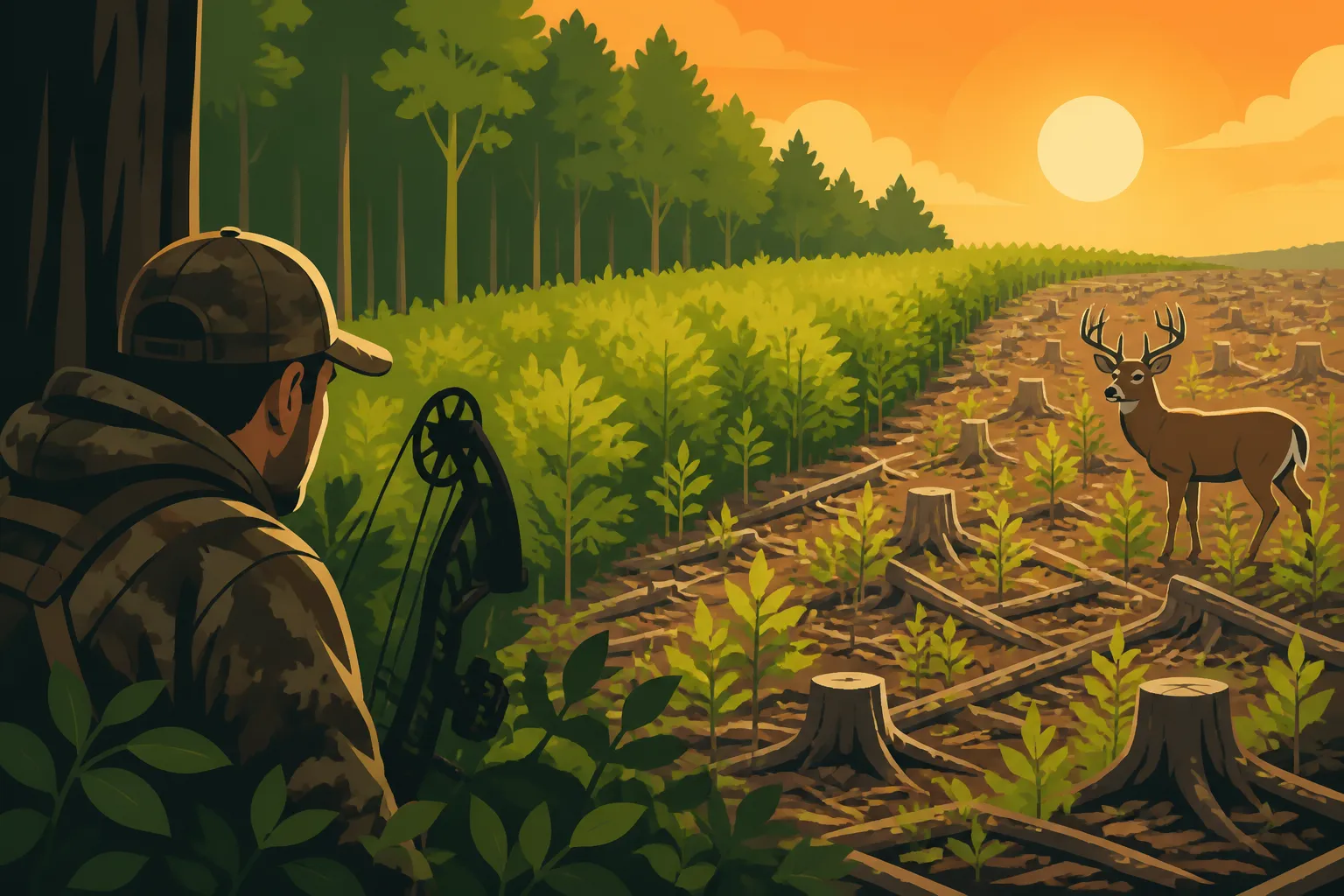
Deer are creatures of edge habitat, and clear-cuts create an abundance of it. When sunlight hits the forest floor after logging, it triggers an explosion of new growth. This isn't just random weeds; we're talking about a smorgasbord of browse species that whitetails absolutely crave. Everything from succulent briars, tender saplings, and a variety of woody shrubs that were once shaded out by the mature canopy suddenly flourish. This fresh, nutritious forage is incredibly appealing, acting like a natural food plot for deer.
Beyond food, clear-cuts offer unparalleled cover. The dense, tangled network of regenerating saplings, brush, and downed timber provides security and thermal cover that mature, open woods often lack. A buck can bed down deep within a thicket, feeling safe from predators and hidden from human eyes, all while being just steps away from his next meal. Does often bring their fawns to these dense areas for protection. These spots become sanctuaries, especially on heavily pressured public lands like sections of the Shawnee National Forest where deer are constantly seeking refuge.
The Stages of Regrowth and Deer Preference
Not all clear-cuts are created equal, and understanding their different stages is crucial to hunting them effectively. Think of it like a buffet: deer have their preferences, and those preferences change as the clear-cut matures.
- Freshly Cut (1-3 years old): In the immediate aftermath of logging, these areas can be quite messy with logging debris and exposed soil. While some initial pioneer plant species might emerge, the cover isn't usually dense enough for prime bedding, and the most desirable browse hasn't yet taken hold in abundance. Deer might still travel through them, especially along edges, but they're not typically holding deer for long periods.
- Early Regrowth (3-10 years old): This is often the sweet spot. The ground is now covered with a dense thicket of briars (like greenbrier and blackberry), young saplings (oaks, maples, sassafras), and other woody plants. This stage offers the perfect combination of food and cover. Deer will spend a significant amount of time bedding, browsing, and traveling within these areas. They become almost impenetrable for humans, which is exactly why deer love them. You'll find deer feeding throughout the day and bedding in the thickest pockets.
- Mid-Stage Regrowth (10-20 years old): As the saplings grow taller and some smaller, weaker plants get outcompeted, the density of the understory might start to thin a bit, especially where dominant species are taking over. While still offering good cover and browse, it might not be as impenetrable as the early regrowth stage. Deer will still use these areas heavily, but their travel patterns might become more defined around specific thickets or food sources within the growing timber.
- Mature Regrowth (20+ years old): At this point, the clear-cut has largely transformed back into young forest, with a developing canopy that once again shades out much of the ground-level browse. While still valuable timber, its appeal as a primary deer habitat diminishes somewhat compared to earlier stages. Deer might still pass through, but the dense, high-value food and cover combination found in younger regrowth is less prevalent.
For hunters, the early regrowth (3-10 years old) is generally the most productive stage. This is where you'll find the highest concentration of deer activity.
Scouting and Locating Productive Clear-Cut Edges
Finding and effectively scouting a clear-cut regrowth edge is a critical first step. You can't just stumble into one and expect success; it requires deliberate, strategic effort, often starting long before the season begins.
Utilizing Maps and Digital Scouting Tools
Before you ever set foot in the woods, your digital scouting tools should be your best friend. Start with aerial imagery from sources like Google Maps, the Illinois Department of Natural Resources (IDNR) website's public access maps, or specialized hunting apps like GoHunt.
Look for areas that appear lighter green or patchy, indicating younger growth, especially adjacent to older, darker timber. Timber sales are usually marked on public land maps or can be identified by distinct cut lines. For private land, the property boundaries in apps like GoHunt can help you pinpoint edges that might border a new logging operation.
- Identify the "Edge": Pay close attention to where the clear-cut meets the mature timber. This transition zone is a superhighway for deer movement. Look for fingers or peninsulas of thick cover extending into the older timber, or vice-versa.
- Locate Funnels and Pinch Points: Are there narrow strips of timber or natural corridors that deer would use to move between a clear-cut and an un-logged area? Creek bottoms, old logging roads, or subtle saddles on a ridge can act as natural funnels.
- Topography: Use contour lines to identify subtle elevation changes. Deer often prefer to travel along contours or cross ridges at their lowest points, which might lead them directly through a clear-cut edge. This is particularly true when Hunting Shawnee Hills Ridgelines.
Boots-on-the-Ground Reconnaissance
Digital scouting gets you in the ballpark, but nothing beats getting your boots dirty. Early season, or even during the off-season, is the best time for this.
- Walk the Perimeter: Start by walking the edge where the clear-cut meets the standing timber. Look for well-worn deer trails entering and exiting the thicket. Deer will often skirt the very edge, using the dense cover for security while still having easy access to the more open woods.
- Look for Sign: Keep your eyes peeled for rubs and scrapes, especially along these edges. Bucks will often make their presence known in these transition areas. During the rut, these clear-cut edges can become hotspots for cruising bucks checking for does. For more insights on this, read up on Scrape Lines Along a Logging Road.
- Identify Bedding and Feeding Areas: While you might not want to penetrate the thickest parts of the clear-cut too deeply to avoid spooking deer, try to find vantage points from the mature timber side where you can observe bedding areas or heavy browse sign within the regrowth. Look for fresh droppings, heavily browsed plants, and flattened patches of grass or leaves that indicate bedding.
- Wind and Thermals: Pay close attention to prevailing winds and how thermals might behave in these areas. Clear-cuts can create unique air currents. On clear, calm mornings, cool air will drain into low spots, while warm air will rise. Understanding these patterns is crucial for stand placement.
Reading Deer Sign Specific to Regrowth
Deer sign in clear-cuts can be different from what you'd find in open hardwoods.
- Rub Lines: Bucks will rub saplings within the clear-cut or along its edges. These rubs can be smaller and less prominent than those on mature trees, but a concentrated line indicates a travel corridor.
- Trails: Expect many small, intertwining trails within the thickest parts. Focus on the main arteries that lead into or out of the clear-cut, especially those connecting to water sources or other food plots in adjacent areas.
- Browsing Pressure: Look for clipped twigs and stripped leaves on young saplings and briars. If you see heavy browsing, you know deer are actively feeding there.
During your scouting, take notes, drop pins on your GoHunt app, and mark potential stand locations. The more detailed your scouting, the better your chances of success.
Effective Hunting Strategies for Regrowth Edges
Hunting clear-cut regrowth edges demands specific tactics. The dense cover that attracts deer also presents challenges for hunters, making strategic setup and movement paramount.
Stand Placement and Approach
Where you position yourself is everything in these tight quarters. The goal is to intercept deer moving into, out of, or along the edges of the clear-cut, without alerting them to your presence.
- Transition Zones: The sweet spot for stand placement is often right on the seam where the dense clear-cut meets the more open, mature timber. Deer use this cover for security as they enter and exit, offering you a shot opportunity. Look for points or fingers of timber that extend into the clear-cut; these act as natural funnels.
- Downwind Advantage: Always, always play the wind. Deer will use these thickets for bedding and will often approach feeding areas or travel corridors with the wind in their favor, scent-checking for danger. Position your stand downwind of the most likely deer movement, ensuring your scent is blowing away from their approach.
- Elevated vs. Ground Blinds:
- Treestands: An elevated treestand offers a clear line of sight over the dense regrowth, which is a huge advantage. It also helps get your scent above the primary deer level. When considering Treestand Setups in Shawnee National Forest, remember that thick canopy in regrowth areas can sometimes limit suitable trees, so look for a mature tree on the edge of the clear-cut that overlooks a travel corridor or feeding area.
- Ground Blinds: For extremely dense clear-cuts where good trees are scarce, a well-brushed-in ground blind can be incredibly effective. The thick cover helps break up your outline, allowing you to blend in. Just be extra vigilant with wind direction and scent control. Learn more about Using a Ground Blind on Illinois Public Land for specific techniques.
Table: Treestand vs. Ground Blind for Clear-Cut Edges
| Feature | Treestand (Elevated) | Ground Blind (Brushed In) |
|---|---|---|
| Visibility | Excellent over dense cover, wider view. | Limited, often peepholes through brush. |
| Scent Control | Higher elevation can help dissipate scent. | More challenging, meticulous scent control vital. |
| Concealment | Silhouette can be visible if not placed correctly. | Blends well with dense cover; natural ambush. |
| Portability | Generally more portable (climbers, hang-ons). | Can be cumbersome; best for semi-permanent sets. |
| Tree Dependency | Requires suitable mature tree on the edge. | No tree needed; can be set anywhere in thick cover. |
| Shot Angles | Downward angles, potentially steep close-in shots. | Eye-level shots, often through narrow windows. |
| Ease of Entry/Exit | Can be noisy climbing; careful approach needed. | Easier to get in/out quietly if brushed in well. |
| Ideal Use | Overlooking trails, small clearings on the edge. | Deep within cover, tight travel corridors. |
Timing Your Hunts
Deer activity patterns around clear-cuts can vary, but certain times are generally more productive.
- Early Morning and Late Afternoon: These are classic prime times. Deer will move out of their bedding areas in the thick clear-cut to feed in the early morning or filter back into the cover as evening approaches. Setting up well before dawn or staying until dark is crucial.
- Midday Movement: Don't discount midday, especially during the rut or in cold weather. The dense cover of a clear-cut provides such security that bucks, in particular, may feel comfortable moving through it at any hour. They might be checking scrapes, pushing does, or simply relocating to a different bedding area. This is a great time for Still-Hunting Southern Illinois Ridges adjacent to clear-cuts, or slowly working parallel to their edges.
- Post-Front Conditions: After a cold front or a rain event, deer often become more active. A clear-cut can be the first place they head to browse on fresh growth.
Still-Hunting and Drives
For hunters willing to work a little harder, still-hunting or carefully planned deer drives can be highly effective in clear-cut areas.
- Still-Hunting the Edge: Slowly and quietly pick your way along the perimeter of the clear-cut, pausing frequently to glass ahead. Use the mature timber as your cover, always peeking into the regrowth. This requires immense patience and keen observation. You're looking for subtle movements, a flick of an ear, or a flash of hide.
- Driving a Clear-Cut: While more challenging due to the density, a small, well-coordinated deer drive can push deer out of the thickest parts of a clear-cut. This is best done with 3-4 hunters. Place standers downwind at exit points where trails lead into more open timber, while walkers slowly and noisily push through the thicket. For more on group tactics, consider reading about Deer Drives With Three or Four Hunters. Make sure everyone knows the plan, safety is paramount, and blaze orange is worn during applicable seasons, following Illinois Blaze Orange Requirements.
Calling and Decoys
Deer calls can be effective around clear-cuts, especially during the rut.
- Rattling and Grunting: The dense cover of a clear-cut often means close-range encounters. Aggressive rattling sequences, followed by soft grunts, can mimic a buck fight and draw curious or territorial bucks out of the thicket. Remember, Rattling Volume in Thick Cover should be adjusted for the environment. You might not need to crash them together as hard as you would in open woods.
- Doe Bleats: Subtle doe bleats can attract bucks searching for receptive does, or even does curious about another deer in their area.
- Decoys: While less common directly within a clear-cut due to visibility issues, a single doe decoy placed just outside the edge in a visible lane can sometimes bring a buck out into the open for a shot.
Ultimately, hunting clear-cut regrowth edges is about understanding deer behavior, being patient, and adapting your strategy to the dynamic, dense environment.
Essential Gear and Safety Considerations
Hunting these dense, often rugged environments in Illinois requires specific gear and a heightened awareness of safety. It's not like strolling through an open oak flat.
Gear for Navigating and Hunting Dense Cover
Your gear choices can significantly impact your comfort, stealth, and success when tackling clear-cuts.
- Briar-Resistant Clothing: This is non-negotiable. Think tough canvas or synthetic brush pants, chaps, or bibs. Brands like Filson, Sitka, or even Carhartt offer excellent options. Your arms will also take a beating, so a durable jacket or thick long-sleeved shirt is wise. There's nothing worse than being constantly snagged and poked, making you loud and miserable.
- Sturdy Boots: Good ankle support and waterproof boots are essential. You'll be climbing over downed logs, navigating uneven terrain, and potentially crossing muddy sections. A comfortable, supportive boot like those from Irish Setter or Danner can make all the difference.
- Navigation Tools: The inside of a clear-cut can quickly become disorienting. A reliable GPS unit or a hunting app on your smartphone (like GoHunt's offline maps feature) is crucial. Always have a compass and a physical map as a backup, especially in areas with spotty cell service, such as deeper into the Shawnee National Forest. Marking your entry and exit points, and any key features, is vital.
- Binoculars and Rangefinder: Even in thick cover, binoculars help you pick apart brush for subtle deer movement. A rangefinder is essential for precise shot placement, as yardage can be deceiving when shooting through lanes in dense timber.
- Compact Archery Equipment/Short Rifles: For archery, a shorter axle-to-axle bow is often easier to maneuver in tight quarters, reducing the chance of hitting limbs when drawing or shooting. If hunting during Illinois's Two Firearm Deer Seasons, a shorter, lighter rifle or shotgun can be advantageous compared to a longer, heavier setup.
- Cutting Tools: A good pair of limb loppers or a folding saw can be invaluable for clearing shooting lanes from your stand or blind, or for trimming minor obstructions on a trail.
Safety Protocols in Clear-Cut Areas
The dense environment and potentially remote nature of clear-cuts make safety even more critical.
- Tell Someone Your Plan: Always let a friend or family member know exactly where you are going, your planned route, and when you expect to return. Share your map pins from your GoHunt app if possible.
- Blaze Orange (if applicable): If you're hunting during an Illinois firearm season, adhere strictly to the blaze orange requirements. Even if not required for your specific season (like archery), consider wearing an orange hat or vest for increased visibility to other hunters, especially if you're still-hunting or driving.
- First Aid Kit: Carry a basic first aid kit with essentials for cuts, scrapes, and other minor injuries that are common when battling briars and rough terrain.
- Communication: A fully charged phone is a must, but remember service can be spotty. Consider a satellite messenger device for true wilderness areas or remote sections of public land where cell service is non-existent.
- Awareness of Logging Activity: If hunting near active logging operations, be extremely aware of your surroundings. Loggers typically work during weekdays, but always listen for equipment, felling trees, or heavy machinery. Never enter an active logging site.
- Environmental Hazards: Be mindful of venomous snakes (especially in southern Illinois), hornets, and other stinging insects that often thrive in tangled, overgrown areas.
- Responsible Hunting: Know your target and what's beyond it. In dense cover, identifying your target cleanly and having a clear backdrop is paramount before taking any shot.
Hunting clear-cut regrowth edges can be physically demanding and mentally challenging, but the rewards are often worth the effort. By coming prepared with the right gear and prioritizing safety, you can turn these overlooked areas into your favorite hunting spots.
Disclaimer
Hunting is an inherently dangerous activity. Always follow all local, state, and federal hunting regulations. Ensure you have the proper licenses and permits. Prioritize safety, respect wildlife, and practice ethical hunting at all times. This information is for educational purposes and should not replace professional guidance or official regulations.