Illinois CWD Testing for Hunters
The presence of Chronic Wasting Disease (CWD) in Illinois deer herds is a real and unsettling concern for hunters, creating uncertainty about the health of the venison they harvest and the future of deer hunting in the state. This comprehensive guide will walk you through everything you need to know about CWD testing for hunters in Illinois, from understanding the disease itself to navigating the submission process and understanding what your results mean.
Understanding Chronic Wasting Disease in Illinois
Chronic Wasting Disease is a serious topic that no hunter in Illinois can afford to ignore. It’s been a part of our deer management landscape for decades now, and understanding what it is and how it impacts the herd is the first step toward responsible hunting and helping to manage its spread.
What is CWD and Why Does it Matter?
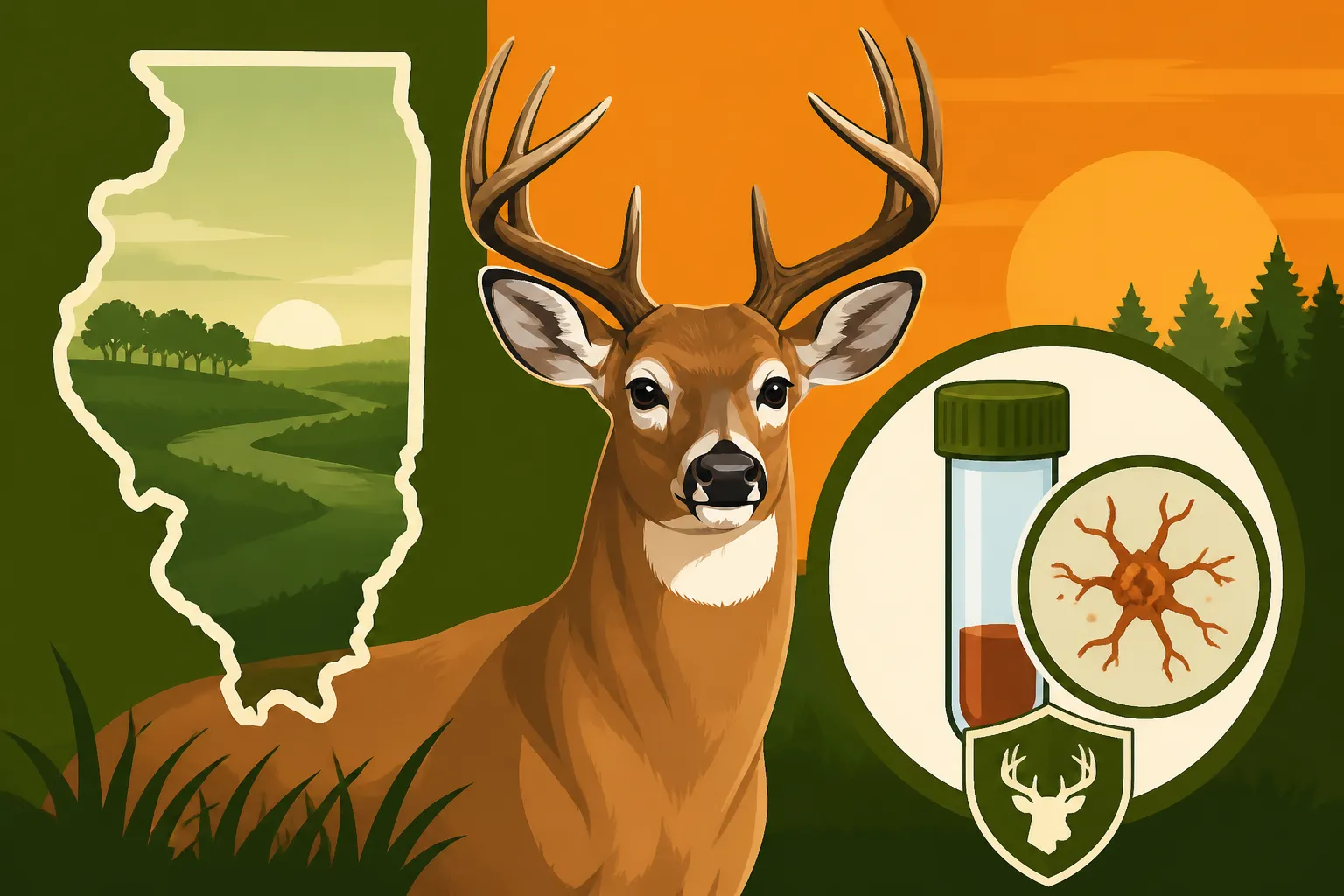
At its core, CWD is a neurological disease that affects cervids – that’s deer, elk, moose, and reindeer – and is caused by an abnormal protein called a prion. Unlike bacteria or viruses, prions aren't living organisms, which makes them incredibly resilient and difficult to eradicate. When a deer contracts CWD, these prions slowly accumulate in the brain and other tissues, causing irreversible damage that leads to severe neurological symptoms like emaciation, abnormal behavior, drooling, and ultimately, death. It's a progressive and fatal disease, and there's currently no cure or vaccine.
For Illinois hunters, CWD matters deeply for several reasons. Firstly, it poses a direct threat to the health and sustainability of our cherished white-tailed deer population. A widespread CWD infection can lead to declining deer numbers, skewed age structures, and a decrease in overall herd health. Secondly, while there's no conclusive scientific evidence that CWD can jump to humans, health organizations like the Centers for Disease Control and Prevention (CDC) advise against consuming meat from CWD-positive animals, out of an abundance of caution. This naturally raises concerns about the safety of venison, a traditional food source for many hunting families. Thirdly, the long-term presence of CWD can fundamentally alter our hunting seasons, regulations, and even the way we approach deer management, impacting the very fabric of our hunting heritage. Illinois has been battling this disease for quite some time, and it's a fight that relies heavily on hunter cooperation, especially in the areas designated as Illinois's Chronic Wasting Disease Zone.
How CWD Spreads Among Deer
Understanding how CWD moves through the deer population is crucial for appreciating the challenges of managing it and why hunter participation in testing is so vital. The primary modes of transmission are through direct animal-to-animal contact and indirect contact with environments contaminated by infected bodily fluids. Picture deer socializing, rubbing noses, or even sharing saliva as they browse. If one of those deer is infected, prions can be passed directly.
But it’s the indirect transmission that makes CWD particularly insidious. Infected deer shed prions through their saliva, urine, and feces. These prions can then contaminate soil, plants, and water sources, remaining infectious in the environment for years, even decades. This means a healthy deer can contract CWD simply by grazing on contaminated vegetation or drinking from a shared water source where an infected deer previously visited. This environmental persistence makes containing the disease incredibly difficult, as prions can literally linger in the landscape long after an infected animal is gone. It’s a silent, invisible threat that makes every patch of ground a potential risk. Experts have been tracking this closely since the disease first appeared, noting how it spread from counties like Boone; for a deeper dive, check out resources on How CWD Spread From Boone County.
Illinois CWD Testing Requirements and Recommendations
Navigating the various rules and recommendations around CWD testing can feel a bit like reading fine print, but it’s critical for every hunter to understand their responsibilities and the opportunities available to them. The Illinois Department of Natural Resources (IDNR) has a system in place that balances mandatory efforts with voluntary participation to best monitor and manage the disease.
Mandatory Testing vs. Voluntary Submission
In Illinois, CWD testing isn't always voluntary. If you harvest a deer within certain counties, particularly those designated as CWD Management Zones, you might be subject to mandatory testing requirements. These requirements are typically in effect during specific hunting seasons, such as the firearm deer seasons, when the IDNR can collect a large number of samples efficiently. During these periods, hunters are often required to bring their harvested deer (or at least the head) to an official CWD check station within a certain timeframe after harvest. This allows wildlife biologists to collect lymph node samples for testing and gather crucial data on disease prevalence in that specific area. Ignoring these mandatory testing rules can lead to penalties, so it’s essential to be aware of the regulations in the county where you are hunting. For detailed information, especially if you're hunting in a known hotspot, you'll want to review the guidelines for Mandatory Testing Inside an Illinois CWD County.
Beyond the mandatory zones and periods, the IDNR also encourages voluntary submission of deer for CWD testing from any county in Illinois. Even if you're hunting outside a CWD Management Zone, participating in voluntary testing is a proactive and responsible way to contribute to the state's CWD surveillance efforts. It provides valuable data that helps biologists detect new outbreaks early and track the potential spread of the disease into new areas. Think of it as an extra layer of peace of mind for you, knowing that the venison you're about to put in your freezer has been checked, and a vital contribution to the health of the deer herd for all of us. Many hunters use apps like GoHunt to quickly find nearby check stations or drop-off points, making voluntary submission easier than ever.
Preparing Your Deer for Testing
Submitting a deer for CWD testing, whether mandatory or voluntary, requires a little preparation to ensure the sample can be properly collected and analyzed. The key is to keep the head and neck intact and cool. After you've field dressed your deer and performed any initial processing, you'll need to remove the head with a portion of the neck attached. The general guideline is to leave about 4-6 inches of neck attached to the skull to ensure that the critical lymph nodes, which are typically sampled, remain with the head.
It’s absolutely crucial to keep the deer's head cool, especially in warmer weather, to preserve the tissue integrity for accurate testing. Placing the head in a cooler with ice (separated from direct contact with melted water) or refrigerating it are good options. Always ensure the harvested deer is tagged and legally checked before you transport it for CWD testing, as this is a separate but equally important step in the Illinois hunting regulations. When handling the deer, especially if you suspect CWD, always use gloves and practice good hygiene to prevent any potential spread of prions to your tools or the environment.
Finding CWD Sampling Locations
Once you’ve harvested your deer and prepared its head for testing, the next step is locating a place to submit your sample. Illinois has a network of collection points, but knowing how to find the most convenient one for you is key.
IDNR Check Stations and Designated Drop-Off Points
The Illinois Department of Natural Resources (IDNR) operates a system of CWD check stations and designated drop-off points across the state, particularly concentrated within and around the CWD Management Zones. During the specific firearm deer seasons, you'll often find manned check stations open for mandatory submissions. These stations are staffed by IDNR personnel or trained volunteers who can assist with the collection process and answer your questions. They are usually well-marked and advertised through local IDNR offices and the official IDNR website as hunting seasons approach.
Outside of these specific mandatory periods, or if you’re looking to submit a deer voluntarily, the IDNR also maintains a network of self-service drop-off locations. These are often freezer locations where you can deposit a pre-labeled deer head at your convenience. You’ll typically need to fill out a submission form with your harvest information, contact details, and permit number, which is then placed in a plastic bag with the head inside the freezer. These drop-off points are a fantastic resource for hunters who want to contribute to CWD surveillance without the pressure of a specific check station schedule. You can always find the most current list of these locations on the IDNR website, or even using a reliable app like GoHunt which often integrates state-specific information to guide you to the nearest drop-off. For the most up-to-date information on where to go, definitely consult the IDNR’s official guidance on Finding an Illinois CWD Sampling Location.
Utilizing Online Resources and Apps
In today’s digital age, finding CWD sampling locations is easier than ever, thanks to online resources and dedicated hunting apps. The Illinois Department of Natural Resources website is your primary official source for all CWD-related information, including interactive maps that pinpoint current check station locations, hours of operation, and details on self-service drop-off freezers. These maps are usually updated regularly, so it's always a good idea to check them right before your hunt. The IDNR site will also provide any necessary forms for voluntary submissions that you might want to print and fill out beforehand.
Beyond the official IDNR website, many modern hunting apps have integrated state-specific CWD information into their platforms. Apps like GoHunt, for instance, often feature layers that show public land boundaries, hunter access points, and crucial CWD check station or drop-off locations. This can be incredibly convenient when you're in the field and need to quickly locate the nearest submission point, or when you're planning your route after a successful hunt. These digital tools can also provide valuable additional information, such as specific instructions for preparing samples or links to the most recent CWD regulations. Being proficient with these digital tools, much like mastering how to utilize resources for Scouting With the Illinois DNR App, can significantly streamline your post-harvest process and ensure you comply with all CWD testing protocols.
The Testing Process and Receiving Results
Once you've submitted your deer's head, you might be wondering what happens next and how long it will be before you get results. The process involves a dedicated scientific approach to ensure accuracy, and knowing what to expect can ease some of the waiting game.
What Happens After Submission?
After your deer's head is dropped off at an IDNR check station or a designated freezer location, it embarks on a journey through the CWD testing pipeline. First, IDNR staff or trained technicians carefully extract specific tissue samples, typically the retropharyngeal lymph nodes from the neck and a portion of the obex (brain stem). These tissues are known to accumulate CWD prions early in the disease progression and are therefore the most reliable samples for detection. Each sample is meticulously tagged with a unique identification number that links back to your specific deer and the information you provided on the submission form.
These collected samples are then packaged and transported to a specialized diagnostic laboratory. In Illinois, samples are often sent to laboratories equipped to handle CWD testing, which typically use a method called immunohistochemistry (IHC) or enzyme-linked immunosorbent assay (ELISA) to detect the abnormal prions. This is a scientific process that takes time, as the samples need to be processed, stained, and examined under a microscope by trained pathologists. The average turnaround time for results can vary depending on the volume of submissions and the specific lab, but hunters should generally expect to wait anywhere from a few weeks to several months, especially during peak hunting seasons when labs are inundated with samples.
Understanding Your Test Results and Next Steps
Once the laboratory analysis is complete, the results are typically communicated to the hunter through a method specified by the IDNR. This could be an online portal where you can look up your results using your unique ID number, or you might receive notification via mail or email. It’s crucial to keep track of your submission information, including any assigned ID numbers, so you can easily access your results when they become available.
If your deer tests negative for CWD, that's excellent news, and you can proceed with confidence in processing and consuming your venison. However, if your deer tests positive for CWD, it's natural to feel disappointed and concerned. The IDNR advises against consuming meat from CWD-positive deer. While there's no direct evidence of human transmission, the CDC and other health organizations recommend this as a precautionary measure. In such a scenario, the IDNR will provide specific guidance on how to properly dispose of the carcass and any venison. This responsible disposal is critical to prevent further environmental contamination and spread of the prions. Understanding these implications is a key part of your responsibility as a hunter, and resources on Handling Venison From an Illinois CWD County can provide further details on safe practices and considerations for your harvest.
Carcass Movement Restrictions and Best Practices
To really get a handle on CWD, it’s not just about testing; it’s also about how we handle and transport deer after harvest. These rules are put in place to slow the spread of those persistent prions.
Rules for Transporting Deer Carcasses
Illinois has strict regulations regarding the transportation of deer carcasses, especially when moving them out of a CWD Management Zone. These rules are designed to prevent the physical movement of potentially infected prions from one area to another. Generally, hunters are prohibited from transporting whole deer carcasses (or certain high-risk parts like the brain, spinal cord, eyes, and lymph nodes) out of a CWD-positive county. The reasoning is simple: these are the tissues where CWD prions are most concentrated, and moving them could inadvertently introduce the disease to a new, unaffected area if they are improperly disposed of.
However, this doesn't mean you can't take your harvested deer home or to a processor. The regulations typically allow for the transportation of boned-out meat, clean skull plates (antlers attached to a clean skull plate with no brain tissue), capes (for taxidermy, with no brain or spinal cord tissue), and teeth. Essentially, any part that does not contain high-risk CWD tissues is generally permissible for transport. It’s vital to process your deer appropriately in the field or within the CWD-affected county before moving it across county lines. Always double-check the latest IDNR regulations before you hunt, especially if you plan to travel through or from a CWD-affected area, because these rules can change. Detailed guidance is available on Moving a Deer Carcass Out of a CWD County, which is essential reading for anyone hunting in or near these zones.
Minimizing CWD Spread in the Field
Beyond transportation rules, every hunter has a role in minimizing the spread of CWD right there in the field. When you field dress a deer, you're inevitably leaving behind certain tissues and fluids. To be a responsible steward of the herd, consider where you perform this task. Try to field dress deer in the area where they were harvested, avoiding areas where other deer frequently congregate, like active food plots or water sources. This localized disposal helps contain any potential prions to a smaller area. If possible, consider burying the carcass parts deep enough to deter scavengers, or transport them to a designated landfill if allowed and practical.
It’s also good practice to thoroughly clean and disinfect your tools, knives, and equipment after field dressing. While prions are tough, a solution of 40% bleach to 60% water can help break them down on non-porous surfaces. This applies to your vehicle as well – if you’ve transported a deer, especially a whole one before processing, ensure any residual fluids or tissues are cleaned from your truck bed or cargo area. By taking these extra steps, you’re not just protecting your own health; you're actively participating in the ongoing effort to protect Illinois’s deer herd from further CWD spread. It’s a collective responsibility that strengthens our hunting future.
The Hunter's Role in CWD Management
As hunters, we're not just participants in the outdoor tradition; we're often the first line of defense and critical partners in wildlife conservation. This couldn't be truer when it comes to the ongoing fight against CWD.
Why Hunter Participation is Crucial
The Illinois Department of Natural Resources relies heavily on hunter participation to effectively monitor and manage Chronic Wasting Disease. Think about it: hunters are out in the field, observing deer behavior, harvesting animals, and providing the raw samples that make surveillance possible. Every time a hunter submits a deer for CWD testing, whether it’s mandatory or voluntary, they are contributing a vital piece of data to the IDNR’s overall understanding of the disease. This data helps biologists track CWD prevalence, identify areas where the disease might be emerging or intensifying, and refine management strategies. Without robust hunter participation, the IDNR would have significant blind spots in their surveillance efforts, making it much harder to implement targeted control measures.
Our involvement goes beyond just submitting samples. It includes being vigilant for sick deer, reporting unusual behavior, and adhering to all regulations, including carcass movement restrictions. These actions directly impact the success of CWD management. The fight against CWD has been a long one in Illinois, spanning over two decades of dedicated effort, a testament to the challenge and the need for ongoing vigilance. To understand the historical context and the IDNR's sustained efforts, it’s worth looking into Illinois's Twenty-Three Year Fight Against CWD. Hunters are not just beneficiaries of a healthy deer herd; we are essential partners in maintaining it.
Long-Term Outlook for Illinois Deer Hunting
The presence of CWD certainly casts a shadow, but it doesn't mean the end of deer hunting in Illinois. Instead, it signals an evolution in how we approach it. The IDNR, in partnership with universities and other organizations, is continuously researching CWD, developing new testing methods, and refining management strategies to slow its spread and mitigate its impact. Efforts include targeted herd reduction in CWD-affected areas, ongoing surveillance, and educating hunters and landowners. The aim is to maintain a healthy and robust deer population capable of providing sustainable hunting opportunities for future generations.
As hunters, our continued engagement is paramount. This means staying informed about the latest CWD updates, embracing testing protocols, and advocating for responsible wildlife management. It also involves adapting our hunting practices if necessary, such as adjusting harvest strategies in affected zones. The long-term outlook for Illinois deer hunting hinges on this collective responsibility. While challenges remain, the commitment of hunters, alongside the dedicated work of wildlife professionals, gives us the best chance to manage CWD and ensure that the tradition of deer hunting thrives in the Prairie State. Understanding the historical context, like why specific areas became hotbeds, as detailed in discussions like Why Effingham and Scott Counties Worried Biologists, helps paint a clearer picture of the scale and complexity of this ongoing challenge. Ultimately, we all have a stake in this, and our actions today will shape the hunting landscape of tomorrow.
Illinois CWD Testing Quick Reference
For quick reference, here's a summary of key actions and information regarding CWD testing in Illinois.
| Action/Item | Description | Key Consideration |
|---|---|---|
| Understand CWD Zones | Be aware of which counties are designated as CWD Management Zones; rules are stricter here. | Check the IDNR website before your hunt. |
| Mandatory Testing | If hunting in a CWD Management Zone during specific firearm seasons, testing is required. | Bring your deer head to an official check station promptly. |
| Voluntary Submission | Highly encouraged for deer harvested outside mandatory zones. | Helps IDNR track disease spread; use self-service drop-off freezers. Apps like GoHunt can help locate these. |
| Prepare Your Deer | Leave 4-6 inches of neck attached to the skull; keep head cool. | Proper preparation ensures a viable sample for testing. |
| Locate a Station | Use the IDNR website or hunting apps (e.g., GoHunt) for current check station hours and drop-off freezer locations. | Locations can change; verify before you go. |
| Carcass Transport | No whole carcasses (or high-risk parts) to be moved out of CWD zones. Boned-out meat, clean skulls, and capes are generally allowed. | Process deer in the field or within the CWD county to avoid violations. Refer to Moving a Deer Carcass Out of a CWD County. |
| Receiving Results | Expect results in weeks to months, typically via an online portal. | Keep your submission ID number handy. |
| Positive Result | IDNR advises against consuming meat from CWD-positive deer. Follow IDNR guidelines for disposal. | Protects human health (out of caution) and prevents environmental contamination. |
| Field Hygiene | Field dress in place, clean tools, and sanitize vehicle areas after handling deer. | Minimizes environmental spread of prions. |
Disclaimer
The information provided in this guide is intended for general informational purposes only and does not constitute legal advice or an exhaustive list of all hunting regulations in Illinois. Hunting laws and regulations, particularly concerning Chronic Wasting Disease (CWD), can change frequently. It is the hunter's sole responsibility to consult the most current official regulations published by the Illinois Department of Natural Resources (IDNR) before engaging in any hunting activities. Always refer to the official IDNR website and guidebooks for the most accurate and up-to-date information.