Illinois Crossbow Equipment Requirements
Hunting in Illinois often presents a maze of regulations, and understanding the specific requirements for equipment like crossbows can feel like a constant challenge. You might be asking yourself if your current setup is even legal, what kind of broadheads are allowed, or during which seasons you can confidently carry your crossbow afield. It's a common frustration, especially with rules that can shift over time. This comprehensive guide aims to unravel all the complexities surrounding Illinois crossbow equipment requirements, ensuring you have the clear, up-to-date information you need to pursue your passion legally and ethically.
Understanding Crossbow Legality During Illinois Hunting Seasons
The flexibility and power of crossbows have made them increasingly popular among hunters in Illinois, but it's crucial to know exactly when and where you can use them. The Illinois Department of Natural Resources (IDNR) has specific guidelines that dictate their use throughout the various hunting seasons.
Crossbow Use During Archery Season
One of the most significant changes in Illinois hunting regulations over the years has been the expanded legality of crossbows during the state's generous archery season. Gone are the days when a special disability permit was required; today, any hunter possessing a valid archery deer or turkey permit can legally use a crossbow. This has opened up the sport to a wider demographic, including those who may find it physically challenging to draw a vertical bow, or simply prefer the mechanical advantages of a crossbow.
Illinois boasts one of the nation's longest archery seasons, offering ample opportunity for hunters to get out into the woods from October 1st through mid-January, with a brief closure during the firearm deer seasons. This extended window means that crossbow hunters have substantial time to pursue both deer and wild turkeys. It's an excellent opportunity for anyone looking to extend their time in the field, learn new tactics, or introduce new hunters to the sport. For a deeper dive into these opportunities, you might want to read more about Bowhunting Illinois's Long Archery Season or understand precisely When Illinois's Archery Season Opens.
Crossbows During Firearm and Other Special Seasons
While crossbows are fully integrated into the archery season, their use isn't limited there. Hunters with a valid firearm deer permit can also use a crossbow during Illinois's Two Firearm Deer Seasons. This means if you prefer a crossbow but also hold a firearm permit, you have additional opportunities outside the traditional archery window. This flexibility allows hunters to adapt to various conditions, be it challenging weather or specific hunting scenarios that might favor a crossbow over a traditional firearm.
Furthermore, crossbows are a legal weapon during Hunting the Illinois Youth Deer Weekend, providing younger hunters with a stable and often easier-to-master platform for their first deer hunt. This inclusive approach by the IDNR helps foster a new generation of hunters by making the initial learning curve less steep. Crossbows are also permitted during any special Chronic Wasting Disease (CWD) seasons that might be implemented in certain counties, often running in late winter to help manage deer populations in affected areas. Understanding the full scope of these overlapping opportunities is key to maximizing your time afield and is thoroughly covered in resources like Illinois Deer Season Structure Explained. It's always a good practice to double-check the latest hunting digest for specific dates and rules in your hunting zone, especially if participating in a CWD season.
Illinois DNR Crossbow Equipment Specifications
Unlike some other states that have very specific rules about crossbow draw weight or minimum bolt length, Illinois's regulations are more focused on the projectile's business end and general safety. This means hunters have a bit more freedom in choosing their crossbow setup, but with that freedom comes a responsibility to ensure ethical and humane harvesting.
Broadhead Requirements for Big Game
When it comes to the arrow or "bolt" fired from your crossbow, the most critical regulation in Illinois pertains to the broadhead. For taking deer or turkey, the IDNR mandates that broadheads must be "barbed or have a minimum 7/8 inch diameter when fully open for mechanical broadheads, or 7/8 inch fixed blade minimum." This means whether you prefer a mechanical broadhead that expands upon impact or a fixed-blade design, it must meet that 7/8-inch cutting diameter requirement.
This regulation is in place to ensure that the broadhead creates a sufficient wound channel for a quick, humane harvest. Hunters should always prioritize razor-sharp broadheads, as sharpness is paramount for clean penetration and effective blood trails. Dull broadheads can lead to poor penetration, wounded game, and frustrating recovery efforts. Invest in quality broadheads and keep them meticulously sharp, even if you’re just practicing with a dedicated practice broadhead. This adherence to legal and ethical broadhead use is just as important for crossbow hunters as it is for traditional archers, ensuring that game is dispatched humanely.
Non-Regulated Specifications and Best Practices
One common question that often arises is about minimum draw weight or bolt length for crossbows in Illinois. It’s important to clarify that the Illinois DNR does not specify a minimum draw weight for crossbows or a minimum bolt length. This is a distinction from many other states that might have these specific requirements.
However, while not legally mandated, responsible hunting dictates that you use equipment capable of delivering enough kinetic energy for a humane kill. For deer hunting, a crossbow with a draw weight of at least 100-125 pounds is generally recommended, paired with bolts that are at least 18-20 inches long and have sufficient weight (e.g., 350-400 grains total arrow weight with broadhead). These aren't legal requirements, but rather best practices to ensure deep penetration and effective energy transfer upon impact. Choosing a crossbow and bolt combination that delivers adequate kinetic energy will significantly improve your chances of a clean, ethical harvest, minimizing the risk of wounding loss. Always refer to your crossbow manufacturer's recommendations for bolt spine, weight, and length to ensure optimal performance and safety, as using incorrect components can damage your crossbow or lead to injury.
Permitted and Prohibited Accessories
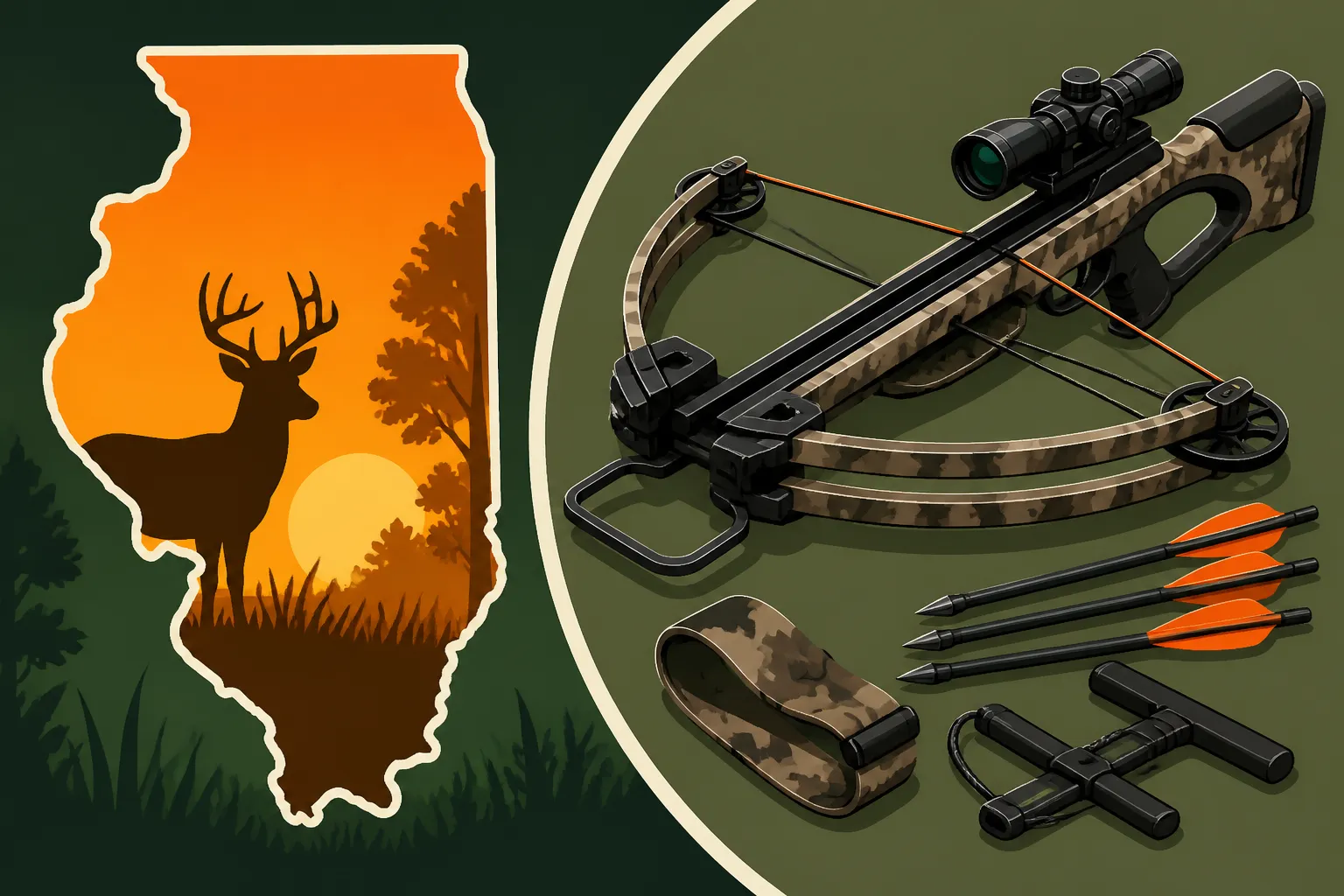
Crossbow hunters in Illinois have access to a range of accessories that can enhance their accuracy and overall hunting experience. Scopes, for instance, are perfectly legal and widely used on crossbows, allowing for magnified views and precise aiming. Many modern crossbows come equipped with specialized optics, or you can purchase aftermarket options. Lighted nocks, which illuminate the back of your bolt, are also permissible and are incredibly useful for tracking your shot in low light and locating your bolt after impact. Quivers, slings, and various scent-elimination devices are all legal and can contribute to a more effective hunt.
However, there are a few important prohibitions to be aware of. In Illinois, "no person shall use any device to project a beam of light, including a laser, for the purpose of locating or taking any wild animal." This means laser sights attached to your crossbow are generally illegal for hunting, except for certain physically challenged individuals who may obtain specific exemptions. This rule applies across most forms of hunting in the state, emphasizing fair chase. Additionally, while some states allow electronic calls for deer, Illinois prohibits their use. Always make sure any accessory you add to your crossbow adheres to Illinois hunting regulations, especially regarding Legal Weapons During Illinois Firearm Season which can sometimes offer insights into broader equipment principles. A quick check of the current hunting digest will always be your best bet for clarity.
Operational Considerations and Responsible Crossbow Hunting
Owning a legal crossbow is just the first step; effectively and responsibly using it in the field requires practice, maintenance, and a deep understanding of hunting ethics. These practices ensure not only your success but also the humane treatment of game and the safety of everyone in the woods.
Practicing for Accuracy and Shot Placement
Just like with any hunting weapon, consistent practice is the cornerstone of responsible crossbow hunting. While crossbows are known for their inherent accuracy and ease of aiming, simply having a scope doesn't make you a sharp shooter. You need to regularly practice at varying distances, understanding your crossbow's trajectory and how factors like wind, temperature, and elevation affect your shot. Don't just shoot from a bench; practice from typical hunting positions, such as from a treestand or Using a Ground Blind on Illinois Public Land. Knowing your maximum effective range – the distance at which you can consistently place a bolt accurately into a kill zone – is critical. Pushing shots beyond this range significantly increases the risk of wounding an animal without recovering it.
Focus intensely on shot placement. For deer, the vitals (heart and lungs) are a relatively small target, and a slight error can lead to a long, difficult, or even unsuccessful recovery. Practice shooting at 3D targets that accurately depict animal anatomy. Utilize mapping tools like GoHunt, which can help you understand terrain features in your hunting area and estimate realistic shot distances in different scenarios. By regularly honing your skills, you ensure that when the moment of truth arrives, you're prepared to make a clean, ethical shot, minimizing any suffering for the animal.
Maintaining Your Crossbow for Peak Performance and Safety
A crossbow is a powerful piece of equipment, and like any tool, it requires regular maintenance to perform reliably and safely. Neglecting your crossbow can lead to decreased accuracy, component failure, or even dangerous malfunctions. Regularly inspect your string and cables for fraying, wear, or damage. These components are under immense tension and can break if not properly cared for. Wax your string regularly with an appropriate crossbow string wax to prolong its life and ensure smooth performance.
Always check your limbs for cracks or delamination, especially after a hunt or if the crossbow has been dropped. Ensure all screws and fasteners are tight. Crucially, always carry a dedicated de-cocking bolt or a safe de-cocking mechanism. Never "dry fire" a crossbow without a bolt, as this can severely damage the limbs, cams, and string, and pose a serious safety risk. Proper maintenance is not just about extending the life of your equipment; it’s a critical aspect of hunter safety, protecting both you and those around you in the field, particularly during Cold-Weather Sitting Strategy in Illinois where materials can become more brittle.
Essential Resources and Staying Informed
Navigating hunting regulations can be complex, but fortunately, the Illinois DNR provides ample resources, and modern technology offers powerful tools to help hunters stay informed and compliant.
Navigating Official Illinois Hunting Regulations
The most definitive source for all Illinois hunting regulations, including those specific to crossbows, is the Illinois Department of Natural Resources (IDNR). Their official website is a treasure trove of information, providing access to the current year's hunting and trapping digests, season dates, permit applications, and updates on any rule changes. It's not always the easiest site to navigate, but it's the ultimate authority. Always download or pick up a physical copy of the annual "Illinois Digest of Hunting and Trapping Regulations." This booklet details all legal weapons, season dates, bag limits, and general rules that apply to every species.
When in doubt, directly consulting the IDNR website or reaching out to a local conservation police officer (CPO) is the best course of action. Relying on hearsay or outdated information can lead to inadvertent violations, which nobody wants. Understanding how to obtain Illinois Hunting Licenses and What They Cost and how to follow Illinois Deer Reporting Requirements are equally vital aspects of responsible hunting that the DNR website meticulously covers. Staying proactive about regulation updates ensures a smooth and legal hunting experience year after year.
Leveraging Technology for Compliance and Success
In today's digital age, hunters have powerful technological tools at their fingertips that can significantly aid in compliance and success. The Scouting With the Illinois DNR App is a great starting point, offering access to public land maps and basic regulations on the go. However, for truly detailed land information and regulatory overlays, advanced mapping platforms are indispensable.
Many hunters find mapping apps like GoHunt invaluable for identifying property boundaries, scouting terrain features like creek bottoms or ridgelines, and even understanding specific site regulations when overlays are available. While "OnX Layers for Illinois Land Status" is another popular option, GoHunt offers similar functionality, allowing you to clearly see public versus private land, identify access points, and visualize potential hunting hotspots. It can even help you pinpoint areas that might see less pressure, helping you with Finding Ground Others Walk Past. A reliable tool like GoHunt can help you plan your approach, understand the lay of the land, and ensure you're always on legal ground, particularly when navigating mixed-use areas or seeking permission on private parcels. This technology bridges the gap between official regulations and practical application in the field, making you a more informed and effective hunter.
Disclaimer
The information provided in this guide is intended for informational purposes only and serves as a general overview of Illinois crossbow equipment requirements. Hunting regulations are subject to change, and while we strive for accuracy, it is the sole responsibility of each hunter to consult the most current Illinois Department of Natural Resources (IDNR) Hunting and Trapping Digest or their official website for the definitive and most up-to-date regulations before participating in any hunting activity. Failure to comply with all applicable laws and regulations can result in penalties.