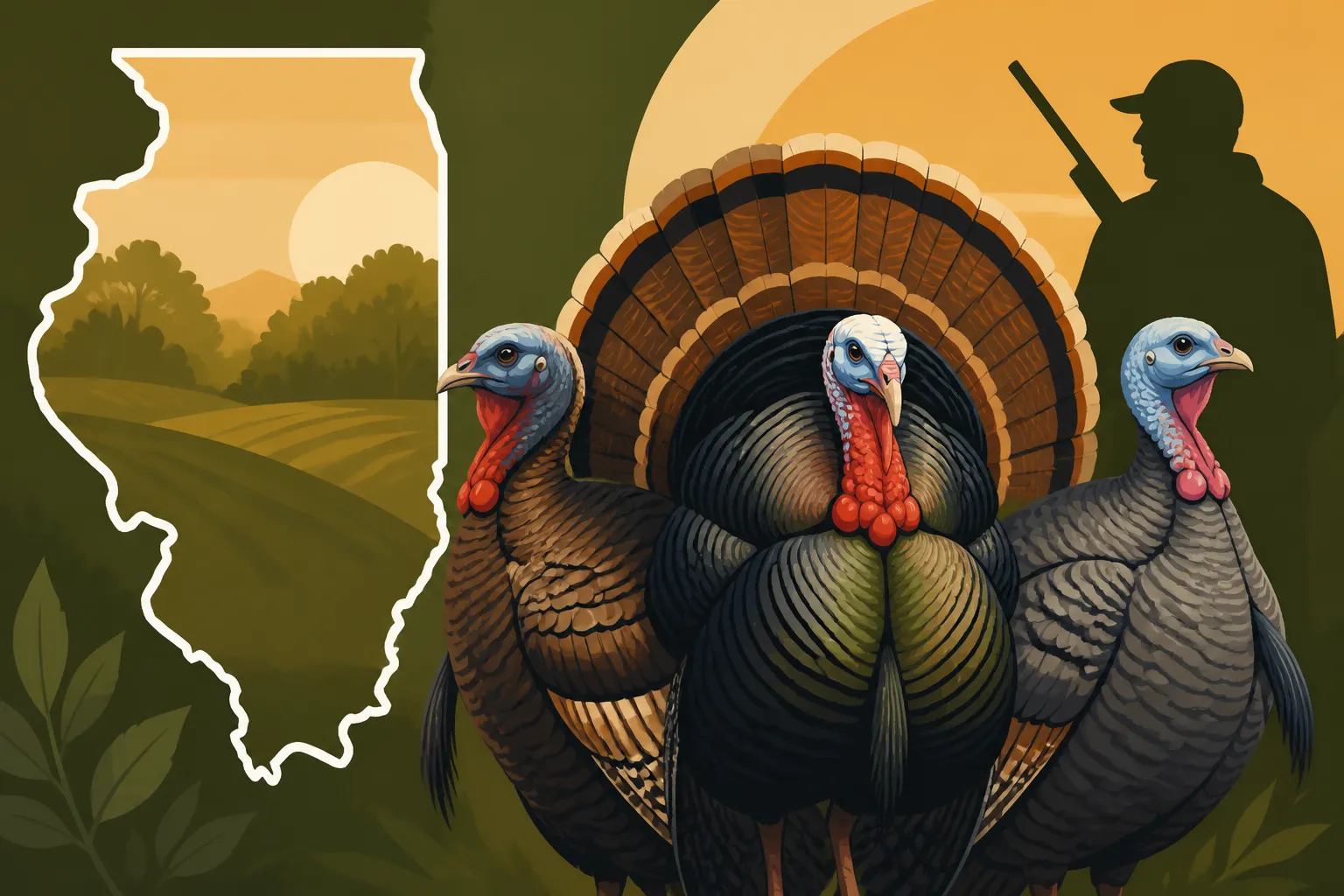
Illinois Wild Turkey Subspecies
There's a common misconception among hunters, especially new ones, that a wild turkey is just a wild turkey. You see pictures of majestic gobblers, hear the booming calls, and assume they're all cut from the same cloth. But the truth is, understanding the specific subspecies of wild turkey you're pursuing can make a significant difference in your hunting strategy and success. In Illinois, we have a distinct resident bird, and knowing its characteristics, habitat preferences, and behaviors is key to a rewarding hunt. This guide will dive deep into the specific wild turkey subspecies you'll encounter in the Prairie State and how that knowledge can elevate your hunting game.
The Eastern Wild Turkey: Illinois's Primary Resident
When you're out chasing longbeards in Illinois, whether it's through the rolling hills of Southern Illinois or the timbered river bottoms of the central part of the state, you are exclusively hunting the Eastern wild turkey (Meleagris gallopavo silvestris). These birds are the backbone of our state's wild turkey population, a testament to incredibly successful conservation efforts over the decades. They are incredibly adaptable and thrive in a variety of habitats found throughout Illinois, making them a consistent and challenging game species for hunters.
Identifying Eastern Wild Turkeys in Illinois
Eastern wild turkeys have a distinct look that, once you learn it, makes them stand out. Their body feathers generally boast a striking metallic sheen that shifts between coppery-bronze and green-gold in the sunlight, giving them a truly iridescent quality. The primary wing feathers are typically dark with lighter, irregular barring, while the secondary wing feathers are dark and distinctively barred with white or buff. Their tail feathers are dark with prominent horizontal black bands, ending in a broad, dark brown or chestnut band. This rich, dark coloration is what often sets them apart from their western counterparts.
Beyond their plumage, Easterns are robust birds, generally large and powerfully built. An adult gobbler can weigh anywhere from 18 to 25 pounds, sometimes even more, and stand quite tall. Hens are, of course, smaller and less vibrant in coloration, with duller body feathers that help them blend into their surroundings when nesting.
Their vocalizations are the classic turkey sounds we all recognize. The booming gobble of a spring tom echoing through the woods is an unmistakable sound of renewal and a hunter's favorite alarm clock. You'll also hear the full range of clucks, purrs, putts, and yelps that are characteristic of this species. These sounds are critical to understanding their communication and are what hunters spend countless hours trying to mimic. These physical and vocal traits are remarkably consistent across Illinois, from the most northern counties down to the furthest tip of the state.
Habitat and Distribution Across the State
Eastern wild turkeys are woodland creatures through and through, showing a strong preference for mature hardwood forests, mixed woodlands, and the transition zones where timber meets agricultural fields. This preference makes them perfectly suited for much of Illinois's landscape. Think about the sprawling timber tracts of the Shawnee National Forest Hunting in the south, the broken woodlots and creek bottoms interlaced with corn and soybean fields in central Illinois, or the dense river bottom habitat along the Illinois River Valley and Mississippi River. These are prime Eastern turkey territories.
They utilize these diverse habitats in specific ways. Mature forests provide essential roosting trees – often tall oaks or sycamores – where they spend the night safe from ground predators. The forest floor offers crucial foraging opportunities, with acorns, various nuts, seeds, and insects making up a significant portion of their diet. The edges of agricultural fields, though not their primary home, serve as important feeding grounds, especially during the colder months when waste grain can be a lifesaver, and during the spring and summer when insects are abundant.
The distribution of Eastern wild turkeys in Illinois is widespread, a true conservation success story. You can find healthy populations in nearly every county that boasts suitable woodland habitat. While densities might vary, particularly between heavily timbered regions and those dominated by agriculture, the Eastern wild turkey has reclaimed its historical range with vigor. To get a better sense of where turkeys are densest, it helps to look at Best Illinois Counties for Turkeys and consider areas with ample timber. This strong presence underscores why they are the sole focus for turkey hunters in the state.
Understanding Turkey Genetics and Subspecies Basics
Delving into the world of wild turkey subspecies can seem a bit academic, but it's actually fascinating and helps explain why our Illinois birds look and act the way they do. It’s not just about a pretty feather; these distinctions are rooted in millennia of adaptation.
What Defines a Wild Turkey Subspecies?
A wild turkey subspecies is essentially a distinct population within the broader species, characterized by unique genetic traits, slight variations in physical appearance (like feather coloration or body size), and sometimes even behavioral nuances. These differences typically arise from geographical isolation over long periods, allowing populations to adapt to their specific environments. Think of it like different branches on the same family tree, each with its own characteristics that have been passed down through generations.
While all wild turkeys can interbreed, these subspecies generally maintain their distinct traits because they tend to stick to their established ranges and rarely cross paths with other subspecies in the wild. For example, a Rio Grande turkey from Texas looks and behaves differently than an Eastern turkey from Illinois, largely due to adapting to very different landscapes and climates. These adaptations can influence everything from their preferred diet to how they react to predation pressure. Understanding these subtle variations, even if you're only hunting one subspecies, deepens your appreciation for the animal. It’s this kind of detail that makes tools like GoHunt valuable for drilling down into specific regional data and patterns, rather than just generic turkey info.
Historical Range and Restoration Efforts
It might be hard to believe now, given the healthy populations we enjoy, but wild turkeys were once completely extirpated from Illinois. By the early 20th century, a combination of unregulated hunting and widespread habitat destruction had wiped them out. Our landscapes had been drastically altered, and without dense, mature forests, the birds simply couldn't survive. It was a bleak time for wildlife in the state.
However, thanks to visionary conservationists and dedicated state agencies, a massive restoration effort began in the mid-20th century. Illinois pioneered what's known as the "trap-and-transfer" method. Eastern wild turkeys, sourced primarily from other states like Mississippi, Arkansas, and West Virginia, were live-trapped and then relocated to suitable habitats across Illinois. These efforts are a prime example of successful wildlife management and directly led to the vibrant populations we see today. If you want to dive deeper into this incredible journey, you can read more about How Turkeys Were Restored to Illinois.
This history is crucial because it explains why the Eastern wild turkey is our exclusive subspecies. The birds introduced were Easterns, and they adapted beautifully to Illinois's recovering woodlands. The success of these initial transplants, combined with ongoing habitat management and regulated hunting, allowed the population to grow exponentially. This also meant that other subspecies, which evolved in very different environments, never had a chance to establish a natural foothold in Illinois.
Why Other Subspecies Aren't Found Naturally in Illinois
With five recognized subspecies of wild turkey in North America – the Eastern, Osceola, Rio Grande, Merriam's, and Gould's – it’s natural to wonder why Illinois only hosts one. It's not for lack of trying on the turkeys' part, but rather the powerful forces of geography and ecology.
The Barriers to Other Subspecies in Illinois
Illinois sits squarely within the historical and modern range of the Eastern wild turkey. The natural territories of the other subspecies are simply too far removed and too geographically distinct to allow for natural migration into the state.
- Osceola (Florida Wild Turkey): This subspecies is found exclusively in the peninsula of Florida. The immense distance and lack of continuous suitable habitat across the southeastern United States create an impenetrable barrier. You won't find an Osceola naturally wandering north through Georgia and Kentucky to reach Illinois.
- Rio Grande Wild Turkey: Predominantly found in the brushy country of Texas, Oklahoma, Kansas, and parts of other western states. While Illinois isn't that far from their range, the vast stretches of open prairie and agricultural land in between act as a significant deterrent. Rio Grandes are adapted to more arid, open country and typically don't favor the dense, humid forests that Easterns love.
- Merriam's Wild Turkey: These birds are mountain dwellers, typically found in the ponderosa pine and mixed conifer forests of the Rocky Mountains and western states. Illinois, famously, has no mountains. The completely different elevation, climate, and vegetation preferences mean a Merriam's turkey would not thrive, let alone reach, the Illinois landscape.
- Gould's Wild Turkey: The rarest and largest subspecies, found in extreme southern Arizona, New Mexico, and northern Mexico. The geographical barriers here are immense – deserts, mountain ranges, and simply thousands of miles of unsuitable habitat.
So, while all these subspecies are fascinating in their own right, Illinois's position on the map and its ecological characteristics have ensured that the Eastern wild turkey remains our singular, proud gobbler.
Implications for Hunters and Management
For the Illinois hunter, this means a simplified, yet no less challenging, pursuit. You don't need to worry about identifying subtle differences in feather tips or body structure to determine which subspecies you're after. When you're in Illinois, you're hunting an Eastern. This consistency allows for highly focused management strategies by the Illinois Department of Natural Resources (IDNR), ensuring that efforts are tailored to the specific needs and behaviors of the Eastern wild turkey.
This focus also means that all the accumulated knowledge, research, and traditional wisdom about turkey hunting in Illinois is centered on the Eastern subspecies. When you read about Illinois Turkey Population Trends or discuss tactics with a seasoned local hunter, you're getting information directly relevant to the bird you're pursuing. Your hunting strategies, from calling techniques to understanding their daily movements, should be specifically geared towards the Eastern. Utilizing platforms like GoHunt for research can be highly beneficial when you filter for data relevant to Eastern turkeys and specific regions within Illinois. There's no need to cross-reference with other subspecies; the Eastern is your target, and mastering its ways is your path to success. The Eastern has proven to be incredibly adaptable and resilient, making it a fantastic game animal to pursue.
Hunting Strategies Tailored for the Eastern Wild Turkey in Illinois
Since Illinois is Eastern wild turkey country through and through, your hunting approach needs to be finely tuned to their specific behaviors and habitat preferences. Generic turkey tactics might yield some success, but truly understanding the Eastern will give you a significant edge.
Adapt Your Calling to Eastern Gobblers
Eastern wild turkeys are often characterized as being highly vocal, especially during the spring mating season. Their powerful gobble is a declaration, a challenge, and an invitation all rolled into one, and it's what drives many hunters out into the pre-dawn chill. But being vocal doesn't necessarily mean they're easy to call in. Easterns can be notoriously "hang-up" birds, meaning they might gobble incessantly but refuse to close the distance. This requires a nuanced calling approach.
You'll need to master the fundamental calls: soft tree yelps and clucks as they wake up on the roost, confident yelps to bring them closer, the excited cutts of a hot hen, and the subtle purrs and putts that often seal the deal when a gobbler is within sight. Pay close attention to their responses. If a gobbler is hammering every time you call, try to back off a bit and make him come find you. If he's hesitant, more aggressive calling might be needed to pique his interest. Every bird and every situation is different.
Practicing realism is paramount. Electronic calls might have their place, but nothing beats the artistry of a skilled hunter using a slate, box, or mouth call to perfectly replicate the sounds of a hen. The timing of your calls is also critical. Early morning often demands mimicking hens on the roost, while later in the day might call for more sporadic, soft sounds. Leveraging platforms like GoHunt to analyze real-time or historical gobbling activity and turkey movement patterns in your specific hunt area can help you refine your calling strategy and timing. Remember, the goal isn't just to make noise, but to tell a convincing story that makes that gobbler believe a receptive hen is just out of sight.
Sometimes, the trick isn't calling them to you, but simply locating them and then getting into position. This is where tactics like Calling an Illinois Gobbler Off the Roost come into play, getting them interested from their nighttime perch.
Mastering Habitat-Specific Tactics
Eastern turkeys in Illinois are deeply intertwined with their environment, and successful hunting means understanding how they use the diverse habitats available. Your tactics will need to shift depending on whether you're hunting vast timber, river bottoms, or agricultural edges.
In the expansive hardwood forests of southern Illinois or the significant timber blocks around state fish and wildlife areas, patience and strategic setups are paramount. Birds have vast areas to roam, and they might cover a lot of ground. Look for natural funnels, ridge tops, creek crossings, and areas with good mast crops. Setting up near known roosting sites or feeding areas can be effective. This often means deep woods hunting, where you need to be proficient at reading the terrain. Consider strategies for Still-Hunting Southern Illinois Ridges and understanding Where Shawnee National Forest Bucks Bed, as deer and turkey often share habitat usage patterns.
In central Illinois, where agriculture often meets fragmented woodlots and creek bottoms, turkeys will frequently use the timber for roosting and security, but spend significant time feeding in fields. Here, patterning birds moving between these areas can be incredibly effective. Setting up on a field edge early in the morning, or ambushing birds as they transition from timber to field, are common and productive tactics. Concealment is key in these more open areas, so using natural cover or a well-brushed ground blind can be essential. Check out Hunting Central Illinois Farmland Deer for insights into similar dynamics that apply to turkey movement in these mixed landscapes.
River bottom areas, especially along the Illinois and Mississippi Rivers, present their own unique challenges and opportunities. These areas often feature dense cover, intricate sloughs, and high water tables. Turkeys here might roost on higher ground or on large trees directly over water, using the river itself as a barrier. Learning to hunt river bottom funnels and identifying travel corridors is critical. Knowing Hunting Illinois River Bottom Funnels is a good skill to cultivate.
Regardless of the specific habitat, scouting is non-negotiable. Glassing fields from a distance, looking for fresh tracks or droppings along logging roads, and listening for distant gobblers before the season opens will significantly increase your chances. Tools like GoHunt's mapping features can help you identify potential roosting areas, feeding locations, and travel corridors before you ever set foot in the woods. Ultimately, the more you understand the Eastern wild turkey's relationship with its specific Illinois home, the better equipped you'll be to put a tag on one.
| Subspecies | Primary Range | Key Distinguishing Features | Found in Illinois? |
|---|---|---|---|
| Eastern | Eastern/Midwestern US & Canada | Rich, dark body feathers with copper/bronze sheen, dark-barred wings | Yes, exclusively |
| Osceola (Florida) | Southern Florida | Darkest body, less white on wing bars, smaller body | No |
| Rio Grande | Central/Western US, Mexico | Buff-colored tail fan tips and wing bars, lighter body | No |
| Merriam's | Western US mountains | White tips on tail fan and wing bars, often larger body | No |
| Gould's | Arizona, New Mexico, Mexico | Longest legs, large body, copper and green body iridescence | No |
Disclaimer
This article is for general informational purposes only and does not constitute professional advice. Laws, prices and regulations vary by location and change over time. Consult a qualified professional for guidance on your specific situation.